What's the difference?
Obviously the headline item of the new McLaren Artura Spider is the ability to drop the top and feel the wind in your hair, or, should you live in Melbourne, at least the damp mist on your face.
But this new plug-in powerhouse has plenty more to offer than just its folding hardtop.
The coupe and convertible are more powerful, there’s a new and louder exhaust, faster gear shifts, a richer rev range, better suspension and better braking.
Oh, and there's a new feature designed to unlock your inner hooligan, but we’ll come back to that one in just a moment...
But at its core, the Artura Spider is a plug-in hybrid monster that goes someway to previewing the future of the supercar species.
Does electrification enhance the excitement? We strapped in to find out.
Driving a whopping great SUV down the straight on a race track at more than 200km/h sounds like fun, but it actually feels a bit wrong, like entering a baby elephant in a dog show.
These are strange times, of course, and the Maserati Trofeo Levante is a suitably strange vehicle - stylish, classy, expensively appointed family hauler that also has the heart and soul of a race car.
Indeed, while performance SUVs are an increasingly commonplace vehicle, the Levante - which was actually getting along in the tooth as a model before this significant upgrade - has higher performance credibility than most.
That's because it has a big Ferrari V8 driving all four of its wheels and delivering a properly supercar-like 433kW and 730Nm.
It's not what you might call a typical Maserati buyer's car, but then only those who know what the Trofeo badge stands for - shouty insanity, basically - will be interested in this end of town. It is a lot of car, but is it worth the large load of money on the sticker ($330,000)?
McLaren’s most liveable offering proves hybrid heroes have a place in the supercar stable of tomorrow. Angry and affable in near-equal measure, it is utterly docile during the week and completely bonkers on the weekend.
Note: CarsGuide attended this event as a guest of the manufacturer, with travel, accommodation and meals provided.
Maseratis are built for a fairly specific niche buyer; someone with a lot of money, someone slightly older and certainly someone who likes the finer things in life and appreciates Italian style, quality and heritage.
They are not, typically, the kind of buyers who want to tear around race tracks like fiends in big, shouty SUVs. But apparently there is a niche within the niche of Maserati fans who do, and they are willing to invest big dollars in vehicles wearing the Trofeo badge, like this Levante.
It might seem a slightly strange creation, a track-mad SUV with a screaming Ferrari engine, but surprisingly, it really does work.
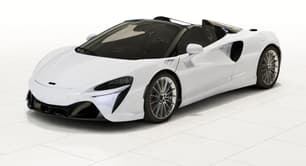
As is pretty par for the course with McLarens, the Artura's design is more about aerodynamics than aesthetics, with everything you see outside designed to either help you slip through the air, or stick to the road.
There is, however, one important new part of the design, and that is the roof, which opens in 11 seconds and at speeds of up to 50km/h, meaning you should never be caught in sudden rain.
Elsewhere, you’ll find it is all angles and alloys outside, while inside, it is a pretty driver-focused experience. I particularly love the steering wheel, which is totally free of buttons – a refreshing change which means it has one job and one job only.
Then there’s the central screen, which looks a bit like it’s just been plonked in the cabin, but works seamlessly. One note, though. It's positioned a little too low, meaning you have to take your eyes right off the road to look at it when driving.
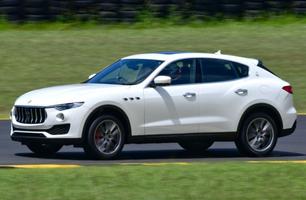
While the other two Maseratis to get the Trofeo treatment - the Ghibli and Quattroporte sedans - are undeniably lovely, the Levante is not quite as pretty.
Admittedly, for an SUV, it looks very good, and the Trofeo touches - that big, nostrilled bonnet, the red gills on the sides, the carbon, the badges - really do lift its game to another level.
Overall, though, the Levante has just never felt beautiful enough to me to be a Maserati. These guys really do style well, as you'd expect from a premium Italian brand, but making an SUV sexy is beyond even them.
I'll grant you, it does look good from front on, but at the rear they just seem to have run out of ideas.
Credit is due for feeling properly special inside, however.
Practical? Not really, but then, what were you expecting? There are two seats, some 124 litres of luggage space in its under-bonnet boot, phone connections and… well, that’s about it.
One design element I do love, which counts as a practicality perk, is the glass finish applied to the rear buttresses, which don’t just look cool, but help you see out the back when peering over your shoulder.
If you've got to move five people in a genuine hurry, the Levante is a pleasant way to go about it.
There's plenty of head and shoulder room, the seats, while firm in the front, are pleasant to the touch and supportive and there's a 580-litre boot with an electric tailgate and split-folding seats.
The boot feels properly spacious, too, with a 12-volt power outlet and four tie-down points. You won't, however, find a spare wheel out there, so serious off-roading is out (although it probably was already if you look at those expensive wheels).
There are huge door pockets with room for bottles and two big cup holders in the front. The centre-console bin looks lovely, it's all carbon fibre, but is quite small.
There are also three USB points, one in the front and two in the rear, and Apple CarPlay and Android Auto connectivity.
Prepare to enter the rarefied air of the supercar world. The McLaren Artura Spider lists at $525,010, or about $50K more than the hardtop Artura, which has also been updated for 2025 and lists at $477,310.
Either way you’re staring down the barrel of around half a million to climb into the new Artura. But kudos to McLaren for offering the new model’s power upgrades, courtesy of a relatively straightforward software update, to owners of the current-gen Artura at no charge.
Anyway, for that spend you get a whole heap of power and performance, of course, but there’s also some new safety stuff and a new launch control designed to unleash your inner hooligan.
It’s called the 'Spinning Wheel Pull-Away' feature, which is essentially a burnout mode allowing you to light up the rear tyres, and even flick through the gears as they’re spinning, attracting the attention of passers-by and the local police in equal measure.
Add to that a redesigned exhaust that delivers a louder and more natural soundtrack, and it begins to become clear the Artura wants to leave any suggestion that it is somehow a mild supercar in its rear-view mirror.
Elsewhere, you’re riding on staggered alloys which are 19 inches up front and 20 inches at the rear, wrapped in Pirelli P-Zero rubber.
And then there’s the roof, which is a lightweight carbon-fibre and composite design operated by eight individual e-motors.
Also new in the cabin is a wireless charge pocket, while a digital dash is joined by a slightly off-looking but effective low-mounted central screen. Standard is a five-speaker McLaren-branded stereo, and rear glass screen is automatic and heated.
I'm sorry, but $330,000 for an SUV, of any kind? Personally I can't see the value, but then personally, as we'll discuss below in the Design section, I can't see the attraction.
This is one of the most expensive SUVs money can buy, well above things like Range Rover Sport SVR ($239,187) or even Porsche Cayenne Turbo Coupe ($254,000), although a pricier Ferrari one is surely on the way.
You'd want a lot for that, and the way it drives and sounds, thanks to that Ferrari engine, accounts for quite a few dollars.
There's also an undeniably high-quality feel to everything you touch on the car, inside and out, and a vast quantity of carbon fibre everywhere as well.
Other highlights include the 21-inch machine polished wheels, an 8.4-inch touchscreen with Navigation and DAB radio, full matrix LED headlights, and incredible Pieno Fiore natural leather, “the best the world has ever seen”, as Maserati says.
The lovely if firm front seats are heated and ventilated, sporty and 12-way adjustable, with Trofeo logos stitched into the headrests. The rooflining is lovely Alcantara, the steering wheel is sporty and features carbon-fibre shift paddles, ad the stereo system is Harman Kardon Premium and has 14 speakers.
And even the rear seats are heated. It feels expensive, and it should. But still, $330K?
The magic of the Artura’s powertrain isn’t the twin-turbocharged V6, but its dinner-plate-sized e-motor, which adds 70kW and 225Nm to the total outputs.
In EV mode, which lasts around 33km, that’s all the power you get. But when both power sources are in use, the e-motor essentially plugs any turbo lag or power holes, delivering smooth, constant and massively ample power.
How much power? Try 515kW and 720Nm — up some 15kW on the existing Artura — unlocking a sprint to 100km/h in 3.0 seconds, a run to 200km/h in 8.4 seconds and from a standstill to 300km/h in 21.6 seconds.
That power is fed through an eight-speed automatic and channelled to the rear tyres, with the help of an 'E-Diff', while pre-configured 'Electric', 'Comfort', 'Sport' and 'Track' modes arrive as standard, too.
There are also a heap of suspension and software enhancements, longer-laster braking, stiffer engine mounts to tighten the entire vehicle, faster damping, significantly quicker gearshifts and a broader rev range.
This will be the last time Maserati gets a proper Ferrari engine like this a 3.8-litre twin-turbo V8 shouty monster, which is good for 433kW and 730Nm.
The future, as is the case everywhere, is going to be more electric and less noisy. For now, anyone who can should enjoy this V8 masterpiece, which drives all four wheels through Maserati's Q4 on-demand all-wheel drive system via a limited-slip rear differential and uses an eight-speed automatic transmission.
Its claimed 0 to 100km/h time is 3.9 seconds, which puts it in what used to be super-car territory, and is still very quick indeed, while top speed is an unimaginable 304km/h.
You can plug the Artura in, of course, and taking the 7.4kWh battery from zero to 80 per cent charged will take around 2.5 hours. McLaren reckons you can expect fuel use of around 4.8L/100km when both powertrains are in operation.
Be warned, though, there’s enough magic used to fill Hogwarts when it comes to calculating that number, and you can expect that figure to likely double if driving sedately, and skyrocket if you get on Tinder terms with the accelerator.
The official claimed fuel economy for the Maserati Levante Trofeo is 13.5 litres per 100km, but good luck with that.
A more realistic number would probably sit somewhere above 17 litres per 100km, and we would have easily exceeded 20 litres while driving it like lunatics around a track.
But you just paid $330K for an SUV, what do you care about fuel economy?
I know it sounds strange, given how knife-sharp and angular the McLaren Artura Spider looks, but perhaps this plug-in powerhouse's biggest party trick is not how it operates at its 8500rpm redline, but how it behaves at low speeds in town or cruising on the freeway.
This is a properly comfortable supercar, happily tootling around in near-silence in in EV mode, or just cruising around, the improved damping smoothing out the road below and the exhaust note barely noticeable.
Honestly, there was a moment on this test drive when I found myself in EV mode with the roof down while travelling at around 70km/h, and I could hear birds chirping as I passed them, such was the calm ambience of the cabin.
Supercars aren't designed as daily drivers, but the McLaren Artura Spider is so effortlessly easy to live with you could use it as your weekday runabout, before unleashing it on the weekends.
Open the taps a little more, though, and suddenly that nature changes, unlocking a darker and more dynamic side to the McLaren's personality, courtesy of the 3.0-litre twin-turbo V6, putting the entire 515kW and 720Nm at your disposal.
I don't think I've driven a car in which the distance between its twin personalities is so vast. Plant your right foot and the acceleration (0-100km/h in just 3.0 seconds) is properly violent, while the gearing has been set up in a way that it is near impossible to hit the redline on a public road – at least without obliterating the speed limit.
The steering is a predictable highlight – super direct, and near-telepathic in the way it responds to your inputs. The eight-speed auto goes about its work with seamless efficiency, too.
The biggest highlight, though, is the Artura's agility. McLaren is famed for taking an approach to removing weight from its vehicles that is so ruthless it's a miracle they don't make prospective owners step on a scale before handing over the keys. And while its true convertibles are heavier than their hardtop counterparts, you can't tell in the Artura Spider.
Instead, the brand has worked to remove weight and tighten the drive experience, mostly through new and stiffer engine mounts and that single piece carbon-fibre tub, which is why there is no additional body stiffening required in the convertible over the coupe.
As a result, the Spider feels light, lithe and super reactive, devouring corners with no jiggling or roll and no different (in that sense) to the hardtop version we drove last year.
One of the other big changes the brand made this time around is to retune the exhaust, making it louder and more natural-sounding, and you can take advantage of that in the Spider, with the rich bass filling the cabin as though your own personal orchestra is being conducted by your right foot.
So, if you're in the camp that says electrification has no place in the world of supercars, you're wrong. Electrification doesn't hamper excitement here, it enhances it.
We got to drive all three Trofeo-fettled Maseratis on track at Sydney Motorsport Park, and before that on the road, where the Levante felt very pleasant, and pleasantly expensive at all times.
As you might expect, a vehicle with 433kW is difficult to fully appreciate on public roads, although there was the occasional and exciting change to give it a quick, loud blat between gears.
It only takes hearing that engine note, and feeling that torque surge, a few times to see why someone might fall in love with this car, or at least this engine.
Out on the track, the rear-driven Ghibli and Quattroporte, which share the Levante's engine, were surely the more fun and frenetic things to drive, but there were those who chose the Levante as their best of the three, even for circuit driving.
There's no doubt that its on-demand all-wheel-drive system, which is biased towards the rear but asks the front wheels for help when required, made it feel the most planted, and the safest, through fast and slow bends.
There's a definite sense that its engine is being asked to work the hardest, though, to push all that bulk through the air (although its brakes never seemed to fade, which is impressive with more than two tonnes of SUV to stop).
While the big, deafening V8 is willing and keen to rev all the way to 7000rpm (where it bangs on the redline waiting for your upshift, if you're driving in manual mode - I do like that), it started to make large sucking sounds towards the top of each gear, as if it was desperately trying to get more oxygen in.
It genuinely sounded different to the other two Trofeo cars, which is odd, but perhaps they just weren't as near their limits. That bulk also slowed it slightly in terms of top speed down the straight, but it still exceeded 220km/h with ease.
What should be said is that I was genuinely shocked at how good the Levante Trofeo was around a track. So much so I asked to have a second go, just to make sure I wasn't going mad.
Sure, it makes no sense to me personally, and I don't know why anyone needs an SUV that's good on a track, but if you do, I can recommend the Levante for sure.
That hugely enjoyable engine is just too much fun, although it's even better in a sedan like the Ghibli...
There's new stuff in the world of safety, too. For one, there’s lane monitoring, which McLaren — ever keen to maintain the purity of its drive experience — is quick to point out you can switch off, and when you do, that it stays off until you switch it back on again.
That said, blind-spot monitoring and rear cross-traffic alert are optional, and you’re more chance of a Powerball win than seeing a Artura Spider crash-tested by ANCAP for an independent safety rating.
Maserati's safety offering on the Levante includes six airbags, a reversing camera and 360-degree overhead camera, parking sensors front and rear, adaptive cruise control and Blind Spot Detection, Forward Collision Warning Plus, Pedestrian Detection, Lane Keep Assist, Active Driver Assist and Traffic Sign Recognition.
There is no ANCAP rating for the Levante as it's not been crash tested here.
The Artura arrives with a five-year, unlimited-kilometre warranty as standard, while the battery is covered for six years or 75,000km. Five years of roadside assistance is thrown in, as are your first three years of services.
Maserati offers a three-year, unlimited kilometre warranty, but you can choose to buy 12-month or two-year warranty extensions, and even a sixth or seventh-year drive-train warranty extension.
When much, much cheaper Japanese and Korean cars are offering seven and even 10-year warranties, this is so far off the pace that such a fast vehicle should be embarrassed. And if you're buying something Italian, a better, longer warranty would seem like a must. I'd be negotiating at sale for them to throw the longer warranty offer in.
Maserati says servicing for the Ghibli has a "ball park costing of $2700.00 for the first three years of ownership" with a service schedule of every 20,000km or 12 months (whichever occurs first)
Also, "please note that the above is indicative only of the manufacturers basic routine service maintenance schedule and does not include any consumable items such as tyres, brakes etc or additional dealership charges such as environmental levies etc."