What's the difference?
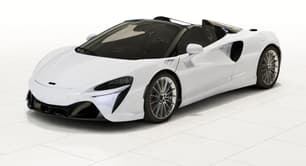
Obviously the headline item of the new McLaren Artura Spider is the ability to drop the top and feel the wind in your hair, or, should you live in Melbourne, at least the damp mist on your face.
But this new plug-in powerhouse has plenty more to offer than just its folding hardtop.
The coupe and convertible are more powerful, there’s a new and louder exhaust, faster gear shifts, a richer rev range, better suspension and better braking.
Oh, and there's a new feature designed to unlock your inner hooligan, but we’ll come back to that one in just a moment...
But at its core, the Artura Spider is a plug-in hybrid monster that goes someway to previewing the future of the supercar species.
Does electrification enhance the excitement? We strapped in to find out.
Close your eyes for me and try to picture a two-door vehicle with a thumping V8 engine, 575kW and a whopping 1000Nm on tap, a 0-100km/h burst of 3.2 seconds and a top speed of 335km/h. Does it look like a Ferrari in your head? Something else Italian, or German perhaps?
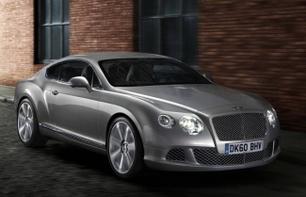
Well, what if I tell you it also weighs 2.5 tonnes. Are you imagining a luxe SUV with the rear doors removed, perhaps? Think again, because what we’re discussing here is arguably the very best of Britain (albeit German-owned), the all new and highly impressive Bentley Continental GT Speed.
Gone is the famous and fabulous W12 engine, never to return (Bentley was long the world’s biggest maker of 12-cylinder engines, henceforth it will make exactly none), to be replaced by the one and only power plant the company will now offer, in various tunes, in all of its ICE cars (yes, a Bentley EV is coming, of course).
All that torque isn’t just from the big 4.0-litre V8, it’s also an 'Ultra Performance Hybrid', which will allow you to drive up to 81km in fully silent electric mode, should you be so boring.
We flew to a posh and very private members-only race track in Japan to find it out if this really is, as Bentley suggests, the everyday supercar.
McLaren’s most liveable offering proves hybrid heroes have a place in the supercar stable of tomorrow. Angry and affable in near-equal measure, it is utterly docile during the week and completely bonkers on the weekend.
Note: CarsGuide attended this event as a guest of the manufacturer, with travel, accommodation and meals provided.
Any fears Bentley was heading in the wrong direction by abandoning 12 cylinders for hybridisation (not that it had a lot of choice) should be totally salved by the Continental GT Speed. It is a hugely capable, fabulously luxurious and beautiful to behold grand tourer that deserves extra points for not being an SUV. It might just be the supercar you could drive every day, with no complaints.
Note: CarsGuide attended this event as a guest of the manufacturer, with travel, accommodation and meals provided.
As is pretty par for the course with McLarens, the Artura's design is more about aerodynamics than aesthetics, with everything you see outside designed to either help you slip through the air, or stick to the road.
There is, however, one important new part of the design, and that is the roof, which opens in 11 seconds and at speeds of up to 50km/h, meaning you should never be caught in sudden rain.
Elsewhere, you’ll find it is all angles and alloys outside, while inside, it is a pretty driver-focused experience. I particularly love the steering wheel, which is totally free of buttons – a refreshing change which means it has one job and one job only.
Then there’s the central screen, which looks a bit like it’s just been plonked in the cabin, but works seamlessly. One note, though. It's positioned a little too low, meaning you have to take your eyes right off the road to look at it when driving.
I don’t think I’ve ever heard so much interesting waffle about the design of any car, ever, but before we get to the wild, and wildlife, justifications for how it looks, just feast your eyes on it.
Now, not everyone might love it, but it’s hard to imagine a huge, super coupe looking any better than this thing does. It’s no Ferrari, sure, but realistically it doesn’t have to compete with that, because it’s a cruiser as well as a bruiser, a supercar you can be quiet and comfortable in. A Rolls-Royce with rocket engines, even.
The most obvious change, of course, is that Bentleys have had four headlights, or four eyes if you like, for so long that seeing this new one with two is a major shock, a big shift, but somehow it works.
The proportions, the elegance, the bold 'be big and bold and give no damns what anyone thinks', it’s just impressive, and the interior reflects that same, luxury ethos.
Apparently the new-look Continental is built on three design principles, the first of which is, amusingly, 'Resting Beast'. This is supposed to reflect how the Bentley looks from side on; like a tiger, stalking its prey, or perhaps resting and thinking about its prey. It’s all muscles and strength and power, but also elegance. And who doesn’t imagine tigers walking red carpets in ball gowns?
Principle two is 'Upright Elegance', and here you’re supposed to see, in the car, the strong vertical line one finds in the chest of a thoroughbred horse when it’s standing in particularly powerful way. Great. Love it.
And finally, there is the 'Endless Bonnet', which is a horizontal line that goes from the front of the car - via the bonnet obviously - and all the way to there rear, via cat-like haunches, providing an impression of “speed, even when standing still”.
Those are the bold strokes, but it’s all the little details that make it sing, like the beautiful jewellery-like look of the headlights, which are meant to resemble a tiger’s eyes. So many cats, is it any wonder I started thinking of the Bentley as a very, very flashy Jaguar?
It’s important to note that while it looks very new - and 68 per cent of the Continental’s parts are new - the body panels are carried over, while the front and rear are all new. This is one very effective mid-life facelift, with a heart transplant, then.
Practical? Not really, but then, what were you expecting? There are two seats, some 124 litres of luggage space in its under-bonnet boot, phone connections and… well, that’s about it.
One design element I do love, which counts as a practicality perk, is the glass finish applied to the rear buttresses, which don’t just look cool, but help you see out the back when peering over your shoulder.
So a two-door, '2+2' grand tourer isn’t entirely built with the term 'practicality' in mind and it could be argued the existence of this Bentley Continental, the fourth generation, is something of a surprise, when you consider most people just buy SUVs and Bentley has done quite well with its Bentayga (which will, in future, share the same engine used here).
But for what it is, a two-seat car with occasional seating in the rear for emergencies, or very small children, it feels entirely fit for purpose.
An actual human can sit in the back, but it does feel a bit claustrophobic, and you’d be so jealous of how comfortable the people are in the front.
The 20-way adjustable front pews feel like grand armchairs for grand touring, fabulously comfortable - although you can slide across them a bit when driving on a race track, not a common problem - and plush to the touch.
They now come with a 'Wellness Facility' that brings postural, massage and climate functions to help with fatigue on long journeys - and epic blasts across multiple European countries is clearly what this thing is designed for.
In general, the cabin is just lovely, Bentley claims it does the best car interiors in the world and while Rolls might argue, it’s a pretty fair statement.
The spinning central 12.3-inch display remains the highlight, offering you a modern touchscreen, which can disappear to reveal either three classic analogue dials or a plain piece of dashboard, if you prefer a 'digital detox'.
Prepare to enter the rarefied air of the supercar world. The McLaren Artura Spider lists at $525,010, or about $50K more than the hardtop Artura, which has also been updated for 2025 and lists at $477,310.
Either way you’re staring down the barrel of around half a million to climb into the new Artura. But kudos to McLaren for offering the new model’s power upgrades, courtesy of a relatively straightforward software update, to owners of the current-gen Artura at no charge.
Anyway, for that spend you get a whole heap of power and performance, of course, but there’s also some new safety stuff and a new launch control designed to unleash your inner hooligan.
It’s called the 'Spinning Wheel Pull-Away' feature, which is essentially a burnout mode allowing you to light up the rear tyres, and even flick through the gears as they’re spinning, attracting the attention of passers-by and the local police in equal measure.
Add to that a redesigned exhaust that delivers a louder and more natural soundtrack, and it begins to become clear the Artura wants to leave any suggestion that it is somehow a mild supercar in its rear-view mirror.
Elsewhere, you’re riding on staggered alloys which are 19 inches up front and 20 inches at the rear, wrapped in Pirelli P-Zero rubber.
And then there’s the roof, which is a lightweight carbon-fibre and composite design operated by eight individual e-motors.
Also new in the cabin is a wireless charge pocket, while a digital dash is joined by a slightly off-looking but effective low-mounted central screen. Standard is a five-speaker McLaren-branded stereo, and rear glass screen is automatic and heated.
As always, value becomes a nebulous term once the price of a car surges into the multiple hundreds of thousands. The Bentley Continental GT Speed will set Australian buyers back a whopping $581,900, before on-road costs.
Yes, you really can buy Ferraris and Lamborghinis for that kind of money, but Bentley assures us its buyers have already owned such fearsome machines, grown tired of their compromises and want something that’s just as fast, but 1000 times more comfortable, and easier to drive every day, and everywhere.
So that’s where the value proposition sits, basically. You’re buying a supercar that’s also a kind of Rolls-Royce adjacent luxury cruiser. Two cars for one price. Bargain. Kind of. It also weight 2.5 tonnes, if you’d like to think of it in dollars per kilogram.
Oh, and it’s hand made, too, and genuinely feels like it.
For that money you get an incredibly posh and plush cabin, excellent seats, and everything you touch, and smell, seems expensive and refined.
The newly facelifted, and butt-lifted, Continental also looks simply stunning, from every angle, outside. Particularly in its new 'Tourmaline Green' paint (there are 18 standard colours to choose from, or you can have bespoke paint made for you on request). And 15 standard leather hide colours as well.
It comes with all the apps and connectivity you could wish for, including a Bentley App Studio.
The magic of the Artura’s powertrain isn’t the twin-turbocharged V6, but its dinner-plate-sized e-motor, which adds 70kW and 225Nm to the total outputs.
In EV mode, which lasts around 33km, that’s all the power you get. But when both power sources are in use, the e-motor essentially plugs any turbo lag or power holes, delivering smooth, constant and massively ample power.
How much power? Try 515kW and 720Nm — up some 15kW on the existing Artura — unlocking a sprint to 100km/h in 3.0 seconds, a run to 200km/h in 8.4 seconds and from a standstill to 300km/h in 21.6 seconds.
That power is fed through an eight-speed automatic and channelled to the rear tyres, with the help of an 'E-Diff', while pre-configured 'Electric', 'Comfort', 'Sport' and 'Track' modes arrive as standard, too.
There are also a heap of suspension and software enhancements, longer-laster braking, stiffer engine mounts to tighten the entire vehicle, faster damping, significantly quicker gearshifts and a broader rev range.
There is some sadness that the world’s biggest producer and promoter of 12-cylinder engines has cut production of them altogether - the epic W12 is no more - and this does feel, on a smaller scale, like Porsche ditching flat-six engines forever.
Previous hybrid efforts from Bentley, including a V6-based one that the company now admits was a bit limp wristed, might cause some concern when you hear that Bentley will, henceforth, make just one engine for all its cars, and that it is a hybrid, albeit one attached to a 4.0-litre twin-turbo V8.
But then they point out the version in this Continental GT Speed’s is “the most powerful Bentley engine ever” and that sounds pretty good.
The engine alone makes 441kW and 800Nm, which almost sounds ample, but the addition of the electric E-motor is good for another 140kW and 450Nm, with the aid of a 29.5kWh battery, which somehow adds up to a combined output of 575kW and a nice, round, and impressive 1000Nm of torque.
All that power does have to move 2.5 tonnes of precious metal, which sounds like an ask, but is effortless in practice - hurling the Speed to 100km/h in a properly supercar-like 3.2 seconds on its way to a top speed of 335km/h.
Yes, vitally, it sounds pretty damn impressive when all the power sources are going at once, it even barks and pops on the overrun, a bit like the Porsche Panamera with which it shares the hybrid set-up, only a bit bossier, and perhaps classier.
The point of the hybrid feels like it’s mostly about performance and excitement, but it has a practical side, too, because in EV-only mode this giant Bentley can drive for up to 81km in pure, and slightly inappropriate-feeling, silence (at speeds of up to 140km/h).
Handy if you live in global cities with zero-emission zones, or if you want your neighbours to think you care about the climate.
One brilliant thing about this plug-in hybrid is it’s set up to use the engine to regen the battery, hard, in 'Sport' mode, so the more fun you have, the quicker the battery charges. So much so that, realistically, you might never need to plug it in at all (Bentley recently ran the car at a race track for two weeks and never needed to top it up via cable once).
It is an impressive, sonorous and enjoyable power plant, and you’d expect nothing less from Porsche, although Bentley says it’s done lots of work on the donor engine to make it uniquely more wonderful.
You can plug the Artura in, of course, and taking the 7.4kWh battery from zero to 80 per cent charged will take around 2.5 hours. McLaren reckons you can expect fuel use of around 4.8L/100km when both powertrains are in operation.
Be warned, though, there’s enough magic used to fill Hogwarts when it comes to calculating that number, and you can expect that figure to likely double if driving sedately, and skyrocket if you get on Tinder terms with the accelerator.
While the top-line figures for performance hybrids like this always sound impressive, it’s hard to believe anyone will ever get near them in the real world, because the temptation to drive a car like this hard and fast, as its makers clearly intended, will mean chewing fuel in a very non-efficient way indeed.
On paper, though, where it matters in terms of being allowed to sell your giant luxury grand tourer in Europe, the Bentley Continental GT Speed produces just 29 grams of CO2 per kilometre.
Fuel economy is a claimed 10.3 litres per 100km, which is optimistic, but still a lot lower than the equally unlikely 14L/100km figure for the old (12-cylinders and no hybrid) car. As in, neither car would ever achieve the theoretical figure, but at least the new one is clearly a lot better.
I know it sounds strange, given how knife-sharp and angular the McLaren Artura Spider looks, but perhaps this plug-in powerhouse's biggest party trick is not how it operates at its 8500rpm redline, but how it behaves at low speeds in town or cruising on the freeway.
This is a properly comfortable supercar, happily tootling around in near-silence in in EV mode, or just cruising around, the improved damping smoothing out the road below and the exhaust note barely noticeable.
Honestly, there was a moment on this test drive when I found myself in EV mode with the roof down while travelling at around 70km/h, and I could hear birds chirping as I passed them, such was the calm ambience of the cabin.
Supercars aren't designed as daily drivers, but the McLaren Artura Spider is so effortlessly easy to live with you could use it as your weekday runabout, before unleashing it on the weekends.
Open the taps a little more, though, and suddenly that nature changes, unlocking a darker and more dynamic side to the McLaren's personality, courtesy of the 3.0-litre twin-turbo V6, putting the entire 515kW and 720Nm at your disposal.
I don't think I've driven a car in which the distance between its twin personalities is so vast. Plant your right foot and the acceleration (0-100km/h in just 3.0 seconds) is properly violent, while the gearing has been set up in a way that it is near impossible to hit the redline on a public road – at least without obliterating the speed limit.
The steering is a predictable highlight – super direct, and near-telepathic in the way it responds to your inputs. The eight-speed auto goes about its work with seamless efficiency, too.
The biggest highlight, though, is the Artura's agility. McLaren is famed for taking an approach to removing weight from its vehicles that is so ruthless it's a miracle they don't make prospective owners step on a scale before handing over the keys. And while its true convertibles are heavier than their hardtop counterparts, you can't tell in the Artura Spider.
Instead, the brand has worked to remove weight and tighten the drive experience, mostly through new and stiffer engine mounts and that single piece carbon-fibre tub, which is why there is no additional body stiffening required in the convertible over the coupe.
As a result, the Spider feels light, lithe and super reactive, devouring corners with no jiggling or roll and no different (in that sense) to the hardtop version we drove last year.
One of the other big changes the brand made this time around is to retune the exhaust, making it louder and more natural-sounding, and you can take advantage of that in the Spider, with the rich bass filling the cabin as though your own personal orchestra is being conducted by your right foot.
So, if you're in the camp that says electrification has no place in the world of supercars, you're wrong. Electrification doesn't hamper excitement here, it enhances it.
In an ideal world, one would take the Bentley Continental GT Speed for an appropriate drive from the top of Germany to the bottom of Italy or France, but instead we were asked to drive the big beast around a tight and slightly terrifying private members race track outside Tokyo called the Magarigawa Club.
Members here pay US$1 million a year for access to this circuit, carved out of several mountain tops, which features two long and fun straights attached to what feels like a hill climb circuit with a bit of Laguna Seca’s Corkscrew and a touch of Mt Panorama’s undulations.
This track, with its daunting lack of run-off, should have been an intimidating and possibly inappropriate place to try the Continental GT Speed, but it is a credit to the car’s “everyday supercar” personality that it soaked up the pressure, and pace with ease.
On our first lap we were encouraged to drive in EV mode, which was predictably a bit dull, quiet and not-quite boring, because if you went past 75 per cent of throttle, or 140km/h, the engine would kick in and things would instantly get interesting.
It was a good chance to note just how lushly comfortable the cabin and seats are, however, and just how supple the suspension can be.
The Bentley’s “secret weapon”, according to its engineers, is a new twin-valve damper the allows the chassis to behave like a sports car when you want it to - probably about 3.0 per cent of the time for actual owners - and an absolute luxury pleasure palace for cruising around the rest of the time.
The split personality thing really is on offer with this car, as we found out once we engaged the Sport setting.
The Speed’s all-wheel drive, all-wheel steering, torque vectoring and electronic LSD were all on display over the later laps, in which we were allowed to blast past 200km/h and find out just how good the brakes are at pulling up 2.5 tonnes of high-speed luxo-barge.
You do your steering via a lovely wheel with a leather front and Alcantara wheel, and it feels effortless, even in full track attack mode. A bit more feedback might be nice, but I guess Bentley owners have other cars for that kind of thing.
Aside from the rushing, roaring speed, what is most impressive is how little body roll there is from the Continental. It feels planted, poised, happy to change direction and is rarely upset or flustered, despite some squeals of complaints from the tyres.
Getting too wide on to the ripple strips caused a shudder and a skip sideways now and then, but perhaps I shouldn’t have been so far off the racing line.
Overall, the Continental GT delivers on its name, with Speed, and lots of it, all delivered in a properly swanky environment.
There's new stuff in the world of safety, too. For one, there’s lane monitoring, which McLaren — ever keen to maintain the purity of its drive experience — is quick to point out you can switch off, and when you do, that it stays off until you switch it back on again.
That said, blind-spot monitoring and rear cross-traffic alert are optional, and you’re more chance of a Powerball win than seeing a Artura Spider crash-tested by ANCAP for an independent safety rating.
All the money and you only get four airbags; front and side for driver and passenger. And none in the back, so don't sit there. Bentley also has its own 'Safeguard' suite of technologies including 'Advanced Emergency Braking', 'Swerve Assist' and 'Turn Assist'.
Other tech includes 'Predictive Adaptive Cruise Assist with Lane Guidance', 'Lane Departure Warning', 'Emergency Assist', 'Remote Park Assist' and '3D Surround View'.
The Artura arrives with a five-year, unlimited-kilometre warranty as standard, while the battery is covered for six years or 75,000km. Five years of roadside assistance is thrown in, as are your first three years of services.
The Bentley Continental GT Speed comes with a five-year, all-inclusive servicing plan as standard.
That sounds good, but stunningly, Bentley still only offers a three-year manufacturer warranty, albeit one with no mileage limitations. That's way below industry standard these days.
The battery that forms part of the hybrid system is, however, warrantied for eight years, or 160,000km.