What's the difference?
Years ago, McLaren wasn't really making McLarens. The ill-fated SLR was still in production, but was an oddity that made little sense - it was a highly specialised Mercedes and built to sell for crazy money to mega-rich F1 fans. Production was down to a trickle,and the iconic and legendary F1 had completed its run a decade earlier.
The "new" McLaren Automotive had a shaky start in 2011 with the unloved MP4-12C, which became the 12C and then morphed into the 650S, getting better with each reinvention.
The P1 was the car that really grabbed the world's attention and was then-new designer Rob Melville's first project for the British sports car maker.
Last year, McLaren sold its 10,000th car and production numbers are closing in on Lamborghini's. Sales have almost doubled in Australia and Rob Melville is still there, and is now the Design Director. The company, clearly, has done very, very well.
Now it's come time for McLaren's second generation, starting with the 720S. Replacing the 650S, it's the new Super Series McLaren (fitting in above the Sport Series 540 and 570S and below the Ultimate P1 and still-mysterious BP23), and is a car McLaren claims has no direct competitors from its rivals at Ferrari or Lamborghini.
It has a twin-turbo V8, a carbon fibre tub, rear-wheel drive and bristles with cleverness.
Like most people in this day and age, I like to consider myself fairly green-minded. I recycle. I canvas bag. One time I even took public transport, despite having a perfectly good car at my disposal.
But most importantly, at least as far as our only planet is concerned, I’ve embraced electrification in the automotive world, confident in the knowledge that, 99 times out of 100, introducing a hybrid, plug-in hybrid or fully electric powertrain to the equation improves both the driving experience and your fuel bill.
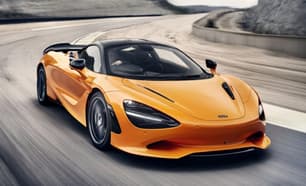
The one out of that 100? That would be the McLaren 750S — the British brand’s new apex predator, and a vehicle that might just be the marque's last non-electrified series-production supercar ever.
It’s powered by a spectacular twin-turbo V8 engine that contributes to a drive experience so raw, so pure, and so unfiltered, that to sully it with heavy batteries or silent electric motors would just about qualify as a crime against humanity, or at least against the parts of humanity fortunate enough to be able to afford one.
So, is this McLaren 750S the best of the current supercar bunch? Let's find out.
Past McLarens have been accused of being a bit soulless, but this one is alive. The last time I felt like this in a car was a Ferrari F12, one of the scariest but most brilliant cars I've ever driven. Except the 720S isn't scary on the road, just sheer genius.
The 720S doesn't necessarily beat the competition but it opens up new ways of doing supercar things. It's a car that looks amazing, is more than fit for purpose but has a wider range of talents than the others.
That makes it ever more compelling, both as a piece of automotive brilliance to admire, andl as something to consider when you've got half a Sydney apartment to spend on a car.
Australian roads await, but the drive through rural English country roads and villages was a great preview. All I can say is: gimme one.
Not just a love letter to the intoxicating delights of the mighty V8 engine, the McLaren 750S is a genuine joy across the board.
Note: CarsGuide attended this event as a guest of the manufacturer, with travel, accommodation and meals provided.
The 720S has received mixed reviews but nobody will say it isn't striking. I love it - every designer says their influence is a Lockheed SR-71 Blackbird (designer Melville even jokes about it), but you really can see it in the 720S, especially in the cockpit design, which looks like a glass canopy from that surveillance jet.
McLaren's signature dihedral doors, which go all the way back to the 1994 McLaren F1, are substantial, with a double skin to act as a serious piece of aero kit.
Melville told me in January that he thinks the cars look shaped by nature, using the example of a stone left in a stream to erode. The 720S is full of details evoking that image, with a clean, taut surface. Where everyone complained that the 12C was "designed in a wind tunnel", the 720S looks designed by the wind. In the carbon and aluminium, it looks extraordinary.
One of the most talked about features are those headlights - almost always finished in black, they're known as "the socket". When you get close you see slim LED DRLs, small but powerful headlights, and you then discover two radiators behind them. Follow it through and the air exits through the bumper, around the wheels and then through the door. It's quite something.
Inside is the McLaren we've come to know and love, but with a clever kicker. The dash panel looks lifted from a race car - but with far nicer graphics. Switch to "active" mode, turn everything up to Track and the panel swings down and presents you with a minimised set of instruments to reduce distraction and make up for a lack of head-up display - just speed, get and, revs.
McLaren concedes the cosmetic updates for the 750S are “relatively subtle”, but there have been some key changes.
The front bumper and splitter are new, as is the rear bumper, while the rear wing is now bigger, with 20 per cent more surface area.
Also at the back, a new (and lighter, of course) stainless steel exhaust is now centre-exit, rather than off to either side.
Like the 720S before it, the 750S looks more like a statement of intent than a designer’s dream, with aerodynamic function over form the order of the day.
In the cabin, you’re looking at two sports seat, a grippy Alcantara steering wheel, and two relatively small screens by today’s sizeable standards.
You can have your cabin trim in full Nappa leather, or the leather mixed with Alcantara, and the audio is taken care of by Bowers & Wilkins.
Still, the 750S delivers everything you need and nothing you don’t in a car in this category.
For a supercar, there is a surprising amount of space in the cabin. You can strap 220 litres of (hopefully) soft stuff on the rear shelf behind the seats and there's a 150-litre boot under the nose. You can store your track gear under there, including helmet, or even cram in a few soft bags for a weekend away.
Again, unusually a for a supercar, you're also treated to a couple of storage cubbies in the centre console.
There's plenty of room in cabin for two bodies and the driver's seat offers lots of adjustment. Despite being so close to the front wheels, your feet have space even for my ridiculous duck feet to fit easily. There's even enough headroom for those over six feet, although the glass portholes in the top of dihedral doors might not be so welcome in an Australian summer.
Next question, please. This is a stripped-back, lightweight, two-seat supercar designed to get you to, and then around, a corner in the least amount of time possible. So, no, you can’t fit much in the way of grocery shopping in the back.
You can, however fit a total 150 litres (front) and 210 litres (rear) in the 750S, and it gets bonus points for having deep cut-outs in the roof that make slipping in under those scissor doors far easier than you might expect.
Kicking off at $489,900 plus on roads, it's fairly clear that the car the local operation has in its sights is the Ferrari 488 GTB, which sells for around $20,000 less but rarely arrives with less than $40,000 in options on board. Two further versions of the 720S are available from $515,080, the Luxury and Performance spec levels, both largely cosmetic.
The 720S ships with 19-inch front wheels and 20-inch rears wrapped in Pirelli P-Zeros. The exterior is finished in "dark palladium" trim and the cabin is lined with Alcantara and Nappa leather. Also onboard is a four-speaker stereo, digital dash, dual-zone climate control, sat nav, active LED headlights, power windows, sports fronts seats and not much else.
A predictably lengthy options list includes paint from $0 to $20,700 (McLaren Special Operations, or MSO, will cheerfully find ways to charge you more for that extra special paint job), but most of the list is carbon fibre bits, reversing camera ($2670!), a $9440 Bowers and Wilkins stereo... you get the picture. The sky, or your credit card, is the limit.
The front lift kit is $5540 and totally worth it to protect the underbelly from driveways. Unlike a couple of Italian rivals, it's not mandatory for all speed-bump ascents.
As we discover every time we look at a car like this, the spec seems slim but none of its competitors have much in them, so it's line-ball.
The McLaren 750S can be yours in hardtop ($585,800) or drop-top Spider ($654,600) guises, both of which have travelled north from the pricing applied to the 720S, which was $489,900 at launch, and its Spider equivalent, which was $556,000.
What you’re getting, though, is more — and less— of everything. More power, more performance, more downforce and more stiffness, combined with less weight, with McLaren having taken a forensic approach to stripping kilos from the 750S.
What you're not getting, though, is much in the way of niceties, with the McLaren 750S offering less interior tech and comforts than a mid-range hatchback (“it now has Apple CarPlay,” they exclaimed excitedly).
But for mine, that only enhances the drive experience, with the 750S offering a genuinely pure-feeling drive — a steering wheel free of buttons, a cabin largely free of distractions, no safety chimes bonging, and a nuclear reactor attached to your right foot. These are all good things.
Elsewhere, the McLaren 750S rides on ultra-lightweight forged alloy wheels (19-inch front / 20-inch rear) wrapped in Pirelli P Zero rubber as standard, and there are thinly cushioned carbon-fibre-shelled racing seats that hold you snuggly in place, and are every bit as comfortable on bumpier roads as cuddling a cactus.
In the cabin, McLaren has worked to up the tech, though its best to remember this is pared-back over plush.
A steering column-mounted driver display is new, and delivers all your key driving info, and it’s framed by all your go-to switches, like your 'Drive Mode' options.
In the centre, an 8.0-inch portrait-style screen now has Apple CarPlay as standard (but not Android Auto), and there are USB-C and USB-A connections for your devices, too.
The 720S runs a 4.0-litre version of McLaren's familiar flat-plane crank twin-turbo V8. Power is up to 537kW (or 720PS, hence the name) and torque up almost 100Nm to 770Nm, from 678. McLaren says 41 percent of the components are new.
A seven-speed twin clutch sends power to the rear wheels and the 1283kg dry (down 106kg from the 650S) monster hits 100km/h in 2.9 seconds, surely a cautious claim. The more alarming 0-200km/h clam is a terrifying 7.8 seconds, half a second quicker than its closest rival, the 488 GTB. That is seriously, insanely quick, while top speed is equally bonkers at 341km/h.
Instead of a complicated and heavy active differential, the 720S uses the rear brakes and various other methods to get the same effect. It's one of several ideas pinched from F1, some of them now banned.
Ah, now we’re talking. In the huge-displacement world of supercars, a 4.0-litre twin-turbo V8 might sound a little on the small side when put up against V10s and V12s out of Italy.
But this mid-mounted, twin-turbo powertrain perfectly compliments the overall balance of the 750S, and when its 552kW and 800Nm (fed through a seven-speed automatic) meets the lightweight McLaren, the results are staggering.
The zero to 100km/h dash is dispatched in 2.8 seconds, while 200km/h flashes by in 7.2 seconds. Want to push to 300km/h? You’ll need just 19.8 seconds.
McLaren claims the European combined cycle could return 10.7L/100km, but we have no way of knowing if that is accurate because we weren't mucking about on the day we had the car.
McLaren says you can expect 12.2L/100km on the combined cycle, with emissions pegged at 276g/km. But you can also expect to win the lottery. It doesn’t make it likely.
It’s hard to imagine how softly you’d have to treat the 750S to get anywhere near those numbers, but I know you almost certainly won’t. The temptation is simply too great.
One of the biggest changes from 650 to 720 is the new Monocage II carbon fibre tub. The drop in overall weight is partly because the cage now includes the windscreen hoop, which previously was metal. Kerb weight with all fluids and a 90 percent full fuel tank (don't ask why 90 percent, I don't know either) it weighs 1419kg, giving it the same power-to-weight ratio as a Bugatti Veyron. Yikes.
The 720S is an astonishing car. We always say you can pootle in a modern supercar, but the 720S is so user-friendly, maneouvreable and so easy to see out of - there are no significant blind spots with an almost entirely glass roof - you can tackle city and country in comfort mode and actually be comfortable. Comparatively, a Huracan goes all blergh in Strada mode and the 488 GTB never stops begging you to kick it in the guts. The McLaren is easy, liveable and smooth.
I was driving a left-hand drive car in the UK, which should have been a complete nightmare, but it was fine - the vision is excellent, particularly over the shoulder.
But when you do decide to kick the 720S into action, it's wild. The acceleration is brutal, the handling impeccable and the ride, oh, the ride. No supercar can handle bumps, irregularities and flat out poor surfaces like the McLaren. The 540C's ride is incredible as it is, but the 720 is just wow.
Because it's quite light, the nose goes where you point it, the huge brakes have less to stop, the towering power less to push. The steering in the 720S is well-weighted but has tons of feel - you know what's going on underneath the double-wishbone sprung front wheels and you can adjust what you're up to accordingly. The stability system is excellent, too. Never overbearing or abrupt, where talent ends and the help begins is delightfully blurry.
The new engine is a bit more tuneful than past McLarens - there's even a loud-start party trick - but it's not loud and overbearing. You'll hear turbos whisting, sighing and pshawing, a deep bassy exhaust note and some awesome intake roar. But there's not much off-throttle character. It does at least do away with the histrionics of the Italians.
The only serious drama is the amount of noise bouncing around the cabin over about 100km/h. There's a lot more glass than sound-soaking Alcantara, which explains some of the extra tyre racket over a 650S. You can't have everything, I guess.
Usually we wouldn’t be dedicating much space to the kilogram’s shaved here and there off the total weight of a vehicle, but it’s important in this case.
In the 750S, that starts with a bespoke carbon-fibre monocoque platform, which is not only light, but also so inherently stiff that even chopping the roof off for the Spider version required no extra bracing or supports, and only marginally impacts the performance figures.
Then, there are the lightest alloys ever fitted to a series McLaren, which reduce unsprung weight by up to 14 kilos.
That rear wing isn’t just bigger, but also lighter, saving another 1.6 kilos, the carbon-fibre-backed seats save a whopping 17.5kg, the new suspension springs shave another two-or-so kilograms. The list goes on and on.
All up, they've found 30 kilos between 720S and 750S, which is now 1389kg total.
The result is a vehicle that feels endlessly athletic — light, lithe and perfectly balanced — but also one that, when you’re feeding on that endless power, feels as though it might suddenly take flight.
Flat-footed acceleration is laugh-out-loud fun, the tyres scrabbling for grip with each donkey-kick gear shift, even past 100km/h, with the rear end shifting around slightly as the Pirelli rubber deals with the physics of what’s happening. It’s loud, visceral and intoxicating, and you absolutely never tire of it.
But the magic in this McLaren is that it's more than just brutally fast in a straight line, it's also one of the most engaging vehicles I've ever driven, and one that provides a near-telepathic connection to the car, its tyres, and the tarmac below.
The more time you spend behind the wheel, the more tameable it feels, and even at warp speeds (somewhere above 270km/h), you feel connected and in control, owing mostly the open lines of communication between the tyres, the steering and the driver.
Also ferocious is the McLaren's braking force, combining carbon ceramic discs with a rear wing that doubles as a jet-style air brake, and stamping on the brake pedal produces vision-blurring force that leaves you feeling like you're not just stopping, but hurtling backwards through time.
So, race track, tick. But away from it, the McLaren – with its 'Proactive Chassis Control' hydraulic suspension – is surprisingly compliant when you want it to be, with its 'Comfort' drive mode delivering exactly that, softening the important bits so you don’t rattle yourself to death on the freeway.
If the 720S was a benchmark, then this 750S is something else entirely, shifting the needle in every important way to create a vehicle that sparks pure, unadulterated joy from behind the wheel.
Along with a super-strong carbon tub, to which is fitted aluminium crash structures front and rear, the 720S comes fitted with six airbags, stability and traction controls and carbon ceramic brakes with ABS (100-0 happens in fewer than 30 metres).
Safety systems hardly abound here, and nor is McLaren or ANCAP likely to pony up for the 750S for crash testing.
You do get front and front-side airbags, front and rear parking sensors and a reversion camera, as well as a handy nose-lift function which should stop you scraping over steep speed bumps and the like.
The 720S comes with McLaren's three-year/unlimited kilometre warranty with roadside assist. McLaren will want to see you every 12 months or 20,000km, which is quite unusual at this level.
The 750S is covered by a standard three-year, unlimited-kilometre warranty, which is fully transferable.
Owners can also spring for an extended warranty, which can cover the McLaren for up to 15 years.
Servicing is required every 12 months or 15,000km.