What's the difference?
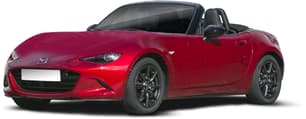
It's not often a car is elevated to 'icon' status, cars like the VW Beetle, Porsche 911, Toyota LandCruiser or Ford Mustang - but the Mazda MX-5 has quietly been the best choice for keen drivers who don't want to break the bank with a big sticker price or costly maintenance.
The ND MX-5 has been around since 2015, and while it’s been praised as a return to the original, simple formula of the NA MX-5 from the late 80s and early 90s, it’s getting close to a decade old.
So, a little refresh with some new tech and a mechanical tweak is here to make the roadster feel like a playful pup once more.
And what better place to test that out than a combination of the winding roads of the Adelaide Hills wine region, paired nicely with a main course of track driving at The Bend Motorsport Park?
Toyota’s smallest SUV has picked up a few subtle styling and tech tweaks as part of a minor model year update.
It goes up against familiar names like the Nissan Juke and Kia Stonic in the light SUV segment, as well as hybrid rivals like the newer Suzuki Fronx and Chery Tiggo 4.
But does the Toyota still have enough appeal this late in its life cycle?
Ultimately, the design and tech changes to the ND MX-5 will be the biggest day-to-day advantages of the updated model, because the mechanical changes don’t make themselves hugely obvious on the road.
If you’re into track days, it’s still a satisfying car to hustle as fast as you can, but it’s at its most accessible on winding roads for weekend drives, where the new differential and track DSC mode won’t come into play as much.
But in a world where accessible sports cars are becoming a rarity, there’s only one rear-drive convertible with a sticker price appropriate for financial mortals, and it’s a pretty damn good thing that it’s the ND MX-5.
Note: CarsGuide attended this event as a guest of the manufacturer, with travel, accommodation and meals provided.
The Toyota Yaris Cross Urban is a city-savvy SUV that’s easy to park, nimble in traffic, and relatively fun to drive. It’s cute as a button on the outside, but the cabin doesn’t quite match the price, and some of the tech feels a little behind the times compared to rivals. The hybrid powertrain definitely earns it points but is it worth the jump in price over its rivals? A hesitant yes, because who doesn't like efficiency? But it needs a cabin upgrade to stay truly competitive in our market.
Alright, we’ve all seen ND MX-5s, you don’t need me to tell you about its proportions or explain its design elements to you in too much detail, so I’ll give you the headline changes.
At the front and rear are new pairs of LED head- and tail-lights, respectively… obviously, fitting into the spaces the old ones took up.
The DRLS and reverse lights have come off the bumpers for both, and are now part of the main lights at each end - no more DRLs in the front bumper, and the reverse lights have been replaced by reflectors.
There are new 17-inch wheel designs for the base and GT trim levels, too, and there’s a new colour - Aero Grey.
Inside, it’s a shame that the tan Nappa leather interior of the RF Black Roof can’t be had in a manual roadster, because it’s gorgeous, even though the inside still looks refined enough for a simple sports car in its base cloth trim.
The Yaris Cross is genuinely adorable. It's compact enough to slip into tight city spaces, yet proportioned well enough that it never looks toy-like. Its upright stance gives it a bit of attitude, and the chunky black plastic moulding around the base actually works in its favour, adding a tough, almost adventurous edge.
The rear is one of its best angles, with crisp LED tail-lights and a clean, sculpted shape that gives it more presence than you’d expect from something this small.
Inside, though, things don’t climb to the same heights. There’s a lot of hard plastic throughout, and while the synthetic leather and cloth upholstery looks decent, it doesn't elevate the space. The tech is well positioned and the layout is tidy, making it a pleasant cabin overall but there’s an unmistakable sense of 'nice, but not quite enough,' especially given what you’re paying.
One thing Mazda has significantly changed for the ND is the multimedia screen, now a larger 8.8-inch touchscreen running Mazda’s updated software.
It brings the MX-5 up to date without sacrificing simplicity and makes it a little easier to use. The physical dial and buttons for controlling the screen also remain. The USB-C ports are also new.
Oh, and the MX-5 is the first Mazda model to get Connected Services, which is coming to other Mazda models eventually.
Connected Services allows owners to find, lock, and get alerts for their cars from a phone app, even letting them set curfews to notify them if the car is started during certain hours.
Aside from that, another small tweak is the simplified instrument cluster, which aims to be easier to read even when the roof is open and the sun is bright.
The cabin isn’t built to be plush, it’s built for ‘Jinba Ittai’, Mazda’s philosophy that applies most strongly to the MX-5 which means ‘horse and rider as one’.
And trust me, you feel one with the horse- er, car, when there’s not ample room to move. It’s not restrictive, but it’s cosy.
Everything’s quite well-placed and it’s not busy with buttons or features in here though, it’s made for focusing on driving.
One downside is the lack of storage, not even a glovebox, in front of the passenger, and the central storage spot under where your elbow sits is tiny, good for keeping the key fob snug though. Also, the cupholders are able to be removed or swapped between the space behind your elbow, or above the passenger footwell.
There’s also a small storage space between the seats behind where your elbow would sit, though it’s tricky to access while you’re driving.
Then there’s the boot, which is usable for a small amount of luggage at 130 litres in the Roadster and 127L in the RF hardtop.
Finally, as a huge positive, probably the biggest advantage of the ND over any other convertible is how easy it is to open and close the roof in the Roadster. You can do it single-handed, which is great if it starts raining and you’re at a traffic light or able to quickly pull over.
The RF hard-top has a switch that automatically opens and closes the roof section.
The front row is easily the best place to be, with the most comfort and creature comforts on offer. Only the driver’s seat is powered, and the controls not the most intuitive to use but both seats have decent padding and single-level heating that makes longer drives more bearable. The new centre armrest feels like an afterthought as it sits too low and tilts too far forward to be truly comfortable.
The rear row is cosy and realistically suited to two adults. Behind my driving position (I’m 168cm), there’s enough knee and head room, but the smaller door apertures may make loading child seats a bit fiddly. You do get two ISOFIX points and three top tethers, but two seats will fit best. My nine-year old loves how light the doors are to open and close, though he isn’t thrilled about the taller windowsills as they block a fair bit of the outside world for smaller passengers.
Storage is better than expected up front with a mid-size glovebox, a storage tray underneath the air-vents and climate control panel. There are two cupholders and drink bottle holders in each row and the rear also gets a single map pocket.
The 8.0-inch media display shares is straightforward to use and the touchscreen is responsive. It’s easy to connect to the wireless Apple CarPlay and it maintained a steady connection all week. The basic sound system can sound a bit tinny when you’re full-pelt on the highway but is otherwise sufficient.
You miss out on a wireless charging pad on all grade levels, which I really missed, and the only two USB-C ports in the car are up front.
Boot space depends on the drivetrain. The front-wheel-drive Urban has a decent 390L, which feels competitive. The Stonic can take 352L. The all-wheel-drive version offers less at 314L, which is smaller than the Juke (422L).
In real-world terms, groceries, school gear and my son’s extracurricular chaos all fit without complaint. You also get an adjustable boot floor, a temporary spare wheel (not always a given in a hybrid) and a powered tailgate for extra convenience.
Getting into an MX-5 is now a little more expensive, with the base manual Roadster up by $2310 to now start from $41,520 before on-roads.
The top-spec soft-top GT RS is now $51,640, or $2800 more than before.
Pricing for the RF hard top is also similarly bumped up, a base manual costing $46,250, and the most expensive GT RS at $56,140.
There’s also a Black Roof edition which comes with tan Nappa leather inside, but that’s only available in an automatic RF, which is possibly the biggest downside to the 2024 range.
Base models get cloth seats, while GT and GT RS models get heated leather seats. The GT RS also comes with stiffer Bilstein dampers, Brembo front brakes, a bracing strut between the front suspension towers and a DSC-Track mode. The difference there is noticeable, so it's worth the extra spend for the more keen driver.
The higher overall costs bring updated tech, a new 8.8-inch touchscreen and a new limited slip-diff in manual versions, plus tweaked mechanicals like improved acceleration response and lower steering rack friction.
But they do look a tiny bit different too.
The Yaris Cross range spans four grades, and for this review we’re in the second-from-the-top Urban. The GR Sport is technically the flagship, but the Urban feels like the smarter pick as it carries most of the premium features without climbing the price ladder just to wear a GR badge. A badge that doesn’t mean as much here as it does elsewhere in Toyota’s line-up. A GR performance hot hatch it is not.
Priced from $36,930 before on-road costs, the Urban front-wheel drive is pricier than some of its closest rivals. The Nissan Juke Ti is a touch pricier at $37,940, while the Kia Stonic GT-Line is a much cheaper $32,480. Both competitors also offer rear USB ports, and the Juke adds dual 12.3-inch displays and a much larger boot, so the premium you’re paying here really comes down to the Urban’s hybrid powertrain.
Other hybrid rivals include the freshly launched Suzuki Fronx (from $28,990) or the slightly larger Chery Tiggo 4 hybrid ($34,990 drive-away for the Ultimate).
This model-year update brings a modest bump in equipment, now including wireless Apple CarPlay and Android Auto, cloud-based satellite navigation, an armrest up front and illuminated vanity mirrors.
The practical bits are covered with a powered driver’s seat, keyless entry, push-button start, a temporary spare tyre, single-zone climate control, and a powered tailgate.
A few bougie touches like the cloth/synthetic leather mix and heated front seats help lift the cabin, too.
Tech-wise, you get an 8.0-inch touchscreen, a 7.0-inch digital instrument cluster, a coloured head-up display, digital radio, Bluetooth, steering-wheel controls and a 360-degree camera system. A standard audio setup rounds things out.
All up, it’s got enough but only just.
Up front, you get one option: a 2.0-litre naturally aspirated four-pot. It makes 135kW and 205Nm, and it’s a delightful little thing, driving the rear wheels only - as it should.
It used to be that the smaller 1.5-litre engine was the more revvy, keen option, rest its soul, but Mazda updated the 2.0-litre to be more eager (and deliver more power) at high revs and basically made the little 1.5-litre redundant.
Anyway, you can have it with a six-speed manual in any variant, or a six-speed automatic in GT guise if you find manual gearboxes difficult or a hassle.
All Yaris Cross variants share the same 1.5-litre three-cylinder hybrid setup, producing 85kW of power combined and 120Nm of torque from the petrol engine. Toyota does not provide combined torque figures for its hybrid powertrains.
On paper, those numbers look a bit anaemic but in practice the hybrid system does a good job of masking the low torque. Around town, it feels livelier than you’d expect, with that electric assist giving it just enough punch to feel almost spritely off the line.
Our test car is the front-wheel-drive version, but you can opt for all-wheel drive for a couple of grand extra.
Compared with rivals, the Yaris Cross lands in an interesting middle ground. The Nissan Juke makes 84kW of power, while the Kia Stonic sits at 74kW.
And that’s really where the critique lands, because while the Yaris Cross feels zippy and eager at low speeds thanks to the hybrid boost, once you’re outside the city the torque deficit becomes harder to ignore. Overtaking and keeping up to speed aren’t the real issues - it’s more that the engine starts to whine like it’s under a bit of duress when you ask for more.
Mazda says the MX-5 uses 6.8L/100km as a manual Roadster, or 7.0L/100km with an automatic gearbox. Or, in the heavier RF 6.9L for a manual and 7.2L for auto.
Not great for a tiny car like this, but pretty good for a sports car!
It’s got a 45-litre fuel tank, takes premium 95 RON or higher, and while it should hypothetically be able to travel more than 600km with its on-paper claims, expect fuel use to sit closer to 8.0L/100km if you’re driving it anything like it deserves.
The Urban FWD has an impressively low claimed combined fuel consumption of 3.8L/100km, and with its 36L fuel tank, you’re looking at a theoretical driving range of up to 950km, which isn't bad for an urban trawler. In real-world use, including longer highway trips and everyday city errands, I averaged 4.4L/100km, which is still very efficient.
By comparison, the Nissan Juke Ti uses 5.8L/100km with a 46L tank, while the Kia Stonic GT-Line sits at 5.4L/100km with 45L. The Chery Tiggo 4 Hybrid uses 5.4L as well.
The Yaris Cross not only sips fuel but makes the most of its smaller tank, which means the hybrid powertrain wins this round.
It feels like every motoring journo under the sun (literally if the roof is off) owns or has owned an MX-5 of some sort.
And the first time you drive one, you might understand why.
If you spend your days testing and driving a bunch of different cars that aim to be many things at once, it’s refreshing to drive something that aims to be one: fun.
That’s it, the MX-5 feels like it was built to be fun. Not for convenience, not for power, certainly not for the school run.
And fortunately its simplicity remains with this update. All Mazda has done to change the way it drives is attempt to improve the rear limited-slip differential and improve the steering a little by reducing friction in the rack, as well as improve throttle response.
Has any of that changed the way it feels to drive on-road? No, not massively, but the ND was already such a delight that Mazda could have kept this update to purely design and interior tech changes and it would have still been one of the best-value buys around in terms of fun.
The MX-5 still feels relatively softly sprung while still being a dynamic and communicative sports car that’s engaging to drive even at low speeds, and rewarding (or frustrating) to drive fast.
On tight, winding roads, the MX-5 is at home, its soft suspension keeps you humble with its shifting weight and its relatively meagre outputs keep your licence safe.
In fact, despite being slightly compromised as a daily drive, the MX-5 is still plenty of fun even in traffic, there’s something about the satisfying click as the shifter slips into gear, or the little rev matches heading back down through the cogs when approaching a red light.
The 2.0-litre four-pot is a keen unit, and the six-speed manual is light and easy to work with, plus its steering is light without sacrificing road surface feedback - that feedback can quickly turn into cabin noise on a coarse highway which could become a little irritating on a long trip.
But the MX-5 can still be plenty of fun on track, where you’re more likely to get the most out of its new limited-slip differential and Track DSC mode.
It’s equally frustrating and satisfying to hustle the MX-5 around the East Circuit at The Bend in South Australia, where the track is twisty, busy, and unforgiving. Get it wrong, and the MX-5 lurches or slides to let you know you’ve made an error.
Get it right, however, and the little roadster glides through the corners, camber changes and even over apex kerbs smoothly and carrying impressive speed.
Plus, the electronic assistance won’t usually kick-in until you really need it, a welcome change from cars that are constantly trying to keep you from having fun behind the wheel.
Power delivery is crisp and punctual, and while the engine can sound strained when you push it on the open road, it rarely translates into any noticeable lag. You won’t feel deep reserves of power, but there’s enough to keep up with traffic and overtake when needed.
Ride comfort is better than expected, with suspension that soaks up smaller bumps, and it corners confidently without too much body roll. The cabin picks up a lot of road noise, and there’s an annoying electric whine at lower speeds but it's easily drowned out with music.
Steering is on the lighter side but remains responsive, making the Yaris Cross genuinely easy to drive. It would make a great first car, or a simple, fuss-free choice for an older couple.
Visibility is excellent, giving you a solid sense of the car’s dimensions which is a big help when manoeuvring and that's even before you look at the 360-degree camera feed. Add in the small 10.6m turning circle, and parking this SUV is almost effortless. If you struggle, it’s not the car’s fault.
The ND MX-5 actually scored five stars with ANCAP back in 2016, even though its score has now expired. It’s not obvious how well it would fare under newer, stricter tests, given the small car’s lack of advanced driver assistance - not that that’s a bad thing in the case of a sports car.
Still, for a two-seat convertible, the MX-5 has a decent list of kit to keep you safe including front and side airbags, alerts for driver attention, blind spots, lane departure and rear-cross traffic, parking sensors and a reversing camera, belt pretensioners and side-impact door beams and even automatic Smart City Brake Support.
The Yaris Cross has a maximum five-star ANCAP safety rating from testing done in 2021 and has eight airbags, including a front centre airbag, which is good for the segment. It scores well across individual assessment sections with an 86 per cent for both adult and child protection, 78 per cent for vulnerable road user and 82 per cent for its safety assist systems.
There is a healthy suite of safety equipment including lane keeping aid, traffic sign recognition, blind-spot monitoring, safe exit assist, rear cross-traffic alert, and auto high beam. There are also seatbelt reminders (audio/visual), two ISOFIX child-seat mounts and three top-tether anchor points.
The adaptive cruise control is fairly well calibrated, although it can occasionally slow down too much on a corner, and none of the safety systems are annoyingly intrusive. A welcome change as it’s been a while since I’ve been in a car that hasn’t yelled at me.
The Yaris Cross has autonomous emergency braking (AEB) with car, pedestrian, cyclist and intersection detection which is operational from 10 - 180km/h but it is more common to see this feature operate from 5.0km/h.
Mazda’s five-year, unlimited km warranty covers the MX-5, including five years of roadside assist.
Servicing costs are pre-set, with intervals every 12 months or 15,000km up to seven years or 105,000km. They cost between $447 and $638, averaging out at about $544 each.
The Yaris Cross comes with Toyota’s five-year/unlimited kilometre warranty, extendable up to seven years if you stick to servicing at a Toyota centre. That makes it more competitive as the Nissan Juke offers a 10-year term and the Kia Stonic comes standard with seven years.
Servicing is also straightforward and affordable, thanks to Toyota’s five-year capped-price program, with each service costing just $255. Intervals are well spaced at every 12 months or 15,000km, whichever comes first.