What's the difference?
A good car in its own right, the Mazda CX-60 has nevertheless been one of the most disappointing new-model releases of recent times.
After the ongoing critical and commercial success of the CX-5, its somewhat larger premium mid-sized sibling should have been a slam dunk, with BMW-evoking longitudinal drivetrain and terrific in-line six-cylinder engine choices, as well as the surprisingly far-sighted option of a plug-in hybrid electric vehicle (PHEV) from the get-go.
Yet, when launched internationally during 2022, the quality, packaging and performance were overshadowed by high prices, a jarring ride, odd handling and erratic transmission calibration, particularly in the aforementioned PHEV.
Now there’s been a wholesale re-think surrounding all of the CX-60’s objectionable systems, as well as a new, lower priced grade, among other updates.
Is it the SUV Mazda should have launched in the first place? Let’s find out.
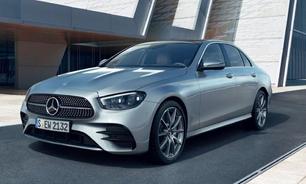
It might not be as tribal as Ford vs Holden, but there’s a rivalry between BMW and Mercedes-Benz that occasionally becomes more obvious - the launch of the new Mercedes E-Class only months after the BMW 5 Series being one of those times.
But Mercedes has done something different. Instead of multiple variants and electric cars under the E-Class banner, Australia gets just one, the E300.
Is it enough to tackle the big Bavarian sedan in the sales race? We attended the Australian launch just north of Melbourne to find out.
Have no doubts. The MY25 version of the CX-60 is the SUV that Mazda should have launched in Australia in 2023.
It fulfils the promise of its sophisticated specification, builds on the extensive dynamic abilities of previous models, and now provides a compelling – and unique – choice for medium-SUV buyers who do not need an extended seven-seater.
It may still looks a bit daggy from some angles outside, and we’d like a little bit less suspension noise on the inside, but the CX-60 should now be on Australian family-car shortlists.
Note: CarsGuide attended this event as a guest of the manufacturer, with accommodation and meals provided.
The E-Class is stacked with kit, looks great, and is an effective and comfortable way to get around in built-up areas or across the countryside.
While it’s not the most dynamically engaging - it’s pipped by its Bavarian rival there - it offers more comfort-oriented features than most, and the cabin is a pleasant place to spend a day driving.
If you're disposed towards stumping up the asking price, the extra outlay for the 'Plus Package' will probably be most relevant to you if you’re covering long distances due to the Airmatic suspension.
Otherwise, even a simple-spec E300 provides a step up from what you might expect from an executive sedan.
Note: CarsGuide attended this event as a guest of the manufacturer, with accommodation and meals provided.
If you’re searching for something new in the looks department for the CX-60, you won’t find it, since this is essentially the same car as last year’s model from the outside. Except there’s a new beige colour option.
Which means the same long-bonnet/cab-backward silhouette remains, along with the corporate wing-motif grille, hunched-over styling (that looks awkward from some angles) and short rear overhangs.
Still, the overall effect remains modern, clean and distinct from the nearly-identical and very closely-related CX-70, CX-80 and CX-90 further up the Mazda food chain.
Note that the CX-60 is usefully larger than the CX-5, with the former coming in at 4740mm long, 1890mm wide, 1675mm tall and 2870mm in wheelbase length, compared to the latter’s 4575mm, 1845mm, 1680mm and 2700mm dimensions respectively.
Which, of course, elevates it from an interior point of view.
Evolution rather than revolution is obvious when it comes to the E-Class’ styling, but that’s in Mercedes’ best interests, because it’s still a good-looking thing, and being a bit subtle is warranted in the executive sedan game.
The biggest changes come in the headlights and tail-lights. Up-front there are now more than one million pixels in the LED headlights, which have adaptive high beam as standard and are more connected to the grille via black trim, as has been seen in EQ electric models.
Underneath, the bumper now features an AMG-style 'A-wing' apron as part of the 'AMG Line' exterior package as standard. A set of 20-inch AMG alloys are also included.
To the rear, and the digital tail-lights feature a Mercedes-Benz star motif, making its lighting signature now more recognisable from behind.
The German Rainbow is well-represented with mostly shades of grey, black, or white available, though 'Verde Silver Metallic' is a slightly retro green, and 'Nautic Blue Metallic' is a subtle and classy tone.
The daring ‘Manufaktur’ shade of 'Patagonia Red Metallic' is a $2500 option, as is 'Opalite White Bright' while 'Alpine Grey Solid' is $2900.
Like the exterior, the changes for the MY25 CX-60 are pretty much under the skin, with improved noise/vibration and harshness-quelling measures to quieten things down more.
And an exhaust-sound enhancer through the audio system to liven things up if you desire.
Representing the aforementioned $10K saving over the previous entry-level Evolve, the Pure does possess less opulent trim and (nice) cloth seat fabrics, but otherwise the CX-60 does present a larger-than-usual cabin environment compared to smaller medium-sized SUVs.
But fans of big, showy screens may be underwhelmed.
The dash is elegant but somewhat old-fashioned, especially compared to, say, the latest BMW X3’s dazzling displays. It feels like a hangover from last decade’s CX-9.
Yet there’s no denying how satisfyingly easy and logical most of it is, from the super-clear, electronic instrumentation to the simple and effective climate control layout, while the iDrive-style rotary controller means less time with eyes off the road. Safe, intuitive ergonomics. Thank you, Mazda.
Additionally, there’s a quality solidness to the fit and finish that elevates the social-climbing Mazda beyond what a CX-5 could achieve.
All the essentials are also well thought out, from storage and vision out to ventilation and, not least of all, space and seat support, especially when sat on over long distances.
That also carries over to the expansive back-seat environment, with air vents, USB ports, lighting, cupholders and grab handles. The CX-60 is an SUV that a family could grow into without it feeling excessive.
Is this ‘big-medium’ or ‘small-large’ sized?
From the boot’s perspective, either fits, and is one of the reasons why you might consider stepping up to a CX-60. The floor is low, wide, flat and easy to load, as well as beautifully finished.
The 40/20/40 split fold backrests can be folded remotely via Mazda’s Karakuri function, boosting capacity from 477 litres (VDA) to 1726L, while the in-line six-cylinder models have a space-saver spare wheel underneath, leaving PHEV owners with an inadequate tyre repair kit.
Inside, the E-Class should feel familiar to anyone who’s spent time in a recent Benz, though the Superscreen might be the main point of difference. It’s an immediately comfortable place, though, with a relatively visually busy cabin.
The seats and their adjustability mean most drivers and passengers, regardless of height and size, should feel supported (and ideally relaxed), while touch-points are mostly either leather upholstery or digital screens.
The steering wheel, also seen in plenty of other Mercedes models, is a bit of a let-down, however, with its haptic touch pads on a slightly busy two-tier layout. This millennial found it irritating, surely too will the usually older E-Class buyer.
There are a few other small annoyances, one being that the MBUX Assistant sometimes won’t hear a command, or that not everything seems to be able to be controlled by it. The climate control vent positions are electrically adjustable to certain pre-sets through the menu, but the MBUX Assistant isn’t able to do this for you.
And while the driver display and central multimedia screen are fairly user-friendly, it’s not always immediately apparent what the quickest way to find some information or a setting is.
Our test car was fitted with the 'Plus Package', which means four-zone climate control available to the rear seats, which my 180cm-tall self found spacious with plenty of headroom, kneeroom, and even a fair bit of room under the driver’s seat.
Behind the rear seats, there’s a generous 540 litres of boot space, exactly the same capacity as the previous generation E-Class.
Starting from $50,240 (all prices are before on-road costs) for the Pure grade in G40e six-cylinder turbo-petrol-powered guise that should account for nearly half of all sales, this is the new base grade.
It has lost some items compared to the previous entry-level Evolve, but remains a decently-equipped proposition.
Included are LED headlights with auto high beams, keyless entry/start, dual-zone climate control, cloth trim, a 10.25-inch display/touchscreen, a 360-degree view camera, front/rear parking sensors, satellite navigation, wireless Apple CarPlay/Android Auto, DAB+ digital radio, eight-speaker audio, vehicle-exit warning, folding/heated exterior mirrors and 18-inch alloy wheels.
There’s also a decent level of advanced driver-assist safety technology like autonomous emergency braking, lane-support systems and adaptive cruise control. More on those later.
Moving up to the Evolve from $55,240 scores you a larger touchscreen (12.3-inches), ground-view monitor, artificial leather trim, a wireless charger, powered tailgate and a few extra safety features like front-cross traffic alert and a driver monitor, while the new Touring grade from $58,240 gains leather trim and heated/powered front seats with driver’s side memory.
Climbing up to the GT from $64,240 adds adaptive LED headlights, panoramic sunroof, Bose 12-speaker audio upgrade, a powered/heated steering wheel, hands-free tailgate operation, heated rear seats, glossier trim and 20-inch alloys, while the Azami from $68,440 includes Nappa leather, glitzier finishes, vented front seats and more.
Speaking of more, $2000 extra buys you a white interior with unique woven textiles (Azami Takumi pack) or a sportier tan colour edition (Azami SP pack).
Want more economy? Diesel adds another $2000 while going for the PHEV powertrain ups that by a whopping $11,050 across all grades. We’re grateful for the choice, Mazda.
These certainly sound expensive for a mid-sized SUV from Japan, but the CX-60 is considerably larger and roomier than, say, a CX-5 or Toyota RAV4, and possesses a level of sophisticated engineering that puts it in Audi Q5, BMW X3, Lexus NX, Mercedes-Benz GLC and Volvo XC60 territory – and the least-expensive of these kicks off from upwards of $20,000 more, depending on spec.
As a sub-luxury premium proposition, then, the CX-60 lives in a sort of no-man’s land. Yet its styling certainly reveals where Mazda’s aspirations lie.
While cross-shopping the E-Class and a BMW 5 Series would normally be relatively easy, the Merc’s $131,500 starting price, before on-road costs, puts it plenty north of the base 520i, the only petrol one available, at $114,900. The electric i5 eDrive40 starts from $155,900, more than $20K over the Mercedes.
But the E-Class is stacked with features as standard, and while there are a couple of option packs, Mercedes Australia has tried to streamline the most popular features and specifications into the E300.
Its $131,500 price gets you a tech-heavy sedan with Merc’s latest 'MBUX' system housed in a visually impressive, if perhaps unnecessary, 'Superscreen' dash.
The dual-screen set-up incorporates a main 14.4-inch central multimedia touchscreen and a 12.3-inch display for the passenger, allowing the driver to keep, for example, a map visible while a passenger sorts out media or comfort settings.
The system is also designed to avoid taking users through sub-menus, though can be bypassed by wireless Android Auto or Apple CarPlay.
It also features a selfie camera mounted to the dash, which is disabled for the Australian market at present. Mercedes-Benz Australia hopes to change this soon.
Mercedes also plans to allow the MBUX system to learn what settings and functions will be most useful to the driver under certain conditions, but currently users are able to manually create so-called ‘Routines’ such as setting the climate control and seats to warm up if it’s below a certain temperature, and can even adjust the ambient lighting to a warmer colour.
More automation comes in the brand’s MBUX ‘Hey Mercedes’ system, which can now respond to commands without the driver needing to say “Hey Mercedes”.
Heated and vented front seats, leather upholstery, wireless phone charging, and a 17-speaker Burmester sound system with Dolby Atmos 4D sound are also standard - the latter being a clever feature that positions different elements of the audio, usually music, to give a 360-degree feeling, as well as turning bassier tones into a physical vibration via “tactile transducers” in each front seat’s backrest. Good for bassline junkies, then (apologies to Mr. Rascal).
With the $9400 'Plus Package', the E-Class also comes with 'Airmatic' suspension and rear-axle steering (which I’ll touch more on later), power-closing doors, 'Urban Guard' to monitor your vehicle while it’s parked, an illuminated grille up front, a more capable version of the MBUX 'Interior Assistant', four-zone climate control and Mercedes’ 'Digital Light' function, which uses the more-than one-million pixels in the headlights to project onto the road or surface in front of you when turning the car off or in driving situations to alert road users of potential danger.
A $6200 'Energising Package' adds multicontour front seats with comfort headrests, upgraded climate controls with 'Air-Balance' and fragrances, upgraded seat heating with armrest heating for the front occupants and heated seats for the rear.
For now, the base engine is the 209kW/450Nm G40e, a 3.3-litre turbo-petrol ‘six’ delivering the sort of healthy power figures that late-model Commodore and Falcon buyers would appreciate.
There’s also the 187kW/550Nm D50e turbo-diesel version, for extra pulling power and economy, and we’re getting into premium Euro territory here, because both offer a 48-volt, mild-hybrid system, employing a small electric motor located behind the engine to boost torque yet cut fuel consumption and CO2 emissions.
Mazda says new motor control and clutch slip control software facilitates “…smoother transitions as the electric motor is activated and deactivated”. We hope so!
Last but not least, there’s the 241kW/500Nm P50e plug-in hybrid electric vehicle powertrain, combining the familiar 2.5-litre four-cylinder petrol engine with a larger, 129kW electric motor powered by a 17.8kWh Lithium ion battery. The latter allows up to 76km of pure-electric driving, and can be recharged either by regenerative braking when driving or plugged into a Type 2 port.
All three engines use a revised eight-speed, wet multi-plate-clutch automatic transmission, still driving the rear or, as traction and/or performance needs arise, all four wheels.
Yep, this is essentially a rear-drive-biased family SUV, with a sophisticated double wishbone front and multi-link rear suspension set-up to keep everything in line.
So, what’s changed underneath compared to last year’s CX-60?
Among the modifications are stiffer dampers and softer rear springs to address ride-comfort issues with the old car; relocated front knuckle mounts; altered rear axle bushes and the removal of the rear anti-roll bar for more stable control; shorter rear bump stops for greater suspension travel; an extra joint in the steering column quells vibrations while updated software improves steering feel and electronic stability control operation. The goal is for noticeably smoother, comfier and more linear dynamics.
Result? To find out how much better or worse Mazda’s latest mid-sized SUV is, we drove the it in a variety of conditions, from the push-and-shove of Melbourne’s bumper-to-bumper peak-hour traffic, to a series of demanding emergency-swerve and multi-speed ride and handling test manoeuvres at the legendary Lang Lang proving ground that shaped so many of our iconic Holdens.
More on that a bit later on.
This lone E-Class variant is powered by a turbocharged 2.0-litre engine pumping out 190kW and 400Nm, assisted by a 48-volt battery system. Under EQ boost, an extra 17kW and 205Nm is available for a short time.
It’s hooked up to a nine-speed auto that drives the rear wheels, and it’s all pretty traditional… for 2024, that is.
Mercedes says the E300 is able to hit 100km/h in a respectable 6.3 seconds.
One area where the Mazda did not need fixing is in its fuel economy.
All of the CX-60’s powertrains are rated at Euro 5.
Officially, the G40e 3.3-litre petrol averages 7.4L/100km, on the combined cycle, and emits 174 grams per kilometre of CO2. Urban and Extra Urban numbers are 9.9L/100km and 6.0L/100km.
Fitted with a 58L petrol tank, expect an average range of around 780km. And it will run on standard 91 RON unleaded petrol to boot.
Moving on to the D50e 3.3L diesel, it manages an impressive 5.0L/100km, for a CO2 figure of 132g/km, resulting in a range average of about 1160km. Its Urban/Extra Urban figures are 5.5/4.7L/100km respectively.
And, finally, there’s the P50e 2.5L PHEV, offering a theoretical 2.1L/100km, for a CO2 figure of just 49g/km, for an unlikely range average of 2380km from its 50L tank, though on 95 RON premium unleaded brew.
Out in the real world, and mostly driven harder than a typical owner might, the trip computer in the PHEV showed low sevens, while the diesel displayed mid-eights and the petrol high nines, which aren’t too bad at all.
Mercedes claims the E-Class drinks 7.2L/100km on the combined cycle, and though we weren’t able to test that properly at the pump on the launch program, the trip computer showed up to 9.4L/100km after some quite spirited driving, which gradually averaged out to about 8.6L/100km in the afternoon once some more calm, E-Class-appropriate distance had been covered.
With its 50L fuel tank, the E-Class should theoretically be able to cover 694km on a single tank if the 7.2L/100km is achieved, though realistically it would be much less, 550-600km depending on driving style.
This is the acid test. Does the CX-60 drive like a Mazda should?
In the engine department, definitely.
The changes that Mazda has made to the transmission calibration means that it no longer hunts indecisively between ratios like it used to, and that results in smoother shifts as well as a more relaxed driving experience.
And that's across the range, whether we're talking about the six-cylinder diesel or petrol, or four-pot plug-in hybrid. And the latter brings the biggest surprise, because the changes made to the gearbox have resulted in a much more pleasant car around town, with no more shunting or jerky movements to contend with.
And then there's the ride, which is palpably softer than before. The suspension is significantly more pliable and comfortable as a consequence, offering better bump absorption, improved control at speed and basically just a more refined experience. We tried several of the Lang Lang Proving Ground’s rough-road tests, which the CX-60 sailed over without any of the hard jarring of the previous model, which Mazda helpfully provided for back-to-back assessments.
So, how does all that translate in everyday driving?
Well, the latest CX-60 is way more comfortable to ride in across the board, it handles and corners with greater control and linearity, seems quieter and it's just a suppler experience overall.
As there was so much that was good with the original CX-60 anyway, including muscular performance from the inline six-cylinder turbos, impressive high-speed stability and exceptional body control through fast turns, the modifications for 2025 do much to elevate an already good thing.
So, it's a win-win situation. If you are in the market for a sub-premium, mid-sized SUV with performance and space, as well as newfound comfort and sophistication, you can do a lot worse than check out the CX-60. It is that much better than before.
While the E-Class has taken fairly sizeable steps in terms of its tech, it remains a fairly traditional car from behind the wheel, save for a few small changes like its mild-hybrid system and rear-wheel steering.
It’s still a petrol-powered rear-drive sedan, and it feels built more for eating up highway kilometres than it does tackling twisty turns. But that’s okay, because it will still do the latter.
Comfort is the main focus, clearly, for the E300, and the big Merc does it well. We weren’t offered a car without Airmatic air suspension on the launch, but the E-Class doesn’t seem like it would be particularly rough without it.
With it, however, large bumps and minor road annoyances only make their way into the cabin in the sense that you’re aware of them, but not bothered by them.
That slight dulling of feedback does extend to the steering wheel however, where, despite the rear-wheel steering making the car more nimble, the feedback to the driver is less encouraging of eager driving.
While 190kW on paper doesn’t seem like enough, the E-Class makes do with its meagre engine quite well - and even though it can seem like it’s working a bit too hard at times, the E-Class’ natural state isn’t responding to a planted foot, so it’s unlikely to be a daily bother.
Engine noise, as well as wind and road noise are suitably dulled by the E300’s NVH fitout, too.
The tuning of its drive modes, in particular Comfort and Sport, seemed well-judged on our drive loop, with the option to set the 'Individual' mode to a custom configuration, most elements in Comfort while the drivetrain is set to Sport is particularly helpful when on gentle, high-speed country roads.
If you do start to approach the limits of the big sedan’s capability, it’ll let you know fairly early on. The heavy E-Class isn’t prone to sudden lurching or poor handling, and isn’t much phased by mid-corner bumps.
It’s not as dynamically engaging as some rivals, particularly the 5 Series, but it does appear to be a better provider of cross-country comfort.
Thankfully, the CX-60 isn’t frugal on safety, scoring a five-star ANCAP crash-test rating back in 2022.
An extensive suite of driver-assist tech is standard, and it’s all nicely tuned for Australian roads, unlike some Chinese vehicles we’ve tested and that’s an important distinction.
These include autonomous emergency braking (AEB) for cyclists, pedestrians and in back-over situations, blind-spot monitoring, vehicle exit warning, lane-departure, lane-assist and emergency lane-keep tech, driver attention alert, forward obstruction warning, rear cross-traffic alert, turn-across traffic and adaptive cruise control tech with full stop/go.
However, front cross-traffic alert, 'Cruising/Traffic Support' (that assists drivers in slow-moving traffic with automatic accelerator, brake and steering control to maintain a safe distance from the vehicle ahead) and see-through view front camera are not in the Pure. Adaptive LED headlights and drowsy driver alert only start from GT up, while emergency brake assist is for the Azami grade only.
All CX-60s include front and rear parking sensors, surround-view cameras, tyre pressure monitors and traffic sign recognition.
The AEB for vulnerable road users works between 10km/h and 80km/h, and the AEB car-to-car operates between 4km/h and 160km/h.
Likewise, the extensive lane-support systems work between 55km/h and 195km/h.
There are also eight airbags, as well as a trio of child-seat restraining top-tether points fitted, along with two ISOFIX latches in the rear outboard seats.
ANCAP hasn’t had a go at crash-testing the E-Class yet, and it might not given the relatively small number that will be sold here compared to volume models, but Mercedes’ track record with safety is pretty stellar, and it’s extremely rare for a Mercedes to not cop the maximum five stars.
In the new E300 there are 11 airbags - plenty for a sedan. Mercedes lists front airbags, knee bags and pelvic/thorax airbags for the driver and front passenger, side bags for the rear and a front centre airbag.
It also comes with a fairly extensive suite of safety tech, including the usual ABS, lane-keep assist, blind spot monitoring and surround-view parking cameras.
But on top of that, there’s also ‘Evasive Steering Assist’, semi-automated cruise control with sign recognition, distance assist for following leading vehicles and can even project light arrows onto the road if leaving your lane, when 'Digital Lights' are optioned.
The E-Class also has a function if an imminent collision is detected in which it can, depending on the type of collision, take occupant protection measures. In the case of a side-on collision, the E-Class can “move an affected front occupant towards the centre of the car” before impact.
Mazda could also do a bit better with its warranty nowadays, since its five-year/unlimited kilometre warranty and roadside assistance is decidedly average.
Service intervals are at 12 months or every 15,000km, while a fixed-price service scheme is available, starting from $463 per service depending on powertrain. That’s for the petrol. The diesels start from $500 while the PHEVs commence from $435.
The E-Class comes with Mercedes’ fairly industry standard five-year, unlimited kilometre warranty, though Mercedes-Benz Australia was unable to confirm exact servicing pricing on the launch.
It does however list pricing for the E-Class on its website for a three-service pack at $3325, four at $4535, and five at $6800, the latter averaging out to $1360 each.
This could increase with the new generation car, and Mercedes doesn’t list estimated serving pricing for new E-Classes yet in its booking system (I checked with one of the test cars).
Servicing intervals are every 12 months or 25,000km, whichever comes first.