What's the difference?
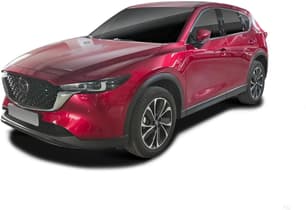
This week I’m family testing the new Mazda CX-5 Akera G35 and the top-grade model is well-equipped. But it faces stiff competition in the mid-sized SUV market with rivals like the Honda CR-V, Kia Sportage and the ever-popular Toyota RAV4.
How do you remain competitive in one of the most popular SUV classes? My family of three is finding out for you!
Mahindra has long been known as a tractor brand and a maker of rugged utes and SUVs, but it’s now dipping its toe into Australia's light SUV segment.
The MY25 Mahindra XUV 3XO marks a further shift in the Indian brand’s local focus from rural and regional to metropolitan.
This tiny SUV goes up against some stiff competition including the Chery Tiggo 4, Hyundai Venue and Kia Stonic, among others. However, the Indian-made SUV holds a specific title that’ll make it stand out among the crowd.
The Mazda CX-5 Akera G35 offers small families a great host of premium features, as well as solid power and handling – all in an attractive package. But the emphasis here is on ‘small’ families because it’s on the compact side for a mid-sized SUV and its rivals offer more back seat space.
Its ongoing costs are reasonable and I enjoy driving it, so it gets a 7.6/10 from me.
My son calls out the back seat as a bit squishy but he otherwise likes it. He gives it a 7.0/10
The fact this is Australia’s cheapest SUV is a massive feat for the Indian brand. It also has so much standard kit so this is even more surprising.
In many ways the XUV 3XO is better to drive than its rivals. The three-cylinder turbo engine has plenty of charm and moves this car along with ease, the car feels confident and composed out on the open road, and there aren’t any bings and bongs from intrusive safety systems.
However, things aren’t perfect. I wish the steering column offered reach adjustment, the steering feel wasn’t so inconsistent and the lane-keep assist wasn’t so hands-on.
If you can overlook these quibbles, this tiny Mahindra is an outstanding value buy if you’re considering a first new car.
Note: CarsGuide attended this event as a guest of the manufacturer, with meals provided.
The Mazda CX-5 hasn’t seen much change to the exterior other than a more horizontally-styled grille. It’s a medium SUV with a handsome kerb-side presence thanks to its full-suite of LED lights and 19-inch alloy wheels. It’s an inoffensive design that should appeal to a wide audience.
The interior looks premium with the brown Nappa leather upholstery and black leather trims. The plethora of soft-touchpoints throughout reinforces that the Akera is the top model.
There's one thing I really like about Mazda and that's how it manages to balance the traditional with the new. The cabin is a seamless blend of the two elements.
The instrument panel features a 7.0-inch digital display but still has analogue dials. There's a 10.25-inch multimedia system on the dash but still a bunch of control buttons and dials to press. The gear shifter is coupled with an electric brake, the sunroof is coupled with a manual blind. You get it.
This duology between high-end tech and traditional elements makes the interior feel up to date but very accessible.
From outside it’s surprising just how small this SUV is. At just under four metres long, the XUV 3XO is shorter than a Mazda2, for example.
The reason for this is because in India there are tax breaks for vehicles under four metres long. The Ford EcoSport, sans the tailgate-mounted spare wheel, was another SUV that met this requirement.
As a result of being so short, this has made the rear overhang virtually non-existent. It’s a strange look, especially because the bonnet is so much longer.
Even though the XUV 3XO is based on the KGM Tivoli (formerly SsangYong Tivoli), which was briefly sold in Australia, you’d be hard-pressed to find visual similarities. The former looks more modern from the outside and has more visual interest with the chunky wheel-arch cladding and diamond motifs.
At the front it’s hard to not see the face of a sad panda. The LED headlights are big and plunge down the front fascia, giving it a droopy and sleepy appearance. It’s not helped by the thick black bar connecting them.
Around the side the diamond-cut alloy wheels are a nice touch, along with the contrast black-painted roof on this AX7L tester.
The rear end is a little on the flat side, though the badging is tasteful. I’m not a fan of the full-width LED light bar, however, as it’s an overdone design cue now.
Inside I appreciate the mix of both old-school and new-school. There are dual 10.25-inch screens ahead of the driver for the digital instrument cluster and touchscreen multimedia system, as well as plenty of physical buttons and knobs for shortcuts and the climate controls.
For such an affordable car I’m surprised how many soft-touch finishes there are in this car. In the AX7L you get an extended use of synthetic leather on the door cards and dashboard, which helps make for a pseudo-premium look and feel.
However, one of my biggest gripes with the XUV 3XO interior is the amount of glossy piano black. It’s on the dashboard, centre console, door cards and even the steering wheel.
This may look cool and slick when you pick the car up from the dealer, but it shows up dust quickly and then gets scratched when you try to wipe it clean. Our tester had fewer than 1000km on the odometer and the centre console was already scratched to the wazoo.
Despite sitting in the medium-SUV segment, the CX-5 is on the compact side for cabin space and front passengers benefit the most in terms of leg- and headroom.
Back rowers get a decent amount of headroom but legroom is squishy and my legs press into the back of the drivers seat when its in my driving position, and I'm only 168cm tall!
My seven-year old complained about his space and asked Dad to slide forward for more room, which is something to consider if you have gangly teenagers.
The seat comfort sits on the firmer side for both rows and the electric front seats are narrower and shorter than I like for long journeys but for the A to B trips, they’re comfy enough.
Only the driver’s seat gets powered lumbar support but they both have heat and ventilation functions.
Individual storage is average for this class with a smallish glove box and middle console that has a removable shelf. A deep utility tray, which houses the wireless charging pad and a 12-volt port, sits in front of the gearshift and there are two cupholders in the centre console.
Each door has a shallow storage bin and the front doors also get a skinny drink bottle holder.
For individual storage in the rear, you get map pockets on the rear of the front seats and two cupholders in a fold-down armrest.
The armrest also houses two USB-A ports and the heat function buttons for the outboard seats and it's because of this positioning and the narrower width of the seat, that the back row feels more suited to two, rather than three passengers.
The technology on the whole is easy enough to use but the rotary dial operation of the multimedia system is a bit annoying to access while on the go.
The wireless Apple CarPlay and Android Auto is a great feature and means one less cable to worry about but the built-in satellite navigation with 10-year map updates is a highlight. The head-up display pulls through the nav directions, too, which is always handy.
You also get two USB-C ports and another 12-volt outlet up front, so everyone should be sorted for charging.
The boot features a powered tailgate which is a handy family feature and a temporary spare tyre is located underneath the level floor.
You get 438L of storage capacity with the second row seat upright, which is plenty for my errands and grocery shop. That jumps up to 1340L (VDA) when the rear seats are folded.
The cargo cover attaches to the lid, meaning it stays out of the way when you're loading stuff into the boot.
Given this SUV is tiny, I’m blown away at how much interior space it has.
Up front both the seats are manually adjustable, which is to be expected at this price point. Despite this, they’re still comfortable and offer an elevated driving position which is something SUV buyers seek.
In front of the driver is a leather-wrapped steering wheel which feels nice in the hand. While it offers tilt adjustment, it disappointingly doesn’t have reach adjustment. This is frustrating if you’ve got long legs and short arms, like myself.
The 10.25-inch digital instrument cluster has an overall dark and minimal look, but you can cycle through a range of informative views. There’s even one that allows you to display a full-width map.
Moving across, the 10.25-inch touchscreen multimedia system appears to be snappy enough. I’ve experienced fewer glitches in this car than in previous Mahindras I’ve driven.
I like the physical shortcut buttons underneath the touchscreen because it allows you to jump around to key sub-menus a lot easier.
As standard there’s both wired and wireless Apple CarPlay and Android Auto connectivity. With my iPhone 15 Pro Max the connection was flawless and only dropped out during known interference points.
This AX7L spec comes with a seven-speaker Harman Kardon sound system which gets this tiny car booming. The subwoofer in the boot is so powerful it almost feels like overkill.
In terms of storage up front there are two cupholders, big door pockets with two bottle holders, a centre armrest and a cooled glovebox. There’s also a USB-A port, 65W USB-C port and a wireless charger.
Moving to the second row there’s a decent amount of space for adults to sit behind adults. You could easily fit two adults along the rear bench, though pushing it to three would get a little too squishy.
Second-row amenities include rear air vents, a USB-C port with a phone slot, as well as a fold-down armrest with cupholders.
At the back there’s a manual tailgate, which is to be expected at this price point, but finding the trigger to open it is a little tricky. It’s a small button that’s hidden away.
Once the tailgate is open, the amount of boot space on offer is generous. Mahindra claims there’s 364 litres with the rear seats upright.
While the loading lip is high, the boot area is deep and wide. Unfortunately there’s no cargo cover available as standard, which means you’ll need to be careful what you boot back there.
Under the boot floor there’s a space-saver spare wheel, which is fantastic peace of mind if you travel long distances away from tyre repair shops.
There are five grades for the CX-5. The top two grades, the GT SP and Akera, have a choice between a 2.5-litre petrol or turbo-petrol engine.
On test here is the flagship Akera grade with the 2.5L turbo-petrol engine. Before on-road costs, it is priced at $55,000. That positions it towards the top-end of its competitors with the Kia Sportage GT-Line AWD coming in at $49,920 (MSRP) and the Toyota RAV4 sliding in just under at $54,410 (MSRP). However, the new Honda CR-V is more expensive by $2.0K.
The Akera is well-equipped with premium features like a sunroof, heated and ventilated front seats, heated rear outboard seats, a heated steering wheel and brown Nappa leather upholstery.
The technology is well-rounded with a 10-speaker Bose sound system, wireless Apple CarPlay and Android Auto and a 10.25-inch multimedia system with built-in satellite navigation (including map updates for 10 years).
There are some good practical features, too, like a powered tailgate, keyless entry and start as well as powered lumbar support on the drivers' seat.
The Mahindra XUV 3XO is currently Australia’s cheapest SUV.
There’s a caveat, however, because this is thanks to an introductory pricing offer that ends on August 31.
Currently though, the XUV 3XO line-up starts at $23,490 drive-away for the AX5L and extends to $26,490 drive-away for the AX7L, as tested here.
After August 31 the drive-away asking price of both of these XUV 3XO variants is set to go up by $500. This will see it share the title of Australia’s cheapest SUV with the Chery Tiggo 4.
Despite the affordable asking price, Mahindra has packed a lot of standard kit. This includes 16-inch diamond-cut alloy wheels, 10.25-inch digital instrument cluster, 10.25-inch touchscreen multimedia system, wireless Apple CarPlay and Android Auto, six-speaker sound system, dual-zone climate control, electric park brake with auto-hold, keyless entry and push-button start, leather steering wheel and gear selector and black cloth upholstery.
For an extra $3000 in the AX7L you get a black-painted contrast roof, 17-inch diamond-cut alloy wheels, LED front fog lights, panoramic glass sunroof, seven-speaker Harman Kardon sound system, 65W USB-C charger, cooled glovebox, black synthetic leather upholstery, and synthetic leather on dashboard and door trims.
The Akera is an all-wheel drive with a six-speed auto transmission and our test model has the 2.5-litre four-cylinder turbo-petrol engine that produces a maximum power output of 170kW and 420Nm of torque. The turbo ensures it never feels sluggish, even when you’re hitting hills.
All variants are powered by a 1.2-litre turbocharged three-cylinder petrol engine that produces 82kW of power and 200Nm of torque.
This is mated to an Aisin-sourced six-speed torque-converter automatic transmission with drive sent to the front wheels only.
The compromise for getting extra power from the turbo is fuel efficiency takes a hit.
The official combined fuel cycle figure is 8.2L/100km but my real-world usage came out at 10L/100km. That’s after mostly open-road driving this week, too, so it’s a bit thirstier than I was expecting.
Based on the combined cycle number and the 58L fuel tank, expect a driving range of around 784km – which is still great for the odd road trip.
Mahindra claims the XUV 3XO has a combined urban/extra-urban fuel consumption of 6.5L/100km.
During my testing, however, I achieved a real-world fuel consumption figure closer to 6.2L/100km, which is better than the claim.
All XUV 3XOs have a 42L fuel tank that Mahindra claims can take 91 RON regular unleaded petrol, but 95 RON premium unleaded petrol is recommended.
With my as-tested fuel consumption this means the theoretical driving range from a full tank of petrol is around 675km.
The Akera turbo-petrol delivers a decent well of power to dip into and it feels peppy in most situations. Even when you’re overtaking or getting up to speed you don’t feel like you’re nearing the bottom of the power barrel.
Steering is responsive and the car is agile when you tackle narrow car parks or streets. However, you still get some roll in corners which my passengers felt more than I did.
The cabin is quiet, even at higher speeds and the suspension is firm enough that you feel the bumps but you’re not jostled about. The ride comfort is still good.
I’ve said it before but I love parking medium SUVs because their size is so forgiving in a car park! The Akera is no different and it’s especially easy thanks to the ultra-clear 360-degree view camera system. You also get front and rear parking sensors to help out when needed.
Behind the wheel, the Mahindra XUV 3XO feels refreshingly old-school.
The 1.2-litre turbocharged petrol engine does seem like it would be underpowered, but in practice it’s completely adequate. Peak torque comes on tap from 1500rpm so it doesn’t have to work too hard at all.
It’s fun hearing the noise the three-banger makes when under the boil. You don’t hear it much though because the revs are typically kept down low to minimise fuel consumption.
The key reason why this car feels old-school is the six-speed torque-converter automatic transmission. It’s nice to not drive an affordable everyday car that doesn’t have a continuously variable transmission (CVT) or dual-clutch automatic transmission as these can suck the life out of a car or be jerky.
The gear shifts in the Mahindra are sometimes docile, but are smooth and measured. It just operates like a regular car that doesn’t require you to rewire your brain to drive.
There are three drive modes to choose from. They’re hilariously called ‘Zip’, ‘Zap’ and ‘Zoom’. These correspond to Eco, Normal and Sport, respectively.
While I did eventually get used to driving in the ‘Zap’ mode, it felt a little snoozy at points, taking a beat or two to get the car accelerating with traffic. You can sidestep this with ‘Zoom’ which feels much more lively. If you activate cruise control or restart the car, though, it defaults back to ‘Zap’.
The XUV 3XO makes the most sense in the city where you’re able to use its tiny exterior dimensions to navigate tight urban carparks and narrow laneways with ease.
It almost became a challenge for myself to find the smallest parking spot I could slot this car into. As standard on this AX7L there are front and rear parking sensors, as well as a surround-view camera system.
Where this car is let down, however, is the steering feel. It’s incredibly light at low speeds and then as the speed builds it gets very heavy. So much so it feels like I’m getting an arm workout.
Unlike some of its rivals, there is still a semblance of feel through the steering wheel, but this drastic change from light to heavy steering weight is too stark. Somewhere in the middle would be nice please.
Something Mahindra is very good at is developing a comfortable suspension tune and this car is no different. It can tackle pimply urban road imperfections and speed bumps with no problems whatsoever.
Out on the open road this car surprised me. It feels like a much larger car than it actually is and doesn’t get blown around in the lane like small cars can.
The three-cylinder turbo-petrol engine remains confident at higher speeds, though if you frequently travel up hills the fuel consumption will skyrocket. There’s also a bit of road noise, which is to be expected when a car is this small.
For the most part the suspension does a fantastic job at rounding out road imperfections, but bigger bumps or potholes can unsettle the car. It’s not helped by the larger 17-inch alloy wheels.
Out in the twisties this tiny SUV is fairly agile. It’s not the sportiest thing out there by a vast degree, but it remains planted and solid even when pushed into harder corners.
Lastly, another point that makes this car feel old-school is the lack of obtrusive bings and bongs from the safety systems.
Sure the parking sensors can be a little over-the-top and the traffic sign recognition takes over the entire digital instrument cluster when it picks up a new speed limit, but having no driver attention monitor and intelligent speed limit assist is refreshing.
It’s not all perfect however as the lane-keep assist is too hands on for my liking. It activates from 60km/h and is quite overt in how it directs the car through bends.
The Akera has a bunch of safety features that are always great to have on a family SUV and a standout is the 360-degree camera system. It’s super clear and well-positioned on the dashboard for easy viewing.
Standard safety items on the Akera include LED daytime running lights, blind-spot monitoring, rear cross-traffic alert, lane departure alert, lane keeping aid, a head-up display, adaptive cruise control, a driver fatigue monitor, AEB, forward collision warning and traffic sign recognition.
The previously awarded five-star ANCAP safety rating for this model has just expired and models built from January 2024 onwards are thus unrated. The CX-5 features six airbags, which is a little low for a family car but I like how many safety features this has overall.
There are ISOFIX child seat mounts on the rear outboard seat positions and three top-tethers but two seats will fit best. Front occupant comfort is compromised when a 0-4 rearward facing child seat is installed.
The Mahindra XUV 3XO hasn’t been crash-tested by ANCAP just yet.
It was, however, tested by India’s less stringent Bharat NCAP testing authority in 2024 and received a five-star rating.
Standard safety equipment includes autonomous emergency braking (AEB), lane departure warning, lane-keep assist, lane centring, adaptive cruise control, traffic sign recognition, rear parking sensors and a reversing camera.
Stepping up to the AX7L gets you a surround-view camera, blind-spot view camera, and front parking sensors.
Notably absent from the entire range is rear cross-traffic alert, as well as a traditional blind-spot monitor that alerts you when a car is in your blind-spot.
There are two ISOFIX points on the two outboard rear seats, as well as three top-tether child seat anchorages across the rear bench.
The CX-5 comes with a five-year/unlimited km warranty, which is average cover for the class but some of its rivals offer longer terms.
There is a five-year, or up to 75,000km capped-price servicing program and services average $423 per workshop visit, which is competitive.
Servicing intervals are reasonable at every 12 months or 15,000km, whichever occurs first.
Like other current Mahindra models, the XUV 3XO is covered by a seven-year, 150,000km warranty with seven years of roadside assistance.
Logbook servicing is required every 12 months or 15,000km, whichever comes first, though the first service is required after 12 months or 10,000km.
The first seven services are capped-price and total $1994. This averages out to $284.85 per service.