What's the difference?
Lotus - it’s one of the most iconic names in the history of automobiles and was once Great Britain’s answer to Ferrari - on the road and the Formula One circuit.
But that was a long time ago, in the 1960s and ‘70s. Since then Lotus has been on a rollercoaster ride through various owners who put in various levels of investment, resulting in various degrees of success.
But through it all, Lotus has stayed true to the ethos of company founder, Colin Chapman - ‘simplify, then add lightness.’ It’s obviously a playful saying, but it spoke to the core elements of Lotus cars, agility and driving purity.
Lotus rarely worried about big, powerful engines and instead focused on creating the best-handling cars.
That was the past, though, because Lotus Cars is now owned by Geely, the Chinese automotive giant that also counts Volvo, Polestar, Zeekr and more under its control.
Geely’s vision for Lotus is very different to what has come before, with a future focused on building electric SUVs and sedans; such as the already released Eletre and Emeya.
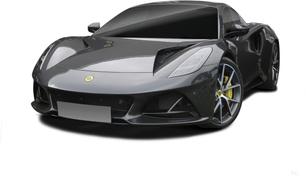
All of which is a very long way to get us to the car we’re actually testing - the MY24 Lotus Emira.
This is the last petrol-powered sports car from Lotus, and while it has been available already with a V6 engine, it has recently arrived with a Mercedes-AMG four-cylinder turbo.
Given its place in the grand scheme of things, the Emira not only needs to live up to the legacy of the iconic models that came before it, but also needs to lay the foundations for the brand’s electric future. Which is a lot of pressure for one car to carry…
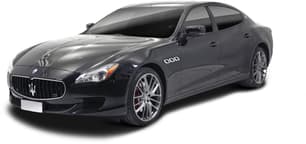
Maserati's Quattroporte is part of a dying breed. A decade or so ago, the European manufacturers took a huge amount of pride in their range-topping big luxury sedans, cars you can either drive or be driven in, bristling with the latest technology.
In 2015, all we hear about are the range-topping SUVs from those makers, with cars like the S-Class and 7 Series fading slowly into irrelevance.
While by no means low-tech, the Maserati Quattroporte takes the high style route, focussing on a luxurious interior with that handmade feel.
If this really is the final petrol-powered Lotus sports car then it’s a sad day for fans of the brand and its history. But it’s also worthy of celebration because they have made a car that is genuinely impressive.
It may not be perfect, and it will have to fight hard to lure buyers away from Porsche, BMW and co. but for anyone who enjoys a dynamic, engaging and incredibly fun sports car the Emira should be on your short-list.
Alternatively, if you’ve always dreamed of buying a traditional Lotus sports car and haven’t got around to it until now, this is your last chance so don’t wait too long.
Beauty is way more than skin-deep in the Quattroporte and while the 330 doesn't have the punch of the S, it's hardly that much slower. Maserati reasons you will want to spend the $25,000 saved on options, concentrating on the Italian craftsmanship rather than the outright performance available in the V8 or the efficiency of the less aurally attractive diesel.
As with any car of this type, you've got to want one in the first place, but for a big, beautiful sedan, there's nothing as good looking this side of an Aston Rapide. The Quattroporte 330 does nothing to dim the allure of Modena's big mover and, if you're that way inclined, nobody on the outside will ever know.
As mentioned earlier, the Emira is meant to be a bridge between Lotus’ past and its future - combining elements of its previous sports cars while also laying the visual tone for future models.
The design does a good job of that, because there’s clearly a link to the Exige and Evora of the recent past, but it also takes heavy influence from the limited-run Evija hypercar.
In turn, this new design language will spread out across the all-new electric models, including the Eletre SUV and Emeya sports sedan.
The styling does a good job of making the Emira look and feel like a premium sports car, without the need for any flashy wings or similar. It’s a simple, compact but stylish sports car.
This trend carries over to the cabin, with the more premium finish with the carpets, leather and good quality switchgear, as well as the digital instrument display and 10.2-inch multimedia touchscreen. Gone are the days of a Lotus having a minimalist, exposed aluminium interior with only the bare necessities. This is a proper premium sports car.
Long, flowing lines mark out the Maserati as something quite different to its German, British and Japanese competition. This Quattroporte has increased in every dimension but the lines cover its size beautifully.
Big wheels, long wheelbase, low ride but it still looks like a sedan rather than pretending to be a coupe.
The elegance of the lines is complemented by a distinct lack of bling – there's little in the way of chrome work or shouty details. There's plenty satin finishes available and the beautiful paint, while available in pretty much any colour you like, is best kept to a restrained, deep hue. Or silver.
The cabin will doubtless age well. Classic shapes house a fairly conventional but hugely comfortable cabin. The front seats have heaps of adjustment and are large but supportive. Naturally, the leather is soft and supple.
The central screen isn't the dominant feature, like a 50-inch LCD screen in a small living room while buttons are kept to a minimum.
The rear seat is sensationally comfortable, with hectares of available space and a seat comfortable for either lounging or working.
In terms of size and price, the Emira lines up almost directly against the Porsche 718 Cayman, which is a formidable adversary, but also the likes of the BMW M4. Notably, it’s significantly cheaper than anything offered by the likes of Ferrari, Maserati and McLaren.
The MY24 Emira range begins at $155,900, before on-road costs, for the entry-level model but stretches up to just over $206,000 for the i4 First Edition we’re driving here.
The Emira has been designed as a more premium and luxurious sports car compared to the stripped down and basic models of the recent past, such as the Elise and Exige, so it gets a range of items not previously seen on many Lotus models - such as carpeted floors and the choice of either Nappa leather or Alcantara trim.
Also included are LED headlights, climate control, keyless ignition, cruise control, rear parking sensors, a premium sound system and a 12.3-inch digital dashboard.
It's worth noting the MY25 Emira line-up was detailed earlier this month. You can read all about it, including pricing and specification, here.
The current Quattroporte has been with us now for a couple of years in diesel and petrol turbocharged V6s and turbo V8 forms.
The 330BHP uses the same, Ferrari-built V6 but detuned to 'just' 330 bhp. The price has been detuned too, dropping $25,000 from the V6 S's entry price to kick off at $210,000.
Maserati 330bhp benefits from an overall specification improvement across the range, landing in your garage with a ten-speaker stereo with USB and Bluetooth, power everything, dual-zone climate control, keyless entry and start, front and rear parking sensors with reversing camera, cruise control, sat-nav, auto headlights and wipers, double glazed windows and an interior covered in leather and wood.
Later in the year, your Quattroporte will be available with a new silk trim from Zegna
Only very occasionally does it become clear that Maserati is part of the Fiat Group and that moment comes when you use the 7.0-inch central screen in the dash.
eight-speed ZF automatic transmission
The software is based on the group's UConnect and it isn't great. It's not bad, but it feels its age (however, it's much better than the system on the Gran Turismo), needing a lot more work or a quick surrender to Apple's CarPlay or Android Auto.
Once you work your way through the weird menus, it's fine to use and is miles ahead of the not-much-cheaper Lexus LS unit which is almost unusable.
Sound from the ten speaker stereo is crystal clear and the phone performance is also very good.
The MY24 Emria first arrived in Australia with the same Toyota-built 3.5-litre V6 engine Lotus had used in recent years in the likes of the Exige and Evora. However, this new AMG-built four-cylinder provides a fresh choice.
Importantly, while built by Mercedes-AMG, the tuning and calibration is unique to Lotus (but we’ll discuss that in detail later).
That means the 2.0-litre unit is tuned to make 268kW/430Nm, which is less potent than AMG offers in its 310kW/500Nm A45 hot hatch, although a more potent version of the four-pot Emira has been confirmed for MY25.
The engine is paired with an eight-speed dual-clutch auto transmission, which you can either leave in automatic mode or change gear manually using the F1-style paddles on the steering wheel.
Like the S, the 330bhp is powered by Maserati's twin turbo 3.0 litre V6, made with more than a dash of Ferrari involvement. As the name suggests, it produces 243kW and a chunky 500Nm. With just under two tonnes to shift, the ubiquitous eight-speed ZF automatic transmission whisks the Quattroporte 100km/h in 5.6 seconds, only half a second down on the 301kW V6 S.
Maserati claims 9.1L/100km on the combined cycle (with the help of stop-start), which seems reasonable given our figure of 10.8L/100km, which we got a with a mix of city and highway running as well as a very enthusiastic blast through some secret back roads.
Just to be clear right up front, the score for this section is heavily biased towards the car's dynamic attributes, because frankly the Emira can be hard to live with at times.
At urban speeds the powertrain feels like a dog straining at its leash, which can result in some awkward moments.
For example, there were multiple instances where the gearbox refused to change out of second gear when exiting a roundabout, letting the engine rev quite hard and likely annoying my neighbours.
Some of the gear changes can be clunky too, not slotting as sweetly as they should on a sports car costing in excess of $200K.
However, you forget all that when you get the Emira onto a stretch of twisty, winding open road (preferably smooth tarmac) and move it from the 'Tour' to 'Sports' mode. The car comes alive, revving hard, shifting with precision and feeling like a puppy running through a field in pure ecstasy.
Like the great cars to come before it from Lotus, the Emira is in its element carving through corners. The steering is incredibly accurate, direct and responsive - as good as any sports car I’ve driven in recent memory. The chassis responds to those inputs with immediacy, too, feeling nimble, agile and engaging.
This is Lotus at its best.
Just a few hundred metres behind the wheel is all it will take to convince you the Maserati belongs in the same class as the competition. It's incredibly quiet – courtesy of the acoustic double glazing – and all occupants benefit from supreme comfort.
While the 330 is 58kW down on the full fat V6, you won't really miss them. There's a fat torque curve, with all 500Nm available from 1750 to 5000rpm, meaning easy progress for the 5.2 metre sedan.
The Quattroporte has two sport buttons to choose from – one looks after the drivetrain and exhaust valving while the second stiffens up the Skyhook suspension.
With the first sport button pressed, you get a more lively throttle, sharper shifts and a glorious noise from the exhausts, although they are a long way from your ears.
It's still a fast car, with strong acceleration from standstill and in the gears, the power as linear as you like with no real turbo lag and a most un-turbo noise to go with the performance.
The only dynamic problem is the electric steering – it seems to get confused between your inputs and feedback from the road, the tyres feeling like they're 'nibbling' an uneven surface, tweaking the wheel in your hands.
The assistance is a little spotty, too, unexpectedly changing weight. It's just a bit weird. In normal driving, you'll never notice it.
Sports cars are not typically beacons of safety, not that they’re dangerous but the priority is speed, not complex and often weighty safety technology. It’s part of the reason these types of cars are rarely crash tested by the authorities, as is the case of the Emira.
But this more modern and luxury focused Lotus comes with a raft of safety items including adaptive cruise control, an anti-collision system (Lotus-speak for AEB), fatigue alert, road sign information, a vehicle speed limiter, lane departure warning, rear cross-traffic alert and lane change assist.
Six airbags, ABS, stability and traction controls, brake assist, blind spot monitoring and rear cross traffic alert.
There is no ANCAP or EuroNCAP safety rating for the Quattroporte.