What's the difference?
Once upon a time Queensland was the home of Aussie camper-trailer manufacturing and companies, such as Lifestyle Camper Trailers, were pumping out camper after camper to happy customers. But then came the imports and the price that people were willing to pay for the product dropped very quickly. Many local companies succumbed and just went out of business, others started importing their own and some innovated, developing new products; Lifestyle did two of the three.
Today Lifestyle only builds light-weight, heavily off-road caravans which it calls Hypercampers and others would call a hybrid caravan, because it takes some elements of a camper-trailer and others of a caravan. It has four models, one of which is built in China in a factory the company part-owns. The other three, including the Reconn R2, which I’m testing, is built in Queensland.
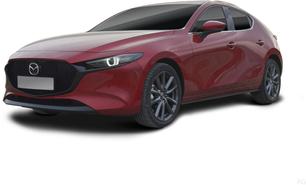
Half a decade on, the current-generation Mazda 3 has weathered a world of change.
Cheap cars have vanished. Electric vehicles are commonplace and the small car class it belongs to has been decimated by SUVs. Big names like the Ford Focus, Holden Astra and Mitsubishi Lancer are history.
But while it looks identical to the car unveiled at the 2018 LA Auto Show, today’s Mazda 3 has also evolved, albeit gently.
Let’s see how competitive the latest and improved (as well as more expensive) version is.
This is one of the campers that very finely straddles that line between camper-trailer and caravan. It’s light-weight and simple to use, even if (and mostly because) it lacks the wide-open comforts of a traditional caravan. It’s very capable, well-equipped and very well made.
If you do like to escape the great outdoors occasionally while camping (or someone you dearly love, does), this is well worth a look. It’ll follow you just about anywhere and your camp life will be better for it.
Given how effortlessly it traverses the mainstream and premium small car classes, the Mazda 3 might be the best value small car on the planet.
With racy styling, sports car handling, classy interior presentation and impressive, intelligent efficiency, there’s plenty to sink your teeth into here.
Poor rear vision, a dark back-seat area and smallish boot aside, it doesn’t have any glaring faults.
In a world overrun with SUVs, props to Mazda for evolving the small car so brilliantly to mask a half-decade of existence. Continuous improvements have made the 2024 G25 Evolve SP Vision an essential small car shortlist proposition, regardless of price.
The Reconn’s interior is interesting, as unlike most modern caravans, there’s not a lot of free space in here, thanks largely, to the height of the bed. It sits right at the top of the camper, like a second-storey mezzanine. To get in, you have to climb onto the dinette lounge, or use the fold-down step built into the base.
There is also a small dinette and lounge space with a folding table that’s comfortable enough for two to sit at ease and read or eat dinner, but I get the feeling Lifestyle doesn’t expect you to be spending the majority of your time in here – that’s not what this camper is about.
Above the dinette there’s cabinet space, while all the dinette seats lift up to reveal more storage areas. The dinette closest to the door has two drawers in it, to make accessing the storage easy.
If this floorplan isn’t for you, there are three other options. One features a pair of bunks, another an ensuite with shower and toilet. The third packs both the bunks and the ensuite all in, somehow – it’s not an overly large space.
There is a price to pay for all this quasi-coupe styling flair, and that’s a comparatively snug-feeling interior, though you’d never call it cramped.
Actually, the Mazda 3 is no less spacious than most of its competition in all but one area, with enough room even for 200cm drivers, along with sufficient shoulder width and ceiling height to match.
If you’re really tall, maybe that missing sunroof isn’t such a bad thing, after all.
Sat so low-down on cushy, enveloping front seats that offer plenty of comfort and support, this is the anti-SUV. Maybe Mazda should have called this the MX-3.
Sporty and spot-on, the driving position is a laid-back affair, with an emphasis on better ergonomics, as emphasised by the thoughtful placement of switchgear that’s all within easy reach, ahead of a beautifully flowing and layered dash. Proudly Japanese in flavour, it brings to mind functional minimalism.
Drilling into some of the 3’s finer interior details, the analogue-look digital instrumentation is super-legible, ultra-classy and gorgeously lit at night. As previously mentioned, the dials and surrounding air vents are reminiscent of the later Porsche 944 and 968.
It’s not just all for the sake of aesthetics, either.
Yes, it’s lovely, but the thinned-rim three-spoke steering wheel feels great to grip, with nifty little paddle shifters that are a delight to prod.
Same goes for the physical volume knob and climate-control buttons, sidestepping the need to get distracted and frustrated by virtual sub-menus.
And having a conventional gear lever with old-school Tiptronic-style shifts suits the 3’s athletic vibe.
Plus, forward vision is A-OK, ventilation is faultless, storage is better than you might expect, and the fit and finish is as good if not better than any of this 3’s German premium opponents.
Out back, the split-fold rear backrest is set at a comfortable angle, the cushion is well padded, and you’re provided with USB ports, air vents, and an armrest with two cupholders. More thoughtfulness.
But while knee room is fair, rear headroom isn’t great if you’re tall or wear a beehive, as the falling ceiling line reveals.
Vision out is limited by that rising window line and fat pillars. Getting in and out of the back requires some contortionist moves. And the small windows mean it can be gloomier in the back than a Smiths album.
Finally, at just 295 litres, the 3’s cargo capacity is disappointing. Sure, it eclipses the Corolla hatch’s 217L cubby, but other rivals are far larger back there.
At least the floor is wide and flat and there are 60/40-split backrests for cabin access for longer items.
Note that a space-saver spare wheel lurks underneath. Mazda argues there’s always the closely-related CX-30 if you need (slightly) more space (317L).
Meanwhile, at the other end of the 3…
I towed it behind a RAM 1500 Laramie, which was serious overkill for a trailer of this size and weight, but it did all the right things. Because it has an adjustable air-suspension underneath, its ride is quite compliant and soft and its height can be adjusted to suit the terrain, or even lowered to reduce air resistance.
Off-road, it posed little trouble, although the tracks we did were mild, at worst. It has no shortage of clearance (and can be dialled up further if you are short of it) and is fitted with a Cruisemaster DO35 off-road hitch.
One of its best off-road features, though, is the completely clean underside. There’s actually no plumbing, tanks, wiring or fittings under the floor or exposed to the elements, river crossings, dust or stones. The camper’s two tanks, batteries, pumps, electricals and plumbing are all contained within a compartment under the driver’s-side storage section. There’s even room in there for expansion – it’ll fit another water tank, another batteries and extra electrical gizmos easily.
Ask yourself. What do you want from a new small car?
Since the first Familia of the early 1960s, Mazda’s been at it constantly, through the 1300 and 323 eras and into the modern age of the 3.
The Hiroshima brand knows its stuff. Space, practicality, comfort, ease, reliability and affordability. But a small car has to offer more, specifically in the way it makes the owner feel.
That’s why, while the Focuses, Lancers, Astras and Pulsars are gone, the 3’s still here. And it isn’t just the lush visuals inside and out that are, well, sensory-rich.
As older Alfa Romeo owners know, there’s something special about an engine that sounds alive, and the moment you push the 3’s starter, it purrs into life. That’s the first clue.
Slot the refreshingly old-school lever into Drive, and the G25 leaps into action, and, if you need it to, will keep pulling forward strongly, engine buzzing, like it’s on a mission.
That describes the torquey urge of this big 2.5L four, paired perfectly with the sensibly-geared auto.
We miss Mazda’s magnificent manual immensely, but the 3’s instant response reflects its favourable circa-100kW/tonne power-to-weight ratio.
And, as we’ve harped on in the past, the twin-cam unit’s extra oomph beyond 4000rpm delivers muscular high-speed responses akin to a good turbo – or a great old-school Alfa. You can keep your laggy dual-clutch transmissions, Europe.
Now, sweet, smooth and speedy performance is one thing, but having the chassis tuned with precise and fluid steering for tactile handling, and confident roadholding, backed by nuanced driver-assist and traction controls, are another.
There is a consistent and unifying control to the 3’s linear and forgiving dynamics, reminiscent of past masters like the Focus (and today’s brilliant Peugeot 308) that makes it a joy to drive enthusiastically through fast corners, with the knowledge that it won’t suddenly snap-oversteer and bite an unalert driver back.
For a Mazda, the ride is quiet enough, but there is still some droning transmitted through the cabin, via the Bridgestone Turanza (215/45) tyres, on coarse-chip bitumen surfaces.
And while suspension comfort is pretty impressive for the most part, larger bumps reveal the torsion beam’s limitations, as the car can occasionally thud over them in a way that we remember the multi-link rear end wouldn’t.
Anyway, what we’re saying is that, overall, the 3 Evolve SP Vision is an immersive and interactive driving experience that is right up there with the best of them.
Brawny performance, exquisite agility and a refinement that, collectively, have eluded every small Mazda in living memory until this generation’s 2019 debut. This 3’s right on the money. Still.