What's the difference?
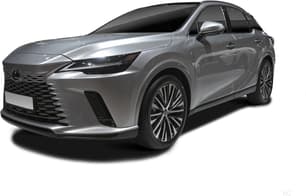
The Lexus RX500h F Sport Performance is the flagship model for the RX line-up.
It’s a deceptively large SUV and it has some serious heavy-hitting luxury rivals; like the BMW X5 xDrive45e and the Mercedes-Benz GLE450. The new RX has been revamped, restyled and retooled, so how does it compete?
Read on to see what’s new and what my little family of three thought of it!
For off-road adventurers, having the flexibility to be able to tow your camper-trailer off the beaten track, out bush and along a beach, opens up a whole new realm of fun and possibility – and that's why Jayco's Outback versions of the company's mainstream camper range have a growing legion of fans.
But the question for camper buyers is: should they upsize? Bigger is often better, but does that hold true in the camper-trailer world? Is a big camper actually worth the extra cash? And is it more difficult to tow?
We take the Jayco Swan Outback (from $30,490), the biggest camper in the Outback range, on a trip into the bush to answer these questions and plenty more.
The Lexus RX500h F Sport Performance certainly gave a solid driving performance this week. I was comfortable behind the wheel and enjoyed the luxe features up front. I feel that it's missing some luxe items in the back seat and some of the family storage options that other large SUVs can have but otherwise, it suited my family’s needs. The fuel efficiency was quite surprising for a hybrid, so this gets a 7.0/10 from me.
My son really liked the panoramic roof and his high seating position. So, he gives this an 8.0/10.
The Jayco Swan Outback is a nice solid camper, packed with features and suited for most trips away.
Sure, it's not the roomiest or flashiest camper around and – you've been warned – it is definitely not up to hard-core 4WDing, but it does come from a company responsible for sharply priced units with plenty of flexibility regarding optional add-ons so that counts for a lot.
Sometimes you can forget how many luxury items this car has because they've been sprinkled around too sparsely.
For example, front passengers definitely enjoy the most this car has to offer. The legroom and headroom are both great, while the luxe factors feature heavily with the heated and ventilated seats and heated steering wheel. It’s great that there is dual-climate control up front and ample individual storage on offer.
The driver has a lot of technology within easy reach – the 14-inch touchscreen multimedia system is simple to use and has built-in satellite navigation. You can pull the directions into the head-up display and there’s still a healthy mix of physical dials on display. The wireless Apple CarPlay was easy to connect to and there’s also wired Android Auto, Bluetooth connectivity and digital radio (which was good in the city, terrible in regional areas).
Front passengers are absolutely spoiled when it comes to charging options, too. You can choose between an USB-A port, three USB-C ports, 12-volt port and a wireless charging pad!
When I reviewed the smaller NX sibling, I struggled with the e-latch door handles but finally got used to them on this model (I even like them!). My six-year-old found them to be frustrating at times and if the groans from my family members are to be believed, they weren’t impressed either but I do think it came down to it being a ‘user’ issue!
The backseat is comfortable and perfect for my 168cm height but taller passengers may feel a little cosier. The seats are set in a stadium setting, which does make you feel like you’re teetering in corners but my son loved the high position.
You can comfortably fit a couple of child seats back there but it might be a squeeze for three. The wide door apertures do make it easy to fit a child seat and to bend down to buckle them in.
Individual storage is limited to just map pockets, two cupholders and skinny drink bottle holders in the doors. The amenities never quite make it to luxurious either but I did like seeing two USB-C ports and retractable sun blinds.
The boot space is decently sized at 612L but the aperture is sloped, which means you might struggle to fit some bulky items. It has a level load space and it’s easy to access the temporary spare tyre. The powered tailgate with kick-function is super quick and handy too.
Correct me if you reckon I'm wrong, but no camper-trailer from any company will ever be in the running for a 'Gorgeous Temporary Home' award. But that's part of this camper's appeal; it's highly practical and functional, not pretty and useless.
The forward bed is to the left as you step inside; the rear bed is to the right. Its kitchen is in front and to the right of the door as you enter the camper.
Interior height is a standard 2070mm and inside is spacious, but tempers will likely fray if all four adults and two kids are standing or sitting around inside at the same time. Hope for no rain.
The interior includes a four-burner stove, Dometic 95-litre fridge (Touring models get the 90-litre fridge), stainless-steel sink, dinette seat, table, club lounge, and the two beds plus the dinette-convertible bed.
If you can't find some places in which to stow away your gear in this Outback, then you're not looking hard enough.
The 'Ezi glide' pull-out drawers include room enough for your large pots, cutlery, kitchen gear and numerous other bits and pieces.
Interior lighting includes overhead LEDs for the dining/entertainment area and reading lights for the beds. There’s a fan for the beds.
My first thought when I drove this was that it doesn’t drive like a big car. It has nice sporty handling – it feels firmly positioned on the road and the steering is responsive.
There’s a definite sense of power but it’s lazy. You have to get firm with the accelerator but it performs well when you push it.
There’s an interesting duality at play here because, despite this, it’s not sluggish - I’m just as confident on the open-road as I am zipping across traffic in this.
The suspension is adaptive and feels springy. It handles cornering quite well but I’m not as firmly seated as I would like. My husband said the same from the passenger side.
The cabin is extremely quiet and peaceful until my kid gets into the car. Then it’s 20-questions in 20-seconds. But otherwise, the new active noise cancelling this model has, works.
I really love the 11m turning circle – parking this in a rat-warren car park was simple. The 360-degree view camera is easily in my top three for camera tech that I’ve used and I like how the car ‘disappears’ when you’re manoeuvring. It makes it easier to navigate a tight spot and not get distracted. Large SUVs can sometimes feel daunting to park but not this one.
Jayco campers are easy to tow and the Swan Outback is no different. It towed steady and stable – no worries – behind our long-termer 2019 2.0-litre four-cylinder bi-turbo Ford Everest 4WD (157kW/500Nm).
We did decent stretches of highway, country back-road and gravel track, deeply rutted in places, with no strife.
The extra length (305mm) over its top-tier stablemates – Hawk and Eagle – was hardly noticeable and only took a little adjustment and increased vigilance when turning in between trees on pinched bush tracks.
With a 130kg towball weight, it feels marginally livelier than Hawk (145kg) and Eagle (150kg), but nothing drastic – again, as long as the driver pays attention there's no issue.
Visibility back along both sides and over the top is good without need for towing mirrors.
The single-axle Swan Outback has a hot dip galvanised 'Endurance' chassis on Jayco’s 'JTech' coil-spring suspension with a little extra ground clearance over road-focussed Touring models. (Note: Jayco’s Outback models are made for dirt tracks and gravel roads, not 4WD-only tracks. They are not built for hard-core off-roading.)