What's the difference?
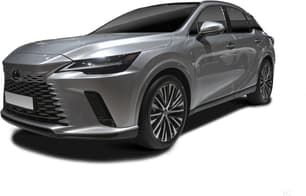
This is a BIG moment for the Lexus RX in Australia. And I'm not just referring to the spindle grille that adorns the front-end of this all-new model (though it too is almost commercially massive).
I'm talking more about the vehicle itself, and its importance to the Lexus brand here. The RX is one of Lexus' best sellers in Australia, and so this new one – which welcomes a new platform, new powertrain options and an all-new F Sport Performance trim level – is a big deal.
So, does it live up to the hype (and to its German competition)? Join me as we figure all that out ahead of the RX's debut here in early 2023.
Toyota Australia has made a raft of changes to the current LandCruiser 300 Series line-up as part of the latest round of upgrades, but even though the third-from-top Sahara gets a $1119 price rise, it doesn’t receive any updates.
In an increasingly competitive 4WD wagon market – where some car-makers are offering more standard features and tech at lower prices – has the venerable LandCruiser lost its lustre?
Read on.
The RX is a big SUV that doesn't always look, or drive, like one, and – in 500h guise especially – can put a smile on a driver's face, too.
Gone are the cabin quirks and the polarising design elements (well, mostly...), and in their place you'll find a solid, premium-feeling family offering without much in the way of drawbacks.
Note: CarsGuide attended this event as a guest of the manufacturer, with travel, accommodation and meals provided.
The Sahara version of the LandCruiser 300 is an impressive large 4WD wagon: refined and comfortable on-road, and it adequately retains that renowned ’Cruiser capability off-road.
It's supremely comfortable seven-seater and has heaps of potential as a touring vehicle, but while there's plenty to like about the Sahara spec, the updated seven-seat GXL (up $2029, to $110,820 excluding on-road costs) offers a more appealing compromise between price and features, especially now that it has a cool box in the centre console, four-zone climate control (previously two), and eight-way power-adjustable driver’s seat (with lumbar support), among other additions.
Honestly, the Lexus RX looks far more powerful, and cohesive, in the metal than it does in some photos, and in the right colour (we're fond on the deep black or the copper-rose hues), it looks downright fetching.
That Predator-shaped front-end is massive, but the way the Spindle grille kind of bleeds in the body work at the nose of the vehicle is a neat trick, and the whole design ethos gives the RX a sportier, more modern, and more intimidating, energy from almost every angle.
Perhaps the most clever element though is the wave-like design piece that links the rear window with the boot, somehow managing to shrink almost-five-metre SUV (visually, at least), and leaving the RX looking more sporty than hulking.
The door handles are cool, too. They’re fixed, and you just touch them to open the door, with a similar system used once inside to get out again.
Inside, Lexus has gone for a clean, modern-feeling space, and, thankfully, there isn't a Remote Touch trackpad in sight. Instead, you can choose between two screen sizes – 9.8- or 14.0-inch – which kind of dominate the dash, while the air-con controls are digital and interactive, too.
It must be said, though, some interior treatments feel far more special than others, and while Lexus in Australia isn't spilling on specifics for our market just yet, the top-spec models will almost certainly feel more plush than the cheaper ones.
The LandCruiser 300 Series in Sahara spec strikes a nice balance between practicality and prestige.
The Sahara's exterior has a distinctive LandCruiser appearance: chunky but modern-ish and ready to be fitted with Toyota genuine accessories or aftermarket gear.
The Sahara is 4980mm long (with a 2850mm wheelbase), 1980mm wide and 1955mm high. It has a listed kerb weight of 2620kg.
The Sahara’s exterior has that distinctive LandCruiser appearance, but modernised.
Otherwise, there are chrome exterior mirrors and door handles, and dynamic indicators front and rear that add to its overall quietly classy appearance.
The Silver Pearl premium paint on our test vehicle costs $675. Other paint choices include Glacier White, Ebony, Crystal Pearl, Graphite, Merlot Red, Eclipse Black and Dusty Bronze.
The entire RX range now rides on Lexus' GA-K platform, which is lighter (-40kg), more rigid, and offers a lower centre of gravity (-15mm) than the model it replaces.
The RX is wider (+25mm to 1920mm), lower (-10mm to 1695mm), but no longer (still 4890mm) than the outgoing model. But Lexus has lengthened the wheelbase (+60mm to 2850mm) to earn some extra backseat space for rear riders.
And it must be said, there is lots of room for backseat riders. Sitting behind my own 175cm driving position I had more than enough knee room, and enough head room, and a general feeling of airy spaciousness.
Elsewhere you get the usual practicality perks, with two cupholders up front, two more in the pull-down seat divider that splits the rear seat, and there are two ISOFIX attachment points in the back seat, too.
Charging is handled by a four USB ports, and depending on the trim/spec balance Lexus in Australia shoots for, you should at least find vents with temp controls for backseat riders, too.
Lexus is yet to confirm the luggage space specs for the new RX, but given it’s only being offered with five seats, and that there’s been no change to the vehicle’s length, you can expect a fair bit of room for bags in its auto-opening boot.
There's a sense of familiarity in the 300’s cabin – it's a functional yet premium space – and it's an easy cabin in which to become instantly comfortable.
The driver gets a heated and power-adjustable steering wheel, and ventilated, heated and power-adjustable seat (with power lumbar adjustment), while the front passenger gets a ventilated, heated and power-adjustable seat.
All seats are leather-accented, comfortable and there are soft-touch surfaces throughout the interior.
The Sahara's 12.3-inch multimedia touchscreen is a main feature in the cabin and it's easy to use, now with wireless Apple CarPlay and Android Auto, and there's a wireless charging pad near the shifter. There are USB-A and USB-C charging points upfront.
The centre console houses a cool box and its lid can be opened from either side, so driver or passenger can access whatever is inside.
And – will wonders never cease? – the Sahara has a powered sunroof (aka moonroof).
There are the usual storage spaces, cupholders, receptacles in the doors for bottles, and myriad other spaces for the stuff that you carry every day.
Second-row seats are in a 40/20/40 split-folding configuration, and the third row is a power-folding arrangement that stows away forwards and flat.
The Sahara's cargo space, when all seven seats are in use, is a listed 175 litres (VDA) behind the third row, increasing to 1004 litres when the second and third row are stowed away.
The rear cargo area has a 220V/100W inverter and four tie-down points.
This is an arbitrary seven out of 10, here. Because we don't yet know how many trim levels the new RX will launch in, how much each will cost, or what you'll get for your investment.
What we do know is that the RX will launch with three powertrain options: an all-new turbocharged hybrid, a second, more conventional hybrid, and a turbo-petrol engine. There’s a plug-in hybrid version available overseas, but we ain’t getting it. Or at least, not yet.
In terms of specific trims and equipment levels, you’ll need to wait until closer to the RX’s launch in early 2023 for the full skinny. But you can expect a choice between a 9.8-inch or 14.0-inch central touchscreen with wireless Apple CarPlay and Android Auto, an eLatch door system with fixed handles that unlatch at the push of button inside and out, as well as more high-tech safety kit (thanks to Lexus Safety System 3.0) than you can shake a radar at.
The seven-seat LandCruiser 300 Series Sahara has an RRP of $139,310 (excluding on-road costs), up from $138,191.
Our test vehicle had a few extras onboard, though, including optional paint (Silver Pearl for $675), an EBC module, (estimated $235 fitted), an on-road towing kit (estimated $285 fitted), a 12-pin trailer wiring kit (estimated $525 fitted), brake controller wiring kit (estimated $625 fitted), giving it a total of $141,655.
Otherwise, the features onboard a standard Sahara include a 12.3-inch touchscreen (with sat-nav, and wireless Apple CarPlay and Android Auto), a wireless phone charger, four-zone climate control, leather-accented trim, a head-up display, a heated steering wheel, heated and ventilated power-adjustable front seats (with three-position driver's seat memory), heated second-row seats (outboard), and power-folding third-row seats.
There is also cooled centre console storage, a 14-speaker JBL premium audio system and a dual-screen rear entertainment system.
You do get a lot for your cash but, geez, with this price tag, you'd be silly not to expect to.
Let’s start with what we’re not getting at launch. Internationally, there's a new plug-in hybrid variant that pairs a 227kW hybrid system with a 18.1kWh lithium-ion battery for an EV driving range of more than 65kms, but fight though Lexus in Australia did, it couldn't secure the model for our market at launch. It wants it though, and badly. So watch this space.
Instead we get three options, including the RX 350h, which pairs a 2.5-litre petrol engine with Lexus' existing hybrid system to produce a total 180kW and 316Nm. It's paired with a constantly variable transmission and will be offered in two- or all-wheel drive.
There’s also a turbocharged 2.4-litre petrol engine on offer in the RX 350, good for 205kW and 430Nm, and paired with an eight speed automatic and AWD.
But the powertrain I really, really like lives in the RX 500h F Performance, and pairs a 2.4-litre turbocharged petrol engine with an electric motor up front, and a second at the rear axle, for a total of 273kW and 551Nm.
The all-new hybrid system has been designed with turbocharged engines in mind, and features a single electric motor at the front, and a bigger rear motor, with the latter able to provide real driving power to the rear tyres - and contribute to a sprint to 100km/h of just 5.9secs.
Lexus calls it an 'eAxle' motor, and it can deliver some 76kW to the rear tyres. It pairs with a 'DIRECT4' all-wheel drive system which the brand says improves "handling, controllability, and feel."
Fitting, then, that it features on the RX 500h F Performance, which also introduces a new go-fast tier for the Lexus brand (though one you can expect to see more frequently in the near future), and which sits between the existing F Sport and the top-tier, full-fat F models.
The brand says things like bigger brakes, performance components and the highest power outputs will be reserved for the F Performance models. And so it is with the RX 500h F Performance, which welcomes six-piston front brakes, adaptive variable suspension, dynamic rear steering and 21-inch wheels.
The Sahara has the 300 line-up’s 3.3-litre V6 twin-turbo diesel engine, producing 227kW at 4000rpm and 700Nm from 1600 to 2600rpm.
It has a 10-speed automatic transmission, high- and low-range 4WD, as well as a centre diff lock.
What it also has is a handy array of 4WD-focussed driver-assist tech onboard, which includes crawl control, downhill assist, hill-start assist, multi-terrain select, multi-terrain monitor with panoramic view, and active traction control (A-TRC).
It also has what’s called turn assist which, when activated through crawl control, helps to reduce the 300’s turning radius by braking the inside rear wheel – and while it initially seems like a bit of a novelty, this feature may come in very handy if you have to work your way through especially narrow and twisty bush tracks.
Let’s start with the pure-petrol RX 350, which will sip a claimed 8.8 litres per hundred kilometres on the combined cycle, and will demand premium petrol. The RX 350h is more fuel efficient, demanding 6.4 to 6.7 litres per hundred kilometres on the combined cycle.
But the most impressive is the RX 500h, which Lexus says will need 8.2 to 8.5 litres per hundred kilometres — making it more efficient than the petrol-powered RX 350, despite producing an extra 68 kilowatts of power and 121 newton metres of torque.
Official fuel consumption is listed as 8.9L/100km on the combined cycle.
I recorded 12.4L/100km on this test, which is reasonable considering I did a solid half-day of low-range four-wheel driving, book-ended by 100km of highway driving.
The Sahara has an 80-litre main fuel tank and a 30L sub-tank (totalling 110-litre fuel capacity) so, going by my on-test fuel-use figure (12.4L/100km), you could expect a driving range from a full 110 litres of almost 890km.
Right, let’s cut to the chase here. I like the way the all-new RX family drives, pretty much across the board. If that’s all the information you want or need, feel free to check out here and move on to the next sub-heading.
Still here? Ok, then let’s go a little deeper.
None of the powertrains on offer feel under-powered in the RX range, which is a good start, but they all do their jobs a little differently.
The RX 350 is probably the most familiar, with a traditional automatic and that well-known petrol-powered punch. It’s not the most powerful engine on offer here, but it’s more than enough to get the RX up and moving — but, for mine, it can feel a little thrashy (or like it’s straining a little too hard), when you really start to push it, but such is the price you pay for a four-cylinder engine pushing a large SUV.
Next up is the RX 350h, which Lexus reckons will be the best-selling model in Australia. Lexus and Toyota have been doing hybrid powertrains for some time now, and the system fitted to the new RX is predictably solid-feeling, though it too has its drawbacks – namely that the constantly variable transmission can drone on and on under constant acceleration, and even the commendably insulated cabin can’t block it out completely.
So if this is a Goldilocks’ scenario, then the just right has to be the RX 500h, which blends its powerful powertrain with a traditional-feeling automatic to deliver plenty of performance and a tight, engaging drive experience that makes it feel as though the big SUV is somehow shrinking around you from behind the wheel, courtesy of the best performance kit (brakes, adaptive suspension, etc).
But to be honest, no matter the RX, the thing that really stands out here is its on-road dynamics. The car doesn’t really wobble about, there’s not much in the way of body roll, and it feels tight and confidence inspiring, no matter the model - but especially the rear-wheel-steering equipped 500h.
The RX also does a commendable job of locking the outside world outside of the cabin. Where you want it to be a calm and sedate family hauler, it can be that. But it can also put a smile on your face on the right road, too.
And that, I think, is something to be celebrated. And also not something we’ve come to associate with Lexus over the years. But that’s now beginning to change. Long live F Sport Performance, then.
The Sahara is quiet and well-behaved on-road.
Steering is light and responsive and, with a 11.8m turning circle, this big 4WD feels nimble in the bush, even on tight tracks or pinched approaches to hills or creek crossings.
The V6 offers up plenty of power and torque, and that’s smoothly managed through the 10-speed auto.
Ride and handling are well sorted but, this being a LandCruiser, it’s soft and comfortable, rather than dynamic.
Its suspension – double wishbone, independent at the front and live axle and multi-links at the rear, with coils all-around – manages to soak up most imperfections in the road surface.
The 300 Series' brakes – ventilated discs all-around – brought the big Cruiser to a controlled stop during two emergency-braking scenarios.
The Sahara does miss out on some of the handy 4WD gear featured in the two higher grades (Sahara ZX and GR Sport), namely Toyota's sway-bar-disconnect equivalent electronic Kinetic Dynamic Suspension System (included onboard the GR Sport), front and rear differential locks (GR Sport), adaptive variable suspension (Sahara ZX and GR Sport) and a rear torque-sensing limited-slip differential (ZX).
But ultimately, unless you're really going all-out to break your Cruiser while 4WDing, then the Sahara has enough old-school and new mechanicals and driver-assist aids to get you through the majority of off-road challenges.
Put it this way: we managed all obstacles at our testing ground without any strife.
The V6 produces more than enough power and more torque – up 27kW and 50Nm over the V8 – and that power and torque is consistently delivered across a broad rev range.
The 10-speed auto is a clever match for this engine, making for a smooth pairing, never floundering through ratios in an attempt to find the sweet spot; it’s always pretty close to bang-on.
High- and low-range gearing are solid in the 300 Series, and the Cruiser has a 50:50 centre diff lock.
There’s also a comprehensive suite of driver-assist tech onboard aimed at making your off-roading escapades easier and safer.
The traction control system has been well calibrated and is quite seamless in its application.
The 300's multi-terrain select system includes driving modes such as Sand, Mud and Rock to suit the terrain you're on. These modes adjust various vehicle systems – including throttle control, engine output, and transmission response – to give you the best chance possible of tackling every off-road obstacle safely and in a controlled fashion.
Off-road measurements and angles are decent: ground clearance is 235mm, wading depth is 700mm, and approach, ramp-over and departure angles are 32, 21, and 25 degrees, respectively.
As well as its dialled-in off-road traction control and all of those driving modes, it has handy tech such as crawl control, which works like a low-speed cruise control.
Its tyres are the only real flaw in the 300 Series’ off-road set-up, as its standard Bridgestone Dueler all-terrains (265/65R18) are better suited to dry-track, light-duty 4WDing in good weather than taking on any hardcore 4WDing.
In terms of towing capacity, the 300 Series can legally tow a 750kg unbraked trailer, and the industry-standard of 3500kg braked for large 4WD wagons.
The Lexus RX welcomes the brand's Lexus Safety System 3.0 setup, which means more high-tech kit than you can shake a radar at.
What appears where on the Australian lineup remains to be seen, but internationally the RX will offer things like Advanced Park, remote parking from your smart phone, Safe Exit Assist that will actually prevent you opening the doors should the cameras detect pedestrians or cyclists, and Pre-Crash Safety, which scans intersections for bikes, people or cars, and activate alarms and the brakes should it sense a collision.
That, and things like Front Cross-Traffic Alert, active cruise, Lane Departure Warning and Lane Tracing Assist, road-sign recognition and Lane Change Assist, should see Lexus shooting for a five-star ANCAP safety rating.
All of the 300 Series line-up, except the GR Sport, have the maximum five-star ANCAP safety rating from testing in January 2022.
Safety gear includes 10 airbags, two ISOFIX anchor points, as well as AEB with pedestrian and daytime cyclist detection, active cruise control (all-speed), Lane Departure Alert (with brake to steer), Road Sign Assist (speed signs only), Trailer Sway Control and more.
Off-road driver-assist tech includes crawl control, downhill assist, hill-start assist, multi-terrain select, multi-terrain monitor with panoramic view, active traction control and that aforementioned turn assist.
The Lexus family is covered by a five-year, unlimited-kilometre warranty, which is about bang-on in the premium-vehicle space.
While servicing details are yet to be confirmed, the previous RX required a trip to the service centre every 12 months or 15,000kms, and it will fall under the brand’s capped-price servicing program, and the Lexus Encore program, which offers all sorts of perks to owners.
The LandCruiser 300 Sahara is covered by a five-year/unlimited-kilometre warranty, which is par for the course in the mainstream market. Owners may extend the engine and driveline warranty to seven years by adhering to service schedules.
Service intervals are scheduled for every six months or 10,000km, whichever comes first. Those timings are shorter than the more usual 12 months/15,000km.
Capped-price servicing applies to the first 10 services at a cost of $420 each (correct at time of writing).