What's the difference?
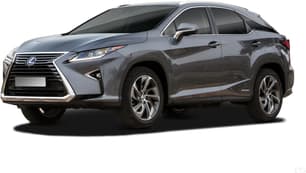
Whether or not people like the look of the models in Lexus' line-up varies, but one thing's for sure, the Japanese luxury brand has a clear identity. The intent of occupying the rung between a mainstream brand and a prestige one is clear in the pricing, and the styling of Lexus's vechicles is akin to jewellery – just look at the intricate Spindle grille, which is particularly enormous on the RX300 Luxury I've tested in this review.
The RX300 Luxury is the entry point into the RX large SUV range, so does this mean it's missing much in the way of tech, equipment or grunt? Yes, and no. Read on to find out.
Let’s make one thing clear from the very beginning - this new Mercedes-AMG GLC63 S E Performance is technically superior to the model it replaces. Whether it’s actually better or not, is the real question at the heart of the matter.
Why? Because, like the C63 sedan stablemate, AMG has opted to replace the previous model’s 4.0-litre twin-turbo V8 engine with a new 2.0-litre four-cylinder hybrid powertrain. It was a move brought about in part because of increasingly stricter emissions standards in Europe, but also ties-in with the German firm’s success in modern Formula One racing.
While the new hybrid system offers more power, more torque and better fuel economy, as the lukewarm response to the C63 has demonstrated, the hard reality for AMG is that its buyers associate it with V8 and even V12 engines. That emotional pull is hard to replace with logic, even if the new model offers technical superiority.
But how does the new powertrain suit the GLC63 - is it just technically better or is it holistically improved?
The Lexus RX300 is luxurious but affordable, making it great value and superbly comfortable, with a high level of fit and finish. Fear not about the four-cylinder engine being small – it makes plenty of grunt and handles daily duties perfectly well.
Which would you go for: An entry level Lexus RX300 or a top-of-the-range Mazda CX-9? Tell us what you think in the comments below.
Like I said right from the start, this new, hybrid version of the AMG GLC63 is technically superior to the model it replaces in every meaningful way. It is faster, more powerful and more fuel efficient and therefore a better performance SUV than the model it replaces.
Is it a better model than the one it replaces? Ultimately that will come down to how much stock you put into the soundtrack and your feelings on an AMG not powered by a V8 engine.
Because if you can see past that, then the AMG GLC63 is an absolutely fantastic performance SUV. Not only does the new powertrain make it faster in a straight line, but the chassis is very well-balanced, making for an engaging driving experience.
For those who can look past the smaller engine they will be rewarded with an incredibly fast and rewarding-to-drive member of the AMG family.
Note: CarsGuide attended this event as a guest of the manufacturer, with travel, accommodation and meals provided.
I've mentioned the Spindle grille and its jewellery-like appeal, and even the sharp edges of this SUV make the RX300 look like a carved gemstone, but I'm not the biggest fan of this vehicle's proportions. I think the door-to-window ratio is a bit off. There's just too much door for my liking.
That said, I'm intrigued by the craftmanship, the attention to detail and the use of materials, which make this SUV both pretty and intriguing.
The cabin mixes the plushness of cushioned surfaces on the dash and the armrests with pleasing design elements, like the swooping aluminium trim, which zig-zags its way from the instrument cluster to the passenger's side of the centre console.
The giant media display is impressive, but the functionality is awkward, to say the least, but more on that in the practicality section below.
The Luxury is the entry grade into the RX model and so comes with smaller wheels than the F Sport and Sports Luxury above it, but it does score roof rails, dual chrome exhausts, a roof-top spoiler and rear privacy glass.
How big is the RX300 Luxury? The dimensions show it to be 4890mm long, 1895mm wide and 1690mm tall.
How do the looks compare with rivals such as a Jeep Grand Cherokee, a Mazda CX-9 or a Land Rover Discovery? Hmm, each has its own distinctive styling, with the Jeep having brutish American looks, the Discovery boasting prestige British off-roader personality and the Mazda an elegant air that's way beyond its price point.
So why haven't I mentioned the Mercedes-Benz GLE or BMW X5? Because they're at least $20K more than the RX300 Luxury, which costs around $72K. If, however, you can stretch the budget to an RX 350 Sports Luxury then you will be crossing the $100K threshold into Benz and Bimmer territory. So let's talk about price.
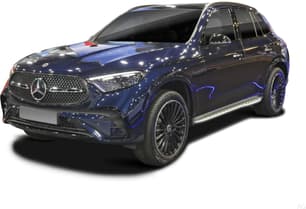
The GLC63 is unmistakably an AMG from the moment you first lay eyes on it. That’s thanks to the AMG-specific elements, starting with the grille with vertical strikes and the AMG crest on the bonnet; which is now a signature item for the performance sub-brand.
The GLC63 is also fitted with the Night Package II design kit; this adds a darkened grille and black chrome badging to further enhance its visual appeal.
The AMG-specific alloy wheels and more aggressive stance do mean the GLC63 stands out from the rest of the GLC range, helping it look fast even when it’s standing still.
The RX300 is a five-seater SUV and, while it would be even more practical if there was a third row, the cabin is impressively spacious.
Have a look at my photo of the entry to the RX300's back seat – that's a big doorway for a car. Parents will understand the value of wide-opening doors and these ones made it easy for my child to climb into his car seat and for me to buckle him up. Head and legroom in the back seats are also good, even for me at 191cm tall, while the flat floor makes it easy to 'scoot' across from one side to the other.
There are two cupholders in the fold-down centre armrest in the back and small door pockets, but storage up front is better, with huge pull-out door pockets, two more cupholders and a large centre-console bin.
There's a wireless charger in the hidey hole in front of the shifter, plus six USB ports on board - the rear passengers have two of their own in the back of the centre console and the rest are up front.
The second row doesn't come with climate control, but the directional air vents back there got a workout over the 40C days we had over summer.
The RX300's boot has a cargo capacity of 506 litres, measured to the top of the second-row seat back.
Now, the media system. Yes, it's a tech thing, but I'm calling out it out as impractical. The functionality of the trackpad used to navigate around the screen is frustratingly awkward. I think 12 swear words in a row came out of me on one occasion (no child on board, obviously), just trying to use the sat nav. The layout of the display menu is also confusing and non-intuitive.
Inside the GLC63 is clearly a derivative of the rest of the range, with its C-Class-inspired design and layout, but there’s enough AMG-specific elements to ensure it looks and feels special. This starts with the AMG steering wheel, which comes not only with a thick rim wrapped in Alcantara, but also some AMG special dials to adjust the various performance settings for the powertrain, suspension and transmission.
Then there are the AMG-specific seats, which look good and offer good support for the driver and front seat passenger. The rear seats offer decent space for what is a mid-size SUV, with room enough for two adults or teenagers or three smaller kids.
Those in the back aren’t particularly well looked after though, with only rear air-con vents and small door pockets but no USB charging ports or other small item storage.
The boot is 590 litres, down from 620L in the rest of the range, thanks to the addition of the rear-mounted electric motor. There’s also no room for the temporary spare the rest of the GLC range gets and instead you have to make do with a puncture repair kit.
The RX300 received a stack of new equipment in the September 2019 update, including a 12.3-inch media screen (previously 8.0-inches), Apple CarPlay and Android Auto, plus four additional USB ports (for a total of six), and a kick-open power tailgate. The list price is $71,920 before on-road costs.
Other standard features include a 12-speaker stereo with DVD player, sat nav, wireless charger, dual-zone climate control, 18-inch alloys wheels, LED headlights, proximity unlocking, heated wing mirrors, rear privacy glass, and powered front seats.
The update added more safety tech, too, along with some changes designed to make the driving experience better, which I'll tell you about below.
You're not getting the heated seats and the head-up display that you do on the F Sport, or the Sport Luxury's Mark Levinson stereo, but the value is great here, especially compared to more prestige brands, which ask more money for the same or less equipment.
The Mazda CX-9 Azami lists for $69,303 and offers more features, but the Lexus brand has more luxury badge appeal than the Mazda, or the $69,950 Jeep Grand Cherokee Limited, while the $73,221 Land Rover Discovery 2.0 i4S beats all of them in the prestige stakes because… it's British. And they have a royal family.
The power and torque figures aren’t the only numbers that have risen sharply, with the GLC63 clearly impacted by a double whammy of inflation and the usual new-car price rise.
The GLC63 now starts at more than $191,814 for the SUV and $198,415 for the Coupe, which represents a nearly $30k increase over the old V8-powered model, which was priced at $164,600 just two years ago. Even for luxury car buyers that’s a big jump, especially when you’re trying to convince people of the merits of the four-cylinder powertrain.
That also means it's more expensive than all of its key competitors, including the BMW X3 M Competition, Maserati’s Grecale and the outgoing, petrol-powered Porsche Macan GTS.
To help explain some of this price increase Mercedes-Benz Australia has opted for a high level of standard specification for local cars. Standard equipment includes 21-inch alloys, AMG composite braking, a panoramic sliding sunroof, a unique AMG steering wheel, power-adjustable sports seats in Nappa leather, a head-up display, dual-zone climate control, wireless smartphone charging and a Burmester 3D Sound system.
Also included is the AMG Track Pace suite, for those who want to unleash their GLC on the racetrack.
There’s also a limited run, AMG Edition 1 Package available too, for an additional $12,900. On the outside you get Manufaktur graphite grey magno paint, foiling with colour gradation and large AMG logo on the sides, an AMG Aerodynamics Package, unique alloy wheels with Edition 1 and AMG branding, yellow brake calipers and an AMG fuel filler cap in silver chrome with AMG lettering.
Inside there’s AMG Performance seats, AMG Nappa leather in black with yellow contrasting stitching, AMG illuminated door sills, carbon-fibre AMG trim highlights, yellow seat belts and a unique AMG Performance steering wheel wrapped in carbon-fibre and microfibre.
The RX300 has a 2.0-litre four-cylinder turbo-petrol engine making 175kW and 350Nm, with a six-speed automatic transmission. This peppy four-cylinder gives the RX300 a completely different feel to the lethargic-but-powerful oomph of the RX350 and its naturally aspirated V6, even though it doesn't make a great deal more grunt, at 221kw and 370Nm. There's a difference in fuel consumption, too – find out how different below.
Is the RX300 all-wheel drive? Nope, it's a front-wheel drive. Only the RX350 and RX450h are AWD.
This is what lies at the heart of the AMG GLC63’s success or failure. As I mentioned at the beginning, the previous generation’s 4.0-litre twin-turbo V8 has been replaced by an F1-inspired plug-in hybrid powertrain.
But don’t think that means AMG is suddenly focused on efficiency over performance. When AMG says the powertrain is inspired by the brand’s success in Formula 1 racing, what it means is the battery and electric motor provides a significant performance boost to support the internal combustion engine, not just save fuel.
To that end the combination of the turbocharged 2.0-litre four-cylinder petrol engine and the rear-mounted electric motor produces an impressive 500kW and 1020Nm. That’s a massive jump over the 375kW/700Nm made by the outgoing V8.
Lexus says the RX300, with its 2.0-litre four-cylinder turbo-petrol engine, should use 8.1L/100km of premium unleaded after a combination of open and urban roads. My own testing over 375.4km - taking in motorways, city and suburban call-of-daycare drop-off-duties - had our RX300 using 11.79L/100km, measured at the petrol pump. The real-world results almost always exceed that of the manufacturer's claims so you can expect the V6-powered RX350, with its claimed 9.6L/100km, to have a much higher mileage again after the same kind of usage.
Mercedes makes no secret that the battery is designed for performance, not saving fuel. It only has a 14km EV range but can recharge quickly on the move to provide a power boost when needed.
But despite all that, the GLC63 is actually significantly more fuel efficient than the old V8, using a claimed 7.3L/100km, which is a massive 4.9L/100km improvement over the old model. Although, on our day-long test drive we didn’t manage to come close to that claimed figure and instead saw returns around 11L/100km, albeit after a lot of spirited open-road driving.
Good seats are the start of a good driving experience and I've not met a Lexus that doesn't have superb pews – from the uber luxury models, such as the LS500 and ES300, to sports cars such as the RCF or LC500, they all have supportive and comfy ones. Lexus somehow manages to combine the comfort of a lounge chair yet still holds you firmly, all while placing you in a great driving position. The RX300 is no different. Large enough to fit me and my 191cm frame, yet bolstered enough to feel snug.
As for performance, the RX300, with its four-cylinder turbo-petrol engine with its six-speed automatic, is responsive and a bit hyperactive feeling. It's a very different sensation to piloting the RX350, which has a V6 and delivers its grunt in a more linear and lethargic fashion. Having driven both back-to-back I'd say the V6 and its eight-speed auto suits the RX personality better, but the 300 is a car that would have had a school report card that read: "Lots of potential, but lazy".
That said, plant the right foot and the RX350 will get the message to hurry up and can do the 0-100km/h sprint in eight seconds flat. The RX300 is keen but can't match it, with a time of 9.2 seconds.
Either way, the ride comfort is excellent, although body control could be better - the speed bump and roundabout route I take to do the preschool drop off caused it to get the wobbles, but give the RX300 a motorway and it'll cruise beautifully.
Forward visibility is good but vision through the tiny rear-quarter window (it's even smaller than it looks) while reverse parking isn't great.
Anyone who still believes in the adage ‘there’s no replacement for displacement’ hasn’t driven a modern turbocharged and hybridised engine. The GLC63 is a demonstration of the metaphorical and literal power of modern technology, combining an extremely efficient and potent internal combustion engine with an electric motor to make enormous real-world performance.
To be blunt, the GLC63 feels like a rocketship out of corners, launching with a ferocity and relentlessness the old V8 simply can’t match. It shouldn’t come as a surprise, a mid-size SUV with 1020Nm was always going to have plenty of performance, but even so it’s a shock to the system every time you give the GLC63 full throttle. Officially AMG claims it takes just 3.5 seconds to run 0-100km/h and has an electronically limited top speed of 275km/h - mighty impressive figures for a five-seat mid-size SUV.
To help get all that torque to the road, AMG deploys torque distribution technology that allows for it to be split an even 50/50 front/rear all the way to 100 per cent to the rear tyres.
Other technologies deployed to enhance its handling include AMG Ride Control suspension with adaptive damping and rear-axle steering. There’s also eight AMG Dynamic Select driving modes and four AMG Dynamics settings (Basic, Advanced, Pro and Master), so it’s a complex vehicle that is designed for the enthusiast.
While it’s easy to drive around town, once you get out on the open road you can really get a sense of the GLC63’s performance potential. Beyond just its powertrain the suspension offers good body control and the rear-axle steering helps it feel agile and responsive.
It’s not perfect though. At times the complexity of the system does lead to some hesitation when you put your foot down. It certainly lacks the linear power delivery of the old V8 and makes for a slightly trickier driving experience at times.
As for the sound, which is one of the biggest elements missing from the V8, Mercedes has added AMG Real Performance Sound, which features a pressure sensor in the exhaust that picks up on the engine note and plays it through the speaker system. It certainly helps make for a louder, more noticeable engine noise, but it still sounds more like an A45 than the previous GLC63 and for many would-be buyers, that’s a major turn-off.
The RX300 scored the maximum five-star ANCAP rating when it was tested in 2016. The September 2019 update added more safety tech to the RX300, including nighttime pedestrian detection and daytime cyclist detection for the AEB system, while the adaptive cruise control was given lane-trace assistance and road-sign recognition. This is on top of the already standard safety equipment, such as a reversing camera, blind-spot monitor and rear cross traffic alert.
Ten air bags, along with auto high beam, front and rear parking sensors, two ISOFIX points and three top-tether mounts for car seats and a space-saver spare wheel round off a comprehensive safety package.
The GLC63 comes standard with a comprehensive suite of safety features including 'Distronic' (Mercedes’ name for adaptive cruise control), 'Active Lane Keeping Assist', 'Blind Spot Assist', 'Traffic Light Assist' and 'Adaptive Highbeam Assist'. It also includes Mercedes’ 'Pre-Safe' accident anticipation system - which pre-tensions the seat belts and will even play a white noise to protect your ears if it senses a crash is imminent.
A parking system that includes a 360-degree camera and active parking assist is also included.
The GLC range was awarded a five-star ANCAP rating in 2022, which pre-dates the latest testing protocols, so doesn’t provide a like-to-like comparison for vehicles tested after that date.
Lexus recommends servicing the RX300 annually or every 15,000km, with the first three services capped at $595.
The duration of Lexus's factory warranty is four years/100,000km, which is a bit longer than BMW and Benz's coverage, but behind the five-year/unlimited-kilometre warranties of the mainstream brands.
The GLC63 is covered by Mercedes Australia’s usual five-year/unlimited kilometres warranty.
As for maintenance, Mercedes offers service plans, spanning three to five years. Three years will cost you $5025, $6455 for four years and five years is priced from $7180. Servicing intervals are 12 months or 20,000km, whichever comes first.