What's the difference?
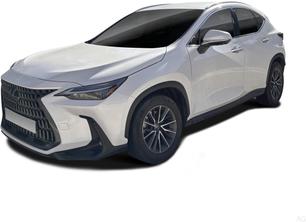
The Lexus NX 450h+ F Sport is a well-specified and plush-looking medium SUV that has a plug-in hybrid powertrain - a first for the brand.
On paper, it seems to tick the boxes for size, luxury and efficiency but we've been testing the flagship grade to see if it's a winning combo in real life.
Just in case attacking Australia's crowded SUV market with a virtually unheard of Indian brand wasn't a high enough hurdle to leap over, Mahindra had made its task even harder - think a Bollywood version of Mission Impossible - by launching its XUV500 SUV here with a diesel engine (which nobody wanted) and a manual gearbox (which few could even remember how to use).
Fortunately, it fixed one of those issues late in 2016, finally adding an automatic transmission to the line-up. And now, at long last, it's fixed the other.
This, then, is the petrol-powered XUV500 SUV. And, on paper at least, it's the most sense-making Mahindra to date.
For one, it's a ferociously cheap way into a new seven-seat SUV. For another, it's pretty well equipped, even from the base level. There's a long warranty, an equally long roadside assistance offering, and there's capped-price servicing, too.
So, should the mainstream SUV players be looking over their shoulders?
Spoiler alert: no.
The Lexus NX450h+ F Sport is a gorgeous mid-size SUV that combines great specs and a fairly efficient plug-in hybrid powertrain. It’s a comfortable and easy ride which should appeal to a wide range of driving styles. It also looks good parked at the kerbside of a city street and with it ticking most of the boxes, it may become your new best friend.
This petrol-powered and well-priced XUV500 W6 might mark Mahindra's most convincing effort at cracking Australia's congested SUV market, but we're still not completely convinced.
That said, it's certainly cheap, the ownership credentials stack up and it's a very comfortable way to transport seven people.
The NX simple looks like a scaled-down version of its larger RX cousin, so if you like that you’ll like what the NX.
It looks sweeter, though, with its smaller proportions being only 4660mm long and 1670mm high but there’s enough sharp pleating in the panelling and rear LED lights to give it a sporty edge. It’s a design that should appeal to a wide range of people.
The interior helps the NX compete against some of its flashier rivals, but the BMW X3's interior beats it hands down with the wow factor. Still, the dual-toned leather upholstery and fabrics of our test model scream understated luxury.
The perforated leather of the seats is supple underhand, but even the robust synthetic leather on the backs of the seats and some door panelling feels like the real stuff most of the time.
The dashboard components – like the air vents, displays and accents – are well integrated and seem well-built. The cockpit is intimate and plush overall, and it always reminds you that you're in the cabin of a luxury vehicle.
There's no getting away from the fact the XUV500 is not the sleekest, prettiest SUV in the pack. But it's not ugly, either. More that it looks like it's doing its best with a design philosophy hatched a generation or two ago.
Its best angle by far is when viewed straight on, where the piano-black grille, dual bonnet bulges and complicated (read: a little weird) headlight clusters all add some road presence to Mahindra's only SUV.
A side-on viewing, however, is less satisfying, where a combination of strangely placed and super-sharp body creases (including one over the rear wheelarch, which adds a Harbour Bridge-style crescent to the otherwise-straight window line) and serious rear overhang give the XUV500 an inescapable awkwardness.
Inside, expect a vast collection of rock-hard (though nicely patterned) plastics, with the ambiance rescued somewhat by the clean-looking and vertical central control unit, which is home to the media screen and air-con controls.
Ready for some hashtag real talk? There are better-looking and better-feeling seven-seat SUVs out there. But there aren't many that start at $25,990 drive-away. And I think that's Mahindra's point.
The cabin of the NX is spacious where it needs to be for four adults to be comfortable on a longer journey, and features enough equipment to satisfy most.
Access is best at the front because of the wider door apertures and while still easy enough to get in and out of from the back, the rear wheel arch cuts into the aperture a bit.
The front seats are very comfortable with thick padding, tall side bolsters that lock you into place in a turn as well as heating and cooling functions.
The back seats are almost as comfortable as the front! However, the outboard seats offer the best under-thigh support. It is a shame that they miss out on heat functions for its grade level, though.
Storage is fairly good for the class, with lots of small item cubbies up front like a sunglasses holder, a mini drawer next to the drivers' knee and a dedicated phone holder and two cupholders. The large glove box (that can hold more than just a manual) and mid-size middle console shoulder most of the storage burden, though.
In the back you get a couple of map pockets, small storage bins and two cupholders. which is most than enough for this size of SUV.
The boot offers an impressive 520L of capacity and a level loading space makes it an easy car to slide larger gear in and out of. The little storage compartment under the floor is handy for charging cables and the hands-free powered tailgate is always handy to have.
The technology is a nice mix of easy-to-use and high-end with a responsive touchscreen on the 14-inch multimedia display. The system has built-in sat nav, wireless Apple CarPlay and Android Auto. The CarPlay was simple to set up and has maintained a steady connection with my iPhone this week.
Charging options are decent with two USB-C ports and a 12-volt socket per row, as well as a wireless charging pad up front.
Pretty damn practical, actually, regardless of whether you want to carry people or cargo. Carrying both at the same time, however, is tricky.
But let's start with people. There is a huge amount of room in the third row of the XUV500, a space with enough head and legroom to put plenty of its competition to shame.
Thanks to second-row seat backs that fold flat, before the the entire seat lifts up and pushes forward, climbing into seats six and seven isn't too big a drama, either.
We rarely say this about seven-seat cars, but at 175cm, I'd feel plenty comfortable back there on a longer drive. There are two air vents in the third row, too, along with bottle storage and side-seat storage for thin items.
All XUV500's are fitted with a 70-litre fuel tank.
The space in the middle row is ample as well, and you'll find three ISOFIX attachment points, one for each of the three seats. There's also a door pocket in each rear door and storage nets on the rear of the two front seats. A pull-down divider that separates the back seat is home to two cupholders, matching the two for front seat riders.
The only downside to all this people-lugging happiness is that, with the third row of seats in place, there is absolutely no room for luggage. Mahindra doesn't quote a litre storage figure when seven are seated (mostly because it would probably be embarrassing to write "one litre"), but trust us, you'll be lucky to squeeze a soft backpack in the boot with all seats in place.
Things improve considerably when you drop the third row of seats, though, which unlocks 702 litres of storage, and that number climbs to 1512 litres with the second and third row folded down.
With a price hike of almost $6K, our flagship NX sits at $95,900 before on-road costs, but it's still slightly more affordable than its top-grade plug-in hybrid rivals.
The Volvo XC60 Ultra is priced from $101,390 and the outgoing BMW X3 xDrive30e sits at $102,500.
In the flagship variant, the standard features list is well-rounded to include both practical and luxury equipment. There are electric front seats with heating and cooling, an F Sport steering wheel with heating and touch controls, a sunroof, rear privacy glass, and a power-adjustable steering column.
Other items include a powered tailgate with a kick-to-open function, dual-zone climate control with a humidity sensor, parking assist, keyless entry/start, a digital key, Lexus Connected services app, a digital rearview mirror and 20-inch alloy wheels.
The technology looks gorgeous with the 14-inch touchscreen multimedia display taking centre stage with built-in satellite navigation, Bluetooth and wireless Apple CarPlay and Android Auto.
You also get a 10-speaker Lexus premium sound system, which has AM/FM radio, MP3 and WMA (Windows Media Audio) compatibility. There are four USB-C ports (2/2), a 12-volt socket and a wireless charging pad.
So while our test model misses out on some of the items you might expect to see for a top-model grade – like three-zone climate control and heated rear outboard seats – it still feels well-specified.
Make no mistake, this Mahindra kills the competition on price. The entry-level W6 version will cost you a lean $25,990, while the fruited-up W8 version will set you back $29,990. You can even have an AWD W8 for $32,990. The best part? All of those are drive-away prices.
Go for the W6, and you can expect 17-inch alloy wheels, cloth seats, air-con with vents (powered by a second compressor) in the second and third row, cornering headlights with DRLs, front and rear fog lights, cruise control, rear parking sensors and a 6.0-inch multimedia screen linked with a six-speaker stereo.
Spring for the W8, and you'll add leather seats, a reversing camera, tyre-pressure monitoring and a bigger, 7.0-inch screen with standard sat-nav.
The NX450h+ F Sport is the first attempt at a plug-in hybrid powertrain for Lexus. It pairs a 2.5-litre four-cylinder petrol engine with two electric motors, one located at each end of the car for all-wheel drive. Together they produce up to 227kW of power, but Lexus doesn’t quote the combined torque figure (cheeky).
The flagship model can do a 0-100km/h sprint in 6.3 seconds and features a smooth continuously variable transmission.
Overall, it moves quickly and the shift between the electric and engine components is barely noticeable.
There's a diesel engine currently available, but the clock is ticking - Mahindra expects it to be phased out within six months. But the big news here is the new petrol engine, a turbocharged 2.2-litre unit good for 103kW/320Nm. It's paired exclusively with an Aisin-developed six-speed automatic transmission, and will send it's power to the front or all four wheels.
Mahindra doesn't quote official performance figures, but those engine outputs hardly scream excitement, do they?
The flagship NX has a smallish 18.1kWh lithium-ion battery and a Type 2 charging port but no CCS enhancement, which means you can’t hook it up to a fast DC charger.
On a standard AC 240-volt domestic plug port, you can charge this from 0-100% in around 7hrs 30mins. You get a great electric-only NEDC-rated driving range of up to 87km and that means you really only have to charge it every other day, which I appreciated.
The official combined fuel cycle usage is 1.3L/100km, but you won’t really see that in the real world. After doing some longer trips mixed in with city slicking, my average real-world usage popped out at 6.5L/100km, and I averaged 20.2kWh/100km when in pure EV mode. They’re not the best hybrid figures I’ve seen for the class, but they're not too bad either.
Local numbers are yet to be confirmed, but after an admittedly vigorous local test, the on-board computers was reading 13+ litres per 100km. All XUV500's are fitted with a 70-litre fuel tank.
This NX feels like it has lots of power in reserve when you put your foot down and never struggles going up big hills. When it’s in pure EV mode, it’s very quiet but there’s no big fanfare when this kicks over to the traditional engine. You barely notice it until you’re on the open road travelling at higher speeds, and that’s when the engine starts to sound more growly like its non-hybrid siblings.
The steering is forgiving without feeling too light and around town, the NX is nimble and sure of itself. The suspension is on the firmer side, so you’ll hear and feel the bigger bumps, but it never feels rough.
Visibility is decent with the largish windows, and the pillars that aren’t too wide from my driving position. I do like having the digital rearview mirror, though, because when you have a big car seat or tall adult in the back seat, the vision back there is hindered.
It’s pretty hard to find a modern car that’s terrible to park, especially in the mid-size SUV segment, and the NX is no different. Even in a small car space, you still have good clearance around you, which hopefully translates to less dings from neighbouring cars!
The 360-degree view camera system is top notch with its quality, and I like that the car disappears and you can see the ground underneath.
About as old school as rocking a pair of button-up tracksuit pants with a Run-DMC cassette stuffed into your Walkman.
On a straight and unchallenging road, there's stuff to like about the petrol-powered XUV500. The engine, while gruff under heavy acceleration, doesn't feel too wheezy when you're not asking a great deal of it, and nor is the cabin overly loud at suburban speeds. It's a comfortable space for driver and passengers, too, and the gearbox performed seamlessly on our short test drive.
But that's about where the good news ends. There's an unshakeable agricultural feel to the way this Mahindra SUV goes about its business, and nowhere is that more obvious than through the steering wheel, which has only a vague and difficult relationship with the the front tyres, making it seriously tricky to approach twisting roads with anything approaching confidence.
The steering is slow and cumbersome - light when you first begin turning the wheel, with a ton of weight appearing by surprise midway through the cornering process - and it has a tendency to fight back should the front wheels find a bump or corrugation in the road, too.
The body lolls about when challenged, too, and the tyres are quick to give up their grip on tighter corners. All of which would give it a certain retro charm if it wasn't so very new, and I must admit I was cackling maniacally on some of the more twisting roads.
But it's simply not a car I could live with.
The NX comes with a maximum five-star ANCAP safety rating from testing done in 2022 and scored very highly across its individual assessment scores; 91 per cent for adult protection, 89 per cent for child protection, 83 per cent for vulnerable road user, and 92 per cent for its safety assist systems.
Eight airbags are standard which includes a front centre airbag and driver's knee airbag.
Other safety equipment includes emergency steering assist, blind-spot monitoring, lane departure alert, lane-keeping aid, emergency lane keeping, traffic sign recognition, safe exit assist, rear cross-traffic alert, LED daytime running lights, LED cornering lights, tyre pressure monitoring, and an emergency call button.
The only safety item which can feel intrusive when driving is the adaptive cruise control as it has a feature that scans for bends in the road and will slow the car down in anticipation of them. On paper, this isn’t a bad thing but in practice, it was sporadic when it activated and sometimes slowed the car dramatically on bends you wouldn’t even call bends!
AEB with car, pedestrian, cyclist, motorcyclist, backover and intersection turning assist is standard and operates from 5.0 - 80km/h (up to 180km/h for car detection).
There are two ISOFIX child seat mounts and three top-tether anchor points in the rear row. The seat isn't wide enough to accommodate three child seats side by side, so two will fit best.
Expect dual front, front-side and curtain airbags (though the latter don't extend to the third row of seats), along with rear parking sensors and ESP. Stepping up to the W8 trim adds a reversing camera with dynamic guidelines. The XUV500 was awarded a four-star (out of five) ANCAP assessment when tested in 2012.
The NX is offered with a five-year/unlimited-kilometre warranty, which is on par with its European rivals.
It comes with a five-year capped price servicing program, where services are competitively priced at $595 each.
Servicing intervals are reasonable at every 12 months or 15,000km, whichever occurs first.
All XUV500s are covered by a five year/100,000km warranty (though the final two years apply only to the drivetrain), along with five years of complimentary roadside assistance.
The XUV500 is also covered by Mahindra's capped-price servicing program for the first three years of ownership, and will require servicing every six months or 10,000km.