What's the difference?
The Lexus LX range has undergone significant updates across the board and the carmaker has also introduced an off-road-focused variant, the Overtrail, to the Aussie market.
The LX500d Overtrail is geared up for 4WDing and, as such, is kitted out with front and rear locking differentials, Toyo Open Country all-terrain tyres on 18-inch rims, as well as a stack of driver-assist aids – including the proven Multi-Terrain Select from Toyota’s LandCruiser 300 Series – all aimed at making you The Absolute King of the Dirty Weekend.
But, being a Lexus, the Overtrail is of course on the right side of premium, replete with a features list as long as … something that is long.
So, how does it perform off-road?
Read on.
You’re after a premium SUV with size for five, without exceeding the ideal metropolitan footprint. It should have adequate oomph for occasional forays into wider open spaces, but offer enough comfort and luxury to keep you cool and relaxed in the city.
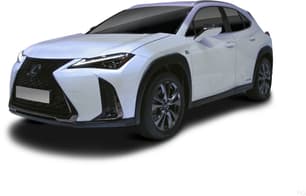
And you’d rather look at something outside the predictable Euro brand path. The Lexus UX 200 F-Sport may just be your ideal urban companion.
The Lexus LX550d Overtrail holds plenty of appeal for those who’d like to bookend a work week of refined daily driving with a weekend of fun and adventure undertaken in style.
With a full complement of standard features, as well as offering premium comfort and understated design, the Overtrail makes a lot of sense as a potential purchase.
It’s luxurious on the road, capable off-road and the Overtrail holds up quite well if cross-shopped against the likes of Land Rover Defender, Toyota LandCruiser 300 or Nissan Patrol.
The Lexus UX 200 F Sport really steps up in the urban context. It’s big enough, energetic enough (especially using the Sport setting and the CVT’s manual mode), and delivers good value for the price. We’d like more boot space, a little more room in the back seat, and the Remote Touch media interface deposited in the bin. But overall it’s a great premium option for young families or active couples in the city.
The LX500d Overtrail is 5100mm long (with a 2850mm wheelbase), 1990mm wide, and 1895mm high. It has a listed kerb weight of 2690kg.
It has an almost straight-up-and-down, old-school appearance, and leans more towards the retro-cool end of the design spectrum rather than the sleek end – and that styling, which is THE Overtrail look based on the GX Overtrail, works.
Adding to this 4WD wagon’s overall large-and-in-charge presence are its big front grille, bulging wing mirrors, side steps and those all-terrain tyres.
The Overtrail has black exterior touches (door handles and mirrors, window mouldings, wheel-arch trims), black front and rear bumpers, and bridge-type roof rails that top off its rugged look and further set it apart from its LX stablemates.
There are a lot more identifiably-Lexus, premium-style touches going on inside the Overtrail, including Overtrail-specific premium leather-accented front seats with Monolith colour stitching, Ash Sumi Black ornamentation, a plethora of soft-touch surfaces and a helpful does of durable plastic.
Design is a key differentiator for Lexus, with a love-it-or-hate-it polarising design language standing the brand’s current products apart in pretty much any car park.
The exterior takes a classic SUV profile and adorns it with an arresting mix of angles outlining everything from the signature ‘spindle grille’ and gaping front air vents to the jagged headlights, and wheel arch overfenders.
A dark chrome finish on key exterior trim elements, as well as the standard 18-inch alloy rims, adds to the premium look..
The rear is a riot of different shapes and surfaces, the full-width tail-light standing proud of the body like a low-relief sculpture, and the surface of the rear hatch door chamfered and contorted through multiple planes.
The back bumper is blinged up with more dark chrome, and features a diffuser style section underneath it.
The interior will be instantly recognisable to any current Lexus owner, the relatively complex, multi-layered dash design finished in a uniform grey, spiced up by the odd splash of brushed metal and our car’s standard white ‘leather accented’ trim.
The broad 10.3-inch multimedia screen is neatly integrated alongside a compact instrument binnacle housing a crystal clear configurable digital instrument display above the centre stack, and all the controls are clear and easy to use, with one exception.
The Lexus ‘Remote Touch’ pad used to manage multiple media and vehicle functions is torture. Despite available adjustments for speed and sensitivity, even on its most benign setting it is maddeningly over-reactive and inaccurate.
Overall, the interior is functional, the build quality is impressive and this is a Lexus so, of course, there are lashings of prestige.
For starters, the seats are comfortable. The 2026 Lexus LX500d Overtrail has a 10-way power-adjustable driver’s seat, and an eight-way power-adjustable front passenger seat and both have four-way Lumbar power adjustment and massager.
The second-row seats in this five-seater are in a 60:40 split folding configuration and are also on the right side of comfortable, which is not always necessarily the case in a 4WD wagon.
The 12.3-inch multimedia touchscreen system dominates the upfront layout and shows navigation, your smartphone desktop, reversing camera view, etc and when off-roading it displays multi-terrain monitor showing the road surface and other conditions.
Underneath that main screen is a 7.0-inch touch display that displays drive modes, adaptive variable suspension, air-conditioning controls and the like.
Both are easy enough to use without hassle.
The driver also gets a head-up display, projected onto the windscreen right in front of the driver, but say hoo-roo to that info once you’ve donned polarised sunnies.
The Overtrail has a powered sunroof/moon roof, whatever you want to call it.
It has plenty of charge points – including two USB-Cs upfront and two for the second-row passengers, and a wireless phone charging pad in front of the cooled centre console – and there are 12-volt outlets front and rear, and a 220V outlet in the rear cargo area.
There are numerous cupholders – upfront and in the second-row armrest – and bottle holders in the doors.
The five-seater Overtrail’s rear cargo area has a 220V/100W socket (to run camp lights, fridge etc), a cargo blind, tie-down points and cup holders on both sides, left over from the seven-seat layout.
Rear cargo space is listed as 1109L with all seats in use, and cargo space is 1960 litres if the second row is folded down.
The rear tailgate is powered and lifts to open rather than swings to the side as the barndoor-style doors do.
Minor gripe: You’d think with the amount of cash you spend on an Overtrail that Lexus would equip the off-road-focused LX with rubber floor mats because its interior should be ready to cop more than its fair share of dirt, sand and mud during its driving days.
It might be a relatively compact SUV in the wider world, but at a bit less than 4.5 metres long, slightly more than 1.8m wide, and just over 1.5m tall, the Lexus UX is fairly sizeable if your natural habitat is the urban environment.
But it’s far from oversized, and the UX has a tight space ace up its sleeve in the form of a 10.4m turning circle. It might sound like a large arc, but that’s a full metre less than the only marginally longer Lexus NX, and considerably inside the bigger Lexus RX’s radius.
And the difference between a clunky three-point turn, and a swift U-turn in a tight traffic environment is massive. So, gold star there.
On the inside, day-to-day practicality in the form of cabin storage runs to a pair of cupholders in the front centre console, with a (Qi) wireless charging mat ahead of them, a decent glove box, as well as generous door bins with enough space for full-size bottles.
A large lidded storage box between the seats contains two USB ports, an ‘aux-in’ socket, and a 12V outlet. It also features the Lexus party trick of hinging open towards the driver or passenger depending on which side button you've pressed. Clever.
There’s a fold-down centre armrest with twin cupholders in the back, but there are no storage pockets on the front seatbacks, or bins in the doors.
Speaking of which, the rear door apertures are tight, making it more of a struggle than it should be for anything above average size adults to get in and out.
Rear headroom is good, although legroom is tight, and shoulder room will be squeezy for grown-ups. That said, twin air vents in the rear of the front centre console is a welcome addition in a car of this size, as are two USB charging ports to keep devices topped up and occupants happy.
Boot space is 371 litres (VDA) with the rear seats upright, which is modest. The small and medium suitcases from our three-piece set fitted in, but there wasn't much space left over. The bulky CarsGuide pram will squeeze in… just. And of course, the second-row backrest split-folds 60/40 to liberate extra capacity.
There are tie-down anchor points at each corner of the cargo floor, a 12-volt power outlet, strategically placed bag hooks and bright lighting, but don’t bother looking for a spare wheel, the Dunlop SP Sport Maxx tyres are run-flats.
There’s a button on the key fob that seems to indicate it remotely opens the rear cargo door, but in my experience it remained a non-cooperative mystery.
Towing capacity is the same, rather lightweight 750kg whether the trailer you’ve connected is braked or unbraked.
The updated LX range is available as an LX500d in Luxury, F Sport, Sports Luxury or Overtrail spec, all with a 3.3-litre V6 twin-turbo-diesel engine. Or you can opt for the LX600, which is available in Luxury, F Sport, Sports Luxury, Overtrail or Ultra Luxury spec, all with a 3.5L V6 twin-turbo-petrol engine.
Prices start from $158,700 (diesel, excluding on-road costs) or $162,200 (petrol, excluding on-road costs) for the LX Luxury seven-seater through to $220,950 for the petrol-only LX Ultra Luxury.
Our test vehicle, the 2026 Lexus LX500d Overtrail, the supposed off-road hero of the new four-variant LX500d line-up, has a price-tag of $182,300 (excluding on-road costs).
The standard features onboard this five-seater include a 12.3-inch multimedia touchscreen system (with wireless Apple CarPlay and Android Auto), wireless charging, a centre console cool box and more smart device charge points than you can poke a USB-C stick at (six, in fact).
As mentioned, the Overtrail is aimed at being the line-up’s off-road master and to that end it has front and rear locking differentials, Toyo Tires’ Open Country all-terrains (265/70R18 116H) on 18-inch matt grey alloy wheels, an underslung full-sized spare tyre, as well as a stack of driver-assist aids – including the proven Multi-Terrain Select from Toyota’s LandCruiser 300 Series – all aimed at turning you into an off-roading expert.
Exterior paint choices include Moon Desert (on this test vehicle and available only on the Overtrail), Sonic Quartz, Graphite Black, Titanium, Liquid Metal, and Khaki Metal.
All colour choices are standard/no cost on the LX.
At $53,450, before on-road costs, the UX 200 F Sport is a premium, 2.0-litre compact SUV lining up against some sharp competition in the form of Audi’s Q3 35 TFSI Launch Edition ($52,750), the BMW X1 sDrive 2.0i M Sport, ($51,750), the Mercedes-Benz GLA 180 ($48,690), and Volvo’s XC40 T4 Inscription ($51,990). All four-cylinder, and front-wheel drive, except for the all-wheel drive Volvo.
The 200 is the entry-point to a three-level UX model range, and F Sport is the highest of three specification grades (above ‘Luxury’ and Sports Luxury’).
Fifty grand is a significant financial threshold, and when you’re lining up against a batch of big name European competitors, the standard equipment list is critical. And the 200 F Sport comes to the party with an impressive number of boxes ticked.
Aside from the active and passive safety tech detailed in the safety section below, the UX 200 F Sport features a leather-accented F Sport shift lever and heated steering wheel, power-adjustable steering column, leather-accented seat trim, eight-way power-adjustable, heated and ventilated F Sport front seats, Qi wireless phone charging, active cruise control, keyless entry and start, dual-zone climate control air (including ‘Lexus Climate Concierge’ management of climate, front seats, and the steering wheel), 18-inch alloy wheels, illuminated entry, and F Sport alloy-accented pedals.
Also included are bi-LED headlights (with auto levelling and adaptive high beam), LED fog lights, LED tail-lights, adaptive variable suspension, five drive modes (Eco, Normal, Sport, Sport+, Custom), a rear performance damper, paddle shifters, an 10.3-inch multimedia screen, 7.0-inch digital driver information display, reversing camera, parking sensors (front and rear), satellite navigation (with live traffic updates), eight-speaker audio (with digital radio), and voice recognition for media and other functions.
No Apple CarPlay or Android Auto connectivity here, though, as Lexus sticks with its own media/audio connection set-up.
Our test example was fitted with an optional moonroof ($2500) and premium ‘Cobalt Mica’ paint ($1500), for an as-tested price of $57,450.
Other colours available are: 'Khaki Metal' (green), 'Carnelian' (orange), 'White Nova', 'Mercury Grey', 'Premium Silver', 'Titanium' (silver), 'Onyx' (black), 'Graphite Black', and 'Caliente' (red).
Our test vehicle has a 3.3-litre turbo-diesel engine – producing 227kW at 4000rpm and 700Nm at 1600-2600rpm – a 10-speed automatic transmission and a full-time 4WD system.
This is a big wagon so it takes some encouragement to get going off the mark – it is sluggish rather than zippy around town – but once underway on an open road, especially on a highway, it punts along nicely.
I drove the seven-seater Lexus LX600 Sports Luxury – with a 3.5-litre petrol engine (305kW and 650Nm) – immediately after this test and – with the same dimensions, but 10kg lighter than the Overtrail – it’s more punchy off the mark.
The Lexus LX500d Overtrail has a variety of drive modes including Custom, Comfort, Eco, Normal and Sport S and Sport S+ for on-road driving.
It has front and rear locking diffs, and Multi-Terrain Select (MTS) drive modes for off-roading. Those modes include Auto, Sand, Mud and Rock. Each off-road driving mode adjusts throttle response, transmission shift patterns, wheel-slip control, engine power delivery and braking to best suit the specified terrain.
Sitting under the UX 200’s bonnet is the 2.0-litre (M20A-FKS) four-cylinder petrol engine. It’s an all-alloy, naturally aspirated (non-turbo) design producing 126kW at 6600rpm and 205Nm at 4800rpm.
Versions of this engine are also used in the Toyota Corolla, RAV4, and Camry, the relatively new (2018) unit featuring dual ‘VVT-i’ (Variable Valve Timing-intelligence) managed by an electric motor on the intake side and conventional hydraulic actuation on the exhaust side, plus a combination of direct- and port-injection, as well as electronic throttle control.
Drive goes to the front wheels via a Continuously Variable Transmission (CVT), with a conventional first gear added to aid take-off, and ‘steps’ to mimic normal ratios accessible via wheel-mounted paddles. More on those in the driving section.
Official fuel consumption is listed as 8.9L/100km (on a combined cycle), but on this test, I recorded 12.8L/100km.
The Overtrail has 110L fuel capacity (80L main tank, 30L sub tank) so, going by my on-test fuel-consumption figure, you could reasonably expect a driving range of about 860km from a full tank.
However, as with any vehicle, once you’ve loaded it with real-world burdens (e.g kids, dogs, camping gear etc) you’ll soon see fuel-use figures increase.
Claimed fuel economy for the combined (ADR 81/02 - urban, extra-urban) cycle is 5.8L/100km, the UX 200 emitting 132g/km of CO2 in the process.
This time around we had several weeks with the car, staying mainly within the urban environment (thank you COVID-19), with some brief freeway running thrown in, and we recorded an average of 8.9L/100km, which is a solid miss on the factory claim, but still good enough to deliver a range well in excess of 500km between fills.
Another plus is a minimum fuel requirement of 91 RON ‘standard’ unleaded, and you’ll need 47 litres of it to fill the tank.
On-road, the Overtrail is impressive: refined, comfortable, unstressed and it offers up controlled ride and handling.
The Overtrail sits nicely on sealed road surfaces – it has a wide wheel track and long wheelbase – and it maintains that composed posture even on gravel or dirt tracks.
It does exhibit some body-roll when pitched through country bends but in a large 4WD wagon that characteristic is no real surprise.
Ride quality is impressive and the suspension set-up, including the Overtrail’s adaptive variable suspension which adjusts damping force according to the drive mode selected, manages to smooth out the worst of most surface irregularities. Active height control is worth mentioned here because it's designed to optimise the spring rate to keep this wagon stable during turning, acceleration, and braking.
The 3.3-litre turbo-diesel engine and 10-speed auto are a smooth combination producing plenty of power and torque across a broad rev range.
It's mostly quiet in the cabin though wind noise does emanate from the chunky wing mirrors.
One thing I’m not a big fan of is the digital rear-view mirror. I understand the reasoning behind it as it helps establish visibility where you may not have it – for example, if something you’ve packed in the rear blocks your vision, or a second-row passenger’s massive head blocks your vision – but the slightly distorted view depicted on the mirror isn’t altogether helpful and tends to push me into headache territory on longer drives. That’s my story and I’m sticking to it. Maybe my old eyes need testing?
So, how does the Overtrail perform off-road?
Well, you’d expect it to go pretty well, especially as it is equipped with front and rear locking diffs, and a raft of off-road drive modes.
And it does. Mostly.
Steering is nicely balanced and the driver is afforded so much visibility of the track ahead that, even with a massive bonnet in front of you, it’s easy to get your wheel placement spot-on. The Overtrail also has a 360-degree camera system, so that maximises your chances of putting the vehicle on exactly the correct line.
Courtesy of its off-road modes, diff locks etc, the Overtrail drives with impressive composure through most off-road situations, whether that’s along corrugated dirt tracks, up steep rocky hills or through shin-deep mudholes.
It offers a reasonable amount of wheel travel for a large wagon and it has decent all-terrain tyres – Toyo Open Country (265/70R18) – and they provide plenty of grip on a variety of surfaces: sand, loose gravel, shale, even rain-soaked mud which can be very slippery and can quickly fill up tyre tread.
The LX500d Overtrail has 205mm ground clearance which is industry standard for a larger or upper large SUV, but it isn't great for a vehicle that’s intended as an off-road machine. However, worth mentioning again here is the addition onboard of active height control, which automatically adjusts vehicle height – Normal, High 1, High 2, and Low (for easy ingress and egress) – to match the drive mode you select and the driving conditions at any time.
And while the off-road angles – approach (23 degrees), departure (22) and rampover (22.7) – aren’t fantastic, those measurements are industry standard for a larger and upper large SUV, but again, in a vehicle billed as an adventure machine, those angles could be a lot better. In the Overtrail’s favour the underbody is well protected by substantial bash-plates and the Overtrail’s full-size spare is mounted to the underbody.
Wading depth is an estimated 700mm, which is also in the vicinity of standard for an unmodified 4WD wagon.
The side steps protrude and if you fail to drive with consideration then they'll probably cop a scrape and maybe even a bit of a dent.
Towing capacities are 750kg (unbraked) and 3500kg (braked). Payload is 590kg, which is not a lot once you throw in your kids, dogs, and camping equipment – not to mention anything you might be towing at the time. For reference, a 300 Series LandCruiser's payload, depending on the variant, is between 650kg (VX/Sahara/GR Sport) and 785kg (GX).
The Overtrail’s listed kerb weight is 2690kg, gross vehicle mass (GVM) is 3280kg, and gross combined mass (GCM) is 6780kg.
This was my second time in a UX 200 within the last 12 months, but this time the loan period extended to around six weeks, covering the time much of the globe was in lockdown in response to the coronavirus.
So essential trips around town were the only ones being taken. But more time behind the F Sport’s wheel highlighted some of this UX 200’s dynamic strengths, particularly aspects of the continuously variable transmission (CVT).
This Toyota designed CVT has the advantage of a conventional first gear to give the UX some extra urgency from step-off. And when you’re predominantly in stop-start traffic (although there wasn’t too much of it), that’s a big help.
Like all CVTs, in set-and-forget Drive mode, this unit aims to keep the engine in its operating sweet spot, constantly balancing performance and economy goals; the downside being a droning engine noise. For those old enough to remember manual gearboxes it feels like a constantly slipping clutch.
But slip into ‘Manual’ and the CVT is able to mimic ratio points, and using the wheel-mounted paddles to shift between them lifts driver engagement massively, even in the compacted urban context.
In terms of outright performance, a kerb weight nudging 2.0 tonnes and a peak torque number (205Nm) that doesn’t arrive until a lofty 4800rpm goes a long way towards telling the UX 200 F Sport acceleration story. Lexus claims 0-100km/h in a reasonably brisk 9.2sec.
The UX is underpinned by the ‘Lexus Global Architecture – C’ platform (a Lexus name for Toyota’s TNGA chassis architecture) and suspension is by struts at the front and trailing wishbones at the rear, with the F Sport featuring adaptive variable suspension and a rear performance damper, the latter designed to improve chassis rigidity and minimise vibrations.
Overall ride comfort is really nice, although the standard 18-inch alloy rims are shod with 225/50 Dunlop SP Sport Maxx run-flat tyres and they’re relatively noisy, with an accompanying tendency to follow irregularities in the road surface.
Dial up the Sportier drive settings and everything tightens up appreciably, so if you’re that way inclined, the sport part of the F Sport’s personality is there to be explored.
The electrically assisted steering delivers decent accuracy and road feel, With some momentum up, the UX 200 F Sport feels balanced and predictable, putting it’s power down nicely, if you decide to break away for a brisk B-road run.
Braking is by ventilated discs at the front (305mm) with solid rotors at the rear (281mm), and stopping power is reassuringly firm.
As mentioned earlier, a tight 10.4m turning circle makes parking easy, supported by a high-quality reversing camera and proximity sensors front and rear.
Under the heading of general observations, the driver’s seating position is great - comfy and secure, a one-touch up and down function on all windows is a nice… touch, and the configurable instrument cluster (which includes the central dial physically sliding into different positions) is functional and fun.
At time of writing, the 2026 Lexus LX 500d Overtrail does not yet have an ANCAP safety rating.
Standard safety equipment includes 10 airbags (driver and front passenger, front knee and side, rear side and curtain), as well as auto emergency braking (AEB), adaptive cruise control, lane departure alert, lane trace assist and lane keeping system (with emergency driving stop system), road sign assist, safe exit assist, facial recognition, driver monitor camera, and more.
Driver-assist tech aimed at making you a better off-roader than you already are includes downhill assist control, hill start assist, crawl control, Multi-Terrain Monitor (MTM) with panoramic view monitor, active traction control, tyre pressure monitor, active height control and more.
The Lexus UX scored a maximum five-star ANCAP rating when it was assessed in November, 2018.
Active (crash avoidance) tech includes expected features like ABS, EBD, BA and stability and traction controls, while the standard ‘Safety Sense+’ system includes the ‘Pre-collision system’ (Lexus-speak for AEB) with pedestrian and daytime cyclist detection, traffic-sign recognition, active cruise control, evasive steering assist, ‘Lane Tracing Assist’, active high beam control, blind-spot monitoring, and a reversing camera, as well as ‘Rear Cross Traffic Alert’, and a tyre inflation warning system.
But then to help minimise injury if an impact is unavoidable, the UX boasts eight airbags (driver, front passenger , driver's knee, side, cushion and curtain side) as well as a forward collision warning and pre-collision braking system. Impressive.
There are also three top tether points for baby capsules/child restraints across the rear seat, with ISOFIX anchors in the two outer positions.
The 2026 Lexus LX500d Overtrail is covered by a five year/unlimited km warranty.
Capped-price servicing applies for five years/100,000km for a maximum of 10 services.
Servicing is scheduled for every six months or 10,000km, whichever occurs soonest and cost per service, at time of writing, is $595.
From its arrival in Australia in the late ‘80s, Lexus has made the ownership experience a high priority. In some areas it’s still at, or near the top of the after-sales class, but in others the grades are slipping.
For example, the standard Lexus warranty in Australia is four years/100,000km. When you have both luxury newcomer, Genesis, and the most established of them all, Mercedes-Benz, at five years/unlimited km, that offer is off the pace.
Sure Audi, BMW, and others are at three years/unlimited km, but the game has moved on for those brands, too. Plus, the mainstream market standard is now five years/unlimited km, with some at seven years.
On the other hand, the ‘Lexus Encore Privileges’ program provides 24-hour roadside assistance for the duration of the warranty, as well as access to owner events and special offers.
A flat tyre during our time with the UX offered a glimpse of that experience, with a flat-bed arriving to take the wounded F Sport away, returning it the next day, ready to roll. Very nice.
Service is scheduled for 12 months/15,000km (whichever comes first). The first service is free, the second is $631, the third $523, and the fourth $631.
A Lexus loan car is provided while your pride and joy is in the workshop, or a pick-up and return option (from home or office) is available. You’ll also receive a complimentary wash and interior vacuum. Not bad.