What's the difference?
Almost 30 years after Lexus launched its original LS flagship sedan, the fifth generation of the car has arrived in Australia in what appears to be the brand’s never-ending battle to hunt down and beat Mercedes-Benz, BMW and Audi at their own game.
In some markets it looks as though Lexus is making headway. In the United States last year Mercedes-Benz was the best-selling luxury brand, followed by BMW and then Lexus. To give you even more insight, 50 per cent of all Lexus sales globally are in the US.
The story is different in Australia, with Lexus hardly a threat to the big three Germans, selling about a third less each month.
The Lexus LS is the Japanese prestige brand’s flagship and comes with a price that nudges up against formidable rivals. There’s the Mercedes-Benz S-Class, BMW 7 Series and Audi’s A8. Only the best cars from a few of the best brands in the world – no pressure, Lexus.
This may even be a reason to buy one – in that it’s not one of the traditional three. You could see Lexus as the popular underdog that in some ways does a better job than the usual suspects. A people’s favourite perhaps?
Just look at how often it’s mentioned in songs. According to lyrics.com.au the word Lexus has been used in 873 songs. Meanwhile Mercedes Benz appears in 500, Audi in 402 and BMW in 307.
With all this in mind we headed to the Australian launch to drive the LS 500 and its hybrid twin the 500h.
You might have some traditional notions of what a 'sports car' is.
Low and light, slick and aerodynamic, purely mechanical and centred around the driver. These notions may have held true for a long time, but in an age where Lamborghini makes a Touareg-based super SUV is there room for those parameters to move?
Especially with consumer sentiment indicating the somewhat oxymoronic idea of a low-slung coupe SUV with an AMG powertrain is more than just a niche.
Mercedes told us the previous generation GLE coupe was a major success, amassing up to 25 per cent of the model line's sales split, and its research indicated a buyer of this massive SUV was drawn to its "performance, style and technology" and was even "a motorsport fan."
Sounds like this buyer would have once been looking for a 'sports car' and like it or not, performance coupe SUVs are here to stay. But does the new GLE 53 Coupe really make for a compelling experience behind the wheel? We found out at its local launch.
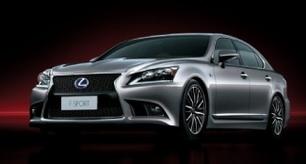
The Lexus LS 500 and 500h are both exceptional cars. The ‘obnoxious’ styling especially to the grille makes the offerings from BMW, Benz and Audi look bland and overly corporate inside and out. It’s really in the dynamics department that the LS falls short of its rivals and only the LS 500 is enjoyable if you like to drive with a degree of conviction.
Both the LS500 and 500h, though, have wonderfully comfortable rides and this together with those sumptuous interiors makes these the perfect place to be if you’re in the back being swiftly and quietly taken to you next meeting.
For me the sweet-spot pick would be the LS 500 F Sport for its value and dynamic ability.
The GLE Coupe isn't going to click with a traditional enthusiast but will appeal to a new age of mainstream performance buyers. It's a total tech showcase and you can feel all of those 48-volt benefits from behind the wheel.
Love it or hate its shape, then, you have to appreciate how Mercedes has gone to the nth degree on the details on an SUV it probably could have sold on looks alone.
“You’re either going to love them or hate them.” You can bet that whenever you’re told this just before being introduced to somebody then that somebody is going to be downright obnoxious. The same goes for the LS, well it’s face anyway, because those are the kinds of statements made about that grille.
The thing is, the LS needs an obnoxious face because its up against The Establishment - the Mercedes-Benz S -Class, BMW 7 Series and Audi A8, and given there’s no way they’ll ever let Lexus into their little ‘club’ it’s good that the LS has steered clear of imitating them and is boldly different.
This was also the type of thinking which inspired the grille’s creator, Tokuo Fukuichi. The so called ‘spindle grille’ first appeared in 2010 on the CT200h before rolling out to the rest of the Lexus line-up. The look polarised the opinions of fans and even executives inside Lexus. But Fukuichi was adamant the key to the brand’s survival and success was to not to be boring.
That massive gaping mouth is anything but boring, and for this new-generation LS the spindle grille has been overhauled. Yes, some car companies might make a few tweaks to a grille, but not Lexus. Using a CAD computer program, it took designers six months to refine each of the 5032 surfaces on the F-Sport’s grille and the more than 7000 on the Sports Luxury’s. If only you didn’t have to slap a number plate on these exquisitely spun net-like structures.
New LED headlights and the ‘Zorro blade-slash’ LED running lights are equally obnoxious and therefore perfectly suited for the LS’s face. So too are the enormous air inlets below them in the bumper. If only the rest of the car’s exterior was as wild and not mild and milder the further you get from the grille. The rear looks stately, modern and sleek but could have done with something more adventurous (similar to IS’s taillights).
But the LS’s insides make up for that dullness, with a cabin that’s decadent and alien at the same time. A dash which sweeps from door to door features asymmetrical string-like design elements which are a theme carved through wood and glass and stitched into leather throughout the cabin. The quality is superb, while the fit and finish is better than I’ve seen on some of its competitors.
There are four no-cost interior packages on the Sports Luxury ranging from 'Moon White' trim with walnut decorative inlays to black trim with 'Crafted Latte' inserts. But it’s the $9800 optional 'Black with hand-pleating' and 'Kiriko' glass which is a stand out. It’s an intriguing look, the pleated fabric which cascades around the hand-cut Japanese glass.
The F Sport’s cabin is less decorative with seats that hold you tighter in three no-cost option leathers from 'Moon White' to 'Flare Red' with aluminium door and dash decorative elements.
Both cabins are sumptuous, although they fall a little short in gob-smacking tech like those amazing, expansive, floating dash screens and the virtual instrument cluster in the S-Class. Yes, there’s the large screen up front and the seat-back screens in the rear but the styling of the graphics and typeface reveal the Toyota DNA.
The LS has the presence a prestige brand’s flagship car should - imposing, long and wide. Look at the LS’s dimensions. At 5235mm end-to-end and 1900mm across, the LS is longer and wider than a Mercedes-Benz S-Class, but swoops in lower at 1450mm. The LS’s wheelbase is longer than a regular S-Class’s at 3125mm, too.
Apart from the grille you can tell an F Sport from a Sports Luxury by its black brake calipers and black elements in the front bumper, boot lid and sill.
To tell a 500 from a 500h, the difference is subtle. There are the badges, of course, but the 500's rear bumper also has a different design with chrome exhaust surrounds.
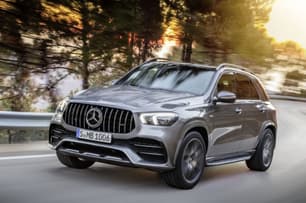
Hate the very concept of a large SUV coupe or not, you have to at least agree this second-generation GLE Coupe looks infinitely better than the model preceding it.
This time the Coupe version was front of mind from the outset of the GLEs development and is significantly different from the wagon version in more ways than just a sloping roofline.
The wheelbase has been cropped in 60mm compared to the wagon, and the GLE Coupe is a full 7.0mm wider and 39mm longer than its predecessor.
All this adds up to an imposing and more resolved SUV Coupe. I especially like the way its bootlid flicks up into a spoiler, and how the tail-lights round out the profile nicely.
Still, there's always going to be something a little off about the proportions when it comes to a coupe SUV this big, and it's certainly a re-imagining of what a sporty vehicle should look like.
This car's cabin is almost as confronting as its exterior. Up front you're met with an assault of chrome, a ventilation overload and a totally dominant expanse of screens.
This all hints at the advanced tech which lies beneath, but the real wood and leather trims also elevate the cabin to something you might expect at the tall asking price.
It may appeal to a particular taste and makes the BMW X6's cabin look almost conventional.
Anything with a 3.1m wheelbase has to be practical right? Well, legroom in the back is excellent, but I can’t properly stretch out in that reclining rear seat with the ottoman without my feet hitting the seatback.
Headroom is also a bit a restricted in that rear row for me, too. That’s something to keep in mind for taller passengers (I'm 191cm tall).
A cargo capacity of 480 litres is 30 litres shy of the Mercedes-Benz S-Class, while the cooler box in the rear (that comes with the Sports Luxury trim) eats into the boot space and drops the total to 440 litres.
The LS is a five-seat sedan, but that centre rear seatback folds forward to become the armrest and houses the controls to the massage and reclining functions, plus two cupholders.
There’s another two cupholders up front and pockets in all the doors. While the storage area under the centre console armrest in the front and back is good – that’s about it for storage.
An access mode will raise the car by 30mm when getting in and lower it by 10mm when getting out. Those wide opening doors also make entry and exit easier.
In some ways, the GLE Coupe makes the most of its extra dimensions, but in other more obvious ways, it's quite compromised.
Benz tells us there's now 40 litres of combined cabin storage, and with the large door bins, centre console box, convertible cupholders, and glove box, I'm inclined to believe them.
The brand also told us much of the extra 39mm of body length has gone into the rear passenger space, and this seems true when it comes to legroom.
You definitely notice the decline of the C-Pillar, though, making an otherwise large space feel slightly claustrophobic, particularly with the 53's dark headlining and heavily tinted rear windows.
The almost absurd ride height does make peering over the bonnet a chore at times, although I enjoyed the adjustability and comfort afforded by the front two seats.
In terms of connectivity, front passengers get a plethora of USB-C jacks, a wireless charging bay, and a 12V power outlet. There's no USB-A connectivity, so you'll want to stock up on converters.
Rear passengers benefit from dual USB-C ports in a fold out tray, and also score dual adjustable air vents. Two extra climate control zones can be optioned for rear passengers ($1450), and there's also an exorbitant option package to include two screens and wireless headsets for the full business-class experience in the back seats ('Entertainment Package' - $6000!).
You might be surprised given this SUV's shape, but a lot of thought was also poured into the design of the boot area. Thanks to a large footprint, the GLE 53 Coupe's boot is large at 655 litres, five litres up on its predecessor. It's still a whopping 170-litres down on the wagon version, though.
The boot lip has been lowered significantly to increase ease of use, too.
Our test car did not have a spare wheel, with only an inflator kit or run-flat tyres to be working with. This is despite a large area under the boot floor which, to my eyes at least, could easily have fit a space-saver spare.
The line-up is simple. There are two powertrains: the turbo-petrol V6 LS 500, and the petrol-electric LS500h hybrid, and there's no price difference between them. Then, there are two trim levels: the F Sport for $190,500 and Sports Luxury for $195,500.
Coming standard on the F Sport are 'F Sport' seats with leather upholstery, heated front and rear seats, dual-zone climate control, 28-way power adjustable front seats and head-up display. The multimedia system comes with a 12.3-inch screen, sat nav, DVD player, DAB+ digital radio, Bluetooth connectivity and a 23-speaker Mark Levinson sound system.
There’s also LED headlights, 20-inch alloy wheels and a kick-open tailgate. While the F-Sport misses out on some of the plush features of the Sports Luxury it does get hardware for better on-road dynamics which you can read about in the driving section below.
The Sports Luxury has that large screen, those power adjustable front seats and the multimedia system with that Mark Levinson stereo, too, but adds much more. The front passenger seat slides and folds itself forward to allow the seat behind it to recline and extend its ottoman-style leg rest.
Both rear seats are 22-way power adjustable and heated. If you’re lucky enough to be lounging back there, you’ll also two 11.6-inch seat-back screens with a DVD player. Plus, there’s four-zone climate control, a rear cooler box and power sun shades.
The F-Sport and Sports Luxury have their own choice of no-cost interior options. The Sports Luxury also gives you the option to buy (for $9800) one of four special interior packs – you can read about the standout one with the hand-cut glass below.
There are 11 body colours to choose from: Sonic Quartz, Sonic Silver, Titanium, Liquid Metal, Onyx, Graphite Black, Vermillion, Scarlet Crimson (a dark red), Metallic Silk, Deep Metallic Bronze and Deep Blue.
Does price matter when it comes to a machine like this? The GLE 53 variant with which this generation of Coupe will launch is the mid-grade car in a three-variant line-up.
It wears a very premium MSRP of $171,800. Soon it will be joined by the only non-AMG badged variant, the GLE 450 Coupe ($137,000) and the top-spec V8 bruiser, the GLE 63 S ($222,700).
To put those numbers (and this car's very existence) in context, it's best to look at its direct competitors.
You'll likely know of its arch rival, the BMW X6. Another Coupe SUV at the pointy end of the price scale, the closest rival variant to our GLE 53 is the M50i starting from $159,900.
Other rivals in this rapidly growing space include the Porsche Cayenne Coupe S at $166,200, and the yet-to-arrive Audi SQ8 which has not yet had its pricing locked in for the Australian market. See what I mean? Coupe SUVs are beyond just an oddity.
So, it's more expensive than its direct rivals, but does it have good reason to be? The GLE 53 is equipment laden from the get-go.
Included are the standard fitments from all new Benz models, including the headline dual 12.3-inch screens adorning its massive dashboard, complete with Apple CarPlay, Android Auto, built-in navigation and voice activation, real leather interior trim with fully electrically adjustable heated and cooled front seats, 21-inch alloys, 'multibeam' LED headlights, AMG styling items, a wireless charging bay, head-up display, and, of course, a panoramic opening sunroof.
An impressive list, but the technology under the skin of the new GLE goes a step beyond. Read about its engine and transmission tech and impressive safety suite later in this review.
Let's talk engine specifications .The LS 500 has a 3.5-litre twin-turbo petrol V6 making 310kW/600Nm, with drive being sent to the rear wheels via a 10-speed automatic transmission. That's impressive horsepower, but this car is heavy is a weight of about 2.3 tonnes.
The LS 500h has a 220kW/350Nm 3.5-litre V6 (a different engine to the 500’s) plus two electric motors driving the rear wheels. The total power output is 264kW. Shifting gears in the 500h is a continuously variable transmission (CVT). Just a reminder, too, the LS 500h is not a plug-in hybrid. Regenerative braking re-charges the lithium-ion batteries.
If you're looking for a diesel, you won't find one here. Same goes for a manual gearbox. And, while buyers can choose an all-wheel drive (awd) Lexus LS in other markets around the world, ours are all front-wheel drive.
Here's where this car gets particularly interesting. It's a hybrid. But not your gran's Prius. It's hybrid in a way which will make you re-think the technology.
Residing under the bonnet is a 3.0-litre, twin-turbo, straight-six engine mated to a very complex looking nine-speed (torque converter) automatic transmission.
One of those two turbochargers is driven by an electric motor rather than the exhaust (in order to provide its peak benefits at the lowest possible rpm), and there's also an electric motor inside the transmission which takes the load off the engine at low speeds and between gears.
This isn't where the 48-volt tech ends, with the GLE 53 also sporting active anti-roll bars and dampers, which significantly adjust the ride and body-roll on-the-fly.
All four wheels are driven via Benz's 4MATIC+ all-wheel drive system.
The LS 500 has an official fuel consumption of 9.5L/100km while the 500h’s is 6.6L/100km after open and urban road driving. We drove both cars on mainly country roads and saw an average of 10.1L/100km in the LS 500 and 9.1L/100km in the 500h.
It's a performance car, so fuel consumption is probably not going to be front of mind for potential buyers. That said, the hybrid tech delivers a surprisingly good number.
The official combined cycle consumption number is ambitiously under 10L/100km at 9.3L/100km.
After three days of (roughly) combined testing and about 300km of distance travelled, our car was showing a dash-reported 14.1L/100km. Not near the claim, but is it really bad for a performance SUV weighing 2447kg? I would argue, not.
The GLE 53 requires the top-shelf 98 RON hydrocarbons to fill its 85-litre tank, giving it a maximum theoretical range of 726km between fills.
My first experience of the new LS was from the back seat of a 500 Sports Luxury being driven from the airport to the venue where Lexus Australia would deliver the presentation on its fifth generation of the car.
Seat reclined, I was whisked quietly and comfortably through the traffic, barely any road or wind noise, the ride was superb on that air suspension, a little floaty but still damped well enough for it not to become bouncy, with minimal head sway (the movement that makes you car sick).
Cocooned in leather with seat-back screens for audio and DVD the ride and environment was just right for a limousine chauffeuring important business types who need swift and tranquil transportation. Not for weirdos like me who were only interested in the way the front and back multi-link suspension kept a 2.3-tonne car with a 3.1m wheelbase so civilised, even through roundabouts. I wondered if this was actually the best way to experience the LS – from the back seats, being driven?
When I did drive the 500 and 500h in the two trims later it more or less confirmed that first impression. The 500 in F Sport trim was the best to drive, while the 500 in Sports Luxury was the best to be driven in. Why? I’ll explain.
The LS 500’s 3.5-litre twin-turbo V6 makes more power than the hybrid for starters, which is always a good thing when you need to move a car this heavy. Even then the LS 500’s acceleration isn’t super quick, and the engine needs to work hard when asked to get a wriggle on. That 10-speed automatic transmission is excellent though.
The same can’t be said for the CVT in the 500h which under harder acceleration does what CVTs do in that situation, make more noise without seeming to get the drive effectively to the wheels.
The 500h’s naturally aspirated V6 is a good thing, but it seems the weight of the car and the CVT work against it being exciting to drive. After a couple of hundred kilometres in a 500h blasting through the countryside steering it became tiresome rather than rewarding with the engine constantly kicking in and whining incessantly when asked for more beans, please.
This car is far better suited to slipping silently through city streets than it is galloping through the bush – that’s where the 500 is a lot more at home.
The 500 and 500h are rear-wheel drive cars, and this, along with an almost 50-50 balance, sets the ground work for good cars to pilot. The F-Sport trim adds an active rear stabiliser bar as standard equipment and brings a more sophisticated version of Lexus’s 'Vehicle Dynamic Integrated Management' (VDIM) – a stability system using data from suspension, ABS, traction control, electric power steering, the stabiliser bar and rear steering. The result is the control of longitudinal, vertical, yaw, roll and pitch movements for better ride and handling.
The F Sport trims adds bigger brakes, too with 400mm x 36mm discs on the front and 359mm x 30mm at the back, plus staggered tyres with 245mm rubber at the front and 275mm at the rear.
The electric steering is light, which makes it easy to manoeuvre in carparks, and an 11.2m turning circle is great for the class.
On the open road at speed the steering is pinky-finger light even in Sport+ mode, and while it’s smooth and accurate, I want to feel more connected to the wheels and where they’re pointed.
While the LS 500 is more the driver’s car than the 500h neither perform as well dynamically as Benz’s S-Class, but from the back seat the LS feels just as comfortable and even plusher.
This Benz feels about as imposing from behind the wheel as it is to look at. Straight away, you'll notice you tower over the road. I felt as though I was sitting high enough to be on the roof of passing hatchbacks, so there's nothing traditionally 'sporty' about it from the get-go.
I know you're probably thinking visibility is average with that roofline, and you'd be right. You just can't see much, full-stop, out the back.
Thankfully, an array of sensors and very wide-angle mirrors help with overall visibility, so you won't have to be too paranoid about unseen vehicles in your blind spots.
I'm pleased to report all the technology which goes under this SUV's skin is evident when it comes to the drive experience.
The hybrid tech is ultra-slick and impressive in every department, from trawling in traffic to the curvy stuff and the open road.
The responsiveness of this powertrain is something to be experienced (with the pre-spooled turbo) and the way the hybrid motor in the transmission smooths out shifts removes all the worst characteristics of a traditional torque converter automatic.
One thing to note about the GLE 53 – while it's quick, it's not quite a fire breather. There's no getting around this car's almost two and a half tonne weight, and while I love the smooth feel and note of the 3.0-litre straight six, it's simply not as thunderous or full of theatre as I imagine the 63 S will be.
Despite its height and weight, the altered steering ratios and 48-volt driven suspension and anti-roll systems cause a suspense in belief when it comes to the corners.
And grip levels are certifiably absurd with those gigantic rear tyres also pitching in to do their part to help something this large deny gravity and physics.
It's not all amazing though. You really feel every millimetre of this SUVs width, and at the end of the day there's no getting around it. It just doesn't feel anything like a sports machine in the traditional sense.
When it comes to ride quality, the GLE impresses, but has its limits. Sure there's air suspension at work, but it offers up nowhere near the ride quality of the more comfort-tuned GLC 300e I recently tested.
Seems as though there's an inevitable cost to keeping the GLE feeling well and truly planted at all times.
On the freeway the GLE Coupe is ridiculous in the way it can basically drive itself, so this offers up a real plus for those looking for a balance of performance and sensibility for longer trips.
The Lexus LS has not been crash tested, but all the signs are there that this is an exceptionally safe vehicle, from the structure of the car to the advanced safety technology such as AEB (forward and reverse) with pedestrian detection, lane keeping assistance and adaptive cruise control.
For child seats there are three top tether anchor points and two ISOFIX mounts across the rear seats.
Both the 500 and 500h are fitted with run-flat tyres.
It would be no good having a 2.5-tonne rolling tech showcase without top-tier safety to match, and the GLE 53 Coupe doesn't disappoint.
Standard is autobahn-spec auto emergency braking, which combined with lane change assist is beyond just the radar cruise in most cars, it's truly autonomous.
Don't try this at home, but the GLE is capable of completely driving itself on the freeway should you... theoretically... let go of the wheel.
Also included is blind spot monitoring, rear cross-traffic alert, traffic sign recognition, and driver attention alert.
There's a top-down camera suite, too (will help maneuvering given it's tough to see over the dash and out the back), and a compliment of nine airbags.
You won't be surprised to hear the GLE range is covered by a maximum five-star ANCAP safety rating to the stringent 2019 standards.
The Lexus LS is covered by a four-year/100,0000km warranty. Servicing is recommended every 15,000km or 12 months. There is no capped price servicing program. Being a Toyota family product the Lexus LS also comes backed by the same reputation for reliability and you may experience lower maintenance costs than perhaps its German rivals.
Mercedes has recently made a jump to the front of the luxury segment, offering an industry-wide standard of a five-year/unlimited kilometre warranty. Here it is only rivalled by Korean newcomer, Genesis.
Service intervals occur once every 12 months or 25,000km and prices can be pre-packaged at a discount.
A three-year service plan can be had for $2800 ($3500 if you choose to 'fix' the price), four years can be had at $3800, while a full five-year plan will set you back $5200. Not cheap, but then, neither is the car itself...