What's the difference?
Most people that are wealthy enough to be ferried around in a car or limo choose a long luxurious sedan like a Mercedes-Benz S-Class, BMW 7 Series or a Lexus LS. Of course, there are now also SUVs that are used for the same purpose.
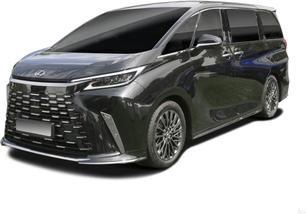
But what about a plush people mover? There are very few of these available in Australia and they don’t sell in huge numbers. But Lexus believes there is a market for such a model and it has just launched the big and bold LM. The hybrid-only range is a unique proposition and the LM should hold appeal for limo and tourism operators, and larger cashed-up families.
This initial launch drive was a slightly different format to usual. Given the intended use of the lounge-like model, Lexus arranged for us to be collected in the LM by a chauffeur and ferried from Melbourne to the Mornington Peninsula. From there we got behind the wheel for a brief drive, but many of my impressions will focus on the passenger cabin experience.
Note too that the LM500h does not land until early 2024, so we only sampled the LM350h AWD.
So jump aboard and let’s see if this Lexus can do everything the LS can do - and maybe even a little bit more.
I know, picture Ferrari and you'll likely be conjuring images of potent V12 or V8 engines, a scenery-shaking exhaust bark on start-up and a fuel bill that would make a Sheikh wince.
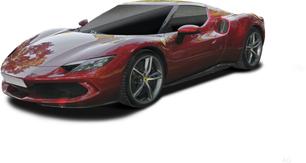
But this one, the 296 GTS, doesn't have, or do, any of those things. In fact, it doesn’t so much explode into life as it does kind of whirr gently, as though you’ve just switched on a photocopier.
And yet, people I trust on these matters reckon this just might be the best Ferrari to have ever worn the badge. So, I guess we better get to figuring out what the hell is going on with this plug-in Prancing Horse.
The Lexus LM is going to be a niche model. This was not designed to appeal to people that may have bought a Toyota Tarago back in the day, or even a Kia Carnival now.
It has a specific purpose for ferrying people around in absolute comfort and at that, it succeeds in a big way.
It’s just a bonus that it’s great to drive.
Welcome to the automotive equivalent of a business class airline suite.
Note: CarsGuide attended this event as a guest of the manufacturer, with accommodation and meals provided.
Anyone who says electrification somehow muddies the Ferrari formula is wrong. This plug-in Prancing Horse is among the most potent and direct vehicles I’ve ever driven, and the electric motor only adds to the experience.
Look, people movers are not considered the sexiest of automotive body styles, but that’s changing.
The Kia Carnival and Hyundai Staria are examples of good MPV design.
And the Lexus LM steps it up again.
It is based on Toyota’s TNGA-K architecture that underpins a bunch of Toyota and Lexus models, including the Lexus RX, and it measures a whopping 5.1 metres long and has a three-metre wheelbase.
It shares its underpinnings with the latest generation Japanese-market Toyota Alphard, which is a cult hit in Australia among the grey import set.
The front-end design is bold, with the latest take on Lexus’ big ‘spindle grille’, pinched slimline headlights and a stubby nose.
I am a big fan of this design. It is far more than a box on wheels and it has quite a bit of presence.
The interior design up front is modern Lexus, with a few familiar Toyota touches, and while it’s not exactly minimal, it’s still visually appealing.
It is hard not to swoon when you gaze upon the 296 GTS, and I say that with no bias - I don’t think all Ferraris have looked this good.
But this is Ferrari at its dreamy, sweeping best, from the tarmac-kissing front — which generates so much downforce and cooling it negates the need for active aero — to its swollen haunches and the glass-topped engine window.
So what’s the difference between this and the GTB? Largely it is the ability to drop the folding roof, meaning you can feel the wind in your hair and that exhaust in your soul. To be honest, though, I reckon it looks better top up...
It’s a cockpit-style driver’s set-up inside, and there’s lots I love and some things I don’t. But let’s start with the steering wheel, which might be one of the best in existence.
It feels magic under the touch, as do the giant flappy paddles which remain fixed in place as you turn the wheel.
It’s also surprisingly comfortable in the figure-hugging sports seats, though climbing in and out of them is not necessarily something you want to do in front of a crowd.
Downsides? There is plenty of tech in the 296 cabin, but it’s all controlled from the steering wheel, making it fiddly and annoying to use.
Also, there are F1-levels of complexity on the control-everything steering wheel, and if I’m being honest, there are some buttons or switches, the function of which I still don’t fully understand.
While most of the fun happens in the second row of the Lexus LM, there is a lot to like in the front compartment.
The dash is dominated by a large touchscreen that houses Lexus’ latest multimedia setup. The logical menu and uncomplicated sub-menus ensure this is an easy system to navigate. Speaking of, the in-built sat-nav is one of the better systems I have experienced.
Comfort isn’t just the domain of the second row - the driver’s seat is very supportive and comfortable, with power adjustment.
There’s plenty of glass including a smaller front quarter window that helps eliminate front blind spots, so forward visibility is exceptional. Rearward visibility is aided by the digital rear-view mirror that is designed to ensure privacy for second and third-row occupants. You don’t want the chauffeur spying on you while you’re sleeping, do you?
The other big tick for me is the driving position. Other people movers, namely the Hyundai Staria and Mercedes-Benz EQV, have very low window lines and it leaves you with a feeling of sitting on the car, rather than in it. I am sure it helps with extra light and it probably makes it easier for kids to see out of, but from a driving perspective, I find it a little disconcerting.
But the LM has flipped that. The front compartment is designed in such a way that it feels like a cockpit that you’re ensconced in. This helps the driver feel more connected with the car, and in the LM it feels like you’re sitting in the driver’s seat of a sporty sedan, not a five-metre bus. Very well done, Lexus.
And now to the main event - the second row.
Where to begin. Let’s start with space. Because there is so much of it. Unsurprisingly given the seating layout, there is an unending amount of head, leg, knee, bum, shoulder and whatever-else room. I can’t imagine anyone complaining about space back there.
Also, getting in and out is a breeze thanks to the sliding power doors on both sides. These can be opened from the front seat, and via several buttons in the rear.
Those captain’s seats are plush. Not quite Benz S-Class plush, but still.
They are adjustable six ways - power adjustable, of course - and they’re heated and ventilated. They recline almost flat, too, if you need a nap on the way to the country estate. And while you do that you can look up through the split sunroof, or close the shade a number of ways.
Is there a massage function? Of course there is a massage function. And it’s not bad. You can choose two settings - weak and firm.
Adding to the feeling of a business class airline seat, there is a fold-out table in the armrest, although it’s a smallish one. And there is dual-zone climate control in the rear.
There is a roof-mounted control panel for things like climate, sunshades and sunroof blinds, but much of this can also be controlled by the Apple iPhone-like devices clipped into both rear seats. These are closer to the seats, so it is easier to access than the roof.
Another function in the device is the Climate Concierge that features different modes - Dream, Relax, Focus, Energise. Depending on which one you choose, it alters the seat settings, massage, climate and lights to suit.
I love the massively wide side windows that are tinted (or privacy glass), too.
Other amenities include map pockets, knee and roof-mounted air vents and a 14.0-inch display screen that retracts from the roof and connects to an HDMI cable, allowing you to watch whatever you want.
The third row is not as appealing as the second. It is technically a three-person row, but the width and the fact that it has a sizeable gap in the centre suggests that this is best thought of as a six-seater van.
The seats are not as plush of course, so you might not want to spend too much time in that row unless you are a small child. But you do get USB-C ports, cupholders, air vents, lights, sunglasses holder, power side shades and grab handles.
Getting in and out of the third row can take a while. It’s all power adjustable, so you don’t have to lift anything heavy - but it takes a while for the second row seats to move forward and up.
With all seats in place the cargo space is limited. In fact, it’s just 110 litres.
That’s similar to what you get in a seven-seat SUV. But it did fit all our overnight luggage easily.
Drop the rear row and that expands to a maximum of 1191 litres in the 350h or 752 litres in the 500h.
All grades have a space-saver spare wheel.
What do you want to know around practicality? We’re talking two seats, about 200 litres of cargo space total and a couple of smallish storage spaces in the cabin. And… that’s about it.
Next question, please.
From launch there will be two versions of the LM350h Sports Luxury on offer - front-wheel drive and all-wheel drive, priced from $160,888 and $165,888 before on-road costs respectively.
They both have seven seats across three rows and share the same four-cylinder hybrid powertrain, but an even more high-end version is on the horizon.
The LM500h will land in January 2024, priced from $220,888, and it adopts a newer more powerful hybrid powertrain. Something else that sets the LM500h apart is the seating layout - it is a four-seater. Behind the driver and front passenger compartment are two big captain’s chairs that recline flat if required. Decadent luxury. Or so the pictures suggest. We will have to wait until the New Year to sink into the sumptuous seats.
Given the positioning and interior layout, the LM will probably not appeal to people looking at a Kia Carnival, or who would have opted for the departed Toyota Tarago. It will, however, appeal to large families that aren’t short of a dollar, airport limo operators, and even as tourist transport.
Thankfully, there’s a substantial amount of standard gear fitted as standard in the LM.
The only difference in spec between the two 350h grades is the addition of all-wheel drive. Otherwise you’ll find keyless entry and start, front heated seats, automatic retractable side steps, power opening side doors, rear privacy glass, a pair of sunroofs, and semi-aniline or L-aniline upholstery.
Tech-wise, there is a digital rearview mirror, and a 14.0-inch touchscreen, a 12.3-inch digital instrument cluster, a head-up display, seven USB ports, a smartphone charger and a rear 14.0-inch multimedia display.
The 500h adds niceties like a separation partition with elevating and dimmable glass, that doubles as a 48.0-inch widescreen display to watch films and TV, or take conference calls with. It also gets two partition glove boxes, a pair of umbrella holders, two second-row phone chargers, a 23-speaker Mark Levinson 3D audio system and more.
In terms of rivals, there really aren’t many other luxury people movers on the market. Aside from the Mercedes-Benz V-Class and all-electric EQV, there are higher-grade versions of the Volkswagen Multivan, and the LDV Mifa 9 EV.
Okay, hold your breath for a moment. The 296 GTS lists at $668,146, which is a sizeable jump over the hard-top GTB, which is more like $551,800. But what price a little open-air freedom?
What you get for that investment is a two-part (solid) folding roof, of course, but also what might be Ferrari’s most high-tech offering to date, with a plug-in hybrid system delivering potent performance rather than a usable EV driving range, a mega-clever braking system and an almost telepathic six-way 'Chassis Dynamic Sensor' designed to link the car’s key functions to make the experience, and the driver, somehow better.
Elsewhere, there are sports seats, Matrix LED headlights, 20-inch alloys, keyless entry and a very cool engine start touch-button on the even cooler steering wheel.
Oh, and there's wireless charging and Apple CarPlay, both thankfully standard in Australia, the latter controlled through the steering wheel and digital driver display.
It's all beautifully finished and a joy to behold and sit in.
There are two hybrid powertrains available. Coming next year, the LM500h combines a 2.4-litre turbocharged petrol engine and a hybrid setup, making for power and torque of 202kW and 460Nm respectively. It is all-wheel drive and is paired with a six-speed automatic transmission.
The LM350h comes with a 2.5-litre naturally aspirated petrol engine and a parallel hybrid system, offering up a total system output of 140kW and 239Nm. The 350h comes in front or all-wheel-drive guise and uses a continuously variable transmission (CVT).
Now we're talking. The powertrain here is both tremendous and terrifying, pairing a 3.0-litre twin-turbo-petrol V6 with a rear mounted electric motor, and a 7.5kWh battery, to deliver a total 610kW and 740Nm. That power is fed through an eight-speed dual-clutch auto transmission.
Those are, frankly, scary numbers, and enough, Ferrari says, to dispatch 100km/h in just 2.9 seconds, and to push on to a top speed of 330km/h.
As you’d hope with an all-hybrid line-up, the LM excels when it comes to combined cycle fuel efficiency. The 350h FWD sips just 5.5 litres per 100 kilometres, while the AWD version is 5.6L/100km. The 500h is a little thirstier at 6.6L.
Our drive was so brief we did not get to record an on-test fuel figure.
The theoretical range of the LM, considering the 60-litre fuel tank and 5.5L/100km (350h) and 6.6L/100km (500h) fuel consumption figures is about 1000km.
As well as the ability to start up and slink away silently, the Ferrari 296 GTS’s little battery will deliver a 25km EV-only driving range, and contribute to the overall claimed fuel use of just 6.5L/100km.
Charging is AC only, and the the brand reckons it takes around 90mins to top up using an 11kW charger. The self-charging is on-point, though, with the Ferrari able to quickly recoup energy from braking and the like to top up the battery without needing to plug in.
As mentioned earlier, I spent much more time in the second row as a passenger than I did behind the wheel of the LM350h. But it was enough time to capture some initial high-level drive impressions.
But let’s start in the rear. The ride in the second row is comfortable - as you’d hope. Our trek from Melbourne’s inner north down to the Mornington Peninsula included a lot of freeway, which was smooth. The only thing that disturbed the peace was a chunky bridge join that caused a bit of a thump. But we were hardly disturbed.
Back in the driver’s seat, there’s a lot to like about how the LM350h drives. First of all, it feels smaller on the road than its ample dimensions would otherwise suggest. It even feels relatively light on the road.
After the LM, I drove a Mercedes-Benz EQE SUV that has a similar kerb weight (the Lexus is about 2.4 tonnes), and the LM felt lighter.
The hybrid powertrain is responsive enough, offering decent acceleration from a standing start. The more potent 500h will of course be quicker.
The transition from electric to petrol propulsion is pretty smooth in Lexus (and Toyota) models these days, and the additional noise-deadening materials in the LM ensure it’s subtle.
The 2.5-litre petrol engine is really only noticeable when accelerating hard, and the CVT a slight drone, but it’s in no way unpleasant.
Otherwise it’s a superbly refined and quiet cabin on all but the absolute worst road surfaces. Whisper quiet power windows adds to that feeling of luxurious refinement.
Given the brief time behind the wheel, we didn’t get to test the handling capability of the LM, so that might have to wait for a review in the New Year.
The steering is heavily weighted and doesn’t feel overly responsive, but it’s perfectly suited to this sort of vehicle.
That supple ride we experienced in the rear was also evident behind the wheel.
This was especially impressive on a couple of pock-marked peninsular back roads. The ride is also much more compliant than the Mercedes-Benz EQV I tested early in 2023.
The engine is undoubtedly a highlight, and we’ll get to that in a moment, but I first want to talk about the steering in this car.
It might sound like a weird point to get hung up on, but it is sensational, and maybe the best I’ve ever experienced. Generally speaking, super-responsive steering can risk feeling overly sharp and uncomfortable when cruising, but somehow the 296 manages to feel super natural, super responsive, and super engaging, without every feeling sharp or darty. It’s just predictable, responsive, and spectacular.
Honestly, it is a highlight of a drive experience filled with highlights, with another being the dual-nature of this drop-top supercar. Long before I got anywhere near a twisting road I needed to navigate the usual nightmare that is Sydney, tackling traffic, suburbia, freeways, tunnels and expansion joints galore, and the 296 never felt uncomfortable.
Instead, the 296 slipped into a comfortable kind of lope, never jarring or rough, and eminently easy to get along with. And yet, when you arrive on the right road that veil of sensibility drops, and the Ferrari quickly reminds you of its potential.
For a start, the acceleration is properly, startlingly aggressive. Engage the 'Qualification' drive mode (which unlocks the full might of the Ferrari's electrified powertrain) and flatten your right foot, and you'll find the world suddenly hurtling past your windows, and your knuckles will no doubt whiten as you feel the rear tyres fighting for traction against the onslaught should you try it on anything but the straightest of roads.
It's addictive, but it's just one element of a near-perfect combination on offer here, with the 296 GTS the stiffest Ferrari drop-top to date, which becomes immediately clear as you start to attack corners with ever-growing confidence.
Grip, stability and stiffness in spades, the GTS delivers. And all accompanied by an exhaust howl so angry and evil it’s hard to believe it’s being generated by a V6.
It’s a thing of very near perfection.
The LM is yet to be crash tested by ANCAP, and it is unclear if it will be given the fact that it’s a niche model. However, as with other current Lexus models, it has a long list of standard safety gear.
The safety suite, including intersection assist, and a pre-collision system with vehicle, pedestrian, bicyclist and daytime motorcyclist detection.
It also comes with emergency steering assist, full-speed radar cruise control, ‘Curve Speed Reduction’, ‘Lane Trace Assist’ with lane-departure alert, automatic high beam, ‘Road-Sign Assist’ (speed signs only), ‘Emergency Driver Stop System’, a blind-spot monitor and rear cross-traffic alert.
Not much chance of the 296 GTS being crash-tested in Australia — you’d be able to hear the Italians weeping across the ocean.
You do get front and side airbags parking sensors, a reversing camera, auto high beam and tyre pressure monitoring.
When you buy a Lexus, you get a bit more than a car. The brand has a customer loyalty program - Lexus Encore - and depending on what model you buy, you are eligible for some pretty cool discounts, bonuses and experiences.
There are three tiers, depending on your model. UX, NX, RX and ES fall under regular Encore, and electric models the RZ and UX300e sit beneath Electrified Benefits. But the LM, as well as the LS, LC and LX are under Encore Platinum - the top tier.
That means access to the ‘On Demand’ program that allows access to another Lexus model for a few days or longer. So if you own an LC Convertible but need an RX for a few days to ferry people around, that’s all free. There’s valet parking service loans and more.
It also includes upgrades at Lexus partners. Our launch took us to Jackalope Hotel on the Mornington Peninsula, which is a Lexus partner, and you can get a bunch of extras here as a Lexus owner that other guests won’t get.
In terms of other ownership details, the LM is covered by a five-year, unlimited-kilometre warranty, and the servicing schedule is every 12 months or 15,000km.
Lexus is yet to announce the capped-price servicing details for LM, but it is expected to cover five years, and should be in the vicinity of approximately $700 per service.
Standard is a three year warranty, but you can extend that for up to five years. Then, if your car has less than 90,000km on the clock, you can opt into the 'New Power15', which gives you up to 15 years total warranty coverage and is fully transferable.
The first seven years scheduled maintenance is free-of-charge.