What's the difference?
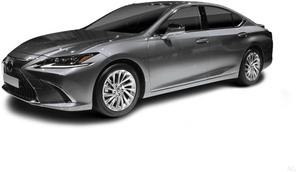
It may be shrinking but sizable fish still swim in the mid-size luxury sedan pool, with the German ‘Big Three’ (Audi A4, BMW 3 Series, Mercedes-Benz C-Class) joined by the likes of Alfa's Giulia, the Jaguar XE, Volvo S60, and... the Lexus ES.
Once the brand's low-key, relatively conservative option, in its seventh-generation the ES blossomed into a full-blown design showpiece. And now it's received a mid-life update with an additional engine choice, upgraded tech, and a refreshed look inside and out.
Has Lexus done enough to bump the ES up the premium sedan ladder? We joined the local launch drive to find out.
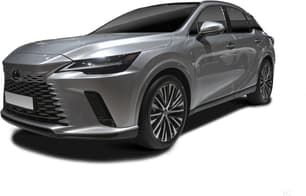
This is a BIG moment for the Lexus RX in Australia. And I'm not just referring to the spindle grille that adorns the front-end of this all-new model (though it too is almost commercially massive).
I'm talking more about the vehicle itself, and its importance to the Lexus brand here. The RX is one of Lexus' best sellers in Australia, and so this new one – which welcomes a new platform, new powertrain options and an all-new F Sport Performance trim level – is a big deal.
So, does it live up to the hype (and to its German competition)? Join me as we figure all that out ahead of the RX's debut here in early 2023.
Since day one Lexus has aimed to prise buyers away from the limpet-like grip of traditional luxury car players. Conventional marketing wisdom says consumers buy brands, with the actual product a secondary consideration.
The updated ES has the value, efficiency, safety, and driving refinement to again challenge the establishment. Amazingly, the ownership package, specifically the warranty, is starting to lag the market.
But for open-minded premium buyers this product is worth a look before following a well-worn brand path. And if it was my money, the ES 300h Luxury with Enhancement Pack is the range sweet spot for value and performance.
The RX is a big SUV that doesn't always look, or drive, like one, and – in 500h guise especially – can put a smile on a driver's face, too.
Gone are the cabin quirks and the polarising design elements (well, mostly...), and in their place you'll find a solid, premium-feeling family offering without much in the way of drawbacks.
Note: CarsGuide attended this event as a guest of the manufacturer, with travel, accommodation and meals provided.
From shy wallflower to life of the party, the Lexus ES was given a comprehensive design makeover for its seventh generation.
A dramatic, angular exterior incorporates signature elements of the Lexus brand's distinctive design language including an unmissable ‘spindle grille’, but is still clearly recognisable as a conventional 'three-box’ sedan.
The jagged headlights now feature ‘tri-beam’ LEDs on F Sport and Sports Luxury grades, adding an extra air of purpose to an already bold face. And the grille on Luxury and Sports Luxury models is now made up of multiple L-shaped elements, mirrored across the top and bottom sections, then finished in gunmetal grey for a close to 3D effect.
The ES is offered in 10 colours - ‘Sonic Iridium’, ‘Sonic Chrome’, ‘Sonic Quartz’, ‘Onyx’, ‘Graphite Black’, ‘Titanium’, ‘Glacial Ecru’, ‘Radiata Green’, ‘Vermillion’ and ‘Deep Blue’ with two other shades reserved for the F Sport only - ‘White Nova’ and ‘Cobalt Mica.’
Inside, the dash is a mix of simple sweeping surfaces contrasted by a flurry of activity around the centre stack and instrument cluster.
Located roughly 10cm closer to the driver, the new multimedia screen is a 12.3-inch unit with touch functionality, a welcome alternative to the laggy and inaccurate Lexus ‘Remote Touch’ trackpad set-up. Remote Touch remains, but my advice is to ignore it and use the touchscreen.
The instruments sit in a deeply hooded binnacle with buttons and dials on and around it. Not the sleekest design in the segment and passable only from an ergonomic point-of-view, but the overall feel is suitably premium.
Honestly, the Lexus RX looks far more powerful, and cohesive, in the metal than it does in some photos, and in the right colour (we're fond on the deep black or the copper-rose hues), it looks downright fetching.
That Predator-shaped front-end is massive, but the way the Spindle grille kind of bleeds in the body work at the nose of the vehicle is a neat trick, and the whole design ethos gives the RX a sportier, more modern, and more intimidating, energy from almost every angle.
Perhaps the most clever element though is the wave-like design piece that links the rear window with the boot, somehow managing to shrink almost-five-metre SUV (visually, at least), and leaving the RX looking more sporty than hulking.
The door handles are cool, too. They’re fixed, and you just touch them to open the door, with a similar system used once inside to get out again.
Inside, Lexus has gone for a clean, modern-feeling space, and, thankfully, there isn't a Remote Touch trackpad in sight. Instead, you can choose between two screen sizes – 9.8- or 14.0-inch – which kind of dominate the dash, while the air-con controls are digital and interactive, too.
It must be said, though, some interior treatments feel far more special than others, and while Lexus in Australia isn't spilling on specifics for our market just yet, the top-spec models will almost certainly feel more plush than the cheaper ones.
An overall length just under 5.0m long shows how much the ES and its competitors have crept up in size over recent generations. The Merc C-Class is more a mid-size car than the compact sedan it once was, and at nearly 1.9m wide and standing a bit over 1.4m tall the ES more than matches it for space.
There's plenty of room up front, the car feeling open and spacious from behind the wheel, thanks in part to the low sweep of the dash. And the rear is just as commodious.
Sitting behind the driver's seat set for my 183cm (6'0”) position I enjoyed good leg and toe room, with more than enough headroom, despite inclusion of a tilt and slide glass sunroof on all models.
Not only that, entry to and egress from the rear is a breeze thanks to a large aperture and wide opening doors. And while the back seat is best for two, three adults across is do-able without too much pain and suffering for short to medium journeys.
Connectivity and power options are plentiful with twin USB ports and a 12-volt socket front and rear. And storage starts with two cupholders in the front centre console, and another pair in the fold-down rear centre armrest.
If the remote touch system was (deservedly) given the boot, there would be room for extra oddments space in the front console.
The front door pockets are adequate rather than large (smaller bottles only), the glove box is modest, but the storage box (with padded armrest lid) between the front seats is more generous.
There are adjustable air vents for rear passengers, which you'd expect in this category, but are always a plus none-the-less.
The rear door pockets are okay, except the opening is relatively slim so bottles are a struggle, but there are map pockets on the back of both front seats as another bottle option.
Important to note that while boot space is decent at 454 litres (VDA) the rear seat doesn't fold. At all. A lockable ski port door sits behind the rear armrest, but the lack of a split-folding back seat is a significant practicality compromise.
A reasonably high loading lip into the boot isn't great, either, but there are tie-down hooks to help secure loose loads.
The Lexus ES is a no-tow zone and a space-saver spare is your only flat tyre option.
The entire RX range now rides on Lexus' GA-K platform, which is lighter (-40kg), more rigid, and offers a lower centre of gravity (-15mm) than the model it replaces.
The RX is wider (+25mm to 1920mm), lower (-10mm to 1695mm), but no longer (still 4890mm) than the outgoing model. But Lexus has lengthened the wheelbase (+60mm to 2850mm) to earn some extra backseat space for rear riders.
And it must be said, there is lots of room for backseat riders. Sitting behind my own 175cm driving position I had more than enough knee room, and enough head room, and a general feeling of airy spaciousness.
Elsewhere you get the usual practicality perks, with two cupholders up front, two more in the pull-down seat divider that splits the rear seat, and there are two ISOFIX attachment points in the back seat, too.
Charging is handled by a four USB ports, and depending on the trim/spec balance Lexus in Australia shoots for, you should at least find vents with temp controls for backseat riders, too.
Lexus is yet to confirm the luggage space specs for the new RX, but given it’s only being offered with five seats, and that there’s been no change to the vehicle’s length, you can expect a fair bit of room for bags in its auto-opening boot.
The existing ES 300h (the ‘h’ denoting hybrid) is now joined by a non-hybrid model using the same petrol engine, tuned specifically to run without the support of an electric motor.
The pre-update, hybrid-only ES line-up spanned six model variations across a roughly $15K price spread from the ES 300h Luxury ($62,525) to the ES 300h Sports Luxury ($77,000).
Now there are five models with an ‘Enhancement Pack’ (EP) available on three of them, for an effective range of eight grades. Again, it's a $15K spread, stretching from the ES 250 Luxury ($61,620, before on-road costs) to the ES 300h Sports Luxury ($76,530).
Let's kick-off with the ES 250 Luxury. Aside from the safety and powertrain tech covered later in the review, the ‘entry-level’ grade is loaded with standard features including, 10-way power-adjustable and heated front seats, dual-zone climate control air, active cruise control, a new 12.3-inch multimedia touchscreen, satellite navigation (with voice control), keyless entry and start, 17-inch alloy wheels, a glass sunroof, auto rain-sensing wipers, plus 10-speaker audio with digital radio, as well as Apple CarPlay and Android Auto compatibility. The steering wheel and gearshift are leather-trimmed, while the seat trim is synthetic leather.
An Enhancement Pack adds wireless phone charging, privacy glass, a colour head-up display, and $1500 to the price tag (total $63,120).
The next rung up the price ladder brings the hybrid powertrain into play, so the ES 300h Luxury ($63,550) retains all the features of the ES 250 Luxury EP and adds a rear spoiler and power adjustable steering column.
Opting for the ES 300h Luxury EP then adds a power boot lid (with kick sensor), leather-accented trim, 18-inch rims, panoramic view monitor (overhead and 360-degree), 14-way power driver's seat (with memory settings), ventilated front seats, side blinds and a power rear sunshade, as well as $8260 to the price (total $71,810).
Next, as the name implies, two ES F Sport models dial up the performance personality.
The ES 250 F Sport ($70,860) retains the features of the ES 300h Luxury EP (except side blinds) while adding LED headlights with adaptive high-beam, a ‘wire-mesh’ grille, sports body kit, 19-inch wheels, performance dampers, an 8.0-inch driver display, alloy interior accents and grippier F Sport seats.
Stump up for the ES 300h F Sport ($72,930) and you'll ride on an adaptive suspension system with two driver-selectable settings, Go one step further and select the ES 300h F Sport EP ($76,530) and you'll also be cranking up a 17-speaker Mark Levinson audio system and warming your hands on a heated steering wheel.
Then, the top-of-the ES pyramid, the 300h Sports Luxury ($78,180), puts it all on the table adding top-shelf semi-aniline leather-accented trim, power adjustable, reclining, and heated rear outboard seats, tri-zone climate control, as well as side door blinds and a power rear sunshade. The rear centre armrest also features controls for the sunshade, seat heating (and angle), as well as audio and climate settings.
That's a lot to take in, so here's a table to help clarify the model walk-up. But suffice it to say this ES maintains Lexus’ reputation for value, testing its competitors in the luxury sedan space.
This is an arbitrary seven out of 10, here. Because we don't yet know how many trim levels the new RX will launch in, how much each will cost, or what you'll get for your investment.
What we do know is that the RX will launch with three powertrain options: an all-new turbocharged hybrid, a second, more conventional hybrid, and a turbo-petrol engine. There’s a plug-in hybrid version available overseas, but we ain’t getting it. Or at least, not yet.
In terms of specific trims and equipment levels, you’ll need to wait until closer to the RX’s launch in early 2023 for the full skinny. But you can expect a choice between a 9.8-inch or 14.0-inch central touchscreen with wireless Apple CarPlay and Android Auto, an eLatch door system with fixed handles that unlatch at the push of button inside and out, as well as more high-tech safety kit (thanks to Lexus Safety System 3.0) than you can shake a radar at.
The ES 250 is powered by an all-alloy, 2.5-litre, naturally aspirated (A25A-FKS) four-cylinder engine featuring DVVT (Dual Variable Valve Timing) - electrically actuated on the intake side, and hydraulically on the exhaust side. It also uses a combination of direct and multi-point fuel-injection (D-4S).
Maximum power is a handy 152kW at 6600rpm and peak torque of 243Nm is available between 4000-5000rpm, with drive going to the front wheels via an eight-speed automatic transmission.
The 300h features a modified (A25A-FXS) version of the same engine using the Atkinson combustion cycle which plays with valve timing to effectively shorten the intake stroke and lengthen the expansion stroke.
The down-side of this set-up is a loss of low-end power, while the up-side is improved fuel efficiency. Which makes it perfect for a hybrid application where an electric motor can make up for the low-end shortfall.
Here, the result is a combined output of 160kW, with the petrol engine producing its peak power (131kW) at 5700rpm.
The 300h's motor is a permanent magnet synchronous type producing 88kW/202Nm, and the battery is a 204-cell nickel-metal hydride type with a capacity of 244.8 volts.
Drive again goes to the front wheels, this time via a continuously variable transmission (CVT).
Let’s start with what we’re not getting at launch. Internationally, there's a new plug-in hybrid variant that pairs a 227kW hybrid system with a 18.1kWh lithium-ion battery for an EV driving range of more than 65kms, but fight though Lexus in Australia did, it couldn't secure the model for our market at launch. It wants it though, and badly. So watch this space.
Instead we get three options, including the RX 350h, which pairs a 2.5-litre petrol engine with Lexus' existing hybrid system to produce a total 180kW and 316Nm. It's paired with a constantly variable transmission and will be offered in two- or all-wheel drive.
There’s also a turbocharged 2.4-litre petrol engine on offer in the RX 350, good for 205kW and 430Nm, and paired with an eight speed automatic and AWD.
But the powertrain I really, really like lives in the RX 500h F Performance, and pairs a 2.4-litre turbocharged petrol engine with an electric motor up front, and a second at the rear axle, for a total of 273kW and 551Nm.
The all-new hybrid system has been designed with turbocharged engines in mind, and features a single electric motor at the front, and a bigger rear motor, with the latter able to provide real driving power to the rear tyres - and contribute to a sprint to 100km/h of just 5.9secs.
Lexus calls it an 'eAxle' motor, and it can deliver some 76kW to the rear tyres. It pairs with a 'DIRECT4' all-wheel drive system which the brand says improves "handling, controllability, and feel."
Fitting, then, that it features on the RX 500h F Performance, which also introduces a new go-fast tier for the Lexus brand (though one you can expect to see more frequently in the near future), and which sits between the existing F Sport and the top-tier, full-fat F models.
The brand says things like bigger brakes, performance components and the highest power outputs will be reserved for the F Performance models. And so it is with the RX 500h F Performance, which welcomes six-piston front brakes, adaptive variable suspension, dynamic rear steering and 21-inch wheels.
Hyundai's official fuel economy figure for the ES 250, on the ADR 81/02 - urban, extra-urban cycle, is 6.6L/100km for the Luxury and 6.8L/100km for the F-Sport, the 2.5-litre four emitting 150 and 156g/km of C02 (respectively) in the process.
The official combined cycle fuel economy figure for the ES 350h, is just 4.8L/100km, the hybrid powertrain emitting only 109g/km of C02.
While the launch program didn't allow us to capture real-world (at the bowser) figures we did see a dash-indicated average of 5.5L/100km in the 300h, which is brilliant for a car in this class, weighing in at 1.7 tonnes.
You'll need 60 litres of 95RON premium unleaded to fill ES 250's tank and 50 litres to brim the ES 300h. Using Lexus figures that equates to a range of a little less than 900km in the 250 and just over 1000km in the 350h (900km using our dash-indicated number).
To further sweeten the fuel economy equation Lexus provides an Ampol/Caltex five-cents-per-litre discount as a permanent offer via the Lexus app. Nice.
Let’s start with the pure-petrol RX 350, which will sip a claimed 8.8 litres per hundred kilometres on the combined cycle, and will demand premium petrol. The RX 350h is more fuel efficient, demanding 6.4 to 6.7 litres per hundred kilometres on the combined cycle.
But the most impressive is the RX 500h, which Lexus says will need 8.2 to 8.5 litres per hundred kilometres — making it more efficient than the petrol-powered RX 350, despite producing an extra 68 kilowatts of power and 121 newton metres of torque.
The first thing you notice behind the wheel of this ES is how extraordinarily quiet it is. Sound absorption materials are stuffed all around the body. Even the engine cover has been designed to keep the decibels down.
And ‘Active Noise Control’ (ANC) uses the audio system to generate “noise-cancelling waves” to suppress mechanical clatter from the engine and transmission. The car is eerily EV-like in it's pin-drop interior tranquility.
We focused on the ES 300h for the launch drive, and Lexus claims 0-100km/h 8.9sec for this version of the car. It feels every bit that quick, but the engine ‘noise’ and exhaust note are like the humming of a distant bee hive. With thanks to Daryl Kerrigan, how's the serenity?
Around town the ES is composed and supple, absorbing pock-marked urban irregularities with ease, and on the freeway it feels like a hovercraft.
Lexus makes a lot of noise about the torsional stiffness of the ‘Global Architecture-K’ (GA-K) platform sitting under the ES, and it's clearly more than hot air. Through twisting B-roads it remains balanced and predictable.
Even in non-F-Sport variants the car points nicely and will steer accurately on the throttle through constant radius corners, with only modest body roll. The ES doesn't feel like a front-wheel drive car, with neutral handling up to an impressively high limit.
Luxury and Sports Luxury grades are offered with three drive modes - ‘Normal’, ‘Eco’ and ‘Sport’, tweaking engine and transmission settings for economy or a more spirited drive.
ES 300h F Sport variants add three more modes - ‘Sport S’, ‘Sport S+’ and ‘Custom’, further revising engine, steering, suspension and transmission characteristics.
Despite all the tuning options, road feel is not the ES's strongest suit. Dialing in sportier modes will add steering weight but no matter what the setting, the connection between the front wheels and the driver's hands is less than intimate.
The CVT auto suffers some of that disconnect between road speed and revs, the engine moving up and down the rev range in search of the power/efficiency sweet spot. But wheel-mounted paddles allow for manual shifting through pre-set ‘ratio’ points, and that option works nicely if you prefer to take the reins.
And when it comes to slowing down the ‘Auto Glide Control’ (ACG) system smooths out regenerative braking when you're coasting to a stop.
The conventional brakes are ventilated (305mm) discs at the front and a solid (281mm) rotor set-up at the rear. Pedal feel is progressive and outright stopping power is strong.
Random notes: The front seats are great. Super-comfortable yet neatly bolstered for secure location. The F Sport's chairs, even more so. The new multimedia touchscreen is a winner. It looks good and menu navigation is agreeably straight forward. And the digital instrument cluster is similarly clean and clear.
Right, let’s cut to the chase here. I like the way the all-new RX family drives, pretty much across the board. If that’s all the information you want or need, feel free to check out here and move on to the next sub-heading.
Still here? Ok, then let’s go a little deeper.
None of the powertrains on offer feel under-powered in the RX range, which is a good start, but they all do their jobs a little differently.
The RX 350 is probably the most familiar, with a traditional automatic and that well-known petrol-powered punch. It’s not the most powerful engine on offer here, but it’s more than enough to get the RX up and moving — but, for mine, it can feel a little thrashy (or like it’s straining a little too hard), when you really start to push it, but such is the price you pay for a four-cylinder engine pushing a large SUV.
Next up is the RX 350h, which Lexus reckons will be the best-selling model in Australia. Lexus and Toyota have been doing hybrid powertrains for some time now, and the system fitted to the new RX is predictably solid-feeling, though it too has its drawbacks – namely that the constantly variable transmission can drone on and on under constant acceleration, and even the commendably insulated cabin can’t block it out completely.
So if this is a Goldilocks’ scenario, then the just right has to be the RX 500h, which blends its powerful powertrain with a traditional-feeling automatic to deliver plenty of performance and a tight, engaging drive experience that makes it feel as though the big SUV is somehow shrinking around you from behind the wheel, courtesy of the best performance kit (brakes, adaptive suspension, etc).
But to be honest, no matter the RX, the thing that really stands out here is its on-road dynamics. The car doesn’t really wobble about, there’s not much in the way of body roll, and it feels tight and confidence inspiring, no matter the model - but especially the rear-wheel-steering equipped 500h.
The RX also does a commendable job of locking the outside world outside of the cabin. Where you want it to be a calm and sedate family hauler, it can be that. But it can also put a smile on your face on the right road, too.
And that, I think, is something to be celebrated. And also not something we’ve come to associate with Lexus over the years. But that’s now beginning to change. Long live F Sport Performance, then.
The Lexus ES scores a maximum five-star ANCAP rating, the car first assessed in 2018, with updates in 2019 and September 2021.
It received high ratings against all four key criteria (adult occupant protection, child occupant protection, vulnerable road user protection, and safety assist systems).
Active crash-avoidance technology on all ES models includes, a pre-collision safety system (Lexus-speak for AEB) active from 10-180km/h, with pedestrian and daytime cyclist detection, dynamic radar cruise control, road sign assist, lane tracing assist, fatigue detection and reminder, tyre pressure monitoring, a reversing camera, as well as rear cross-traffic alert and parking support brake (including an intelligent clearance sonar).
Other features like blind-spot monitoring, adaptive high-beam and a panoramic view monitor are included on F Sport and Sport Luxury grades.
If a crash is unavoidable there are 10 airbags on-board - dual front, driver and front passenger knee, front and rear side airbags and side curtain airbags covering both rows.
There's also an active bonnet to minimise pedestrian impact injuries, and ‘Lexus Connected Services’ includes an SOS call (driver-activated and/or automatic), and stolen vehicle tracking.
For child seats there are top tethers for all three rear positions with ISOFIX anchors on the outer two.
The Lexus RX welcomes the brand's Lexus Safety System 3.0 setup, which means more high-tech kit than you can shake a radar at.
What appears where on the Australian lineup remains to be seen, but internationally the RX will offer things like Advanced Park, remote parking from your smart phone, Safe Exit Assist that will actually prevent you opening the doors should the cameras detect pedestrians or cyclists, and Pre-Crash Safety, which scans intersections for bikes, people or cars, and activate alarms and the brakes should it sense a collision.
That, and things like Front Cross-Traffic Alert, active cruise, Lane Departure Warning and Lane Tracing Assist, road-sign recognition and Lane Change Assist, should see Lexus shooting for a five-star ANCAP safety rating.
From the time it arrived in the Australian market just over 30 years ago Lexus has made the ownership experience a key differentiator for the brand.
Its focus on post-purchase benefits and ease of servicing shook the established luxury players out of their button-backed leather lounge slumber and into a new aftersales mindset.
That said, the Lexus standard four-year/100,000km warranty is some way off luxury newcomer, Genesis, as well as traditional heavyweights Jaguar and Mercedes-Benz, all at five years/unlimited km.
Yes, Audi, BMW and others are at three years/unlimited km, but the game has moved on for them, too. Plus, the mainstream market standard is now five years/unlimited km, with some at seven, even 10 years.
On the other hand, the ‘Lexus Encore Privileges’ program provides 24-hour roadside assistance for the duration of the warranty, as well as, “dining, hotel partnership and luxury lifestyle experience offers exclusive to owners of new Lexus vehicles.”
The Lexus Enform smartphone app also offers access to everything from real-time advice on events and the weather to nav destinations (restaurants, businesses, etc), and more.
Service is scheduled every 12 months/15,000km (whichever comes first), and the first three (capped price) services for the ES are $495 each.
A Lexus loan car is provided while your pride and joy is in the workshop, or a pick-up and return option (from home or office) is available. You'll also receive a complimentary wash and interior vacuum.
The Lexus family is covered by a five-year, unlimited-kilometre warranty, which is about bang-on in the premium-vehicle space.
While servicing details are yet to be confirmed, the previous RX required a trip to the service centre every 12 months or 15,000kms, and it will fall under the brand’s capped-price servicing program, and the Lexus Encore program, which offers all sorts of perks to owners.