What's the difference?
The B10 isn’t Leapmotor’s first car in Australia - the C10 has been here for more than a year now - but for many it might bring about the first time they hear about the Chinese brand.
The 2026 Leapmotor B10 lands in Australia promising to be the most European of its Chinese compatriots, with the brand’s connection to Stellantis giving it access to other brands under the company umbrella like Alfa Romeo, Maserati and Peugeot.
At its local launch, we get behind the wheel in scorching south-east Queensland to find out if that holds true for this electric small SUV, and to see if the B10 can bring with it a better first impression than the already-arrived mid-size C10.
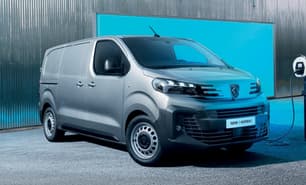
French manufacturer Peugeot is at the cutting edge of electric commercial vans in Australia, having introduced its E-Partner small van (under 2.5-tonnes GVM) in 2023 before recently adding its new E-Expert in the popular mid-size segment (2.5 to 3.5-tonne GVM).
We recently spent a working week aboard the E-Expert to see if it has what it takes to provide a genuine zero-tailpipe-emissions alternative to Toyota’s dominant diesel-only HiAce.
I’ll be a shame if the B10 doesn’t sell well, because it doesn’t suffer from many of the downfalls of its compatriots and its price is extremely competitive for what you get.
As a comfortable smallish SUV, it meets par, and it’s on the better side of tech when it comes to cars from China, and it doesn’t have any major on-road red flags.
You really wouldn’t be disappointed with this having paid $40K, just skip the base model and go for the Design.
Note: CarsGuide attended this event as a guest of the manufacturer, with travel, accommodation and meals provided.
The driving comfort and competent load-carrying ability of the E-Expert in a daily short-haul working role would be well suited to both tradies and fleets, if equipped with the convenience of back-to-base overnight charging at home or depot. However, its zero-tailpipe-emissions technology comes at a high price, requiring careful cost-benefit analysis by potential buyers.
Right after we praise the B10 for its value, we need to talk about its looks. A slight drop in tone as the second Leapmotor to land in Australia looks an awful lot like the first, and it’s relatively bland.
It’s not ugly, but it’s not particularly inspiring and there’s not much character to this little electric SUV.
It’s got a very upright silhouette at the front with a slightly sloping roofline at the rear, so the overall shape is appealing, but the lack of distinct features makes the B10 an anonymous commuter for now, especially with its similarities to the C10.
You can tell them apart by the C10’s slightly larger size if they’re near each other, or the B10’s more in-line headlight bar, where the C10’s have a ‘droop’ at the sides.
The large section of black at the lower half of the front is also unappealing, though darker colours like the optional 'Starry Night Blue' or 'Dawn Purple' (both $990) blend into it better than standard 'Light White'.
To its credit, at least the B10 doesn’t fall victim to the design crutch of adding trim and plastic for no reason.
In terms of the specifics, the B10 is 4515mm long, 1885mm wide and 1665mm tall with a 2735mm wheelbase, making it quite the large small SUV.
Inside, the cabin looks and feels roomy thanks to the test car’s light interior, decent windows and the light from the sunroof, as well as the fact the EV powertrains are compact and generally don’t interfere with cabin space.
Materials aren’t all scratchy hard plastic, though it is dotted around, and the general look of the B10 inside feels more premium than its price would have you thinking, despite the simplicity of the layout and design.
Externally the E-Expert adopts the new look of the Peugeot light commercial range, featuring an elaborate grille design with the brand’s equally new emblem proudly displayed at its centre.
The three-seater cabin design has also been upgraded, with Peugeot claiming extensive revision of the driving position for greater comfort (see Practicality).
The E-Expert rides on a 3275mm wheelbase with 12.4-metre turning circle and combines MacPherson strut front suspension with semi-trailing arm/coil-spring rear suspension, rack and pinion steering with electric power-assistance and four-wheel disc brakes.
Its 1948mm height ensures it can easily access height-restricted areas like underground loading docks and multi-storey car parks.
Getting into the B10 requires a minor annoyance - unlocking and locking the car requires a keycard to be tapped on the drivers’ side mirror like you're scanning to access your floor in a hotel elevator.
There’s an app that adds a fair bit of functionality, but having to whip your phone out ahead of jumping in the car is also irritating.
Once you’re in, though, the space inside the B10 is well laid-out, even if much of its functionality is crammed into the big central touchscreen - it’s always ‘points off’ for a lack of physical buttons in this section of a review.
Once you’re used to it and have sorted out your personal settings on the multimedia software, it becomes more natural and less distracting, though Apple CarPlay and Android Auto would occasionally lag in the car on test.
The good news is they now exist for the brand in the B10, with the Leapmotor C10 still lacking the vital in-car mirroring tech.
The ergonomics and interior space work well, generally, with comfortable pews and good vision, plus decent spaces to keep things out of the way. The phone charger being in a very visible and accessible position might tempt some naughty screen-keen drivers, and being in the sun without a vent for cooling while charging means your phone will get proper hot.
The second row is extremely spacious, belying the fact this car is classified as a small SUV. Oodles of legroom and enough headroom for a tall adult means the B10 outguns rivals in terms of good options for parents (note the B10’s extremely strong 95 per cent child safety score from ANCAP, too) or anyone who needs to cart humans around regularly.
Behind the second row is a 490L boot, which becomes 1475L when the second row is folded down.
There’s space under the floor for cables and messy bits, but unfortunately no spare wheel, just a tyre repair kit, so more points off for that.
A highlight of the E-Expert’s design is its conspicuously low published tare (unladen) weight of only 2052kg, which is considerably lighter than not only its LDV eDeliver 7 LWB Low Roof rival at 2365kg but also the segment-leading diesel HiAce (in LWB Auto Barn-Door spec) at 2245kg.
This figure is largely the result of weight-saving chassis technology, given that its diesel Expert equivalent’s tare weight is an athletic 1698kg. As a result, given the E-Expert’s 3053kg GVM, it has a substantial 1001kg payload rating, so it’s a genuine one-tonner.
It’s also rated to tow up to 1000kg of braked trailer, but given Peugeot does not publish a GCM (or how much it can legally carry and tow at the same time) we can't confirm how much payload it can carry while towing its maximum trailer weight.
The cargo bay, which with the standard bulkhead/cargo barrier has a competitive 6.1 cubic metres of load volume, is accessed through sliding doors on each side with 935mm openings or from the rear through symmetrical barn-doors with 180-degree opening to enhance forklift and loading dock access.
The cargo bay offers 2780mm of floor length and 1628mm width, which combined with 1258mm between the rear wheel-housings means it can carry two standard Aussie pallets, or up to three Euro pallets, secured with a choice of eight load-anchorage points.
The cargo bay floor length partially extends to more than 4.0 metres by opening the load-through flap at the lower left-hand side of the bulkhead and raising the outer passenger seat-base into its vertical storage position.
This allows long lengths of timber, copper/PVC pipe, carpet/lino rolls etc to slide through and be carried internally. There’s also an additional load-anchorage point in the passenger footwell. Overall, this is a practical design feature.
The bulkhead window is protected by a sturdy mesh guard, the cargo bay doors and walls are lined to mid-height and internal lighting is provided front and rear.
A tough liner to protect the load floor from scrapes and dents is not included as standard equipment, but is available as an accessory.
The cabin can seat up to three occupants with a combination of a driver’s bucket seat and two-passenger bench seat. All seats are trimmed in two-tone ‘Mica Grey' fabric and equipped with full lap-sash seatbelts.
Although this cabin design offers wide door access and good comfort for the driver and outer passenger, the centre passenger is compromised by the large central-dash protrusion that houses the gear-selection and drive-mode controls.
The only option for those seated in the middle is to position both legs on the passenger side of this protrusion, which ensures their feet intrude into the outer passenger footwell. So, trips with two passengers should only be short ones.
Another criticism is the lack of hinge detents or struts to hold the rear barn-doors open in their 180-degree positions, given that a gust of wind when loading/unloading can slam them shut with potential injury for the operator (we reckon lock-open devices should be mandatory for all vans equipped with barn-doors).
The cabin includes two tiers of storage in each front door, comprising a slender shelf at mid-height for small items and a large-bottle holder and big storage bin at the base for larger items.
On top of the dash-pad are a small-bottle/cupholder on each side and a large clamshell-lidded compartment in the centre. There’s also a glove box with another open storage compartment below, while the centre console offers a smartphone cradle.
The centre seat’s base-cushion, which is hinged at the front, can be tilted forward to reveal a deep compartment below that’s lined with insulating polystyrene foam to keep small items of food and/or drink hot or cold.
The centre seat’s backrest can also fold forward and flat to reveal a mobile office space, with a small desk that can be rotated to provide a comfortable working angle. It also has a shallow tray for holding pens etc and an elastic strap to hold documents in place.
Talking about the price may well be us highlighting the Leapmotor B10’s strongest point right up top, because you can get into one for less than $40K, drive-away, before the end of March 2026.
While regular pricing for the B10 starts from $37,888, before on-road costs, for the base Style and $40,888 for the kitted-out Design LR, Leapmotor has a limited-time deal starting from $38,990, drive-away, for the B10 Style and $41,990 for the Design LR. LR for Long Range, by the way.
That runs until the end of March, 2026, but even its standard pricing is impressive for what you get.
The entry-grade B10 Style comes with plenty of kit, including an 8.8-inch LCD driver display and large 14.6-inch central multimedia touchscreen, a wireless phone charger, auto climate control, a panoramic sunroof with retractable shade, heated mirrors, auto LED headlights, a set of 18-inch wheels, surround-view parking cameras with dashcam recorder capability, over-the-air (OTA) updates and Level 2 advanced driver assistance (ADAS).
That’s a list of inclusions that can, on paper, rival much more expensive models.
The Design LR, for not much more money, adds heated and ventilated synthetic leather seats with electric adjustment (six-way for the driver, four-way for the passenger), a heated steering wheel, a 12-speaker sound system, ambient lighting, a power tailgate, tinted privacy glass, LED tail-lights and auto folding mirrors.
You’d hate to be in the product planning team of a legacy manufacturer trying to put together a competitive spec for a small electric SUV to sell in Australia against that.
Even other small electric SUVs from China come with much smaller batteries or fewer features around the $40K mark, like the MG S5 EV Essence RWD with its 49kWh battery ($42,990 D/A) or the base Geely EX5 Complete FWD ($40,990 BOC) and the higher Inspire variant is $4000 more.
Our test vehicle, to use its full name, is the E-Expert Pro Long Auto. It’s available only as a long wheelbase variant with single electric motor, 75kWh battery and single-speed automatic transmission for a list price of $79,990.
That’s $18K more than LDV’s eDeliver 7 LWB Low Roof electric rival and more than $29K dearer than both its diesel Expert equivalent and Toyota’s LWB Auto Barn-Door HiAce.
Our example is also finished in 'Titanium Grey' metallic paint ($690 option) which pushes the list price over $80K.
Standard equipment on our test vehicle includes 16-inch steel wheels with black hubcaps, 215/65 Michelin tyres and a full-size spare.
There’s also a solid bulkhead between cabin and cargo bay with load-through flap (see Practicality), front/rear parking sensors, daytime running lights, a 180-degree reversing camera, demister/wiper on each rear barn-door, a Mode 3/Type 2 charging cable in a Peugeot storage bag and more.
Inside are two USB ports and two 12-volt sockets plus an electric parking brake, dual-zone climate control, heated steering wheel with multi-function controls, heated driver’s seat and a 10-inch digital driver’s display.
There’s also a 10-inch central touchscreen to control the four-speaker multimedia system which includes voice recognition, digital radio and wireless Apple/Android connectivity.
There’s only one powertrain option for the Leapmotor B10, a single, rear-mounted electric motor that produces 160kW and 240Nm, which makes the electric SUV good for a claimed 0-100km/h time of 8.0 seconds in both variants.
Top speed is a claimed 170km/h, also regardless of the variant.
The E-Expert’s single electric motor, which drives the front wheels through a single-speed automatic transmission, produces 100kW of power and 260Nm of torque. It also offers three grades of regenerative braking/battery charge replenishment, using paddle-shifters on the steering wheel.
Leapmotor claims the B10 will, from its LFP battery of either 56.2kWh for the Style or 67.1kWh for the Design LR, draw 17.2kWh/100km or 17.3kWh/100km, respectively under WLTP testing.
The result is the Style offering up a 361km WLTP-tested driving range, and the Design LR a more useful 434km.
While we were unable to properly confirm this claim on the launch, the trip computer after a mix of highway driving and more spirited back-road testing displayed a figure of 13.5kWh/100km, while the previous 1447km of driving had reportedly measured in at 14.7kWh.
Charging from 30 to 80 per cent takes approximately 20 minutes regardless of spec and battery size. The smaller battery can be charged via DC fast-charging at a maximum 140kW, and the larger at 168kW. Both max out at 11kW under AC charging.
Peugeot claims an official WLTP driving range of up to 330km from its 75kWh lithium-ion battery, which is mounted in a cradle beneath the load floor to maintain the same cargo bay load volume as its diesel sibling.
Our test vehicle was fully charged on collection and we drove 214km on that single charge, of which 50km was hauling a near-maximum payload on our city/suburban test route. We also switched between the three drive modes, but most driving was done in 'Normal' mode.
At the completion of our test, the dash readout was claiming average energy consumption of 25kWh/100km. So, based on these figures, a ‘real world’ driving range of up to 300km is credible, with potentially more using 'Eco' mode exclusively.
Peugeot claims the E-Expert can be charged from 0-100 per cent using a three-phase (11kW) wall-box in about 7.5 hours, or 0-80 per cent in 45 minutes using (100kW) DC quick-charge facilities.
The Leapmotor B10 was developed with testing at Stellantis’ European proving ground in Italy. This is because despite Leapmotor being its own brand within China, its international operations are a joint-venture between itself and Stellantis.
There are some on-paper shreds of evidence for this, a rear-wheel drive layout and a claimed 50/50 weight distribution help, but get the B10 on the road and it’s clear this isn’t a car that’s relying entirely on price, a long list of features and some showroom shine to sell.
After the initial familiarisation that comes with many new electric cars, particularly from China, the Leapmotor B10 becomes easy to settle into a rhythm with, especially if you turn off some of its more intrusive ADAS features like lane-keep, driver monitoring and speed limit warning. The latter can sometimes get a limit wrong, and though the B10’s chimes aren’t audibly overbearing, they are persistent.
While the B10 doesn’t excel in any areas on the road, it doesn’t fall down significantly in any either.
Its suspension soaks up bumps relatively well, and despite some vibrations on rougher roads the B10 is pretty comfortable. The tyres it rides on as standard, however, are rather noisy, so if there’s an opportunity to swap out the Linglong defaults to something better, we’d advise it.
The tyres also squeal rather quickly when cornering, not necessarily because the B10 is about to let go, but just because the weight of the car appears to be pushing on the front outside tyre in cornering.
The B10 holds up better than\ a family car really needs to in dynamic driving, but we wouldn’t be doing mountain runs or track days in one.
There’s a little body roll in corners, but not nearly as much as has been in other models riding on the apparently soft suspension preferred in China.
The steering, braking and acceleration all have a mild vagueness to them, but once you’re honed in they’re all predictable. The steering can be adjusted for weight, and its lightest setting is too light, while the acceleration feels lethargic in its lowest setting and too aggressive in its highest.
There’s not a lot of regenerative braking strength, but it’s enough to help regulate speed once you’re used to how mildly it comes in - again, depending on your preferences and settings.
The good news here is that the B10 is easy to drive, and only very serious road bumps on fast corners unsettled it on test - the kind you’d expect to upset any car.
Thanks to adjustable lumbar support, a height/reach adjustable steering wheel with flat lower rim to allow extra torso/legroom and a decent-sized left footrest, it’s easy to find a comfortable driving position. The door mirrors, although smaller than some rivals, are adequate given their active blind-spot monitoring assistance.
The steering feel is responsive and nicely weighted, combined with sure-footed handling and supple unladen ride quality from its four-coil suspension.
It provides smooth and near-silent performance at speeds up to 80km/h, with tyre and wind noise becoming more intrusive at highway speeds. We drove most of the test in 'Normal' drive mode, which provides more than adequate city and suburban performance given the E-Expert’s relatively light kerb weight.
The energy-saving Eco mode causes a noticeable drop in response, as you’d expect. The 'Power' setting has the opposite effect, using more energy but producing improved acceleration even with a heavy load on board.
Adjustment of regenerative braking ('Low'/'Mid'/'High') using the steering wheel paddles produces noticeable differences in retardation across the three modes. In High mode, the effect is strong enough to require minimal use of the brake pedal.
To test its GVM rating we forklifted 770kg into the cargo bay, which combined with our two-man crew equalled a payload of 950kg which was only 50kg under its one-tonne limit.
Even so, the coil-spring rear suspension only compressed 40mm under this load, leaving more than 30mm of static bump-stop clearance that ensured no sharp bottoming-out over bumps.
On our congested 50km city/suburban test route, where mid-sized electric vans would typically operate, it handled this load with considerable ease in Normal mode with no requirement to use the Power setting.
The extra weight had a minimal effect on handling and braking response, with the E-Expert proving to be a competent load-hauler within its driving range.
Our only criticism is the positioning of the centre seat’s large headrest, which even when fully lowered blocks a large portion of the central mirror’s view through the bulkhead window and rear doors. As a result, we removed it and stored it away when not carrying a centre passenger.
The Leapmotor B10 was bestowed a five-star ANCAP rating in early February 2026 under the body’s most recent criteria.
There are seven airbags, including an important centre airbag, plus the B10 boasts 17 ADAS systems with 12 cameras and sensors helping monitor the road, surroundings and the driver.
As mentioned, those systems can be a little intrusive sometimes, but less than other new models from brands new to Australia.
The B10’s list of safety features includes multi-collision braking, collision sensors, an emergency data recorder, the aforementioned dashcam-style surround-view recording system, belt pretensioners, plus all the elements of the ADAS suite Leapmotor calls 'Leap Pilot'.
This includes adaptive cruise and lane centring, lane departure warning and emergency intervention, collision avoidance and warnings, blind-spot detection, rear cross-traffic alert and brake, speed assist, and driver monitoring and distracted driver warnings.
For baby capsules and child seats there are three top tethers across the second row with ISOFIX anchors on the two outer positions.
No ANCAP rating but it comes standard with front, side and curtain airbags for driver and passenger plus AEB, lane-keeping, forward collision warning, blind-spot detection (but no rear cross-traffic alert), tyre pressure monitoring, traffic sign detection and more.
It also features what Peugeot calls the 'Acoustic Vehicle Alerting System' (AVAS), which generates sound that can be heard outside the vehicle when travelling at low speed, to enhance pedestrian safety.
The B10’s post-purchase prospects are generally solid, though Leapmotor’s six-year, 160,000km warranty is an area where it falls short of rivals which are offering longer, unlimited kilometre warranties.
The battery is covered for eight years or 180,000km, whichever comes first, which is pretty par for an EV.
Servicing is capped-price for the first eight years, with each service costing $370 on average. The eight-year span makes it pretty appealing, per 12-month interval or every 20,000km.
There are currently 20 dealers across the country, though more are coming, while Leapmotor also offers eight years of roadside service.
E-Expert comes with a five-year/200,000km Light Commercial Vehicle (LCV) specific warranty, plus eight-year battery warranty, 12-year corrosion warranty and three-year paint warranty.
Scheduled servicing is every 12 months/25,000km whichever occurs first, with capped-price for the first five scheduled services totalling $1846, or an annual average of $369. Pre-paid service plans up to five years offer considerable savings.