What's the difference?
Need a dual-cab ute? You’re in luck. Not only does Australia have access to a huge variety of makes and models in the dual-cab space, there is also a huge range of prices and equipment levels.
The sweet spot for Aussie buyers, though, seems to be the dual-cab layout with four-wheel drive and enough convenience and safety gear to make the vehicle a viable family car as well as a work truck when necessary. Which is precisely where the Chinese brands including GWM, BYD and LDV have targeted their current ranges.
There’s been a lot of chat about such vehicles lately, but rather than let the formula stagnate, LDV has ushered in the Terron 9, a dual-cab that, size-wise, falls roughly between the familiar makes and models and the full-sized American-made stuff. This is a crucial point, too, as the Terron 9’s extra size might be a hint on where the dual-cab market is going generally. Certainly, every other class of car and ute is creeping up in size, why not dual-cabs too?
Like the other Chinese brands, of course, the Terron 9’s appeal will largely be based on value for money, so it’s worth picking the car apart to find out how it stands in that regard. But this is 2025, so the Terron 9 is also going to have to produce the goods in terms of driving ability and safety, that modern dual-cab buyers are looking for.
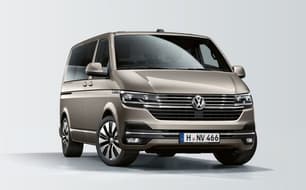
Volkswagen’s new-generation Multivan is the brand’s family-oriented bus, and having just been to its Australian launch the people mover feels more high-end and somehow more practical than ever. But something has changed and it’s only now that it feels as though the final piece of the Multivan puzzle has been found and this van is complete.
Volkswagen’s entire vehicle range is mind-bogglingly big. From hatchbacks, wagons and SUVs to vans and buses, they all have two things in common - a high-quality feel and practicality. The Multivan has always adhered to this theme, as well.
Now, the new-generation Multivan has arrived and it’s clear Volkswagen has stuck to the same recipe of premium and practical, but there’s been a big change in the way it drives thanks to the decision to stop building the van on a truck-like platform and start building it on one used for cars.
You can read more about this below or watch my reaction to piloting the Multivan in my video.
Keep reading for more on the new-gen Multivan.
There’s no doubt that the current crop of Chinese utes are better than previous versions. Similarly, there’s little doubt that private buyers are having a big say in which way the market is headed, particularly when it comes to alternatives to the Thai-built legacy players. And that’s precisely where the Terron 9 plays its best game. The value for money is hard to argue with, and the sheer size of the thing gives it an extra dimension if that’s what you think you need in a dual-cab. While we have no quarrel with the driveline of the Terron 9, it will be nice when somebody finally adds an on-bitumen four-wheel-drive mode to one of these in this price range. Until then, the Terron 9 can’t be criticised for this omission. In the meantime, the Terron 9 exhibits quite a bit of refinement in the way both the engine and transmission work together. Our biggest complaint is the way the driver-assistance systems have been calibrated. The driver-distraction warning is almost comical (for the first five minutes, anyway) in its zeal, and the lane-keeping assistance program is bordering on scary in the wrong circumstances. Again, LDV is not alone in this regard, but as a clean-sheet design, sketched up in a driver-assisted world, perhaps we were expecting a little more from this ute.
The Australian launch of the new generation Multivan was confined to the Life grade with the 2.0-litre diesel engine. Later in 2025 the Style grade will arrive bringing a hybrid powertrain and even more features. We’ll be able to test both more thoroughly once we have them in the CarsGuide garage.
From this first drive, however, it's clear that while slightly pricier than its Kia Carnival rival the new generation Multivan is more practical than ever, and now that it rides on a car platform, far better to drive.
Note: CarsGuide attended this event as a guest of the manufacturer, with meals provided.
While the Terron 9 remains a ladder-chassis design with the body plonked on top (just like traditional four-wheel drives and most other dual-cabs) there is one important departure in design terms. And it’s one that rules out a whole sub-class of this type of vehicle.
Because the body sides are one piece in the Terron, with no gap between the rear bulkhead and the tray, there’s no way to turn the thing into a cab-chassis with a drop-side tray or service body. Yes, you can add a canopy to the existing design (LDV is working on its accessory line-up for the Terron right now) but there’s no cab-chassis variant now or in the works.
That might seem a bit odd, but when you consider the vast majority of dual-cabs are, in fact, styleside utes, maybe the sales hit won’t be a huge one. That’s especially so when you consider many of the Chinese utes rely on private buyers, not fleet customers, for their sales volumes. And in any case, says LDV, the way the body is constructed allows for a little more rear seat legroom and a touch more cargo space length for the same overall length. Which the company believes is a trade-off worth sticking with.
There’s also been a clear brief for the Terron 9 to make a visual statement. While it’s dimensions put it somewhere between the mainstream dual-cabs and the full-sized American pick-ups we see, the styling definitely leans towards the latter. The grille is huge, the vertical tail-lights very Stateside and the whole thing looks imposing. I’ll personally draw the line at attractive, but it’s definitely imposing.
The most adventurous piece of interior design must be the electronic door handles which need just a simple press to open the doors. There’s a manual, cable-operated door opener hidden in each door pocket if things go wrong electrically at some stage.
As with all Volkswagens the redesign of the new-gen Multivan is more about refining than redefining. Just like the Golf hatch which has kept its look through eight generations the Multivan is recognisable and familiar but new and modern looking, too.
Smoother lines, a more heavily raked windscreen and a flatter bonnet make for a cuter snub nose. The new Multivan is less boxy than before even though it is still a box on wheels, just a sleeker, more adorable one.
As mentioned, the Multivan comes in two lengths: the short wheelbase, which is 4973mm from the front bumper to the rear bumper, and the long wheelbase which is 5173mm long. Height for both is 1900mm.
Inside, the cabin is modern with large screens for media and driver instruments with a minimalist design to the dash, while the lack of a centre console frees up space. The sense of roominess is enhanced by daylight flooding in through oversized windows which can be taken a step further when combined with the optional panoramic (split panel) glass roof.
There are nine body colours to pick from including 'Candy White', 'Pure Grey', 'Reflex Silver Metallic', 'Copper Bronze Metallic', 'Deep Black Pearlescent', 'Energetic Orange Metallic', 'Medium Blue Metallic', 'Mono Silver Metallic' and 'Starlight Blue Metallic'.
A longer, wider cargo bed is probably one of the Terron 9’s best party tricks. Compared with the T60, the Terron is larger in every direction and extends that lead into the tub’s dimensions where it emerges with 1230mm between the wheel arches and a cargo bed length of 1600mm (90mm more than the T60 Pro).
That’s partly all possible by the extra wheelbase which, at 3300mm, is about as big as it gets in this class of ute, although the turning circle has grown to 13.1m compared with the T60’s tighter 12.7m.
A spray-in tub liner is standard as is the spring-assisted tailgate. Pony up for the ritzier, Evolve version, and you add cargo rails atop the tub sides and cargo-bed lighting.
Inside the tray, there are four decent tie-down hooks nice and low in the tub and plastic side toppers to prevent damage to the tub’s top rail. The tailgate is a clever design that is supported by springs and struts so that it drops in a controlled way and is very light to lift back up. The latch on the top corner of the tray is odd, but the tailgate can be opened via the key fob, too.
The biggest omission in the tray is the lack of any power socket.
Inside, the cabin is wide and features a pair of cup-holders down low in the centre console, as well as a USB-A, USB-C and a 12-volt socket placed somewhat awkwardly in the centre bin. The front arm-rest looks like it should incorporate a wireless phone charger, which it doesn’t. Yet. Watch this space, is the whisper. A reach and height adjustable steering column is also a nice addition at this price-point. And, thankfully, LDV has worked out that most people don’t want to go fishing through a menu to adjust the climate control. So the Terron 9 has actual buttons on the dashboard. Hallelujah.
Side steps are standard and help you in and out of the cabin, and there are grab-handles in the right places, too. Rear seat space is generous and even the cloth trim of the entry-level version is not the cheap-and-nasty sort, even if it’s far from sporty looking.
The indicator wand is on the `wrong’ side for Australia, partly because the gear selector is a wand on the other side of the steering column. Some users will spend the first few days hitting the gear selector in error. The starter is a push button, but placed in the conventional position of a standard ignition key. Nice touch.
Practicality is the Multivan's greatest strength. Seven seats come standard and the rear five can be configured into numerous variations. If you like you could have those rear seats facing each other or you can just have a second row with a large boot area or you could have two in the middle row and two in the third row or whatever other variation you can think up. Yes, you can remove all five rear seats and now that they're 25 per cent lighter it’s easier to do so.
People space is excellent and at 189cm tall I found it possible to not only sit comfortably in the second row behind my driving position, but also behind that in the third row with plenty of leg and headroom.
An optional multi-functional table is also available and this can slide on rails from the third row all the way up to between the driver and front passenger.
Second row cabin storage is outstanding. You’ll find drawers under the seats big enough for a pair of shoes, hidey holes and cupholders everywhere, seat-back tray tables and gigantic door pockets.
Up front is a double glove box, a dash-top storage bin, more cupholders as well as a multitude of pockets and small storage holes for bits and pieces.
For devices there’s a wireless phone charger and four USB ports.
You’ll also find three-zone climate control with air vents throughout the cabin and dark-tinted glass for the side windows.
Finally, the power sliding rear side doors are huge and allow easy entry and exit to and from both rear rows.
Being able to leave the driver or front passenger’s seat and walk through to the second row is also handy and fun. Not while driving, of course, although it’s tempting.
The Terron 9 will be available initially in entry-level Origin specification and, following that in the next few weeks, a plusher Evolve variant with a mixed bag of additions, some of which extend its off-road appeal, and some of which don’t.
Kicking off with the $50,990 Origin (drive-away for ABN holders) or $53,674 drive-away for private buyers, the range then ramps up to the Evolve model at $55,990 for ABN holders and $58,937 drive-away for private buyers. But if you are an ABN holder and you get in quick, there’s $1000 discount on both grades as a launch deal.
The base vehicle is equipped with 18-inch alloy wheels with a highway-oriented tyre as opposed to the more off-roady All Terrains some competitors use. A tow-bar is standard kit as are LED headlights, a tailgate helper spring, wireless Apple CarPlay and Android Auto phone connectivity, roof rails, twin 12.3-inch digital screens, automatic headlights, six-way powered font seats, rain-sensing wipers, front and rear parking sensors and a 360-degree camera system.
Clues that this is the entry-level car come in the form of the cloth upholstery and the four-speaker sound system, although the standard paddle shifters suggest otherwise.
Move up to the Evolve (when it arrives) and you’ll be adding 20-inch alloy wheels and tyres fitted with similar on-road oriented rubber to match. Sure, the 20s are blingy, but they won’t do anything for off-road ability. More relevant perhaps, is the addition of a front differential lock to join the rear locker standard on the base version.
On the luxe front, the Evolve adds eight-way adjustment for the powered front seats, heating and ventilation for those chairs as well as a massage function, heating for the rear seat, an eight-speaker stereo, ambient lighting, auto-folding exterior mirrors, and a trailer back-up assistance program.
Given the price-tag, the LDV puts up a strong value-for-money argument. Very few dual-cab utes at this price-point offer disc brakes on all four wheels, nor a standard tow-bar. And some of the ones that do supply only the hitch receiver, while LDV supplies the receiver, hitch and wiring loom.
Volkswagen has launched the new Multivan in one grade to begin with called Life and it comes exclusively with a diesel engine. A Style grade will come later in 2025 to sit above it with a higher price but more features and different powertrain - likely a petrol-electric hybrid.
For now, though, the Life is here and there are two versions - a long one and a short one. Volkswagen calls them short wheelbase and long wheelbase but the truth is their wheelbases (the distance between the front and rear wheels) are identical. It’s the back area of the car which differs in length and it’s only 20cm - the length of the boot, basically.
But let’s go with Volkswagen’s choice of words. The Life in short wheelbase form lists for $75,990 and the long wheelbase is $3000 more at $78,990, both before on-road costs.
Standard features on the Life include LED headlights, 17-inch alloy wheels, power sliding rear doors and power tailgate, a 10-inch media screen and 10.25-inch digital driver’s display, three-zone climate control, push-button start and eight-speaker audio plus wireless Apple CarPlay and Android Auto. Seven seats are standard, too.
While peak outputs of both the Terron 9 and its smaller stablemate T60 seem similar on paper, in actual mechanical terms, there are a few important differences.
While the T60 uses a 2.0-litre four-cylinder diesel with a pair of turbochargers, the Terron 9 is, on paper, a bit more simplified, but a lot newer in design terms. It’s a 2.5-litre unit, but reverts to a single turbocharger for a power peak of 163kW (three up on the T60, at slightly lower revs) and max torque of 520Nm (20 more). Fuel economy should be about line-ball with the T60 (more of that later).
Like the T60, the Terron 9 features an independent, coil-spring front end, but loses the T60 Plus’ coil-sprung rear axle for a leaf-sprung live axle.
The Terron 9 sticks with an eight-speed automatic transmission (although a different unit to the T60’s eight-speed unit) and also gets four-wheel drive with a low-ratio transfer case for proper off-roading. What’s missing (but nobody else at this price-point has it either) is Auto 4WD mode which allows the vehicle to be driven in four-wheel drive on bitumen surfaces. In the case of towing on a wet road, this is a huge boost to overall safety.
While the extra torque over the T60’s smaller engine seems welcome, it pays to remember that the larger Terron 9 is about 300kg heavier than its little brother. That said, the payload is a little higher at 1100kg for the Origin and 1005kg for the Evolve but with the vehicle’s full 3500kg on the tow-hitch, that payload falls to 600kg and 505kg respectively, thanks to the Terron’s 6500kg Gross Combination Mass. It’s far from alone in this regard.
At the moment there’s just the one grade of Multivan, the Life, and it's powered by a 2.0-litre four-cylinder diesel making 110kW and 360Nm. Transmission is a seven-speed dual-clutch automatic which sends drive to the front wheels.
Coming later in 2025 will be a petrol-electric variant but it will only be available in a more premium Style grade.
LDV’s official fuel consumption figure for the Terron 9 is 7.9 litres per 100km. That’s a number that you might – just might – see on a gentle highway run, but the 9.0 litres per 100km we recorded on our own test drive is probably closer to the day-to-day mark. That’s still pretty good, though and speaks of the tall gearing in the eight-speed automatic transmission.
Against the 80-litre standard fuel tank, that gives a useable range of close enough to 850km on the open road before you need to start watching the fuel gauge.
It’s also worth mentioning that the Terron 9 is Euro 5 complaint rather than meeting the tougher Euro 6 emissions targets. As such, it does not require the addition of AdBlue, representing another running cost saving.
Volkswagen says that after a combination of open and urban roads the Multivan Life should use 6.4L/100km. While on the launch the trip computer was recording an average of about 8.5L/100km, but we’ll assess fuel efficiency again when this VW comes into the CarsGuide road test garage.
In theory, if you do use 6.4L/100km, the Multivan's 80-litre tank should give you 1250km of range.
The score for efficiency looks quite low here and that's because without having driven the Style grade and the hybrid powertrain all we have to go by currently is the diesel.
The first impression is that this is a very big vehicle. The passenger’s seat seems miles away and the bonnet is high, wide and mighty. That might not play too well off road where such a huge bonnet can hide the obstacles you’re about to fall off or drive over, but at least the forward facing camera system gives you a fighting chance. The other problem off-road is likely to be the sheer girth of the LDV where it might struggle a little for elbow room on tracks formed by smaller vehicles.
On the bitumen, the Terron 9 feels pretty relaxed with a gear for every occasion and an unstressed engine that is clearly tuned for mid-range oomph rather than top-end power. It’s smooth and relatively refined and, left to its own devices, the eight-speed automatic shifts up seamlessly.
The only complaint would be a degree of driveline shunt in the example we drove that could be both heard and felt, most notably in the transition from off-throttle to on-throttle, but also during the odd upshift. In 2025, this seems very odd indeed. We checked with LDV and they reckon this is a one-off glitch and possibly down to the car’s early build. Certainly, the second Terron 9 we sampled didn’t exhibit the same problem.
Ride quality is generally good and while the leaf-sprung rear axle can feel a little lively at times, it’s not a bad match for the front end, meaning that the car feels of a piece rather than two halves of a car fighting each other. While there is plenty of suspension movement, it also feels quite well controlled despite the obvious amount of unsprung mass. Cabin noise is commendably low, too. Thanks to tall gearing and that noise suppression, the Terron is a relaxed highway performer.
The steering is better than average for this type of vehicle with a good relationship between feel, weight and reaction speed. This is one ute than can be hustled along if it needs to be, and one on which the paddle-shifters are a meaningful inclusion (although they’re also a huge bonus when off-roading).
By far our biggest complaint is one that is far from exclusive to LDV. And that’s the (what we consider to be) poor calibration of some of the driver aids. The lane-keeping assistance is the main offender and, on a narrow road with a well-defined edge, the Terron 9 will intervene to prevent a wheel dropping onto the gravel. Unfortunately, at higher speeds, it does so with what feels like a stabbing action; violent enough to scare you the first time it happens. Could it frighten a timid or inexperienced driver into a crash? It’s a possibility we can’t ignore.
The driver-distraction warning is also, ironically, its own distraction. Take your eyes off the road for long enough to read the otherwise excellent dashboard display, and you’ll have the warning stepping in with a beeping admonishment as well as a visual warning that overrides the information you were trying to read in the first place. Again, LDV is hardly alone in this, but there’s definitely some recalibration required before the systems are as good as some of the (more expensive) competition’s equivalents.
The missing piece of the Multivan puzzle for me has been the way it drives. Past versions have been less 'car-like' than rivals like the Kia Carnival. It felt like a commercial van to drive, because essentially it was. But that's been fixed.
One of the biggest changes to this new-generation Multivan is the platform on which it's built. Volkswagen has decided to swap the truck-like platform from the past for the 'MQB' platform which underpins vehicles such as the Golf and Tiguan.
Having spent a few hours driving this new generation Multivan around some great country roads during the launch I can testify that not only is the ride comfortable and composed but this van handles way better than you might imagine.
While the Multivan is in no way a sports car, good handling adds to the fun factor. It's easy to drive with light, accurate and direct steering, good acceleration and smooth gear changes from the transmission, great pedal feel under your feet and superb visibility from the high seating position and oversized windows all around.
That said, I enjoyed driving the previous generation Multivan. I loved its fun and easy piloting factor and the change in platform for this new-gen model makes the experience even more pleasurable.
Both versions of the Terron 9 will feature the same safety package, starting with the latest driver aids such as autonomous emergency braking (AEB), forward-collision warning, lane-keeping assistance, adaptive cruise control, traffic-sign recognition, blind-spot monitoring, rear cross-traffic alert, and a door-exit warning to help prevent `dooring’ cyclists. But as we mentioned earlier, the inclusion of these assistance systems is not enough; they also need to be calibrated properly.
Meantime, the forward-collision warning and autonomous braking functions work in a speed range of 8km/h to 140km/h.
It’s also good to see standard tyre pressure monitoring which really should be included on every vehicle aimed as heavily towards towing duties as this one.
The Terron 9 in all its forms also sports seven airbags including a centre-front air bag to minimise head clashes in a side impact.
The Terron 9 has not been assessed by ANCAP for a crash-safety rating, but it’s expected that ANCAP will, indeed, study overseas data on the vehicle and make a judgment in due course.
Volkswagen's Multivan scored the maximum five-star ANCAP rating under 2022 criteria (tested by Euro NCAP). Safety tech includes AEB, lane keeping assistance, rear cross-traffic alert, blind-spot warning, front and rear parking sensors and emergency assistance.
Importantly, side curtain airbags extend to cover all three rows; there's also a centre airbag between the driver and front passenger.
A pleasant surprise was finding how non-intrusive a lot of the safety tech onboard the Multivan is. While there's steering assistance there are no annoying alarms and bells as you'll find in other vehicles. In trying to focus your attention on the road they only distract you further.
The Terron 9 is covered by LDV’s rather excellent seven-year/200,000km warranty. Service intervals are every 12 months or 15,000km with the exception of the very first service which is due at 10,000km to account for the running-in oil the engine is filled with from the factory. This sounds like an extra impost, but mechanical sympathists will love this attention to detail.
LDV is looking into capped-price servicing but there’s no announcement to be made yet, nor any hint of what the price structure of that might look like if it happens.
The Multivan is covered by Volkswagen’s five year/unlimited kilometre warranty.
Servicing is recommended every 15,000km or annually and will cost you between about $600-800 a year.