What's the difference?
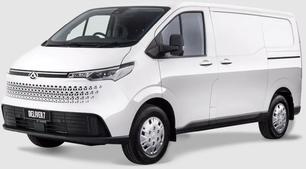
Following up the electric LDV eDeliver 7 comes the diesel-powered model which may look identical from the outside but is an altogether more traditional package.
Effectively replacing the G10 as LDV’s mid-size (2.5-3.5 tonne GVM) van, the Deliver 7 competes against segment stalwarts like the Ford Transit Custom, Hyundai Staria Load, Renault Trafic Pro, Toyota HiAce and Volkswagen Transporter.
Unlike some of the others in that list, the Deliver 7 has its eyes firmly set on the fleet operator crowd with all the required safety equipment, plenty of payload capacity and – crucially – a cheap starting price.
Jayco is Australia’s most prolific builder of camper-trailers, caravans and motorhomes. Many of its models are the cheapest options in their class and represent decent value for money.
The company’s cheapest little camper-trailer – the Swift – is the perfect example of that: functional, versatile, packed with features and it costs less than $20,000.
For a van that is going to be heavily loaded most of its life, the diesel Deliver 7 offers a strong value proposition with snazzy exterior design and passenger car-like interior tech.
As a fleet-oriented vehicle, that ANCAP sticker of approval, non-slip flooring and ergonomic seats will please the health and safety officers, too.
It's a shame, then, that LDV couldn't match the reasonable refinement and ride quality offered by the electric eDeliver 7. Where that van feels competitive with rivals, the diesel Deliver 7’s budget bones add up to a bouncy, unrefined and bonging safety aid-filled driving experience.
The diesel Deliver 7 is a decent enough workhorse but it’s hard to recommend saving the money over its more refined competitor set.
Overall, the Swift is pretty good value. It’s got a sensible layout, a clever process to set up and offers quite a lot of comfort within a cosy package.
Given the price and the layout, it’s worth considering if you’re also shopping for a forward-fold camper-trailer, which likewise offers an internal living area.
When it comes to exterior size, the LDV Deliver 7 sits between the smaller Hyundai Staria load SWB and larger Toyota HiAce LWB. It is only available in low-roof guise but the Deliver 7’s generous width is its party trick, measuring 2118mm from flank to flank.
The Deliver 7’s load area is 2547mm long (or 2913mm in the LWB), 1800mm wide (pinched to 1390mm between the arches) and 1428mm tall for a total of 6.3 cubic metres of load space. There are six heavy-duty tie-down loops to secure cargo.
Adding to practicality are standard barn doors which are handy in low car parks and make loading pallets — the Deliver 7 will easily fit two Australian or Euro palettes inside — simple.
They can be opened to 90 degrees where they lock, or all the way to 180 degrees. There is no lock when fully extended, though, so they can blow closed on windy days. We’d also appreciate seeing a second sliding side door as an option.
The Deliver 7’s star factor is payload, in fact it’s clear of all the listed rivals above by a reasonable margin. The Deliver 7’s 2105kg kerb weight and 3400kg GVM mean drivers can carry up to 1290kg of cargo in the back. It is also capable of towing a 2000kg braked, or 750kg unbraked, trailer load.
Oddly, for its impressive carrying capacity, the Deliver 7 is not equipped with a bulkhead. It is also a strict two-seater without a centre bench for a third occupant.
The trade off here is that the Deliver 7 has supportive car-like bucket seats with adjustable arm rests. The upholstery is cloth that feels hard wearing and the seats slide forwards and backwards, have height and tilt adjust along with manual lumbar to keep you fresh after a few hours behind the small diameter leather-appointed steering wheel.
Moving to a stalk-style shifter frees up the Deliver 7’s centre console for added incidental storage, with handy spots for tape measures, keys, invoices and four cupholders easily accessible.
Hidden storage is a little limited, with a small-ish glove box and ashtray the extent of the cubbies.
And while the Deliver 7’s technology suite looks good on the surface, it is not particularly responsive and many heavy-use functions are restricted to the screen.
For example, the headlight controls are on the main menu and they do not automatically switch off when you turn the Deliver 7 off using its push-button start system unless they’re in auto mode and, instead of just turning a stalk to silence beeping, you have to reboot the car.
The eating and ventilation controls are a mix of digital and physical though the row of switches is an awfully long way from the driver’s seat. The scroll wheels to adjust fan speed and temperature have very fine stops making it difficult to be accurate on the move.
The touchscreen’s menus are otherwise straightforward enough, though it is a shame Apple CarPlay and Android Auto phone mirroring has to run through a cable attached to only one of the three USB-A and USB-C charge ports scattered about the interior.
The camper’s interior is quite cosy, but there’s room to move around or to relax in the dinette, and the beds will become de-facto play areas for young children.
The dinette converts into a small bed, but if you’re thinking about using it as a full-time bed for a child, opt for one of Jayco’s larger campers.
The Deliver 7 is effectively the same configuration as its electric sibling, using struts with coil springs up front and a leaf-sprung beam axle at the back. Standard stuff for a heavy duty van.
The front and rear disc brakes have a nice solid pedal feel with well calibrated ABS and the Deliver 7 is generally safe and fairly secure on the road-holding front.
Unfortunately, the suspension set-up of LDV’s diesel van is significantly worse than the rather refined electric model. Unladen, the Deliver 7’s ride quality is atrocious, bordering on unacceptable.
Over speed bumps, the rear end bucks and shimmies as the van’s dampers fail to control the heavy duty leaf springs. There were several instances when the Deliver 7 was so uncontrolled my backside lost contact with the seat cushion.
As Deliver 7s are likely to spend most of their life loaded up, we headed to BC Sands in Taren Point which happily put 600kg worth of builders sand in the back. The rear ride height dropped 20mm with the load onboard.
With the weight onboard the Deliver 7’s ride settled on rippled tarmac and the bouncing was less abrupt coming off speed humps.
However, the 3.3-turn lock-to-lock steering became light and ponderous and the ride still lacks finesse. A previous-gen Toyota HiAce rides better.
Visibility is another Deliver 7 struggle. A solid-walled van will always be compromised but with the seat in a comfortable position for me, at 188cm, my head was in line with the B-pillar.
The big mirrors couldn’t be adjusted far enough out for my driving position, either, leaving plenty of blind-spot (lucky there’s a safety system for that!). The A-pillars are thick and pushed forward, impacting visibility at junctions and roundabouts.
Because the Swift Touring is so small and light, modern utes and SUVs are able to tow it pretty comfortably. With the Ford Ranger, for instance, as a tow vehicle I can see over the top of this camper-trailer to the traffic behind, and because it is so narrow, vision back along the side is quite generous, too.
The Swift’s weight has little impact on a dual-cab’s performance, and there’s only a slight rise in fuel consumption as the Swift doesn’t have similar aerodynamics to a large caravan.
Also, as its ball weight is so light, the Swift doesn't cause too much rear-end sag in the tow vehicle, even if it’s behind a passenger car.
Another advantage of the Swift’s slightness is that it’s easy to move around at camp, or drag onto the tow-ball if you have to hitch solo or don’t have a reversing camera.