What's the difference?
It’s pretty hard to miss the LDV D90.
Mainly because it is gigantic; it's one of the biggest SUVs you can buy. In fact, I’d say what’s drawn you to this review is maybe you’ve seen one of these behemoths trucking past, and you’re wondering what the LDV badge is all about and how this relatively unknown SUV stands up against popular rivals and other notable newcomers.
To get one confusing thing out of the way, LDV once stood for Leyland DAF Vans, a now-defunct British company which has been brought back to life by none other than China’s SAIC Motor – yes, the same one which also resurrected MG.
So, is this MG big brother worth looking into? We took the recently released diesel version of the D90 on test for a week to seek some answers…
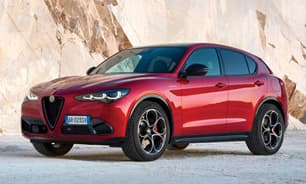
This week I’ve taken the recently updated Alfa Romeo Stelvio Veloce on a massive road trip and after the first few hours of driving it, I thought this is the sort of car you get when you need some extra boot space but still want that sports car vibe.
It helps that our test model is finished in the classic 'Alfa Red' but while its on-road performance can't be ignored, it has some tough medium SUV competition from the likes of the BMW X3, Genesis GV70 and Lexus NX.
So, is it just a fun car to drive or will it suit the family, too? I've been cruising around in it for the last week with my family of three to find out for you!
Looking for a cheap, powerful diesel SUV with huge cabin space and a humane third row for adults? The D90 is a really sound offering, especially considering the price of entry for this top-spec diesel which should resonate with Aussies a bit better than the petrol version.
It has plenty of issues that could be ironed out, but they’re all so small and not sale-breaking it’s almost annoying how much better the D90 could be with just a little work. Rivals should be looking over their shoulder for what comes next.
The Alfa Romeo Stelvio Veloce is the car you get when you want a sports car but happen to have a kid or two. Its ride comfort is on the lower end but it has heaps of power and enough features that it manages to slide into its price tag without feeling too cheeky. The back seat’s size will limit this to smaller families, though. And I would prefer to see better tech at this grade level, so this gets a 7.1/10 from me.
My son didn’t spend much time in this one but he liked the red paintwork. My mum, however, loved the power and sexy packaging. She gives it an 8/10.
Some colleagues I’ve spoken to like the way the D90 looks. To me, it looks like someone gene-spliced a Hyundai Tucson with a SsangYong Rexton in a lab, then grew it in a stew of peptides and this was the result.
What can’t really be communicated in images is how truly massive the D90 is. At over five metres long, two metres wide and almost two metres tall, the D90 is certifiably huge. Given that’s the case then, it’s admittedly almost admirable that only the side profile makes this thing look a little goofy.
I think LDV has done a pretty good job on the front, and the rear is simple but well resolved for a vehicle that rides on a ladder chassis (just take a look at the Pajero Sport for how ladder-chassis rear designs can get… controversial…).
The wheels, garnishes, and LED headlights are all tastefully applied. It’s not ugly… just confronting… size-wise.
Inside shares some familiar characteristics with sister-brand MG. Look from a distance and it’s all quite nice, get in too close and you’ll see where the corners have been cut.
The first thing I don’t like about the interior is the materials. Apart from the wheel they are all pretty cheap and nasty. It’s a sea of hollow plastics and mixed trims. The faux-wood pattern, which is clearly just a print on a plastic resin is particularly gnarly. Reminds me of some Japanese cars from 20 years ago. It might work for the Chinese audience, but that’s not where the market is in Australia.
On the other hand, you could say “well, what do you expect at this price?” and that is true. Everything is here and works, just don’t expect the D90 to be playing alongside the established players when it comes to fit, finish, or material quality.
The huge screen works to finish the dash, but that darned software is so ugly you’ll wish it didn’t. At least all the major touch-points are ergonomically accessible.
While the Veloce has had a facelift, the changes are so minor I would dare to ask, why bother?
The daytime running light signature has been tweaked but only die-hard Stelvio fans will notice it. I do like the larger 12.3-inch digital instrument display but surprisingly the multimedia screen remains on the smaller side at 8.8 inches.
Otherwise, there’s no denying the Veloce looks like an Alfa Romeo, staying true to its Italian heritage. It’s solid, with a 1903mm wide stance, but so robust that it moves away from words like 'sleek' or 'sexy'.
The black grille, 20-inch alloy wheels and red brake calipers make it look sports car mean and hint at what's under the bonnet.
The interior looks well made and it's got a bat cave element with the black headliner and panoramic sunroof. There's a plethora of soft touchpoints throughout and the circular air-vents found in both rows add some flair.
Overall, though, the interior is understated and if you’re looking for something as flashy as the exterior, you may be disappointed.
The D90 is as massive on the inside as it is on the outside. I’m talking better space than a minivan, and nothing says that more than the humane third row. At 182cm tall, I not only fit in the rearmost two seats, but I can do so in as much comfort as any other row. It’s staggering. There’s actual airspace for my knees and head back there.
The second row is massive and on rails too, so you can extend the amount of room available to third-rowers – and there’s so much room in the second row, you’ll have space even with the seats moved forward.
My only criticism here is that the giant rear door is far enough forward to make clambering into the third row a little tricky. Once you’re there though there are really no complaints.
The boot is even usable with the third row deployed, with a claimed 343L of space. That should be hatchback-sized, but the measurement is a little deceptive as the space is tall but shallow, meaning it will only allow you to place smaller bags (a few, if you can stack them) with the remaining space.
The boot is otherwise cavernous with a wild 1350L available with the third row stowed flat, or 2382L with the second row stowed. In this configuration, with the front passenger seat slid forward to its furthest position, I was even able to get a 2.4-metre-long benchtop in the back. Truly impressive.
Without buying an actual commercial van then, this could be the cheapest way into such room, especially in a 4x4 bi-turbo diesel SUV. No arguing with that.
Second-row occupants get their own climate control module, USB ports and even a full-sized household power outlet, with more legroom than you could possibly need. My only complaint was that the seat trim seemed a little flat and cheap.
Front occupants get large cupholders in the centre console, a deep armrest box (with no connectivity in it, just a randomly placed DPF cycle switch), pockets in the doors, and an awkward binnacle under the climate controls that houses the single available USB port. My phone didn’t fit in there.
No complaints about leg and headroom in the front either, though, with plenty of adjustability to boot. The driver’s seat offers a commanding view of the road, although it can be a little unsettling to be so far off the ground in corners… more on that in the driving section.
The front row benefits the most in terms of space and features. I have stacks of headroom and legroom in the front seat and didn’t feel like I was too close to my passenger this week.
I like the comfortable electric seats and the fact you can adjust the side bolsters and under-thigh support.
Individual storage options are on the slim side throughout the car and it was something my mum and I found annoying on our road trip because there aren’t a lot of spots to put your little items up front. Think snacks, sunglasses, lip balm etc.
The two cupholders are really drink bottle holders because they’re too large to fit a small takeaway cup without popping the lid off but I like the large storage bins in each front door.
It's a tight squeeze in the back seat for my 168cm (5'6") height and that’s behind my driving position! It could feel a tad cramped back there for those with longer legs.
It’s also a bit awkward getting in and out of the back seat because of the large wheel arches.
The storage bins in the doors are too small to hold a drink bottle but the middle armrest has two cupholders and a phone holder.
Charging options are fantastic up front with two USB-A ports, one USB-C port, a 12-volt socket and a wireless charging pad to choose from. You even get an 'aux' jack, too.
The amenities in the back seat are okay and you get a couple of net map pockets, reading lights, a USB-A and C port, as well as directional air vents.
This Alfa has a no-nonsense approach with the other tech, though. I usually don’t mind that but the touchscreen multimedia system is a little too no-nonsense for this spec-level.
I found it to be laggy and too small. It also regularly turned itself off and rebooted. This happened a few times while needing satellite navigation directions, which was annoying.
Also on the sat nav, you can’t search for a general name of something, like a business, you have to input an address which meant using my iPhone anyway. It’s great that you get wired Apple CarPlay and Android Auto, though.
The digital instrument panel looks upmarket but isn’t properly customisable and I was disappointed the ambient lighting package only meant that there are lights in the footwells and a tiny overhead light. Adding some extra lighting would have transformed the night-time driving experience.
The boot is the highlight for me because you get a decent capacity at 499L. The load space is level and I like the back row's 40/20/40 split-fold. We had plenty of room on our road trip for luggage and shopping.
You get a temporary spare tyre and a retractable cargo blind. The latter is stiff enough to double as a shelf which is handy and a handsfree powered tailgate comes standard, as well.
On paper, the seven-seat D90 is immediately quite appealing. At $47,990, it is literally a lot of car for the money. This latest iteration, the bi-turbo diesel, is only available in Executive trim at this price, but you can pinch pennies further by choosing one of the lesser petrol turbo variants.
Regardless, and much like its MG sister brand, LDV is good at making sure that essential spec boxes are ticked.
This includes screens galore as is popular in the Chinese market, including a massive 12-inch multimedia screen and 8.0-inch digital dash.
A screen is only as good as the software that runs on it though, and let me tell you, the D90’s software is not good. A quick flick through the weirdly small menu reveals barebones functionality, terrible resolution and response time, as well as possibly the worst execution of Apple CarPlay I’ve ever seen.
I mean, it doesn’t even use all of that screen real estate! Not only that, but in a recent overhaul to CarPlay, Apple released software to utilise wider displays – so the car’s own software must simply be incapable of supporting it. Inputs also proved laggy, and I had to repeat myself on multiple occasions to get any use out of Siri. Unlike every other car I’ve used, the software in the D90 wouldn’t return to the radio after you hang up or stop talking to Siri. Frustrating.
I’d rather have a far smaller display that actually worked well. The semi-digital dash was functional, although barely did anything that a small dot-matrix display isn’t capable of and had one screen which for my entire week said ‘loading’. I’m still not sure what it was meant to do…
At least it supports Apple CarPlay at all, which is more than could have been said for segment hero, the Toyota LandCruiser.
The D90 does tick some necessary items that are quite good. LED headlights are standard, as are leather seats with eight-way power adjust for the driver, a heated multi-function steering wheel, 19-inch alloy wheels (which still somehow look small on this huge thing), three-zone climate control, eight-speaker audio system, electric tailgate, keyless entry with push-start ignition, a reversing camera, front and rear parking sensors, tyre-pressure monitoring, as well as a fairly substantial safety suite which we’ll explore later in this review.
Great on paper then, the bi-turbo diesel engine is a boon, as is the fact that the D90 rides on a ladder chassis with an electronically-controlled low-range terrain mode for the transmission, too.
You’d expect to pay more – even from Korean and Japanese rivals for this much specification. No matter which way you cut it, the D90 is good value.
There are three models for the Stelvio and ours is the mid-spec Veloce grade, which will cost you $82,950, before on-road costs. The pricing should make it competitive compared to its rivals but the features list isn’t as robust as it could be.
The interior gets most of the big-ticket items with leather upholstered sports front seats, extended leather trim on the doors and dashboard as well as a heated steering wheel.
Both front seats are electric with six-way power adjustment, powered side bolsters and four-way adjustable lumbar support. They also feature a heat function and extendable under-thigh support.
The luxury items continue with the panoramic sunroof, real aluminium accents throughout and a premium Harman Kardon sound system that boasts 14 speakers.
Other standard features include full LED adaptive 'Matrix' headlights, aluminium sports pedals, dual-zone climate control, keyless entry, push-button start and a handsfree powered tailgate.
It's the technology that lets the Stelvio down but I'll go into that later.
The D90 was initially offered in Australia with a 2.0-litre turbo petrol four-cylinder, but this 2.0-litre bi-turbo diesel makes much more sense, both for towing and long-distance touring.
It’s a four-cylinder offering a healthy 160kW/480Nm. You’ll note that’s pretty close to Ford’s similar 2.0-litre bi-turbo diesel, which is currently offered in the Everest…
The diesel also gets its own transmission, an eight-speed torque converter automatic with computer-controlled ‘Terrain Selection 4WD’.
This gives the D90 diesel a max towing capacity of 3100kg braked (or 750kg unbraked) with a max payload of 730kg.
The Veloce has a 2.0-litre, four-cylinder turbo-petrol engine that gives a maximum power output of 206kW and 400Nm of torque. It’s an all-wheel drive and has an eight-speed auto transmission which is very smooth.
Checking out the specs I didn’t think this would be as powerful as it is. But it’s really fun when you need to put your foot down! I mean, it can go from 0-100km/h in just 5.7 seconds.
The D90 diesel is said to consume 9.1L/100km of diesel on the combined cycle, but ours didn’t score near that with a figure of 12.9L/100km after a week of what I’d consider “combined” testing.
The D90 a big unit, so that number doesn’t seem outrageous, it’s just nowhere near the claim… All D90s have 75-litre fuel tanks.
The official combined cycle fuel economy figure is 7.0L/100km and my real-world usage came to 8.4L/100km.
I drove our test model hard but did A LOT of open road driving - 2051km to be exact - so I was happy with the average but I would expect it to be higher in the city.
Based on the official combined cycle number and 64L fuel tank, you theoretically should be able to get a driving range of around 914km but my real-world tests see that figure come in closer to 700km.
Alfa Romeo recommends a minimum 95 RON petrol be used for the Stelvio.
The D90 is easier to drive than it looks… to a degree…
It lacks some polish of its more established rivals, which results in a drive experience that isn’t bad, but occasionally frustrating.
The ride somehow manages to be soft and harsh at the same time. It undulates over larger bumps, while transmitting the worst parts of smaller, sharper ones to the cabin. It speaks to a lack of calibration between the suspension and dampers.
That having been said, the D90 masks its ladder chassis underpinnings well, with little of that typical body-on-frame jiggle that some rivals still struggle with.
The drivetrain is good, but a little unruly. As you’d imagine from the figures, there’s more than enough power on tap, but the transmission tends to have a mind of its own.
It will occasionally lurch between gears, pick the wrong gear, and off-the-line will sometimes be delayed before shunting the D90’s bulk forward with a sudden mountain of torque. It doesn’t sound particularly good either, with the diesel surging through the rev range with industrial crudeness.
By the time the D90 has reached cruising speed though, there’s really not much to complain about, with the D90 milling along with plenty of power in reserve for overtaking. The view of the road is commanding, but you really feel the D90’s high centre of gravity in the corners and under heavy braking. The physics of such a large object are undeniable.
I have to say, LDV has done a fantastic job of the D90’s steering, with a quick, light feel that betrays the SUV’s size. It manages to stray on the right side of lightness though, not being so disconnected that you lose a feeling of where the wheels are pointing. No mean feat in something this shape.
Overall then, the D90 isn’t bad to drive and has some genuinely great characteristics, it just also has a litany of small issues that get in the way of it being truly competitive with segment leaders.
The Veloce is downright fun to drive because of how damn responsive it is. There is plenty of power, so much so, that you’ll look forward to hitting the open road.
The sporty steering makes for sharp handling and the car moves decisively. I have felt confident all week that it would do what I wanted it to do. It's wide stance also makes it hug the road like an old friend.
However, the suspension is also sporty, aka firm! The padded seats help soften the impact when you hit a bump but you’ll still know it when you hit one. There's also a resonating 'ker-thump' in the cabin, in case you didn't feel it.
The big thing that marred the driving experience for me, at least for a longer trip, is how loud road and wind noise are at higher speeds. It’s loud enough that you need to raise your voice to talk, which I didn’t enjoy.
The Veloce earns back points with how easy it is to park and it handles those stupidly small hotel car parks extremely well.
I don't rate the reversing camera, though. The quality of the image is terrible for this grade-level.
The LDV D90 carries a maximum five-star ANCAP safety rating as of 2017, and has a fairly comprehensive active safety suite.
Included on the diesel is auto emergency braking (AEB) with front collision warning, lane-departure warning, blind-spot monitoring, driver-attention alert, traffic-sign recognition, and adaptive cruise control.
Not bad for the price, and nice that there’s nothing optional. Expected items include electronic traction, stability, and brake controls, as well as six airbags.
The curtain airbags do extend to the third row, and there’s the bonus of a reversing camera and a tyre-pressure-monitoring system.
There is a full-size steel spare under the boot floor, and the D90 also gets dual ISOFIX and three top-tether child-seat mounting points.
The Stelvio has most of the major items that I like to see on a family car and the standard safety features include adaptive cruise control, forward collision warning, driver attention monitor, traffic sign recognition, lane keeping aids, blind-spot monitoring, rear cross-traffic alert, a reversing camera, daytime-running lights, front and rear parking sensors, and a tyre pressure monitoring system.
It's important to note though that the safety systems only scored a 60 per cent with ANCAP.
It has autonomous emergency braking with pedestrian and car detection and is operational from 7.0 - 200km/h.
The Veloce has a maximum five-star ANCAP safety rating but it was done ages ago in 2017, which means it will expire this December. It also only has six airbags, which is low for a family car but the curtain airbags cover the back row.
There are ISOFIX child seat mounts on the outboard rear seats and three top tethers in the second row but two seats will fit best.
You can just squeeze a 0-4 rearward facing child seat in but it will encroach on front passenger comfort.
LDV covers the D90 with a five-year/130,000km warranty, which is not bad… but falls behind sister brand MG, which offers seven years/unlimited kilometres. At the very least it would be nice to have the unlimited kilometre promise.
Roadside assist is included for the duration of that warranty, but there’s no capped price servicing offered through LDV. The brand gave us indicative pricing of $513.74, $667.15, and $652.64 for the first three annual services. An initial six-monthly 5000km checkup is free.
All D90s need to be serviced once every 12 months or 15,000km, whichever occurs first.
The ongoing costs aren’t too shabby on the Stelvio because it comes with a five-year/unlimited km warranty and you also get five years roadside assistance.
It’s a 24/7 complimentary service that covers a host of items but check out the terms and conditions for more information.
There’s capped priced servicing for five years or up to 75,000km, whichever occurs first.
Services cost an average of $573, which is competitive for the class and servicing intervals are good at every 12 months or 15,000km, whichever occurs first.