What's the difference?
There is nothing quite like a car company occasionally building a car that could be considered a risk. And there are all kinds of risks in the car business - the market isn't ready for that car, people don't identify your brand with this or that type of vehicle, the list goes on. And it's long. It's very easy for me to sit on the sidelines and say, "Pft, what were they thinking?" Few cars land on your driveway without years of thinking having already gone into their development.
The Kia Stinger is the kind of car that would have caused lots of thinking and plenty of hand-wringing at Kia HQ in Korea. Not because it was a bad idea - it wasn't. Not because it's a bad car - it is, in fact, the opposite. And not because SUVs have already changed the way we look at cars - Kia has done well out of that.
It's just that Kia has never produced a car like the Stinger. A five-door coupe-sedan, rear-wheel drive and with a focus on driver dynamics. Most of us know very well how the Stinger GT burst on to the scene in a blaze of well-deserved glory. It's not all about the GT, though. There's a whole range of Stingers and just below that very accomplished sports sedan is the Stinger GT-Line.
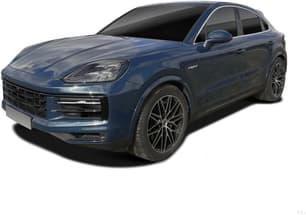
The Porsche Cayenne Turbo GT needs a better name. This is the king of Cayennes and quite possibly the ruler of all super SUVs.
Well, the Cayenne Turbo GT is the fastest SUV around the Nurburgring Nordschleife. Not just that, it has such colossal power and torque it'll be side-by-side with a Porsche 911 GT3 RS in a sprint from 0-100km/h. No, a better name for this SUV would be the Cayenne GT3.
Which is perfect for me because I'm at the point in my life where although I love full-on and noisy cars I also have a full-on and noisy family.
We lived with the Cayenne Turbo GT for a week to find out if this super SUV was also a super family car - from practicality to safety.
We're also a family with ridiculously high expectations of luxury SUVs having lived with and tested each of the Cayenne Turbo GT's rivals - from the Lamborghini Urus and Bentley Bentayga to the Aston Martin DBX and Alfa Romeo Stelvio Quadrifoglio.
The Stinger GT-Line is a great machine. It looks good, feels good to drive and while it's not the cheapest large sedan, it's also not a Camry. With a strong European vibe, it's a nice bridge between boring-dependable and out-of-reach European. Boasting a strong link to Europe in its chassis DNA, it has it all apart, maybe, from the badge.
But Kia has a habit of doing unexpected things and the Stinger was a bold move worth making just for the halo effect of having such a cool car in the range. It has done good things for the company's reputation, as though the rest of the range isn't proof already.
Of all the super SUVs I've piloted, the Porsche Cayenne Turbo GT is the best all-rounder in terms of performance, comfort, cabin technology and style.
As a family car it's roomy, practical and easy to use and drive daily.
As a performance car the Turbo GT is stupidly quick, with the agility of a sports car. Sure, a 911 would leave it behind on a twisty race track, but this SUV is close to having that sportscar experience and keeping your family, as well.
The Stinger looks fantastic. I know the car has its detractors, but there's a massive Euro influence here that sits well in my visual cortex. It's maybe not as ooh-aah as the A5 or the outgoing BMW 4 Series Gran Coupe, but the Stinger can and should be mentioned in the same breath. It looks terrific, even if it is a bit fussier in the details.
From the signature grille, the low beltline, big wheels and sports coupe roofline, it looks sleek and sophisticated.
Inside is a bit more conventional, with some real classic touches such as circular air vents, conventional-looking gear selector and a flat-bottomed steering wheel. It's cool, clean and, with the big new screen, a bit more techy-looking than before. There are lots of nice materials and the odd rogue one, but it's a good cabin that feels well put-together.
This might be a personal thing but to me nearly all Porsches look better from the back than the front.
It's the wide stance and powerful haunches, the hunkered down suction-capped-to-the-road look that does it for me and the Cayenne Turbo GT, despite being an SUV, passes this important Porsche checklist item.
The GT aero kit only serves to make this SUV look more of a beast, and the gold-bronze looking satin Neodyne wheels are a Porsche theme that I've not always been a fan of, but I get the historic connection.
If only the Turbo GT could look a little less like other Cayennes from the front. This is the king of the SUV range and despite the apron and bumper already being exclusive to this model, there should be more.
Vents in the wheel arches, carbon bonnet with nostrils GT3-style perhaps? Or is that going too far? If you do want something more lairy then there's always the Urus.
The Cayenne Turbo GT's cabin is stunning in its plushness and modern surprises such as the passenger display, the hoodless instrument digital cluster, the lashings of Race-Tex upholstery everywhere. It's perfectly Porsche. High-performance meets high-end.
It's also highly practical. Let's talk about that.
This is really a four-seater car. While there is good legroom in the rear, the falling roofline, small door aperture and huge transmission tunnel box you in a bit, almost rendering the middle seat useless for all but the shortest of folks. You do get your own air vents, though, which is generous.
The low roof also means limited headroom, made a little worse by the standard sunroof. I had room but taller people might brush the headlining. There are two cupholders front and rear for a total of four and each door has a bottle holder.
The boot is a modest-for-this-size 406 litres, rising to 1114 litres with the seats down. Access to the boot is good if not spectacular; the hatch opens wide but a slightly narrow aperture means loading and stowing flat packs and things like that could be a struggle.
The Porsche Cayenne Turbo GT only makes one compromise on practicality and that's the removal of the middle seat in the back, which, with just two kids isn't used all the time but on average we might need it once a week for school mates and cousins.
Instead of a middle seat there is a shallow tray, which will fit a phone or in our case leaves and rocks found at the park.
So, yes, the Turbo GT is a four-seater only, but this is a spacious, large SUV with good head and legroom, wide-opening doors for easy entry and exit, and air suspension which can raise and lower the height for easy access.
Storage is excellent with enormous door pockets in the front and back and there are four cupholders.
There's a wireless phone charger in the front and two USB-C ports as well, plus two USB-C sockets in the back.
Four-zone climate control means the kids in the back can set their own temperatures. They also have heated seats.
I was disappointed to see there aren't sunshades for the rear windows - pretty vital in Australia where it feels like we're only about 50 metres away from the sun.
The Turbo GT's 576-litre boot just managed to fit our pram and a week's shopping, which is our minimum standard for living. Any more space is a bonus.
As is the custom at this time of the year, the Stinger scored a mild update for that minty-fresh taste at the dealer. Not much has changed in the looks department (good) and the most obvious tweak is the brand-spanking new media system already seen in the brilliant new Sorento.
The GT-Line is one of two four-cylinder variants of the Stinger, priced at $57,230 or $60,690 driveaway, a solid $7000 more than the 200S and it's $730 more than the MY20. It's also uncomfortably close to the 330S, which has the delicious twin-turbo V6, but obviously a lower equipment level.
For your money you get 19-inch alloy wheels, a 15-speaker stereo, dual-zone climate control, camera package that includes a reversing camera, side cameras and front camera, keyless entry and start, front and rear parking sensors, active cruise control, powered heated and ventilated front seats, sat nav, automatic LED headlights, head up display, leather seats and wheel and even more besides. It's a lot, which is fair given the price.
The 15-speaker stereo is run by the excellent new media system on the excellent new 10.25-inch touchscreen. It's great to look at, has some really cool ideas in it (including the hilarious soundscapes list which includes, for some reason, a noisy cafe environment), DAB and Apple CarPlay and Android Auto.
The Turbo GT is the king of Cayennes, so it shouldn't surprise anybody that it's also the most expensive with its list price of $364,700.
Lamborghini's Urus lists for $409,744 and is the Cayenne Turbo GT's not-so-subtle Italian cousin, sharing the same platform and engine.
Both are in my mind the best performance SUVs on the planet. It just depends how conspicuous you want to be.
Then there's Bentley's V8 Bentayga which isn't blessed with the Porsche's good looks but would still be all over the Cayenne if the two happened to meet at a race track.
So, why is the GT Turbo the king of the Cayennes? What makes it better? For all the reasons you'd think - it's the fastest, most powerful, most luxurious and most equipped Cayenne in the range.
We'll get into mind-bending engine and performance specs soon, but first let me take you through the standard features on a car that's anything but standard.
Coming standard and exclusively to the Turbo GT are 22-inch 'GT Design' wheels in satin 'Neodyne' with full-colour Porsche centre caps, an active rear spoiler, Turbo GT front apron, dual titanium exhaust, rear apron with diffuser, 'SportDesign' side skirts, wheel arch extensions, a lightweight carbon roof and tinted LED HD-matrix headlights.
Inside, and also exclusive to this grade, is the 'GT Interior Package' with 'Race-Tex' upholstery throughout with 'Deep Sea Blue' stitching on the front seats and centre console and the armrests and dashboard.
There's also the 'Carbon Interior Package' which includes dashboard and door trim elements.
Race-Tex trim is applied to the 'GT Sports' steering wheel, roof lining and gearshift, too.
The adaptive active air suspension, which can lower the car by 15mm, is standard and only available on the Turbo GT, too.
The soft-close doors are standard (a cost option on lower grades), as are the stainless steel pedal covers.
The rest of the features are also found on lower grades and include the 12.65-inch digital instrument cluster, head-up display, proximity unlocking, 12.3-inch multimedia touchscreen with sat nav, wireless Apple CarPlay and Android Auto, digital radio, a 10-speaker Bose sound system, heated front seats, rear privacy glass and an auto tailgate.
Four-zone climate control is standard on the GT Turbo, too, and so are heated rear seats.
Our car had several options fitted such as the front passenger display ($2860) and the Deep Sea Blue Accent Package.
The passenger display is a crowd pleaser, but as a family car my kids felt like they were missing screens in the back seats, too. Well, in my day...
Under the GT-Line's bonnet is Kia's Theta II 2.0-litre four-cylinder turbocharged engine. It's the same as before, with a stout 182kW and 353Nm. Driving the rear wheels is an eight-speed automatic from the Hyundai-Kia empire.
It's pretty rapid, knocking out the 0-100km/h spring in just six seconds, a mere 1.1 seconds slower than its faster sibling's 4.9 for the benchmark.
As a middle-aged parent with two children, a Porsche that I don't have to crawl into and out of like a cubby house is a great thing.
What's even better is that this ‘easy access' Porsche is every bit as brutally powerful and fast as the quintessentially ‘pure' Porsche, the 911. Actually, it's more powerful and faster.
The Turbo GT's twin-turbo 4.0-litre V8 petrol engine makes 485kW and 850Nm with drive going through an eight-speed transmission to all four wheels.
In comparison, a Porsche 911 GT3 RS, arguably the most brutal and anti-social 911, has 386kW/485Nm.
I haven't made a mistake. Those are the real numbers. And it's only when you step on the accelerator in the Cayenne Turbo GT, and it feels like somebody's sat down on your chest, that you realise what a big deal this is.
That is such a colossal amount of oomph that this 2.2-tonne family SUV can accelerate from 0-100km/h in 3.3 seconds.
The 911 GT3 RS can do it in 3.2 and it has a roll cage and a fixed rear wing the size of a bedroom door.
And yes, we're now coming into a digital age where Teslas and other electric SUVs are quick, too, but can they go around corners like a Porsche Cayenne Turbo GT?
Do they have the same rumble and roar as a twin-turbo V8 that's terrifying and enticing at the same time.
The correct answer is, absolutely not.
Kia's claimed combined cycle figure is 8.8L/100km. As the Stinger goes without trickery like stop-start or mild hybridness, it's no surprise that my week with it yielded an indicated 10.4L/100km, which isn't bad for a 1750kg sports sedan that was not molly-coddled and also spent some time in a resurgent case of crap traffic in Sydney.
It also drinks standard unleaded, which is a nice touch.
Seriously? This is a 2.0-tonne twin-turbo petrol V8 with a 90-litre fuel tank. Even the Porsche specs sheet doesn't understand the question because in the column for fuel efficiency there are three letters - tbc.
My own testing saw me record 22.5 L/100km at the fuel pump, which means I enjoyed driving the car very much.
A little digging around reveals Porsche globally claims the Turbo GT will use 12.6L/100km, over a combination of open and urban roads.
You might not have as much fun as I did but easing back a little might get you closer to the 700km of range this more frugal consumption figure appears to offer.
While efficient it isn't, I'm not going to mark the Turbo GT too much here because compared to its petrol rivals the fuel consumption is what I'd expect from such a high-output heavy SUV.
I have driven and loved the Stinger GT. It's tremendous fun, goes like a rat running away from a cut snake, which itself is being chased by a mongoose with its bottom on fire, and it handles like a proper sports sedan.
The GT-Line is obviously not that quick, but it's not slow, either. But it does take a bit of the GT's DNA and delivers a driving experience eerily reminiscent of an E90 BMW 3 Series. That seems like an out-of-date reference, but it was a beautiful car to drive with a lovely balance of ride and handling.
The steering has good feel and you know what's going on underneath the front wheels. You sit towards the centre of the car, also a BMW trademark. Turn the wheel and the car goes with you, despite its bulk, and it's happy to dance a bit with its limited-slip diff.
The 2.0-litre turbo does a good job in most conditions but you feel it coming up short when you're hustling it. It's never breathless, but the torque deficit to the turbo six is clear. If you've not driven the faster Stinger, you may not notice, but there's a touch of lag in the 2.0 that contributes to the idea it's working hard to move the big sedan.
But back off a little and it becomes a fluid, fun drive. In town it's firm but very comfortable, gently bumping rather than crashing into potholes. The rear suspension is a complicated five-link set-up that costs money and eats into boot space but delivers the goods.
Given its length the Stinger is a bit tough to manoeuvre in tight spaces and its 11.2m turning circle isn't too flash either, but you soon get used to it.
Never have I met a car this powerful and superbly athletic that is as pleasurable to drive alone on great, fast roads as it is to pilot at 50km/h in the suburbs with a family on board.
It exceeds my understanding of engineering that something this large can move so quickly. That in an instant can turn and tip into a corner with such precision and effortlessness.
Yet it can switch seamlessly and happily to coping with speed bumps and potholes, delivering a ride so comfortable it'll send babies off to sleep. And it did.
The only issue, and this is such a tiny thing, is the dash-mounted gearshift, which means having to reach up and select Drive or Reverse or Park, which, when executing a three-point turn, is necessarily frustrating.
Still, I'm giving the Turbo GT a 10 out of 10 for driving under all conditions, and we didn't even go off-road, which of course you can do, as long as it's not too wild.
The Stinger ships with an impressive safety package that includes seven airbags, ABS, stability and traction controls, high- and low-speed forward AEB with pedestrian and cyclist detection, intersection assist, lane-keep assist, steering assist, driver attention alert, high- and low-speed forward collision warning, front cross traffic alert and rear cross traffic alert.
You get two ISOFIX points and three top-tether anchors.
The Stinger scored five ANCAP stars in 2017.
The Porsche Cayenne Turbo GT hasn't been locally crash tested and so doesn't have an ANCAP rating.
That's quite normal for super high-end cars. But, when this third-generation model first arrived in 2017 it was tested by ANCAP's European equivalent, Euro NCAP, and was awarded the maximum five stars.
There's AEB which operates at city, urban and highway speeds, and lane keeping assistance, and lane change assistance which is a form of blind-spot warning, and adaptive cruise control. You can option rear cross-traffic alert, as well.
A space saver spare wheel is under the boot floor.
Kia's ground-breaking seven year/unlimited kilometre warranty along with roadside assist for the first 12 months. Each time you service your car at Kia, you get an extension on your roadside assist for up to eight years.
Perhaps the only thing that makes you go, "Oh, what?" about the Stinger is the 12 months (Good)/10,000km (Oh...) service intervals. That's pretty common with Kia's turbo engines but is a little inconvenient. Then there's the cost - prices range from $312 to $685, which adds up to $3459 over the first seven services. If you stay under 10,000km/year, that's not bad going at under $500 per year for servicing, but if you're a high-miler, it will add up.
The servicing isn't outrageous - and the prices are capped - but it's not cheap, either.
The Cayenne Turbo GT is covered by Porsche's three-year, unlimited kilometre warranty, which is lagging behind in terms of duration even compared to other luxury brands such as Mercedes-Benz, which offers five years.
Servicing is recommended annually or every 15,000km, although there isn't a capped price maintenance plan with final costs determined at the dealer level (in line with variable labour rates by state or territory).