What's the difference?
An updated Sportage is a big deal for Kia. It's the brand's best-selling model in Australia and around the world, and arguably has never faced more and stiffer competition.
There's a new Mazda CX-5 around the corner, this time with a hybrid, and Toyota has just whipped the covers off its new RAV4. And that's before you mention Hyundai, Volkswagen, Honda or the litany of Chinese newcomers all here for slice of the pie.
Kia tells us this mid-life update is designed to look better, drive better, offer better tech, better safety and better equipment right across a vast range that includes petrol, diesel, hybrid, two-wheel drive, all-wheel drive, turbo and non-turbo alike.
So the question is, is all of that enough to keep the Sportage fresh in the face of all this new competition? Let's go find out.
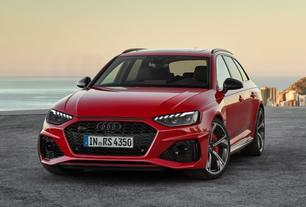
It's the end of the line for that Audi A4 as we know it. In saying goodbye to the ‘B9’ generation A4 that launched in 2015, we welcome the Audi RS4 Competition Plus.
It is the most hardcore example of the breed yet, sitting lower to the floor with hard-edged gear changes, lightweight wheels and snuggly bucket seats. You can also get it in swoopy RS5 Sportback guise.
Audi is only bringing 75 units of each down under as a swan song for the B9 generation RS4 and RS5 before the even-numbered model moves into its all-electric future.
As we’ll go on to discover, these two special models see the A4 and A5 bow out in style.
The Sportage still feels like a super solid offering in its segment, plus the addition of more hybrid options is only going to help.
It does feel a little under-specced in the lower grades, though, considering the everything-and-the-kitchen-sink approach taken by its Chinese rivals.
I feel like I should almost whisper this bit, given it's a dirty word at the moment, but that diesel engine, it's a real peach, and if I wasn't afraid of being run out of Sydney's inner west with pitchforks, that's probably the one I'd be choosing.
Note: CarsGuide attended this event as a guest of the manufacturer, with meals provided.
What a way to send off this generation of Audi RS4 and RS5. The extra focus courtesy of those trick coil overs and drama from the exhaust plus the sharper gear changes deliver the best Audi has done with these RS products.
There are some compromises, with the suspension favouring outright control over low-speed comfort. It’s also true that the current BMW’s M3 and M4 are more impressive, but when the products are nearly seven years fresher than Audi’s, what do you expect?
Plus, those looking for a more restrained and polite fast executive sedan (or wagon) will gel with the Audi’s sophistication. There aren’t many of these Competition Plus RS4 and RS5s coming to Australia and they are impressive visually and from behind the wheel. It’s a fitting way to send off the current generations.
Note: CarsGuide attended this event as a guest of the manufacturer, with accommodation and meals provided.
All new Sportage models feature a redesigned front and rear end, but they actually have a slightly different look. There's one look for the cheaper models and then one for the top-spec cars, the SX+ and GT-Line.
The changes aren't overwhelming, though. There are fog lights in the more expensive models, but also just more use of black edging, as opposed to the silver edging that frames the bottom of the grille and rear end in the cheaper cars.
Either way, I still really like the way the Sportage has come together. The front end looks bold and powerful, mostly because of the vertically stacked headlights and and the DRLs that really frame the front end, but they've also done a good job of making a fairly big and spacious SUV feel small and not too imposing.
Now, inside the top-spec cars it’s very modern Kia, with a big twin-screen setup, and the dual-function bar beneath them that handles things like climate control, but also mapping and media and those kinds of functions. The cheaper models also get the same look, but swap the second 12.3-inch screen for a smaller driver display.
It means you don't have to dig through the screen for everything, which is always a nice touch. And I also like some of the materials used in the GT-Line, too, like the synthetic wood grain that’s actually nice to touch.
But there are a couple of key downsides. Not quite so much in the top-spec cars, but in the cheaper versions. I hate those constant reminders that you didn't spring for a more expensive model, and there are plenty of those in the lower-spec cars.
In the more expensive models, there are buttons alongside the gearshift, but in the cheaper cars, those buttons are still there, just blacked out and inactive. And even the cutout for the head-up display still exists in the cheaper cars, but of course, there's no head-up display.
All of that combined with some hard and scratchy plastics front and back makes you really want to dig deep for a more expensive Sportage.
The RS4 Avant’s 'Progressive Red' metallic helps the black milled 20-inch alloy wheels pop. Its stance is hugely purposeful with wheels tucked right up in the blistered arches courtesy of the lowered ride height — it's how the Avant would have looked in a design sketch.
The visual bulk of the long-roofed RS4 gives it the sort of proportions motoring journalists love to wax lyrical about, even if plenty of buyers still prefer coupes or lifted SUVs.
The RS5's more flowing, elegant lines match well with the Navarra Blue paint work, silver-accented wheels and conventional leather-appointed seats within.
Both cars have effectively identical front cabins reflecting Audi’s classy and sleek design language. The integration of technology is pretty good and the RS4’s additional red styling pack really makes it feel sporty within.
The Sportage measures 4685mm long, 1865mm wide and between 1665mm and 1680mm tall, depending on the trim.
Slip into the backseat of the Sportage and you’ll find legroom is ample, at least for my 175cm frame, and headroom is ok, without being great - though our test car had the sunroof fitted which could be eating into the space.
Elsewhere in the back though, even the top spec GT-Line just doesn't feel that plush. And by that, I mean some of the materials are a bit hard and scratchy, you don’t get your own temperature controls for the air vents, and it generally just lacks a premium air.
Now, to the all-important point in this segment, and that is boot space. The official VDA numbers are 543-1829 litres for the petrol and diesel cars, and 586-1872L for the hybrid, but the real-world reality is a boot that is deep and wide and really has enough space to carry plenty of groceries.
But there is an important caveat. Under the flat floor there is a temporary spare wheel in the hybrids, where in some of the ICE cars, you get a full-size spare wheel.
The RS4's cabin is excellent, with a good mix of physical buttons and responsive touchscreens for control. There’s enough storage space for this kind of vehicle, with good door bins and well-sized cupholders in the centre as well as USB-C and -A charge points.
Audi’s multimedia system is friendly though the large touch targets and dark background aren’t as crisp as those fitted to the latest rivals. The screen isn't as big, either, measuring 10.1 inches for the multimedia item. The RS4 supports wireless Apple CarPlay and Android Auto.
That said, Audi’s 12.3-inch digital driver’s display with bright and poppy mapping software and generous customisation remains right at the head of the pack.
There is a panel of switches below the touchscreen for climate control, physical selection of the five-or-so drive modes and a collection of helpful buttons on the perfectly-shaped and sized leather-appointed steering wheel.
It lacks F1 or DTM wow-factor compared to the C63 and M3 with their easy-access driver mode buttons and toggles on the steering wheel but the RS4's restrained looks will resonate with those that prefer a bit more elegance inside.
Neither the RS4 nor RS5's back seats are designed for those over about 175cm. The RS4’s roof is a little higher so it is good enough for most adults but the RS5’s sloping profile compromises things. It has two individual buckets compared to the RS4’s three-wide bench.
Rear seat passengers get air vents, an individual climate zone, bottle holders in the doors, USB charge points and ISOFIX attachments for the outboard seats, with matching top tethers in the seat backs.
The Audi RS4’s boot is a generous 505L with under floor storage and a netted area on the driver’s side. Folding the 40/20/40 split-fold bench increases space to 1495L. That said, the RS5’s 465L is still very good, though it is not quite as practical in the real world.
Being fitted with roof rails makes for sleek integration of roof racks for the RS4 to slip roof pods, bike racks or whatever else you might choose to take on a trip away.
There are a lot of different numbers involved in the Sportage story. In fact, there are no less than 13 trim and powertrain combinations, and so 13 different prices you can pay. Easier, I think, if I just pop the graphic up on screen and you can jump to the one you want.
While there are four engines and five powertrain configurations to choose from, not all of them are available across all four trim levels. The SX+, for example, offers no electrified options, while the SX will give you hybrids, but no turbo-petrol choice.
The range opens with the S, which gets 17-inch alloys, LED DRLs, power-folding mirrors and roof rails, while inside there are cloth seats, power windows, a smart key with push-button start, and single-zone air-con with rear-seat vents. Tech at this level is handled by a 12.3-inch infotainment screen with wireless Apple CarPlay and Android Auto, but no wireless charging, which pairs with a six-speaker stereo. The driver then gets a 4.2-inch screen to deliver driving info.
The SX then adds 18-inch alloy wheels, dual-zone climate, standard navigation and rain-sensing wipers.
The SX+ is feeling like a sweet spot, adding 19-inch alloys, LED fog lights, artificial leather seats that are heated up front, wireless device charging, a heated steering wheel and a better Harman Kardon Premium stereo.
Finally, the flagship GT-Line gets the lot, with 19-inch black alloys, or 18-inch wheels in the hybrid, welcome lights, projection headlights, a twin-screen cabin which adds a second 12.3-inch screen for the driver, a powered driver’s seat and a head-up display.
All models also get Kia Connect, which gives you remote access to the vehicle for things like pre-setting the climate, as well as Over the Air updates.
I’ve got to say, though, the flagship Sportage offers largely what the cheapest version of most Chinese SUVs offer, showing just how much price pressure the newcomers are putting on the old guard.
You'd expect the RS5 to be more popular given how uncool wagons are these days but Audi's whole thing is wagons — or Avants, for the initiated — so it makes sense that the RS4 Avant outsells the RS5 Sportback about two-to-one.
For the RS4 Avant’s basic asking price of $165,015, before on-road costs, you get luxury features such as LED headlights, an RS design package, Nappa leather upholstery, power-adjust seats, a Bang & Olufsen 19-speaker sound system and metallic paint on top of the significant changes to the RS4’s chassis and zingy 331kW V6.
The RS5 is a little dearer, reflecting the addition of Matrix LED headlights that aren’t available on the wagon.
But we have the 'Competition Plus Pack', which is a $13,990 indulgence that swaps adaptive dampers for Audi’s 'RS Sport Suspension' coil over package with manual rebound and compression adjustment and height adjustment.
The cars sit 10mm lower than a normal RS4 but you can go to a dealer to move the ride height up or down from there.
That’s not it, though. You also get a louder exhaust system with matte black pipes, fixed-ratio steering system, a retuned eight-speed automatic with more aggressive shifts, different rear differential programming, black exterior badging, 2.0kg lighter 20-inch Audi Sport wheels (in silver or black), special LED entrance lights and your speed limiter raised to 290km/h.
The 'Navarra Blue' RS5 pictured is a ‘basic’ Competition Plus. You can go further, as done with the RS4 Avant with its manual-adjust bucket seats ($1300), 'Interior Design Pack' in red ($3400), matte carbon exterior pack ($6300) and carbon trim, bringing its total cost to $191,405, before on-road costs.
That makes the RS4 and RS5 the most affordable in their competitor set, below a BMW M3 Competition xDrive Touring ($183,500) and Mercedes-AMG C63 S E Performance hybrid, which is $187,900, before on-road costs.
The big news about this mid-life update for the Sportage is the expansion of Kia’s hybrid powertrain, which is now available with AWD, and the inclusion of an eight-speed automatic for the 1.6-litre turbo-petrol variants.
Elsewhere, the 2.0-litre petrol option produces 115kW and 192Nm, pairs with a six-speed automatic, and drives the front wheels. The other pure petrol option is a 1.6-litre turbocharged petrol unit that produces 132kW and 265Nm, paired with an eight-speed auto and powering all four wheels.
Then comes the diesel, which is a 2.0-litre unit making 137kW and 416Nm. It pairs with an eight-speed automatic and powers all four wheels.
Finally, there’s a hybrid option, now with two- or all-wheel drive. It pairs a 1.6-litre turbo-petrol engine and a six-speed automatic with an electric motor and a 1.49kWh lithium-ion battery to produce a total 173kW and 367Nm.
Audi’s 2.9-litre twin-turbo petrol V6 has seen plenty of use across performance products from Audi and Porsche, including the Macan S and Audi S6.
In the RS4 and RS5 Competition Plus, it develops the same 331kW (at 5700-6700rpm) and 600Nm (at 1900-5000rpm) as the regular car. This makes it an extremely flexible engine that delivers predictable punch anywhere in the power band.
That said, it lacks the explosive character of BMW’s twin-turbo inline six — the figures are only 15kW and 50Nm higher on paper yet the M3’s response is that much more ferocious.
Audi’s RS division has tried to capture a bit more emotion, retuning the eight-speed torque converter automatic transmission for crisper shifts. This also benefits the RS4’s 0-100km/h sprint time, which falls two tenths to 3.9 seconds in Competition Plus guise.
The V6 breathes a little easier, too, with a different exhaust. Audi says the extra sound is down to 8.0kg less sound deadening in the car.
There’s more resonance at idle that does feel tiring sitting in traffic idling but the trade-off is a brawny mid-range baritone that develops into a shrill bark approaching the redline.
All pure ICE Sportage grades are fitted with 54-litre fuel tanks, while the hybrids get 52-litre tanks. But the hybrids more than make up for it when it comes to fuel efficiency, with the FWD sipping a claimed 4.9 litres per hundred kilometres on the combined cycle, while the AWD drinks 5.3 litres.
The diesel is the next most-efficient, using a claimed 6.3L/100km combined, while the turbo-petrol needs 7.5 litres, and the 2.0-litre petrol requires 8.1 litres.
Our calculations suggest that, taking the fuel claims at face value, a 2.0-litre petrol Sportage should carry you 666kms on a full tank, while a turbo-petrol will take you 720kms. The diesel should deliver 857kms, while the FWD hybrid (1061kms) and AWD hybrid (981kms) will take you the furthest.
The Audi RS4 wagon is rated to use 9.5L/100km in ADR combined cycle (urban/extra-urban) consumption testing while the slipperier RS5 returns 9.4L/100km in the same test.
We weren’t able to run accurate or particularly relevant fuel figures on the event but the trip computers showed around 12L/100km in both RS4 and RS5.
While these numbers are high compared to your average passenger car, the Audi is more efficient than BMW's rivals, and gets remarkably close to the hybrid C63 in the real world.
The fuel tank is quite small for this kind of vehicle at 58 litres. That limits the RS4’s theoretical driving range to 611km.
Unsurprisingly, the Audi RS4 and RS5 require 98 RON premium unleaded petrol.
I want to start this with just a small caveat. It hasn't been the most comprehensive drive of this car so far. And remember, there are a lot of variants.
Petrol, diesel, hybrid, two-wheel drive, all-wheel drive – we haven't driven all of them, and so I feel uncomfortable giving you my rock-solid verdict across the whole range. I can, however, give you my first impressions.
The first of those is that whoever in the vast Hyundai group came up with adding a long-hold function to the stereo mute button deserves a medal. By far the most annoying of the modern safety systems is the overspeed warning, which inevitably reads some signs incorrectly, others not at all, and has no idea when school zones actually start.
Thankfully, Kia, like Hyundai, now has the shortcut to mute it. You just long-hold down mute button and voila, the bing-bongs vanish.
Now elsewhere, as is pretty typical of modern Kias, the ride in this car feels properly well sorted. We've taken it through the city, onto the freeway, along a little twisting road section, and on some typically coarse and broken country B-roads, and the Sportage handled them all really well.
And even when you're getting a little frisky with the driving, there's little in the way of body roll, with the Sportage feeling planted and solid.
I wasn't totally blown away with the refinement in the cabin. On the wrong road surface, you definitely get a bit of road noise in the cabin – mind you, that is pretty hard to avoid on the coarse chip stuff – but you can also hear the engines revving away and working hard when you put your foot down.
That said, the way the gearboxes channel that power is smooth and easy, and when you put your foot down in each of the powertrains we tested, there's certainly enough urge to get you up and moving.
And that is especially true in the diesel, which I do think is a bit of a peach of a powertrain – super torquey and super easy to get the Sportage up and moving. It might find itself on the endangered species list, that engine, so get it while you can.
Now, one small downside. While the ride hasn't changed, at least for any of the ICE-powered cars, the steering has changed for all of them, and at speed, it's really lovely. It's quite direct, confidence-inspiring, and nicely weighted.
But at low speeds it can feel a little bit darty, like it takes a really big bite when you put a little input in, and it takes a little bit of getting used to.
The time allocated to driving the RS4 Avant Competition Plus was fairly limited and we were sadly unable to sample how the highly adjustable coil over suspension performed where it makes most sense — on the racetrack.
Still, winding country roads between Sydney and the Southern Highlands served up some challenges, demonstrating how the Competition Plus pack changes the character of the RS4 and RS5.
The only real negative is comfort, specifically over those horrible plastic speed bumps that litter shopping centre car parks. With adaptive dampers, carmakers can set programs for these kinds of obstacles to soften and stiffen the clever shocks at just the right time. Not so the Competition Plus pack cars, which ride these bumps harshly.
That about does it, though, and everything thing else is a net benefit. The steering system addresses some criticism of the earlier RS4s. Further than a retune, the Competition Plus gets a new rack, that is non-progressive with a fixed ratio of 15:1 (instead of 13.3:1) and 2.4 turns lock-to-lock. The reactions to each input feel a hint more faithful.
When above 40km/h the coil overs come into their own. Even though the RS4 rides firmly it doesn’t constantly jiggle over small bumps. Over sharp-edged hits, the suspension rounds the hits off so, while you feel them, there’s a sense of control and sophistication.
Having speed limits to contend with means it is essentially impossible to find the limits of grip of the 275/30R20 Continental SportContact 6 tyres on the road and there isn’t much body roll, either.
The RS4 is still rewarding, though, getting up on its toes just enough through a series of bends to feel engaging. It gives an impression of being quite light and at 1820kg it is now considered featherweight next to rivals.
The RS4's Quattro all-wheel drive system favours the rear wheels when driving normally (60 per cent rear) and can send up to 85 per cent of the drive to the back axle.
The tweaked electronically-controlled rear limited-slip differential amplifies the throttle steer-ability of the RS4, giving you the confidence to squeeze the gas on exit.
It helps that the Competition Plus bucket seats are a little thinner and set closer to the floor giving you more feedback. This is the key differentiator between the RS4 and RS5 we drove — the buckets make the car feel alive.
Strong brakes are made up of 375mm front rotors clamped by six-piston calipers. Optional carbon ceramic brakes with larger 400mm front rotors help save 6.5kg and, if you plan to use the RS4 on track, are a smart buy along with a set of Pirelli P Zero Corsa semi slick tyres ($850).
Really, though, neither the RS4 nor RS5 are the perfect car for the track. They are plenty capable and fast on the road with just enough fun, reward and character thrown in to keep you coming back for more.
All Sportage models start with seven airbags, and even the cheapest S gets a pretty full suite of safety stuff, including a new SOS button should you have an accident, auto emergency braking (AEB) with junction sensing, blind-spot monitoring, lane keep and lane follow assist, a rear-view camera and the often-infuriating speed limit monitoring.
From the SX+ and up you also get Kia’s Highway Driving Assist, which pairs active cruise with a lane entering function, and the GT-Line also gets remote park assist, which allows you to remotely drive into or out of tight spots, along with a blind-spot view monitor and a rear-view monitor.
The Sportage wears a five-star ANCAP rating, which it earned back in 2022.
The Audi A4 range was rated a maximum five stars in ANCAP safety testing in 2021, with the rating now considered expired. The stamp also only applied to four-cylinder models — so not the RS4 we drove.
It has lots of safety equipment, including eight airbags (dual frontal, side chest, front and rear side head curtains), autonomous emergency braking (AEB) functional up to 250km/h with pedestrian detection, front and rear cross-traffic alert, lane-keep assist, blind-spot monitoring, safe exist warning and tyre pressure monitoring.
Adaptive cruise control with lane-trace assist makes it an easy car to use on the motorway. The systems are well integrated and easy to switch on and off as you like.
All Kia models also get the brand’s seven-year, unlimited-kilometre warranty, seven years of capped-price servicing and, should you service with Kia, eight years of roadside assistance.
Turbo-petrol and hybrid models require servicing every 12 months or 10,000kms, where the rest are 15,000km intervals. The Kia website has the full costings for each powertrain choice, but for reference, seven years of hybrid ownership will cost you a not-insubstantial $4510.
Audi covers the RS4 and RS5 with a five-year/unlimited kilometre warranty which is now the expected norm across the premium part of the market.
A five-year service plan can be pre-purchased, costing $3630 for both models with maintenance due annually or every 15,000km.
After the five-year warranty period, owners can choose to extend the service packaging and warranty for two extra years at a cost of $4260. This can be done twice, extending the warranty up to nine years.