What's the difference?
Kia has launched a new small sedan - the K4 and it replaces the popular Cerato model for our market. A hatchback sibling arrives sometime later this year as a contender against the Toyota Corolla.
With a design that's sharper and far sportier-looking than the model it replaces, will it prove to be as successful?
We're in the flagship GT-Line grade to see what this new sedan has to offer and whether it's a good fit for urban dwellers who don't want another SUV.
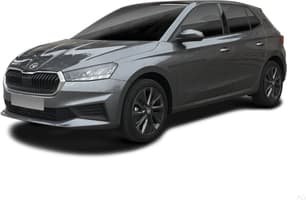
The smallest car in Skoda’s local line-up is also its most affordable, but only just.
When the current generation Fabia launched with the halo Monte Carlo variant at almost $40,000, it was a bit of a surprise for a small hatch from what’s seen as an affordable brand.
Now, there’s a new entry-level version of Skoda’s bub and, while it’s not nearly as cheap as it once was, it offers a choice that’s more within reach for anyone keen on a premium small car.
Can the Fabia Select convince customers looking at the likes of the Mazda 2 or Suzuki Swift to go Euro and cross the $30,000 threshold?
The new Kia K4 GT-Line has a lot to offer - an interesting design, lots of features and a pleasant driving experience. It’s not without its quirks and there are times when a more powerful engine may have improved it for me as a long-term prospect as I do some big kays every year but it ticks the boxes as a friendly urban dweller.
Once you get past the shock of the Fabia no longer being a sub-$25K car (because let’s face it, what is anymore?), the fact that it remains refreshingly simple to live with and engaging on the road should be celebrated.
It has its downsides if you need space, and you can buy a light (or even small) SUV for the same price, but you’ll be compromising in other areas.
The Skoda Fabia can’t do everything, but what it can, it does well. Plus, it’s certainly less common than the similarly priced Toyota Yaris.
Have to admit I wasn’t convinced on the design of this new sedan at first as it can look a little out of sorts from certain angles. But the more time I spend with it, the more I appreciate its sharp lines and sporty rear shaping.
The small sedan market doesn't have a lot of options now because SUVs are so popular but it's nice to see a design that stands out and the fang-like LED light design at the front and rear, as well as the 18-inch alloy wheels make the K4 look very cool.
The rear doors look sleek because the handle has been hidden in the C-pillar and the K4 is particularly striking in our test model's 'Wave Blue' ($600 RRP) paint colour.
Head inside and you'll find a cabin that looks slick with a two-tone synthetic leather upholstery that feels supple underhand and a plethora of soft touchpoints under all the bits that touch.
The black headliner creates a posh space but the sunroof helps the cabin to feel airy when you need it to.
The dashboard isn't too wide, preferring a sharply linear shape and is headlined by a massive display panel that houses dual 12.3-inch screens and a 5.0-inch climate panel.
There is still a strong presence of plastics inside but you don’t tend to focus on them.
Unlike some other new cars hitting our market, the K4 hasn’t done away with its buttons and dials - and there’s enough to satisfy those who don’t like to rely on a screen for everything. The extra traditional element of the physical gear selector adds to its charm as well.
The Fabia’s design hasn’t departed dramatically from its predecessor, but the evolution into the current generation has the little Skoda looking more mature and smoother than before.
Some elements like its grille and headlights are a little sleeker and the car looks less boxy, but still has a unique Skoda design language that’s instantly recognizable.
Its chrome grille trim and its set of unusual 16-inch alloy wheels are the clues that this is the entry Select, plus the lack of much badging.
Inside, the change in generation is most obvious in the step-up in materials and some of the aforementioned tech (screens in particular), though the steering wheel is a carry-over even if it doesn’t look dated.
The new instrument display cowl which features the model name on its side, the round air vents, and the fabric across the dash bring the interior into the current decade, though the centre stack’s modernity is betrayed by climate controls that could have existed in 1998.
There are a fair few hard plastic surfaces, though none of them are in poorly thought-out places and don’t let the cabin down too much.
The K4 feels big for the class, especially compared to its nearest rivals and that translates to a cabin that feels adult-friendly in both rows. An impressive feat for a small sedan.
Access is the only time you will have moments of 'I should have opted for an SUV'. That's because you will get in your daily squats sliding in and out of the K4 due to its 140mm ground clearance.
The rear doors also feature a wide wing that juts out from the door handle and it catches your hip almost every time you go to close the door.
The wide front seats offer lots of comfort with thick padding and long under-thigh-support. The driver's side is powered with adjustable lumbar support but the passenger seat only offers manual adjustments, which is surprising for a top-grade model. However, both front seats enjoy heat and ventilation functions.
The back bench seat offers similar comfort to the front with seat padding and length but it's not terribly wide and two adults (or child car seats) will fit best.
Amenities and storage is decent for the class with each row enjoying four drink holders and two USB-C ports. Front rowers also get a wireless charging pad and 12-volt socket.
In the front there is a large glove box that fits more than just an owner's manual, a mid-size middle console and a centre console that features retractable cupholders to open up the space if you need to. A dedicated phone cradle with small spaces on each side rounds up individual storage for the front.
In the rear there are two map pockets, a small item cubby next to the USB-C ports and a pair of directional air vents, reading lights and a fold-down armrest.
The boot space is massive for the class at 508L (that's nearing mid-size SUV territory) but the aperture is narrow and I couldn't fit my big booster seat through the opening.
The boot is quite deep as well and you may find yourself climbing into it to retrieve items that roll into the back.
The rear bench seat has a 60/40 split which can help with storage and there is a temporary spare tyre underneath the floor.
While you don't get a powered tailgate in this model, the lid isn't heavy to operate and has a proximity opening function that keeps it practical when you have your hands full.
This just means when you approach and stay near the boot with the key fob on your person the boot lid will pop open for you.
The 12.3-inch touchscreen multimedia system looks great with crisp graphics and a responsive touchscreen. The menus are in an easy-to-understand layout which you'll get accustomed to in no time. The 5.0-inch climate display sits to the right of this system and it's nice to have it on display all the time.
The 12.3-inch digital instrument cluster isn't all that customisable but it's easy to read with large text and a small menu screen that shows nav directions, trip info or a compass.
The built-in satellite navigation system is easy to get going and to cancel a route guidance, it's a one button affair which is great for when you're on the go.
The system features wired and wireless Apple CarPlay and Android Auto. The CarPlay is simple to connect to and retained a steady connection this week with feedback from my callers that my voice was clear on calls.
There are cars in the market that, for around or not much more than $30,000, seem like a bargain given the perceived value of features like big touchscreens and (synthetic) leather.
The Fabia Select doesn’t have those things, but everything in it makes sense and, more importantly, everything works well.
For example, as much as I point out the dated-looking air conditioning controls, the reality is they're much easier to use than an in-screen menu requiring the same amount of attention as replying to a text while driving - something that is rightfully illegal.
Simple controls on the steering wheel, a touchscreen that doesn’t require much attention, a clear driver display and a few shortcut buttons around the gear selector mean you can focus more of your attention on driving, without lacking any of the convenience or features you’d expect in a new car.
Wireless phone mirroring for Apple CarPlay and Android Auto add to this, as you can bypass Skoda’s (fine, but basic) multimedia software easily.
The lack of wireless phone charging is a shame, but not a deal-breaker, as the space under the centre stack is conveniently sized. The same can’t be said for the tiny storage bin under the centre armrest, though.
However, the glove box and door card storage is generous and there’s the Skoda-standard umbrella in the door that’s accessible when open.
The seats in the Fabia have decent bolstering and are ergonomically sound, manual adjustment is easy enough and there’s a turning wheel rather than a lever with increments to adjust the backrest.
Given the Fabia’s diminutive stature relative to most vehicles on the road, it shouldn’t be a surprise that the back seat isn’t the most spacious. But as an average-sized adult it feels like the kind of space I’d be comfortable in for a short trip, with adequate headroom, knee room and even a vent.
There’s no centre armrest, though, and the seats aren’t as comfortable as the fronts.
Behind the 60/40 split-fold there’s a generous (for a hatch this size) 380-litre boot with bag hooks, though the floor has some mildly intrusive angled plastic elements.
Impressively, the Fabia has a spare tyre rather than a repair kit, so kudos to Skoda for not taking the cheap (and less safe) option.
The new K4 sedan is offered in four grades - the base-model S which has an optional 'Safety Pack' available, the mid-spec Sport and Sport+ grades and the flagship GT-Line, which is the model on test for this review.
The GT-Line is sharply priced at $42,990, before on road costs. This positions it in the middle of its small sedan rivals, the Hyundai i30 N Line Premium ($41,500 MSRP) and the Mazda3 Astina ($43,310 MSRP).
What the K4 GT-Line has going for it over its peers is a standard specification list that features some heavy-hitting technology.
This includes dual 12.3-inch displays, a 5.0-inch climate display, built-in satellite navigation with 10-years' of map updates, wireless/wired Apple CarPlay and Android Auto and dual-zone climate control.
Charging is taken care of by two USB-C ports for each row but the front row also enjoys a 12-volt socket and fast wireless charging pad in the dedicated phone cradle.
There's also an eight-speaker Harman Kardon sound system, over-the-air updates, digital radio, AM/FM radio, Bluetooth connectivity, and a 'Sounds of Nature' soundscape for added ambience.
The Kia Connect app is also included and this allows user access to the emergency call functionality (e-Call), remote control functions for the vehicle, as well as vehicle status monitoring.
Premium equipment includes a tilt and slide sunroof with electric sunshade, two-tone synthetic leather upholstery, heated and ventilated front seats, an electric drivers seat (with two-position memory function and adjustable lumbar support) and a heated steering wheel.
For a small sedan, it comes packed with features!
The Skoda Fabia has fallen prey to the same upward-creeping prices as many other light cars have, quite hard.
What was a sub-$25,000 car in its previous generation’s entry grade is now a $32,390 offering, plus on-road costs.
For an entry-level light hatch, the Fabia Select has a decent list of features, though is decidedly more basic than the already-launched Monte Carlo ($39,690 MSRP).
The headline tech features in the base Fabia include an 8.25-inch touchscreen covering multimedia functions, with wireless Apple CarPlay and Android Auto, an 8.0-inch driver display, two USB-C ports, plus drive mode selection and a host of safety features (covered later in this review).
For reference, the Monte Carlo gets a larger 10.25-inch digital instrument cluster and a 9.2-inch multimedia touchscreen.
The Select makes do with manual-adjust cloth seats, but does have keyless entry and start, a leather ‘sports’ steering wheel, automatic windscreen wipers, an auto-dimming rear view mirror and auto LED headlights and LED tail-lights.
Skoda says the Select’s features list aims to line up as “similar to rivals’ mid-specification models” and it’s about bang on. But its price might still be a turn-off for some seeking a budget-friendly light car.
The flagship grade is front-wheel drive and has a 1.6-litre four-cylinder, turbo-petrol engine that produces up to 142kW of power and 265Nm of torque giving this a more powerful presence than its non-turbo siblings (which only produce up to 112kW/192Nm).
However, while the power is adequate for the GT-Line there are times when the engine sounds like it's working a bit too hard.
The eight-speed torque-converter automatic transmission can also become flustered as it moves through the lower gears, especially when you’re accelerating quickly.
On the whole, the power delivery and outputs are more than enough for a city environment and the odd road trip.
The Fabia’s turbocharged 1.0-litre, three-cylinder, petrol engine makes 85kW and 200Nm in this guise, mated to a seven-speed dual-clutch transmission driving the front wheels only.
Given the Fabia weighs 1265kg, getting to 100km/h in under 10 seconds - which it should be able to do, just - might depend on how many passengers you have.
While it’s not very fast or powerful, the Fabia’s outputs sit about average for its class and price.
With an official combined (urban/extra-urban) cycle fuel usage figure of 6.7L/100km and a fuel tank size of 47L, this model has a theoretical driving range of 701km. That does sit around 80 kays less than some of its rivals but it’s still sufficient for those wanting to do the odd road trip!
My on-test fuel usage has popped out at 9.2L/100km, which is based on figures achieved at the pump (32.05L) and my km travelled (348km).
I’ve done mostly urban trips this week with one longer open-road drive and overall I’m not too surprised by that figure because I’ve been pushing it hard but it could be better.
The K4 is a simple gal because Kia recommends a minimum 91 RON unleaded petrol to be used for all models.
The Fabia has a 5.0L/100km combined cycle (urban/extra-urban) fuel consumption figure under WLTP testing, with a minimum 95RON premium fuel grade required.
With its 42-litre fuel tank, that means you could hypothetically expect to cover a touch more than 800km before running out of fuel, though that seems unlikely in the real world.
Despite a particularly lively drive undertaken purely for testing purposes, the highest fuel consumption the trip computer displayed was 7.7L/100km, which isn’t so bad when you consider the Fabia’s not likely to be driven hard most of the time.
As mentioned earlier, the power is adequate to move this car around on the open-road but you have to be a little aggressive on hills to keep your speed consistent.
It’s not always quick off the mark, though, and you’ll notice that when you have to cross traffic or enter a roundabout - so allow for extra car lengths. Once you get going, it’s responsive in the city.
The steering is sports-stiff and so is the suspension. This makes the handling feel nimble in turns and sure-footed when doing quick lane changes but you hear and feel every bump in the road.
On-road comfort is okay around the city but the road noise is very loud inside the cabin and is particularly noticeable at higher speeds. You’ll have to raise your voice to chat to passengers in the back when you're on the highway.
The K4 has a small turning circle of just 10.7m and you can easily do a U-turn in spaces that others might have to do a three-pointer. This made the K4 feel friendly in small car parks and on ramps.
The direct steering makes it easy-enough to park, as does the reversing camera and front/rear parking sensors but I’m pretty disappointed that at the top grade-level, you miss out on a 360-degree camera system (tsk, tsk, Kia).
If you’re someone who doesn’t need a big car and likes an engaging drive, the Fabia ticks those boxes.
In fact, it feels like it punches above its weight. Well, not literally, because while it actually weighs in at over 1.2 tonnes, it feels lighter than even that.
Tight corners don’t faze the Fabia, and its steering and suspension both feel more dialled-in than a car with 85kW has any right to.
Yep, even though its engine is only slightly more powerful than some budget sports cars from the 1980s it feels peppier than it should.
It has some low-speed hesitancy thanks to its transmission - taking off from a stop sign if you’re not in Sport mode can be annoying - but with shift paddles (or a manual gearbox… ) the Fabia could be a hidden gem for enthusiasts.
Its suspension is firm, but not sharp enough that it allows bumps and rough roads to make their way into the cabin as shocks or rattles, and even holds its own on unsealed surfaces at sensible rural speeds.
The Fabia feels playful even on a commute, and the follow-through from the rear-end on a spirited bit of cornering speaks volumes about its chassis, even in urban driving.
The Kia K4 has just been launched and hasn’t been tested by ANCAP yet, so is unrated but Kia is hustling to get it tested so it can join in on their strong five-star performance record. The K4 has seven airbags, including a front centre airbag.
The K4 GT-Line has all of the bells and whistles when it comes to safety equipment and includes the big-ticket items like blind-spot monitoring and collision avoidance, intelligent seatbelt warning (all seats), rear cross-traffic alert, front cross-traffic alert, lane keeping aid, lane departure alert, leading vehicle alert, emergency call functionality, side exit warning, rear occupant alert, traffic sign recognition, driver monitoring and alert, LED DRLs, dusk-sensing LED headlights, front/rear parking sensors and a reversing camera with dynamic guidelines.
The K4 GT-Line has AEB with forward collision warning, car, pedestrian, cyclist, and junction crossing detection.
The rear seat has two ISOFIX child seat mounts on the outboard positions and three top tether anchor points but two seats will fit best.
Kia has become well-known for having annoying sound alerts in their cars and while the K4 has them too - you can easily disable the most annoying one, the traffic sign recognition, by holding the steering wheel volume button in for a few seconds.
The Fabia wears a maximum five-star ANCAP safety rating from assessment in 2021, under recent but now-surpassed criteria.
That’s not to say its safety kit is outdated, as occupant protection scored well (58 per cent for adults, 81 per cent for children) while pedestrian and active safety were also adequate (70 ad 71 per cent, respectively).
The Fabia Select comes with autonomous emergency braking (AEB), pedestrian and cyclist detection, multi-collision braking, driver monitoring, lane assist, rear cross-traffic alert and six airbags - though no front-centre airbag.
It also features cruise control, though it’s not adaptive and requires a little more attention than most new cars - not necessarily a bad thing, mind you.
On the road, its safety tech is unobtrusive, leaving you to focus on driving while knowing there are features there to keep you safe should the unexpected happen.
The K4 GT-Line is offered with Kia’s seven-year/unlimited-kilometre warranty. That’s a pretty good term for the class and there is a seven-year capped price servicing program for a flat $3877 (averaging $554 per service), which is slightly more expensive than others in the class.
Servicing intervals could get annoying if you do big kays every year as they're spaced at every 12 months or 10,000km, whichever occurs first.
Skoda offers a seven-year/unlimited kilometre warranty on all its cars, which is becoming more common in the industry but is quite competitive for a European brand.
The Fabia is also able to be covered by a seven-year servicing pack for $3650, that being the total price you’d need to pay for the first seven years of servicing (occurring every 12 months or 15,000 kilometres, whichever comes first). In other words $521 per workshop visit.
Skoda also offers 12 months of roadside assistance from the new vehicle warranty start date, and another 12 months is topped up every time you service with Skoda.