What's the difference?
Kia admits that, even a handful of years ago, a car like the EV4 likely wouldn't exist in Australia. With a forecast of 70 sales a month, or 840 a year, it won't come close to the brand's biggest all-electric sellers, and senior executives and product planners alike would have been wondering if it was worth the effort.
But times have changed, and so have regulations, and Kia is happy to roll the dice on as many EVs as it can get its hands on to lower its fleet emissions in the wake of the New Vehicle Efficiency Standard (NVES).
If you'll forgive the long and rambling intro, I'll now get to the point. Long live the NVES, because the EV4 is a good (if a little bizarre-looking) thing. It's quite lovely to drive, will cross vast distances in its long-range guise, and will undoubtedly make our roads a more visually interesting place.
But would you have one over the Tesla Model 3 or BYD Seal? Read on.
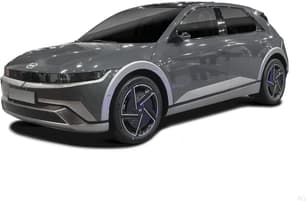
This new Hyundai Ioniq 6 N asks one important question for the brand - how far can Hyundai go?
Not in the sense of driving range, but rather how far can the brand go in terms of both performance and price. The Ioniq 6 N pushes the limit on both, offering supercar levels of power and performance and at a price that continues to take the brand into unchartered territory.
This is the follow-up to the groundbreaking Ioniq 5 N, the all-electric performance SUV that launched in 2024. But, as you’d expect, in the intervening time Hyundai has been able to make improvements to push the Ioniq 6 N to new levels.
The Ioniq 5 N dramatically raised the bar for Hyundai, offering up to 478kW of power and 770Nm of torque, way beyond the 242kW/348Nm offered by the brand’s i30 N hot hatch. This was Hyundai’s ‘Godzilla moment’, when the Skyline GT-R changed the image of Nissan forever.
Now the Ioniq 6 N looks to push things even further. And it does so as the sole Ioniq 6 model grade in 2026, with the rest of the range currently unavailable in Australia, as the local operation waits for the facelifted model to arrive sometime in the future.
An electric sedan is really shrinking the buyer pool, which is why Kia has such gentle expectations for the EV4 in Australia. But it's a lovely driving EV with plenty of perks, and the design alone will brighten up Australia's roadways. For my money, I'd either be going for the cheapest one that's sharp value with plenty of kit, or the flagship GT-Line that gets the big battery and the works in terms of equipment. The Earth for me sits in no-man's land.
Note: CarsGuide attended this event as a guest of the manufacturer, with travel, accommodation and meals provided.
Note: The author, Andrew Chesterton, is a co-owner of Smart As Media, a content agency and media distribution service with a number of automotive brands among its clients. When producing content for CarsGuide, he does so in accordance with the CarsGuide Editorial Guidelines and Code of Ethics, and the views and opinions expressed in this article are solely those of the author.
In the Ioniq 6 N Hyundai has built an incredibly quick and high-capable performance car. But that doesn’t mean it’s flawless and an obvious recommendation over its rivals.
Its looks remain divisive, and while obviously each individual will need to judge the design of the Ioniq 6 N themselves, objectively speaking there is a lot to like about this latest addition to Hyundai’s N stable.Â
Yes, it’s very fast, but with all the N modes switched off it’s also a very quiet and relaxed sedan with a premium look and feel. So it will play the dual role of track terror and everyday family transport well.Â
But it needs to be for the price, which is really testing the limits of Hyundai’s brand appeal. It obviously won’t be a best seller, but with the less-polarising Ioniq 5 N only selling approximately 300 cars since its launch, this could be a very niche proposition, reserved only for those who crave its special kind of electric performance.
Note: CarsGuide attended this event as a guest of the manufacturer, with accommodation and meals provided.