What's the difference?
Jeep's Renegade might be late to the mini-SUV party but it comes with a pretty impressive back catalogue to suggest that this is a SUV that can cash the cheques its name can write.
The top of the range Trailhawk can write even bigger cheques than the lower models, bringing with it a range of off-road tech toys to let you really get down and dirty.
The XC40 Recharge Twin Motor is the flagship model for the segment leading small electric SUV from Volvo.
Well positioned in terms of price, specifications and driving range, it continues to prove itself a fierce rival to the Mercedes-Benz EQA, Lexus UX and newcomer BMW iX1.
But does it bring its A-game to every attribute buyers in the small electric SUV segment demand? In this review, we put it to test to find out.
Rugged, dependable and good off-road are the most obvious qualities of the Trailhawk. It stands out from the rest of the mini-SUVs by being able to do the S and the U with plenty of vigour.
It's just a shame that its on-road manners can't match that of its big brother, the Cherokee. Unless you're planning on proper off-roading, the Trailhawk might not be quite what you're looking for.
The Volvo XC40 Recharge Twin Motor is a cute small electric SUV that offers a decent specs list and a sweet urban driving experience. It’s not the nicest ride on a longer journey but it does have a decent range to be able to tackle one, if needed. I didn’t love the interior design but there’s lots the XC40 gets right.
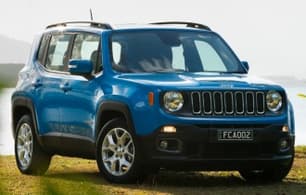
In what is absolutely not a coincidence, the Renegade immediately conjures up the Wrangler. Upright grille from the Willys Jeep (references abound here), round headlights, squared off wheel arches to mimic the Wrangler's guards, short overhangs and big rear view mirrors.
The 17-inch wheels look completely lost in the wheelarches which are even more cavernous owing to the Trailhawk's 50mm of extra ride height. The wheels are also a bit cheap looking but will probably survive the belting the car is intended to take.
Less rugged is the interior, despite a fairly self-conscious effort to make it look and feel chunky. The front seats are flat and unsupportive with the rears just as lacklustre making sure everyone is sliding around together. Luckily, front passengers get a dash-mounted grab handle.
It seems quite well put together, however, but with carpets and easily-marked plastics, you'll hope your passengers don't bring the mud in with them too often. And the "Since 1941" stamped into the steering wheel can go.
The dashboard is reasonably clear and has plenty of information to share via the screen between the dials but whoever thought marking the redline with a water splash graphic in bright orange should probably rethink their design decisions.
Storage is limited to two cupholders up front, door pockets in each door and nets on the front seat backs.
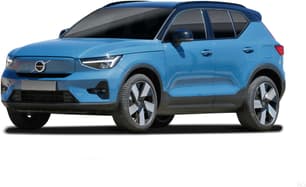
The XC40 Recharge sees some design changes from its fuel-based counterparts and that’s mainly seen in the front because you get a body-coloured panel instead of a standard grille. The 20-inch alloys feature a chunkier-looking design but the front still boasts the cool ‘Hammer of Thor’ headlights (which I'm rather fond of).
The interior is where the electric powertrain loses me because the fuel-based equivalent is so much nicer inside with its leather-accented upholstery and trims.
It's lovely that there has been a conscious effort to use recycled materials and non-leather upholstery throughout but I'm left with the strange-feeling that synthetic seats don’t reflect the grade or price level of this car.
Other than the cool-looking topography inserts on the dash and front doors and the 9.0-inch vertical multimedia system, it’s pleasant but a little basic in the cabin. Which is shame because the exterior is cute as hell.
The Renegade range starts at $28,000 for the 1.6-litre Renegade Sport manual front-wheel drive, climbing between $2000 and $3000 through the Sport Auto, Longitude Auto, Limited Auto with a final jump of $4000 to the 2.4-litre auto-only Trailhawk.
Standard is a nine-speaker stereo with Bluetooth and USB, 17-inch alloys, dual-zone climate control, reversing camera, rear parking sensors, keyless entry and start, cruise control, electric front seats with heating, satellite navigation, automatic bi-xenon headlights, auto wipers, leather trim, roof rails, front and middle bash plates, full size spare, heated leather steering wheel, privacy glass, trailer sway control and tyre pressure monitoring.
The lairy Omaha orange is $500, part of an eleven colour palette with only two no-cost paint options (black and white).
You can add lane departure warning, auto-parking and a black painted roof for $500 each, a removable and retractable roof called My Sky Roof for $2200 or a more conventional electric sunroof for $1900.
The Beats-branded nine-speaker stereo is run via Fiat-Chryser's UConnect system, accessible through the 6.5-inch touchscreen. While it improves with every attempt, it's still quite clunky and when the sat-nav is added, becomes a bit of a mess.
Thankfully, not every function has been crammed into the touchscreen interface, so you'll spend more time with your hands on the wheel rather than working out which bit of the screen has the climate control.
There are two powertrain options in the XC40 family, a mild-hybrid or pure electric. The latter gets two variants and we’re in the top-spec Recharge Twin Motor, which is priced from $85,990, before on-road costs. This positions it in the middle of its nearest rivals but in its family line-up it’s a big $23K jump from its Ultimate B4 AWD combustion equivalent.
The standard features list for the XC40 is robust and there are some great premium features, like the electrically-adjustable and heated front seats with extendable under-thigh support and electric lumbar control.
A panoramic sunroof makes the cabin feel light and airy, the rear outboard seats have heat functions and the driver enjoys a heated steering wheel. You also get a premium 13-speaker Harman Kardon sound system in the Twin Motor.
Other premium features include pre-entry and after-park climate control (perfect for those super-hot days) and a hands-free powered tailgate.
Technology highlights include a complimentary four-year subscription for the built-in Google Assistant, Google Maps and Google Play Store which are accessed via the portrait-style 9.0-inch multimedia touchscreen.
There's also access to apps like YouTube, which delighted my seven-year old and would be handy on any charging stints for some diversion. It's surprising there isn't wireless functionality for Apple CarPlay and Android Auto but they can be hooked up via cable.
The Trailhawk is powered by Fiat's 2.4-litre four naturally-aspirated four-cylinder producing 129 kW and 230 Nm. Jeep reckons you'll get 7.5L/100km on the combined cycle. Our mostly city driving with a longish motorway run produced an 11.0L/100km average over a week.
The transmission is a nine-speed ZF automatic driving all four wheels.
The Trailhawk also has Jeep's five mode Selec-Terrain system which should cover pretty much every eventuality – Auto, Sport, Mud, Sand and, just for the Trailhawk, Rock. The Trailhawk is rated to tow 400kg unbraked and 907kg braked.
The XC40 Recharge Twin Motor features two electric motors which are powered by a large 82kWh lithium-ion battery and produce a combined power output of 300kW and 670Nm of torque.
Which is downright fun because it can do a 0-100km/h sprint in just 4.8-seconds!
The Trailhawk name suggest that things are going to get muddy – compared to the rest of the range, the range-topper rides 50mm higher and has exposed, easy-to-reach tow hooks in the fairly unlikely event you get stuck. It also has a 20:1 low-range crawl ratio and Active Drive 4x4 which means it can switch between front and all-wheel drive. It'll also wade through almost half a metre of water. It's a genuine mud-plugging proposition and will take on some much bigger machinery out in the bush.
On the road, where we spent all our time in the Renegade, it's not what you'd call particularly inspiring. There's a number of sources of noise that contribute to a less than quiet cabin and having to constantly correct your course at freeway speeds adds to the tiring nature of the Renegade.
It's much better at lower speeds, pottering around but then again, its nine-speed transmission needs a lot more work on the shift mapping because it seems to forget which gear it needs to be in when you sink the right foot. If you don't need the Trailhawk's extra off-road goodies, consider the 1.4 litre Limited or Longitude.
Like the Polestar 2 there’s no ignition button on the XC40. You shift into drive to ‘turn on’ and after you park, you simply get out to turn it off. It takes a little while to get used to but it’s a cool feature.
The twin motors deliver a hefty kick and you never worry about not having ‘enough power’. In the city it’s zippy but on the open-road you also feel comfortable getting up to speed or overtaking because the power distribution is so well-balanced because it’s an AWD.
I customised my steering wheel ‘feel’ to firm and it makes the handling crisp and direct. You feel like you’re in total control whenever you have to tackle be it tight streets or small car parks.
The blind-spot visibility is compromised by how wide the B and C-pillars are and I find that I'm relying a lot more on the blind-spot monitoring system to compensate.
The XC40 loses a few points for me in terms of ride comfort. As mentioned, the seats aren't terribly comfortable but the suspension is hard enough that you notice every bump, as well.
Road noise is also quite pronounced and it doesn’t sound refined when you drive at higher speeds, which is a shame. The flip-side, though, is that you don’t notice those things as much on short, urban trips.
The standard regen braking isn’t customisable and you don’t notice it until you switch over to a 'one-pedal' function. I found this function uncomfortable to use as it’s very aggressive and creates a jerky driving experience.
Because of its 4440mm length and tiny 11m turning circle, you won’t struggle in a car park! The 360-degree view camera system and front and rear parking sensors make it easy to navigate a tight spot.
This is a joy to park. It’s so easy.
Seven airbags (including driver's knee bag), traction and stability controls, roll mitigation, blind spot monitoring, ABS and brake assist.
The Renegade does not yet have an ANCAP star rating although it scored five EuroNCAP stars in 2014.
The XC40 has a long safety features list but a standout is the Volvo designed 'Side Impact Protection System' (SIPS) that reinforces the car's steel framework at the sides and disperses energy in a side collision.
Other standard features include full LED external lights, daytime running lights, adaptive cruise control, rear cross-traffic alert, blind-spot monitoring, driver attention alert, forward collision warning, lane departure alert, lane keeping aid, intelligent seatbelt reminders, traffic sign recognition, 360-degree camera system, front and rear parking sensors.
The XC40 has a maximum five-star ANCAP safety rating from testing done in 2018. It has seven airbags, including a driver's knee bag and features high individual scoring for adult and child occupant protection at 97 per cent and 84 per cent, respectively.
The XC40 has AEB with car, pedestrian and cyclist detection and is operational from 4.0-210km/h. It's usual to see that top speed sit closer to 180km/h, so that's very good.
A cool feature for any parents out there is the second key which you can program to limit stereo volume levels and set a maximum speed allowance. It's even coloured bright orange so there are no chances of a sneaky switcheroo!
There are ISOFIX child-seat mounts on the rear outboard seats and three top-tether anchor points for any families out there but two seats will fit best.