What's the difference?
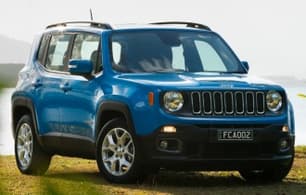
Jeep's Renegade might be late to the mini-SUV party but it comes with a pretty impressive back catalogue to suggest that this is a SUV that can cash the cheques its name can write.
The top of the range Trailhawk can write even bigger cheques than the lower models, bringing with it a range of off-road tech toys to let you really get down and dirty.
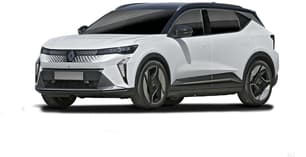
What’s 15 years between friends? Well, in this instance quite a lot because this is the all-new, pure-electric Renault Scenic E-Tech small-medium SUV.
The Renault Scenic we knew here until the late noughties was a petrol-powered, five-seat family car or an upright, seven-seat people mover.
But this is an altogether sleeker proposition, priced and specified to compete with other electric SUVs like the BYD Sealion 7, Hyundai Elexio, Kia EV5, Skoda Elroq and Zeekr 7X.
So, could this fresh Euro contender have what it takes to steer you away from such an impressive set of pure-electric competitors?
We attended its local launch to find out.
Rugged, dependable and good off-road are the most obvious qualities of the Trailhawk. It stands out from the rest of the mini-SUVs by being able to do the S and the U with plenty of vigour.
It's just a shame that its on-road manners can't match that of its big brother, the Cherokee. Unless you're planning on proper off-roading, the Trailhawk might not be quite what you're looking for.
The Renault Scenic E-Tech is lining up against some heavy-hitting competitors, but Renault Australia admits it has one top of mind - the Kia EV5. The Kia’s a quality package and if you’re in the market for a mid-size electric SUV, you’ll no doubt have it on your shopping list. And you should have a look at this slightly smaller car, as well. It has the refinement, practicality and safety to stand up confidently in a rapidly expanding segment.
Note: CarsGuide attended this event as a guest of the manufacturer, with travel, accommodation and meals provided.
In what is absolutely not a coincidence, the Renegade immediately conjures up the Wrangler. Upright grille from the Willys Jeep (references abound here), round headlights, squared off wheel arches to mimic the Wrangler's guards, short overhangs and big rear view mirrors.
The 17-inch wheels look completely lost in the wheelarches which are even more cavernous owing to the Trailhawk's 50mm of extra ride height. The wheels are also a bit cheap looking but will probably survive the belting the car is intended to take.
Less rugged is the interior, despite a fairly self-conscious effort to make it look and feel chunky. The front seats are flat and unsupportive with the rears just as lacklustre making sure everyone is sliding around together. Luckily, front passengers get a dash-mounted grab handle.
It seems quite well put together, however, but with carpets and easily-marked plastics, you'll hope your passengers don't bring the mud in with them too often. And the "Since 1941" stamped into the steering wheel can go.
The dashboard is reasonably clear and has plenty of information to share via the screen between the dials but whoever thought marking the redline with a water splash graphic in bright orange should probably rethink their design decisions.
Storage is limited to two cupholders up front, door pockets in each door and nets on the front seat backs.
There are some design tips of the hat to Scenics past in this latest electric version, including blacked-out door pillars and a recognisably angular C-pillar treatment.
But despite the fact it debuted at the Munich IAA Motor Show in late 2023, from its slimline headlights and jagged grille to its sculpted flanks and saw tooth rear end, this fifth-generation Scenic looks contemporary from every angle.
A highlight is the large Renault diamond logo sitting at the centre of a faux upper grille, surrounded by a multitude of the same elongated hexagon shape as a cool recurring graphic, the pattern merging neatly into the headlights.
Speaking of which, the LED beams can be set to produce an elaborate welcome sequence as you approach the car.
The interior feels slick and screen-rich but not at the expense of user-friendly physical controls for audio, ventilation and other commonly used functions.
Recycled fabric on the dashboard and headliner looks and feels good while doing its bit to suppress cabin noise.
Speaking of which, the Scenic is Renault’s poster child for the use of recycled materials in its construction and end of life recyclability.
Everything from ferrous components consisting of 37 per cent recycled materials to a bonnet and doors made of up to 80 per cent recycled aluminium.
The dashboard cowling is made from kenaf, a plant fibre similar to jute; the steering wheel cover is 51 per cent bio-sourced; the cockpit uses 26 per cent recycled plastic; the storage bins in the door panels are 45 per cent recycled fibre, the floor mats are 54 per cent recycled plastic bottles and the seat upholstery is 100 per cent recycled fabric. The list goes on and on, but you get the idea.
The Renegade range starts at $28,000 for the 1.6-litre Renegade Sport manual front-wheel drive, climbing between $2000 and $3000 through the Sport Auto, Longitude Auto, Limited Auto with a final jump of $4000 to the 2.4-litre auto-only Trailhawk.
Standard is a nine-speaker stereo with Bluetooth and USB, 17-inch alloys, dual-zone climate control, reversing camera, rear parking sensors, keyless entry and start, cruise control, electric front seats with heating, satellite navigation, automatic bi-xenon headlights, auto wipers, leather trim, roof rails, front and middle bash plates, full size spare, heated leather steering wheel, privacy glass, trailer sway control and tyre pressure monitoring.
The lairy Omaha orange is $500, part of an eleven colour palette with only two no-cost paint options (black and white).
You can add lane departure warning, auto-parking and a black painted roof for $500 each, a removable and retractable roof called My Sky Roof for $2200 or a more conventional electric sunroof for $1900.
The Beats-branded nine-speaker stereo is run via Fiat-Chryser's UConnect system, accessible through the 6.5-inch touchscreen. While it improves with every attempt, it's still quite clunky and when the sat-nav is added, becomes a bit of a mess.
Thankfully, not every function has been crammed into the touchscreen interface, so you'll spend more time with your hands on the wheel rather than working out which bit of the screen has the climate control.
The Scenic E-Tech starts from $55,990, before on-road costs, for the entry-grade Techno. Then there’s the Techno Long Range for $59,990, BOC, while the flagship Esprit Alpine comes in at $65,990.
That’s sharp relative to competitors and follows the brand getting a reality check with the Megane E-Tech after it launched here in late 2024, Renault shaving $10,000 off its price only a few months later.
Equipment highlights across the line-up include a 12-inch multimedia touchscreen, a 12.3-inch driver display, sat-nav, adaptive cruise control, a 360-degree surround-camera view, all LED exterior lights, wireless Android Auto and Apple CarPlay and six-speaker Arkamys audio.
There’s also dual-zone climate control, an electric tailgate, auto-folding side mirrors, cloth upholstery, heated front seats and steering wheel, 48-colour ambient interior lighting, keyless entry and start and 19-inch alloys (on the Techno models).
Then you can fold in over-the-air updates, access to remote services via the ‘MyRenault’ app and Google In-Built that enables voice-control for up to 70 car functions.
The Esprit Alpine ups the ante with 20-inch rims, nine-speaker Harman Kardon audio, synthetic leather and cloth seat trim, six-way power adjustment (with memory settings) for driver and front passenger seats, a massaging driver’s seat, brushed metal pedal covers and facial recognition for seat and mirror settings.
In short, the Scenic is well-equipped relative to its competitive set and cost of entry, with Renault confirming there are mainly demonstrator cars in dealers at the moment, with the majority of stock landing in late May or early June this year.
There are three optional paint choices - metallic ($800), two-tone ($1000) and matt ($1200), the latter exclusive to the Esprit Alpine.
The Trailhawk is powered by Fiat's 2.4-litre four naturally-aspirated four-cylinder producing 129 kW and 230 Nm. Jeep reckons you'll get 7.5L/100km on the combined cycle. Our mostly city driving with a longish motorway run produced an 11.0L/100km average over a week.
The transmission is a nine-speed ZF automatic driving all four wheels.
The Trailhawk also has Jeep's five mode Selec-Terrain system which should cover pretty much every eventuality – Auto, Sport, Mud, Sand and, just for the Trailhawk, Rock. The Trailhawk is rated to tow 400kg unbraked and 907kg braked.
Like its Megane E-Tech sibling, the Scenic E-Tech uses an excited synchronous motor which Renault says is more efficient than the more commonly used permanent magnet type, with the bonus that it uses no rare earth materials.
The entry-level Scenic E-Tech Techno's fitted with a 60kWh NMC battery. Its electric motor transfers 125kW and 280Nm to the front wheels and Renault claims a 0-100km/h time of 8.6 seconds.
The Techno Long Range and top-spec Esprit Alpine pack an 87kWh battery and a more powerful motor, raising outputs to 160kW/300Nm and lowering the 0-100kmh sprint time to 7.9 seconds.
The Trailhawk name suggest that things are going to get muddy – compared to the rest of the range, the range-topper rides 50mm higher and has exposed, easy-to-reach tow hooks in the fairly unlikely event you get stuck. It also has a 20:1 low-range crawl ratio and Active Drive 4x4 which means it can switch between front and all-wheel drive. It'll also wade through almost half a metre of water. It's a genuine mud-plugging proposition and will take on some much bigger machinery out in the bush.
On the road, where we spent all our time in the Renegade, it's not what you'd call particularly inspiring. There's a number of sources of noise that contribute to a less than quiet cabin and having to constantly correct your course at freeway speeds adds to the tiring nature of the Renegade.
It's much better at lower speeds, pottering around but then again, its nine-speed transmission needs a lot more work on the shift mapping because it seems to forget which gear it needs to be in when you sink the right foot. If you don't need the Trailhawk's extra off-road goodies, consider the 1.4 litre Limited or Longitude.
Renault says the entry-grade Scenic Techno will accelerate from 0-100km/h in 8.6 seconds with the more powerful Techno Long Range and Esprit Alpine lowering that number to 7.9sec. So, it’s quick without being scary fast.
It’s certainly nippy in traffic and at the risk of stating the bleeding obvious, quiet. Even in the context of premium EVs the Scenic is quiet and refined.
Suspension is strut front, multi-link rear and the car feels super planted. The launch drive took in some reasonably rapid twisting corners and there’s no hint of lateral movement in the car. Body roll is minimal, too.
Tyres are energy-efficient Michelin e.Primacy (Techno - 205/55x19 / Esprit Alpine - 235/45x20) and the steering is quick with a relatively low number of turns lock-to-lock. It’s never jerky or too sharp. Rather, it means the car starts to turn into a corner the instant you apply steering lock.
That said, the feel between your hands on the wheel and the front tyres on the road is less than intimate.
There are four drive modes - ‘Comfort, ‘Eco’, ‘Sport’ and ‘Custom’. None of them adjust the suspension tune, it’s more about accelerator response and we found Comfort delivers the best blend of right-foot urgency and overall composure.
Most of the braking you’re going to do will be courtesy of the regenerative system and there are five levels, adjustable via steering wheel paddles, including the most aggressive single-pedal mode.
The one-pedal setting pulls the car up nice and progressively and if you do need to use the physical brakes, they’re ventilated discs all around. Some bite on initial application, but even on downhill corner sections, leaning on them quite hard, they perform well without drama.
Under the heading of miscellaneous observations, you can sense the ADAS (Advanced Driver Assistance Systems) including functions like lane-keeping assist doing their thing occasionally, but it’s all quite subtle, which is a good thing.
The Esprit Alpine’s sports front seats remained grippy and comfortable after a couple of hours behind the wheel. And it’s worth noting the Scenic’s relatively compact 10.9-metre turning circle helps in slow-speed manoeuvring.
Speaking of which, some of the modes in the audio system and external warning sounds for pedestrian safety have been designed by French composer and performer Jean-Michel Jarre, noted for his electronic, ambient-style music. Hats off to Renault for commissioning him.
Seven airbags (including driver's knee bag), traction and stability controls, roll mitigation, blind spot monitoring, ABS and brake assist.
The Renegade does not yet have an ANCAP star rating although it scored five EuroNCAP stars in 2014.
The Scenic E-Tech has a maximum five-star ANCAP rating from assessment in 2022 with active crash-avoidance tech including AEB (with pedestrian and cyclist detection and junction assist), adaptive cruise control, lane departure warning and lane-keep assist, blind-spot detection, traffic sign recognition, a 360-degree camera view, rear cross-traffic alert, driver fatigue monitoring and tyre pressure monitoring as well as front, side and rear parking sensors.
If a crash is unavoidable, there are seven airbags onboard including a front centre bag and for child seats there three top-tether points across the second row with ISOFIX anchor in the outer positions.