What's the difference?
This Jeep isn’t a 4WD, it’s electric, front-wheel drive and built on the same platform as cars from France.
It’s not sounding very ‘Jeep’ so far, but the Avenger isn’t trying to be a traditional Jeep in that sense.
What it is trying to do is draw in a new kind of Jeep owner, and lead the brand into the electric era without being all ‘EV-ish’ - just a car that happens to be electric.
So can Jeep do it? We’re jumping in the light SUV as it hits our shores to find out.
We appear to have reached a tipping point in the acceptance of electric vehicles in this country. The early adopters have made their switch but the technology has become more widely accepted, so now carmakers need to woo buyers with conventional means.
That means the tried and tested methods for making any car more appealing to a customer - lower cost and more equipment.
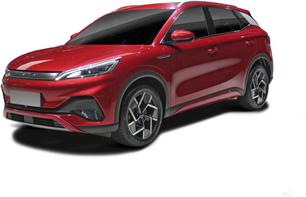
No car demonstrates this better than the BYD Atto 3, which is one of the most popular electric vehicles in Australia. But after an initial surge of buyers happy for a more affordable EV, BYD needs to find fresh ways to attract new customers.
So, for this updated 2024 Atto 3, BYD has made it cheaper and added some key new equipment, while retaining its previous strengths in terms of value and technology.
The Jeep Avenger is a strong move for the brand as a city-focused offering, and particularly as its first EV.
The styling and easy driving experience should be a draw, but its price in an increasingly competitive small SUV (and electric car) market could be a turn-off for some - even if it is only few thousand dollars more expensive than the slightly larger Compass.
Despite a couple of small flaws and a lacklustre safety rating overseas, the Avenger is ultimately one of the best-driving cars the brand has put out in years, and deserves a look if you’re keen on a practical but stylish EV.
BYD hasn’t made dramatic changes to the Atto 3 for 2024, but has it done enough to lure in more buyers?
The additional equipment, namely the larger infotainment screen and new tyres, will certainly help make the Atto 3 more appealing. And the technology behind EVs is more understood by the average motorists, so the barriers to making the switch to electrification are dropping.
But the single biggest factor is likely to be the price. At a time when inflation (and other reasons) is driving the cost of new vehicles up, having your updated model go in the wrong direction will only help make potential buyers take notice.
Especially when you consider Toyota’s closest rival to the Atto 3, the bZ4X, starts at $66,000, while the Tesla Model Y is priced from $55,900, making both significantly more expensive propositions. Heck, the cheapest Toyota RAV4 hybrid model starts at $42,260, only marginally cheaper than the Atto 3 Standard Range.
So, if BYD can make its value argument strongly it will help lure more new buyers to take the plunge into the world of EVs.
One of the Avenger's biggest draws for me is its style.
Those who like the Jeep brand for its rugged off-road vibes, but don’t actually want or need to go off-road might enjoy that it still looks very Jeep.
We’re told that the decisions made in this car’s design are all for a purpose, and some of them are very clear.
For a start there’s a deliberate plastic barrier wrapped around the full 360 degrees of Avenger to protect the paintwork and body panels in low-speed collisions that can be just as likely off-road as in a carpark.
There’s also the sunken headlights, which sit far enough back that they’re less likely to be damaged in an impact, being one of the most expensive and breakable parts at the front of a car.
But there’s also a series of little hidden ‘easter eggs’ that the Avenger’s head designer Daniele Calonaci left up to us to find for ourselves.
For a start, the tail-lights feature an ‘X’ shape that’s inspired by the jerry cans used to carry spare fuel and liquids in World War 2.
The ‘X’ theme continues in other places on the Avenger, though there are some more cutesy design features like a series of seven-slot grille motifs around the car in places like the wheels, tail-light, and even a small one under the front grille.
There’s a 3D ladybug in the roof rail up top, too. But perhaps the most ‘aww’-inspiring is the silhouette of a child looking through a telescope in the lower passenger side of the windshield, up at some stars in the upper driver’s side. The child? That’s Calonaci’s son.
In a couple of words, not really. At least when it comes to the exterior design.
In fact, the biggest design change for 2024 is actually the colour of our test car, the new Cosmos Black. Apart from that, the rest of the Atto 3 is unchanged visually, which is becoming something of a trademark for EVs, at least from newer brands like BYD and Tesla.
Instead of worrying about adding a new grille, different headlights or an alternative alloy wheel design, brands like BYD are focusing on updating batteries, the technology and other software enhancements to keep their models fresh.
The only exterior change is at the rear, where the previous 'Build Your Dreams' lettering has been replaced by a simple 'BYD' badge.
As for the interior design, kudos to BYD for not following Tesla down the cost-saving-disguised-as-minimalist-design path, but personally the design aesthetic and the variety of colours and trims used aren’t to my taste, but I can see why others may love it. The ‘guitar string’ door pockets are likely a particularly polarsing design choice.
BYD has added a new interior option, with a black/blue trim for the examples finished with grey and black exteriors, while white and blue painted cars get a blue/grey interior.
The outside of the Avenger is plenty of fun, but the inside is a fairly sensible place.
That’s not to say it’s boring, but the use of space for a car of this size is impressive, and there are plenty of places to store things.
There’s a well thought out phone charging pad in a relatively deep storage compartment in the centre of the Avenger, as well as the cupholders in front of the centre armrest and another storage bin underneath, plus a ‘shelf’ along the dash.
The amount of storage is impressive given the Avenger’s interior is a nice, tidy design that still manages to incorporate some useful elements some cars forgo - buttons for the climate controls, for example, are something that are increasingly (and frustratingly) rare.
Anyone who has used a Uconnect system in a Jeep or Fiat in the past might like to know that this one (accessible via a 10.25-inch touchscreen) is a step-up from predecessors.
It’s not perfect, some elements of the menu and feature placement seem a little random at first, but it doesn’t lag, is easy to connect to wirelessly, and has a fairly helpful voice control system.
Functionality is most of the way there generally, but a few missing things like dual-zone climate control or electric adjustment for the passenger seat feel like let-downs, plus the heating on the front seats seemed to be quite weak for a long time before eventually warming.
Behind those seats, the second row is lacking just about any amenities besides a USB port, but it’s not too cramped for a light SUV. Adults might find it suitable for relatively short trips, but kids should be fine for a while.
The sunroof (when featured) doesn’t extend very far back, so the second row also feels a little dark.
Behind that, an impressive 355 litres of boot space expands to 1250 litres when the seats are folded down, plus a plastic lining on the boot lip means you don’t scratch the car when loading or unloading.
The Atto 3 remains classified as a ‘Medium SUV’ but blurs the line between mid-size and small in terms of dimensions, especially inside. It’s not in the same size game as the Toyota RAV4 or Mitsubishi Outlander, but is close in size to the likes of the Honda ZR-V and Mazda CX-5.
While there’s a few key practical storage spaces, there aren’t as many as some newer rivals, which does suggest the Atto 3 design is starting to date or just wasn’t well thought-out enough in the first place; such as putting all the switchgear in the centre console rather than on the dashboard.
This was probably done, at least in part, to accommodate the rotating touchscreen, which seems like a poor design and practicality choice to me. Especially the new one, which at 15.8-inches when rotated to the portrait mode it starts to interfere with your vision and the layout is more user-friendly in landscape mode - both when using the native multimedia system or your smartphone connection.
Space is respectable in the back seats, and there’s both a USB-A and USB-C port for charging devices. While out the back the boot measures 440 litres, which is a respectable amount of space for an SUV this size, but there’s only a tyre repair kit instead of a spare wheel.
Before the Avenger had even landed, Jeep announced a $3000 reduction to the original pricing. While it might seem like this move stems from an increasingly competitive small-SUV market, Jeep says production costs dropped after the pricing was initially set, and the decision was made to pass it along to customers.
In any case, the Avenger now starts from $49,990 before on-road costs for the entry-level Longitude, with a mid-spec Limited costing $54,990 and the appropriately named Summit set at $60,990.
This puts the Avenger among the most expensive offerings in the 'Light SUV' category along with the electric Mini Aceman (from $55,990) and hybrid Lexus LBX (from $47,550), but around the same price as the slightly larger Hyundai Kona Electric (from $54,000) and Renault Megane E-Tech (from $54,990).
It also looks like brilliant value compared to the much smaller and lower-ranged Fiat 500e (from $52,500). Style comes at a cost.
For the Avenger, there’s a bunch of kit that’s standard across the range, plus only one cost-option - premium paint at $990.
Each Avenger gets dual 10.25-inch screens inside, one for the driver instrument display and the other a touchscreen for the multimedia controls, centred on the dash so it can be reached by both front occupants.
Satellite navigation, keyless start, adaptive cruise control and Jeep’s Selec-terrain drive mode system are all also standard features.
The Limited adds partial synthetic leather trim to the seats, keyless entry, more safety features like blind-spot assist and parking sensors, plus a height-adjustable boot floor and more powerful AC charger, with an 11kW version replacing the 7kW of the Longitude. The Limited also has optional two-tone roof paint in black for $495.
Climbing to the Summit means you get the two-tone roof as standard, plus LED projector headlights and LED tail-lights, 18-inch alloys, leather accented heated seats with power adjustment and lumbar massage for the driver, plus it also gets a sunroof over the front occupants.
As we just mentioned, price has been a critical tool for carmakers looking to keep demand for EVs rolling along as the early adopters fade, and BYD is not immune from this. Earlier in 2024 the Atto 3 Extended Range, the model we’re testing here, started at $50,011 before on-road costs. Then in April 2024, BYD announced a drive-away deal for $45,990 for pre-registered demos.
Now this updated model is priced from $47,499 (plus on-road costs), which is a jump up from the sale price, but is more than $3500 cheaper than the Atto 3 was at the start of 2024. Meanwhile, the Standard model is priced from $44,990 (plus on-road costs), which is also a saving of more than $3000 on the previous model.
The key difference between the Standard and Extended Range models are the batteries, so the specification is similar. Both variants are equipped with LED headlights, power tailgate, synthetic leather upholstery, power-adjustable front seats, 5.0-inch digital instrument panel and in-built satellite navigation.
One of the big ticket item changes for 2024 is the upgraded 15.8-inch multimedia touchscreen, which comes with BYD’s signature trick - rotating between portrait and landscape modes. This is upsized from 12.8-inch in the old model. Wireless Apple CarPlay and Android Auto are now standard too.
The Avenger has one drivetrain for now, a front-wheel drive electric motor, though it sounds like we shouldn’t rule out the possibility of other petrol hybrid drivetrains in the future.
The EV Avenger we’ve got is built on a 400-volt electric architecture, with a single motor delivering 115kW of power and 260Nm of torque.
It’s got a a mode that increases the regenerative braking, though isn’t quite a one-pedal driving experience.
Jeep says it’ll hit 100km/h in 9.0-seconds, but apparently tops out at 150km/h.
As with the design there isn’t much to say about what’s powering the Atto 3 because it’s the same as the 2023 model. Both the Standard and Extended Range use the same front-mounted electric motor, which makes 150kW/310Nm and drives the front wheels through a single speed transmission.
With 0-100km/h times of 7.9 seconds and 7.3 seconds respectively for the Standard and Extended Range, the Atto 3 won’t shove you back in your seat, but it has adequate performance for a mid-size SUV.
The Avenger has a reasonably sized 54kWh lithium-ion battery for a light SUV, which it says allows for a driving range of up to 396km, or 390km in the top-of-the-range Summit, due to the specification.
Under WLTP testing, Jeep says the Avenger is rated at 15.4kWh/100km (15.8kWh/100km for the Summit) for efficiency, and it comes with a Type 2 CCS combo charging socket for either DC fast charging up to 100kW, or AC charging up to 7kW in base Longitude and 11kW in higher variants.
On DC charging at its max 100kW rate, the Avenger should take about 24 minutes to charge from 20 to 80 per cent, while slower AC charging at 11kW takes five hours and 34 minutes.
On the launch drive route, we were seeing between 14.8 and 16.4kWh/100km on the trip computer, so Jeep’s claims seem accurate.
The Standard Range has a rated driving range of 345km (WLTP) from a 49.92kWh ‘Blade’ lithium-iron phosphate (LFP) battery while the Extended Range’s bigger 60.48kWh unit increases that to 420km.
Charging is capped at 70kW (DC) for the Standard and 80kW (DC) for the Extended.
One of the major hurdles for EV brands is convincing people that they won’t run out of charge every day. At 420km the Extended Range Atto 3 will get most people through multiple days of commuting, so even with public charging you shouldn’t worry about range anxiety.
Those drivers with commutes longer than 420km per day should be looking at something other than an electric car (and probably a job closer to home).
The mix of a fun exterior and practical interior for the Jeep seem to blend into the Avenger’s driving experience. It doesn’t feel too much like an EV, but it is still playful and capable on the road.
Jeep wanted the Avenger to come across like a normal car that just happens to be electric, and the relatively calm take-off (rather than the usual immediate torque push electric cars are capable of) seems to prove that.
Though 115kW doesn’t sound like much on paper, it feels brisk enough for what the little Jeep is built for, and its delivery means even on a wet day like what we copped during the launch drive, wheelspin and torque steer were minimal.
Once up to speed, the Avenger feels pretty light for an EV, and it’s playful enough in corners without feeling like it’s becoming unstuck or hard to handle.
The suspension and steering are clearly aiming for comfortable driving more than sporty performance, and so while both feel well-sorted, neither are particularly communicative. But the steering is accurate and feels nice and light, making the Avenger easy to point into a corner and you can trust it to hold on.
Perhaps the biggest downside is the brake pedal, which is soft and doesn’t grab as quickly or progressively as you’d expect. It takes a few presses to work out how much pressure you need to stop the car.
But a drive mode that adds a bit of regenerative braking helps out there, even if it’s not proper single-pedal driving.
At higher speeds, the Avenger settles well over big bumps and undulations, feels comfy on most surfaces, and despite a bit of road noise and a small rattle in the dash on one of our test cars, it feels pretty easy and confidence-inspiring.
Jeep says the Avenger is built to handle some light off-road driving but I imagine its front-wheel-drive setup would be limiting in some circumstances, especially in the rainy, muddy weather we faced. Despite that, some unsealed mud and gravel driving proved the Avenger capable of gentle inclines at low speeds without risk of sliding.
For reference, ground clearance is 200mm, while the approach and departure angles are 20 and 32 degrees, respectively.
Driving the updated Atto 3 feels… fine. Nothing special or class-leading, but within the expectations buyers should look for in a mid-size SUV. Which is meant as a compliment to BYD, as it is still a relatively new brand in this very competitive market and there are certainly some noticeably worse rivals in this same segment.
The Atto 3 may not be the most comfortable, most powerful or most dynamic mid-size SUV, but it’s a perfectly nice thing to drive and it will get you from Point A to Point B quietly and smoothly.
Another of the major changes for 2024 is BYD’s decision to ditch the fantastically named, but not very good Atlas Batman tyres, replacing them with Continental rubber. The Atlas tyres were a major drawback on the old model, lacking grip and detracting from the driving experience, with the new ‘Contis’ solving those problems.
The Jeep Avenger hasn’t been tested by ANCAP, but comes with a disappointing three-star score from Euro NCAP.
Jeep Australia says it’s currently working with ANCAP regarding a potential local score, but wouldn’t detail what that could mean. A small SUV’s score dropping below four stars might concern some young family-type buyers, though most of its poor scoring comes in the categories of Vulnerable Road Users (pedestrians and cyclists) and Safety Assist (active tech).
In terms of what the Avenger offers as standard, there’s auto emergency braking (AEB), lane-keep assist, traffic sign recognition, driver monitoring, a reversing camera and six airbags (no front-centre bag, though).
It’s notably missing rear-cross traffic alert, and the base Longitude makes do with regular adaptive cruise control and parking sensors at the rear only, while higher variants get blind-spot assist, surround parking sensors, and intelligent cruise control.
In terms of safety, both Atto 3 variants get a comprehensive list of both passive and active safety features, enough to score a five-star ANCAP rating.
There’s airbag coverage for all occupants, 360-degree parking cameras, adaptive cruise control, autonomous emergency braking, forward and rear collision warning, blind spot detection, lane departure warning, lane keeping assist, rear cross-traffic alert, rear cross-traffic brake and door open warning.
Most of these systems behaved themselves during our testing, although the forward collision warning did seem overly sensitive at times, and sounded alarms over potential accidents that simply weren’t a problem. Still, compared to some modern brands, the BYD systems performed well.
Jeep offers a five-year/100,000km warranty, which is starting to be overtaken by other brands increasingly offering seven-year/unlimited kilometre warranties or longer.
The high-voltage battery system of the Avenger is, however, covered for eight years or 160,000km, whichever comes first.
Jeep also offers capped-price servicing for the five-year warranty, with scheduled visits costing just $250 and spaced out at 12,500km or 12-month intervals.
There’s also the brand’s lifetime roadside assist, but only when you service your car with Jeep.
BYD offers a six-year/150,000km warrant for the vehicle, with eight years/160,000km coverage for the batteries.
Service intervals are every 12 months of 20,000km and while a minor service is only $165, every second visit is more expensive, ranging from $498 to more than $600. There may be less oily bits under the bonnet but there’s still a cost to owning an electric car.