What's the difference?
The days of very short caravans are over – almost no one would consider buying even a 14-foot caravan in today's age – but despite that, Jayco's simplest camper-trailer almost mimics the layout of a regular-sized vintage caravan.
At just 14-foot long, the Penguin encloses its bed, dinette and kitchen without any extensions, and does it quite smartly, too.
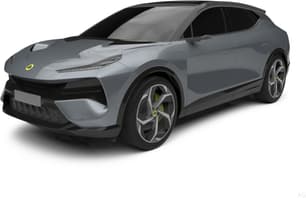
This is a Lotus - but it’s not like any Lotus you’ve ever known.
In fact, forget everything you know about Lotus, the British brand previously famous for small, lightweight sports cars is now evolving into something very different. Very, very different.
Under the control of Chinese automotive giant Geely since 2017, Lotus will shed its past and focus its future on all-electric, luxury vehicles like the Eletre we’re testing here.
The Eletre is a full-size luxury electric SUV designed to take on the likes of the Audi SQ8 e-tron, BMW iX and Mercedes-AMG EQE on the electric side, while also trying to lure buyers away from the likes of the Bentley Bentayga and Lamborghini Urus.
So, how does this radically different Lotus measure up to the brand’s reputation and stack up against its would-be competitors? Read on to find out…
At nearly $25,000 the Penguin can't really be called cheap, but what does make it worth a look is the completely contained living space – the sitting, sleeping and cooking are all done inside, and that's a boon when the weather turns.
It's ideal if you want the comfort of a caravan without the bulk of one, and the ease of towing a more traditional camper-trailer offers, without the struggle of set-up.
So, how does this radically different Lotus measure up to the brand’s reputation and stack up against its would-be competitors in the final summation? It doesn’t reset the benchmark in any area or stand out head and shoulders above its competition, but crucially for Lotus (and its overlords at Geely) it doesn’t feel behind its rivals.
For the Lotus diehards this is an unrecognisable addition to the brand’s legacy of great sports cars. But this new version of the brand is looking to reach fresh customers and the Eletre will likely grab their eye with its dramatic looks.
It’s a highly competitive luxury, performance SUV that should have anyone considering a similar sized Bentley, BMW, Mercedes, or even the Lamborghini taking it for a test drive. It has both elements - luxury and performance - that will appeal to those looking for something special.
Inside, the layout is simple, but comfortable for two people. The rear of the camper is dominated by the east-west oriented bed.
The dinette, to the front of the camper, is cosy and only good for two people. It does actually fold down into a second bed for a third body (or a second body who's not allowed in the first bed), but although there's sleeping for three, seating that many would be difficult. Maybe a small grandchild, occasionally. It's comfortable, though and both seats lift up to reveal a little extra storage. There's even a hidey-hole behind the driver's side back-rest.
Typical of all campers of this sort, the bench heights are low and will frustrate taller people who need to stoop to use them.
This camper has a canvas skirt, but really there's more see-through plastic window than actual canvas, so it's quite panoramic inside. It's not hard to gain a bit of privacy, though; there's a dark tint to them so it's hard to see through during the day, and all the windows have curtains, so you can shut everything out, easily enough.
Lighting is simple, with just two LED lights in the roof, although unless you pay extra for a battery, they'll only work at powered sites.
The modern and premium design carries over into the cabin, with the model we were testing finished in grey leather and Alcantra with gold highlights. Which, along with the fact there’s leather and carpet inside, makes this feel more polished and luxurious than any previous Lotus.
But once you look beyond that you notice it’s not quite as practical as such a large SUV could be. Yes, there are a couple of cupholders in the centre console, but one is quite small and not practical for most cups/bottles.
There’s a small shelf for the wireless smartphone charging pad and the centre console box, but aside from that, there’s no other significant storage space in the front.
On the plus side the seats are comfortable and supportive, which is also true of those in the rear. The space in the rear is excellent, with plenty of head and knee room that will allow four adults to travel in comfort (adding a fifth to the middle seat would be a squeeze).
Those in the back also get access to the small screen that allows them to adjust not only the climate control but also the front seats. The rear seats also recline and there’s a pair of cupholders and USB-C ports.
The Lotus Eletre has a generous 688-litre boot, which is wide and deep. However, it comes at the expense of a spare tyre, with only a puncture repair kit provided.
Because the Penguin is so light – as mentioned above – and because the towing height is just 1660mm, lower than the roof of most cars and certainly below that of SUVs, it's easy to tow, even if you don't have the largest 4WD to haul it around.
The Subaru Forester I tested this camper with, for instance, did the job quite well and would be ideal if you towed the camper down the coast a few times a year.
Underneath, the camper's got a simple beam axle with leaf slipper springs and shock absorbers. They do a commendable job and, as this is a purely on-road camper, there's no need for it to be anything else.
The challenge for Lotus, and its competitors, is to make its cars stand out from the pack despite the increasing similarities in performance brought on by electric powertrains.
Whereas in the past we could have assessed the difference between a Lotus-built V8 compared to a BMW manufactured V8 or even a Mercedes-Benz V12, these days all the electric models produce the same quiet, effortless punch.
So, it creates a generic driving experience in some regards, when what you’re hoping for at this end of the market is something special and different. And it’s important to note I don’t use the term ‘generic’ in a negative sense, but simply the Eletre has similar driving characteristics to the electric models from BMW, Mercedes-AMG and others.
Where it does give a hint to Lotus’ heritage is in its handling, where the combination of the air suspension with adaptive dampers, torque vectoring (by braking) and the British brand’s decades of experience combine to create a surprisingly direct and responsive SUV.
You won’t mistake it for an Emira, Exige or Elise, but the Eletre does have dynamic ability a cut above your average luxury SUV.