What's the difference?
People with camper-trailers are increasingly looking to push their travel boundaries and so they head off the bitumen, onto dirt roads and go bush.
But on-road camper-trailers are not suited to cope with the extra stresses that dirt-road or gravel-track driving bring, which is why campers better equipped for light-duty bush driving, such as Jayco’s Outback versions of its models, are finding favor with buyers.
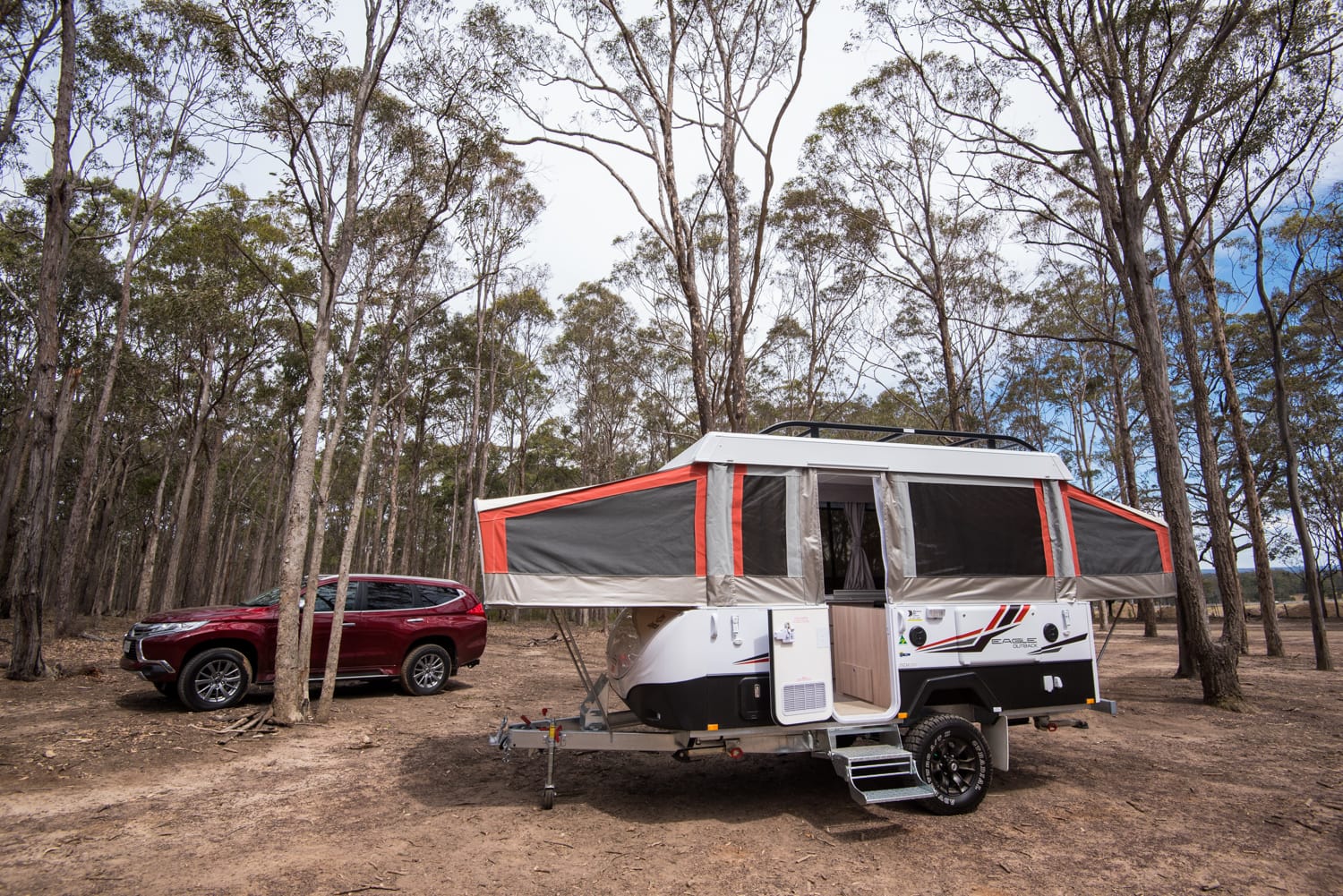
We took an Eagle Outback into the bush to check it out.

Yet another Chinese-branded EV has arrived on our shores and if the name Jaecoo doesn’t ring a bell, that’s understandable. It’s a relatively new offshoot of Chery, making its presence felt with a growing line-up aimed squarely at everyday buyers. Think mainstream, built around accessible pricing and a decent spread of features.
Offered in a single grade, the Jaecoo J5 EV is a small SUV entering an already crowded segment. It goes up against familiar names like the BYD Atto 2, Chery E5 and MG S5 EV, all offering broadly similar promises on paper. The real question, then, is whether the J5 EV manages to carve out an identity of its own, and whether its appeal stretches beyond the price tag.
The Jayco Eagle Outback, for me, is an example of a camper-trailer getting closer to what I reckon a truly off-road-capable Jayco camper will be like.
There's nothing in Jayco's current line-up that offers comfort and full functionality and is also capable of tackling decent off-roading, so we're looking forward to testing Jayco's first line-up of dedicated off-road campers, including the JTrak Outback and Outback X.
The Jaecoo J5 EV makes a strong first impression and a quieter long-term one. The J5 looks the part, feels comfortable and covers all the basics well, making it an easy choice for buyers who want an affordable, practical EV without too many compromises.
It’s a solid effort overall, though even at this lower price point a few more rear-seat features would be welcome - especially given this is the only grade currently available. However, it hits the right notes when it comes to ownership and value which will be its strongest pull.
These Jayco camper-trailers have a familiar touring-friendly floor-plan – check out the accompanying photos for proof of that – and most adhere to a similar approach to interior functionality – neat and simple – and that’s well suited to those who venture off the blacktop and hit the dirt.
Interior height is 2070mm, standard for campers of this type, so there’s plenty of stretch space for those of us not gifted with the vertical inches of Collingwood’s Mason Cox. Bench height, also standard for a camper-trailer, remains just lower than an average bloke’s hip so stooping to work in the kitchen is still an issue, but that’s part and parcel of the lifestyle, so stop whinging and get used to it.
Looking from the door, to the left is the front bed and club lounge; along the wall is the kitchen area (replete with four-burner stove, Dometic 95-litre fridge*, storage drawers and pantry); and to the right is the rear bed and dinette area. (* Outback models get the 95-litre fridge; Touring models get the 90-litre fridge.)
Overhead interior lighting includes LEDs for the main area and reading lights for the beds; there’s a fan for the beds.
There are also power points and USB port.
The Jaecoo J5 EV's cabin is spacious with both rows offering ample head- and legroom. A flat floor also helps the middle rear seat feel more usable than usual, which is always appreciated. Up front, the seats are very comfortable, with their added adjustment, heating and ventilation making a noticeable difference on longer drives. The rear seats are well padded with decent back support, so passengers in the second row shouldn’t feel short-changed.
Access to both rows is good with wide door apertures and an easy step in/step out height. My main quibble here is the keyless entry set-up. Unless you enable proximity unlocking through the multimedia system the doors aren’t truly keyless. Even then, the system can be inconsistent. That means occasionally having to reach for the key fob, which is frustrating when your hands are full.
Storage is one of the J5’s stronger suits. Up front, it’s easy to keep things neat thanks to a large glove box and a deep, if slightly narrow, middle console. There’s also a clever open shelf beneath a centre console that houses cupholders and phone storage, including a wireless charging pad. A small hidden pocket behind the media display adds to the storage count, although I’ll admit I regularly forget it exists.
Rear passengers get a couple of map pockets, drink bottle holders and cupholders. Beyond that, amenities are limited. There’s a single directional air vent and a USB-A port, but not much else to keep older kids or adults entertained.
Technology is fairly straightforward, although almost everything is accessed through the touchscreen. The multimedia system is crisp and responsive, with wireless Apple CarPlay and Android Auto working well, however it misses out on built-in satellite navigation and any meaningful apps. That said, there is a karaoke app tucked away in the system, which will undoubtedly delight someone, somewhere.
Charging options up front include a USB-A and USB-C port, along with a 12-volt socket. There’s also a USB-A port near the rear-view mirror, which is handy if you’re planning to install an aftermarket dash cam.
Jaecoo pitches the J5 as pet-friendly, with upholstery designed to be easy to clean and resistant to wear. In practice, I’d say that claim comes with caveats. Jaecoo clearly hasn’t met my son or my German Shepherd, and it took a fair bit of elbow grease to properly clean the cabin. Staying on top of messes will be key if you want the interior to keep looking fresh.
The boot offers up to 480L of capacity, which is strong for the class, and the flat load floor makes it easy to slide items in and out. There are no power ports or sockets, which feels like an odd omission for an EV. You also get a repair kit instead of a spare tyre, despite there being enough space to accommodate one. A 35L frunk adds some extra storage flexibility, and the powered tailgate is a welcome inclusion.
This single-axle camper – at 5060mm long (including drawbar), 1910mm high, 2240mm wide, and with a 1270kg tare weight – towed smoothly behind the Mitsubishi Pajero Sport we used on this review.
It sat snug and steady on the towball (with a 150kg download) during open-road driving, as well as during short sections of slightly bumpy gravel track and undulating dirt road.
The Eagle Outback has a hot dip galvanised Endurance Chassis riding on Jayco’s own JTech coil-spring suspension set-up.
Please note: Jayco’s Outback models are designed and engineered for, at worst, dirt roads and gravel roads, not 4WD tracks. Do not think that because these campers have been branded ‘Outback’ that they are actually able to tackle hard-core off-roading.
The Jaecoo J5 EV has plenty of power on hand, with good pick-up when you need it for hills or overtaking. It feels responsive enough for everyday driving, without ever feeling aggressive or overly eager.
Steering is light, and the suspension leans towards the softer side. Around town that works well, offering a comfortable ride. On faster roads or through corners, however, it can feel a little unsettled, and the J5 isn’t particularly convincing on the open road.
Visibility out the front and sides is strong and the driving position gives you a fairly commanding view of the road, which makes day-to-day city driving straightforward.
There are three levels of regenerative braking, but even on the lowest setting it can feel abrupt. Some passengers reported feeling queasy and maintaining a smooth, consistent speed can be tricky as the car has a tendency to lurch.
Parking is generally easy thanks to the J5’s compact footprint and a clear 360-degree camera system. That said, the aggressive regen braking can make low-speed manoeuvres, particularly reversing, more challenging than necessary, as it’s hard to get the car to creep smoothly.