What's the difference?
The Ineos Grenadier Quartermaster is the dual-cab ute version of the Ineos Grenadier wagon, which arrived a few years ago to much fanfare.
It’s a body-on-frame / ladder-frame 4WD with live axles, a dual-range transfer case, front, centre and rear diff locks, and plenty of features – onboard and optional – intended to turn you into an off-road expert.
The Quartermaster is a purpose-built work-and-play ute aimed at taking on the likes of the Toyota LandCruiser 70 Series and it’s a real breath of fresh air in a dual-cab ute market that’s increasingly looking same-same – although admittedly the Kia Tasman has also rattled the cage, but that’s another story.
So how does this Land Rover Defender-inspired ute perform off-road?
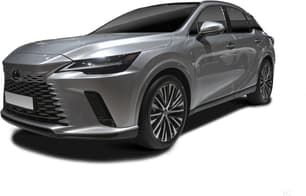
This is a BIG moment for the Lexus RX in Australia. And I'm not just referring to the spindle grille that adorns the front-end of this all-new model (though it too is almost commercially massive).
I'm talking more about the vehicle itself, and its importance to the Lexus brand here. The RX is one of Lexus' best sellers in Australia, and so this new one – which welcomes a new platform, new powertrain options and an all-new F Sport Performance trim level – is a big deal.
So, does it live up to the hype (and to its German competition)? Join me as we figure all that out ahead of the RX's debut here in early 2023.
The Ineos Grenadier Quartermaster is best regarded as a charming old-school oddity in an increasingly cookie-cutter dual-cab ute market.
In the same vein as the Suzuki Jimny, Jeep Gladiator, and Toyota LandCruiser 70 Series, this ute is for those of us who really like driving to be a fully immersive experience and don’t mind a few sacrifices and some discomfort along the way.
Good on Ineos for giving it a crack.
The RX is a big SUV that doesn't always look, or drive, like one, and – in 500h guise especially – can put a smile on a driver's face, too.
Gone are the cabin quirks and the polarising design elements (well, mostly...), and in their place you'll find a solid, premium-feeling family offering without much in the way of drawbacks.
Note: CarsGuide attended this event as a guest of the manufacturer, with travel, accommodation and meals provided.
The Quartermaster is 5400mm long (with a 3227mm wheelbase), 1943mm wide, and 2019mm high. It has a listed kerb weight of 2718kg and a 14.5m turning circle.
I’m always reluctant to talk about any vehicle’s design but it’s easy with something like this ute.
The Quartermaster has a distinctive look. It’s blocky, hard lines everywhere, and it’s straight up and down, old school.
Substantial side steps/runners, exterior utility belt (a integrated feature by which you can attach accessories, tools, or cargo to the Quartermaster’s exterior), and BFGoodrich All-Terrain KO2 all-terrain tyres on 17-inch alloy wheels add to this ute’s presence.
It certainly catches everyone's attention, for better or worse because some people like it, some people don't. I happen to be part of the mob who actually like the look of the Quartermaster and its sibling, the Grenadier station wagon, and the design pretty much works overall.
Extras like the black contrast roof, safari windows and raised air intake further set this Quartermaster apart from most other modern dual-cab utes on our roads.
The interior is somewhat spartan but well laid-out and comfortable. It has lots of controls and quirky styling to keep everyone inside occupied and while, at first, it’s all a confusion of buttons, knobs and dials, it soon takes on a more familiar feel as you become accustomed to everything.
Honestly, the Lexus RX looks far more powerful, and cohesive, in the metal than it does in some photos, and in the right colour (we're fond on the deep black or the copper-rose hues), it looks downright fetching.
That Predator-shaped front-end is massive, but the way the Spindle grille kind of bleeds in the body work at the nose of the vehicle is a neat trick, and the whole design ethos gives the RX a sportier, more modern, and more intimidating, energy from almost every angle.
Perhaps the most clever element though is the wave-like design piece that links the rear window with the boot, somehow managing to shrink almost-five-metre SUV (visually, at least), and leaving the RX looking more sporty than hulking.
The door handles are cool, too. They’re fixed, and you just touch them to open the door, with a similar system used once inside to get out again.
Inside, Lexus has gone for a clean, modern-feeling space, and, thankfully, there isn't a Remote Touch trackpad in sight. Instead, you can choose between two screen sizes – 9.8- or 14.0-inch – which kind of dominate the dash, while the air-con controls are digital and interactive, too.
It must be said, though, some interior treatments feel far more special than others, and while Lexus in Australia isn't spilling on specifics for our market just yet, the top-spec models will almost certainly feel more plush than the cheaper ones.
In terms of practicality, it's pretty good news inside the Quartermaster cabin when you first climb in. As mentioned, there is a confusion of dials, buttons, knobs, everything in front of and above you. But give yourself some time to locate controls and understand how to best use them, and you'll be absolutely fine.
As alluded to in Design, the cabin looks really good but it also functions quite well as a work or travel space. Once you are underway and you have a firm understanding of everything, it all feels comfortably familiar.
There are hard plastic surfaces in the cabin, leather accents, as well as plenty of quirky styling cues around the cabin, including port and starboard markings, aircraft cockpit-style controls and more, and you'll have fun discovering those.
The floor has drain plugs and the buttons and switches have an IP54K rating (protected from limited dust ingress and water spray from any direction) with the idea being that, worst comes to the worst, you can always hose out the interior if it gets really dirty.
The Recaro seats, front and rear, are very comfortable. There's not a whole lot of room in the rear seat. You don't get much leg and knee room, especially if you are tall, but the seats are raised for optimised visibility to the front and otherwise, with big glass everywhere and safari windows, it’s an airy and useable space.
The auxiliary battery is under the rear seat.
All in all, it's a functional and comfortable interior.
Anyway to the business end. The tub is 1564mm long, 1619mm wide (1137mm between the wheel arches) and 485mm deep. It has a sturdy tub liner, four-tie-down points, a load-space light, power socket.
The full-sized spare was located in the rear left-hand corner of the tub and while that’s not ideal and certainly doesn’t optimise the load space, it can be shifted elsewhere – on the roof perhaps – and it’s not as much of an eye-sore as the spare in the GWM Cannon Alpha PHEV tub.
The spare tyre also has the optional lockable storage box ($490) attached to it, so you can throw a bit of gear inside there and keep it secure during your travels.
The entire RX range now rides on Lexus' GA-K platform, which is lighter (-40kg), more rigid, and offers a lower centre of gravity (-15mm) than the model it replaces.
The RX is wider (+25mm to 1920mm), lower (-10mm to 1695mm), but no longer (still 4890mm) than the outgoing model. But Lexus has lengthened the wheelbase (+60mm to 2850mm) to earn some extra backseat space for rear riders.
And it must be said, there is lots of room for backseat riders. Sitting behind my own 175cm driving position I had more than enough knee room, and enough head room, and a general feeling of airy spaciousness.
Elsewhere you get the usual practicality perks, with two cupholders up front, two more in the pull-down seat divider that splits the rear seat, and there are two ISOFIX attachment points in the back seat, too.
Charging is handled by a four USB ports, and depending on the trim/spec balance Lexus in Australia shoots for, you should at least find vents with temp controls for backseat riders, too.
Lexus is yet to confirm the luggage space specs for the new RX, but given it’s only being offered with five seats, and that there’s been no change to the vehicle’s length, you can expect a fair bit of room for bags in its auto-opening boot.
This ute is available in three different spec levels: the base-spec Quartermaster, the Fieldmaster and, this, the Trialmaster.
It’s available with one of two BMW-sourced engines: a 3.0-litre inline-six turbo-petrol engine (producing 210kW at 4750rpm and 450Nm at 1750-4000rpm) or a 3.0-litre six-cylinder turbo-diesel engine – producing 183kW at 3250-4200rpm and 550Nm at 1250rpm-3000rpm.
I tested the diesel-powered variant.
The Trialmaster has a starting price of $118,000 before on-road costs, but our test vehicle has $15,386 worth of accessories onboard pushing its as-tested price up to $133,386.
Standard features onboard the Trialmaster include a 12.3-inch touchscreen multimedia system (with wireless Apple CarPlay and Android Auto), permanent four-wheel drive, centre diff lock, and front and rear skid plates.
Other noteworthy features inside this test vehicle include leather trim (black, $3405), heated front seats ($715), Nappa Leather Driver’s Pack, as well as auxiliary battery, auxiliary charge points, high load auxiliary switch panel and electrical preparation, 400W Inverter, and load bay utility rails.
Other features on the outside of this Trialmaster include a contrast roof – Inky Black ($2460), front and rear diff locks (standard on the Trialmaster), raised air intake, privacy glass ($770), safari windows ($2720), 17.0-inch alloy wheels ($1165), Class III 1-7/8” NAS tow hitch and electrics, a load bay liner, and a spare wheel lockable storage box ($490).
Exterior paint colours include the standard Britannia Blue (solid) or you can choose from Scottish White (solid, $1155), Magic Mushroom (solid, $1155), Eldoret Blue (solid, $1155), Sela Green (solid, $1155), Inky Black (solid, $1155), Devil Red (solid, $1315), Shale Blue (metallic, $1520), Queen's Red (metallic, $1520), Donny Grey (metallic, $1520), or Sterling Silver (metallic, $1520).
But what you want to know is how is it off-road and is it a replacement for the 70 Series, so let’s keep punching on through this yarn.
This is an arbitrary seven out of 10, here. Because we don't yet know how many trim levels the new RX will launch in, how much each will cost, or what you'll get for your investment.
What we do know is that the RX will launch with three powertrain options: an all-new turbocharged hybrid, a second, more conventional hybrid, and a turbo-petrol engine. There’s a plug-in hybrid version available overseas, but we ain’t getting it. Or at least, not yet.
In terms of specific trims and equipment levels, you’ll need to wait until closer to the RX’s launch in early 2023 for the full skinny. But you can expect a choice between a 9.8-inch or 14.0-inch central touchscreen with wireless Apple CarPlay and Android Auto, an eLatch door system with fixed handles that unlatch at the push of button inside and out, as well as more high-tech safety kit (thanks to Lexus Safety System 3.0) than you can shake a radar at.
The Ineos Grenadier Quartermaster is available with either a 3.0-litre inline-six turbo-petrol engine (producing 210kW at 4750rpm and 450Nm at 1750-4000rpm) or a 3.0-litre six-cylinder turbo-diesel engine – producing 183kW at 3250-4200rpm and 550Nm at 1250rpm-3000rpm.
Both engines are from BMW. Our test vehicle has the diesel.
This Quartermaster has an eight-speed ZF automatic transmission and a dual transfer case (high- and low-range 4WD), as well as a front, centre and rear diff lock.
This is a nicely refined engine-and-auto combination, offering up a decent punch of power and torque across a broad rev range when it’s needed.
Let’s start with what we’re not getting at launch. Internationally, there's a new plug-in hybrid variant that pairs a 227kW hybrid system with a 18.1kWh lithium-ion battery for an EV driving range of more than 65kms, but fight though Lexus in Australia did, it couldn't secure the model for our market at launch. It wants it though, and badly. So watch this space.
Instead we get three options, including the RX 350h, which pairs a 2.5-litre petrol engine with Lexus' existing hybrid system to produce a total 180kW and 316Nm. It's paired with a constantly variable transmission and will be offered in two- or all-wheel drive.
There’s also a turbocharged 2.4-litre petrol engine on offer in the RX 350, good for 205kW and 430Nm, and paired with an eight speed automatic and AWD.
But the powertrain I really, really like lives in the RX 500h F Performance, and pairs a 2.4-litre turbocharged petrol engine with an electric motor up front, and a second at the rear axle, for a total of 273kW and 551Nm.
The all-new hybrid system has been designed with turbocharged engines in mind, and features a single electric motor at the front, and a bigger rear motor, with the latter able to provide real driving power to the rear tyres - and contribute to a sprint to 100km/h of just 5.9secs.
Lexus calls it an 'eAxle' motor, and it can deliver some 76kW to the rear tyres. It pairs with a 'DIRECT4' all-wheel drive system which the brand says improves "handling, controllability, and feel."
Fitting, then, that it features on the RX 500h F Performance, which also introduces a new go-fast tier for the Lexus brand (though one you can expect to see more frequently in the near future), and which sits between the existing F Sport and the top-tier, full-fat F models.
The brand says things like bigger brakes, performance components and the highest power outputs will be reserved for the F Performance models. And so it is with the RX 500h F Performance, which welcomes six-piston front brakes, adaptive variable suspension, dynamic rear steering and 21-inch wheels.
Official fuel consumption is 10.5L/100km on a combined cycle.
On this test, I recorded 12.3L/100km.
The Quartermaster has a 90-litre fuel tank so, going by that fuel figure, you could reasonably expect a driving range of about 730km from a full tank. However, long-range fuel tanks are available, so there’s always that option.
Let’s start with the pure-petrol RX 350, which will sip a claimed 8.8 litres per hundred kilometres on the combined cycle, and will demand premium petrol. The RX 350h is more fuel efficient, demanding 6.4 to 6.7 litres per hundred kilometres on the combined cycle.
But the most impressive is the RX 500h, which Lexus says will need 8.2 to 8.5 litres per hundred kilometres — making it more efficient than the petrol-powered RX 350, despite producing an extra 68 kilowatts of power and 121 newton metres of torque.
First things first, just to put your mind at ease – the Quartermaster is not absolutely terrible to drive on road, in fact it’s actually quite nice: planted, comfortable (on coil-spring suspension), and refined (for a ute).
It’s no surprise that a long four-wheel-drive ute does really well on-road, even if it is a heavy solid axle vehicle and not particularly dynamic.
What's also not surprising – because on paper this is an off-road beast – is that the Quartermaster is very capable off-road.
It has three diff locks (front, centre and rear), off-road mode, hill descent control and more, so it's an effective mix of traditional mechanicals and driver-assist tech. That's the dual range transfer case, but it also has electronic traction control. The 3.0-litre turbo-diesel engine and the eight-speed automatic transmission work well in on-road situations and it's also a clever smooth combination in off-road scenarios.
So there's plenty to like about this ute when it comes to 4WDing.
Be aware though: this is a big, heavy vehicle with a long wheelbase, so it takes considered driving to steer around – it has a big turning circle at 14.5 metres – but that's not to say those dimensions and those characteristics ruin it off-road because they don't. The Quartermaster simply requires a bit more thought when you're driving it.
If you haven't spent a lot of time or any time in vehicles like this, such as the Toyota LandCruiser 70 series or of that sort of ilk – big long old-school four wheel drive utes – then you may have a bit of an issue with the steering. It is slow, and there is a lot of play to it, especially off-centre. It does feel floaty and it takes a lot of effort and constant micro-corrections when you're driving to keep it on track and to keep it going where you want to. Put it this way: it’s not self-centred so you have to work at getting it back on track once you’ve taken on a turn.
But I like that, because four-wheel driving should be an entirely immersive experience, you should be always directly involved in the process and in this ute you are.
There’s plenty of power and torque across a nice rev range, with plenty of torque down low, which is crucial when off-roading.
And while the stretched wheelbase makes the underbody vulnerable to knocks and scrapes, especially over more severe 4WD-only terrain, the Quartermaster actually manages quite well.
Its approach, ramp breakover and departure angles – 36.2, 26.2 and 22.6 – are reasonable for something of this size and with 264mm of ground clearance and 800mm of wading depth, this ute has the measurements to cope with most off-road challenges you could throw dirt at.
Another thing I like about the Quartermaster is the fact it retains an old stubby stick, that’s working off the dual-range transfer case, to put the vehicle into low range and that's a welcome touch and a practical nod to the past, rather than a button or a dial.
As mentioned earlier, it has live axles, so there’s flex through the front and rear, although it'd be even better with a swaybar disconnect system onboard (as in the Jeep Gladiator).
This Trialmaster gets the BFG KO2s and where the standard tyres on a contemporary ute may not be up to scratch in off-roading terms, the KO2s work really well. It’s impressive what a difference decent all-terrains make, and if you want to get into the sloppy stuff, then you might consider getting some mud-terrain tyres.
So the Quartermaster is a very capable four-wheel-drive ute and there's a lot to like about it, but the issue with a vehicle like this is that people may come into it not understanding exactly how it rides, how it drives and how involved you actually have to be and the fact that there are lots of compromises, indeed some sacrifices.
You're not getting as much driver-assist technology as you get in other utes, and it doesn't drive as precisely or perhaps as comfortably as some other utes – but that's missing the point.
The Quartermaster is about that all-encompassing off-roading experience. And if you get in one of these things, you have to be all-in, ready for the bumps and the discomfort and the effort it requires but all of those things add to the appeal of this ute, rather than detract from it.
And that's a major point of difference with this ute over others in the market: in being faithful to the spirit of old-school 4WDing, Ineos has been willing to forgo those things which people have come to expect and as a result it may only draw the faithful, the committed, who are all-in for off-road adventure.
Where the Quartermaster falls short, however, is in terms of practical use because its payload is 832kg in the diesel version and that’s disappointing, especially when a 2.8-litre LC70 GXL dual-cab can cope with 1325kg.
It is rated to tow 750kg unbraked, and 3500kg braked and with a kerb weight of 2718kg it has a GVM of 3550kg and a GCM of 7000kg.
Right, let’s cut to the chase here. I like the way the all-new RX family drives, pretty much across the board. If that’s all the information you want or need, feel free to check out here and move on to the next sub-heading.
Still here? Ok, then let’s go a little deeper.
None of the powertrains on offer feel under-powered in the RX range, which is a good start, but they all do their jobs a little differently.
The RX 350 is probably the most familiar, with a traditional automatic and that well-known petrol-powered punch. It’s not the most powerful engine on offer here, but it’s more than enough to get the RX up and moving — but, for mine, it can feel a little thrashy (or like it’s straining a little too hard), when you really start to push it, but such is the price you pay for a four-cylinder engine pushing a large SUV.
Next up is the RX 350h, which Lexus reckons will be the best-selling model in Australia. Lexus and Toyota have been doing hybrid powertrains for some time now, and the system fitted to the new RX is predictably solid-feeling, though it too has its drawbacks – namely that the constantly variable transmission can drone on and on under constant acceleration, and even the commendably insulated cabin can’t block it out completely.
So if this is a Goldilocks’ scenario, then the just right has to be the RX 500h, which blends its powerful powertrain with a traditional-feeling automatic to deliver plenty of performance and a tight, engaging drive experience that makes it feel as though the big SUV is somehow shrinking around you from behind the wheel, courtesy of the best performance kit (brakes, adaptive suspension, etc).
But to be honest, no matter the RX, the thing that really stands out here is its on-road dynamics. The car doesn’t really wobble about, there’s not much in the way of body roll, and it feels tight and confidence inspiring, no matter the model - but especially the rear-wheel-steering equipped 500h.
The RX also does a commendable job of locking the outside world outside of the cabin. Where you want it to be a calm and sedate family hauler, it can be that. But it can also put a smile on your face on the right road, too.
And that, I think, is something to be celebrated. And also not something we’ve come to associate with Lexus over the years. But that’s now beginning to change. Long live F Sport Performance, then.
The Ineos Grenadier Quartermaster does not have an ANCAP safety rating because it has not been tested.
As standard, it has six airbags, electronic stability and traction control, rear park assist, a tyre-pressure monitoring system, and trailer-stability assist.
It does not have auto emergency braking (AEB), adaptive cruise control, blind-spot monitoring, lane-keep assist, or traffic sign recognition.
The Quartermaster does have a rear-view camera, but the screen is quite small.
Front and rear parking sensors are standard on the Fieldmaster and Trialmaster, but optional on the base-spec Quartermaster.
The Lexus RX welcomes the brand's Lexus Safety System 3.0 setup, which means more high-tech kit than you can shake a radar at.
What appears where on the Australian lineup remains to be seen, but internationally the RX will offer things like Advanced Park, remote parking from your smart phone, Safe Exit Assist that will actually prevent you opening the doors should the cameras detect pedestrians or cyclists, and Pre-Crash Safety, which scans intersections for bikes, people or cars, and activate alarms and the brakes should it sense a collision.
That, and things like Front Cross-Traffic Alert, active cruise, Lane Departure Warning and Lane Tracing Assist, road-sign recognition and Lane Change Assist, should see Lexus shooting for a five-star ANCAP safety rating.
The Ineos Grenadier Quartermaster is covered by a five-year/unlimited km warranty, not the best in terms of years of coverage, but on par with the likes of the LC70.
A 12-year anti-perforation warranty – covering body sheet metal panels and chassis frame against inside-to-outside corrosion caused by defective materials or workmanship – applies to this ute.
No capped-price servicing is available and service intervals are scheduled for every 12 months or 15,000km, whichever occurs soonest, and total cost for the five years is $4626 for the diesel and $4896 for the petrol.
At the time of writing, Ineos has 25 sales and service centres, two sales-only centres and 55 service-only centres spread throughout Australia with a focus on regional and rural areas.
The Lexus family is covered by a five-year, unlimited-kilometre warranty, which is about bang-on in the premium-vehicle space.
While servicing details are yet to be confirmed, the previous RX required a trip to the service centre every 12 months or 15,000kms, and it will fall under the brand’s capped-price servicing program, and the Lexus Encore program, which offers all sorts of perks to owners.