What's the difference?
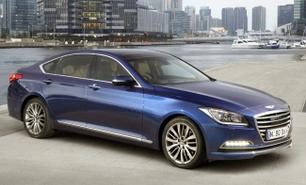
Anybody who doubts that Hyundai is gunning for the number one in the world has rocks in their head. Big heavy ones. Korean companies do not settle for anything less than number one. The second-generation Genesis (our first taste here in the Antipodes as the gen-one had its steering wheel on the wrong side) is proof.
What's different about Hyundai's unstoppable rise is the way they're going about it. They've always done their own thing in Korea, reinventing themselves time and again when they strayed off the beaten path.
The Genesis is a gamble for a Korean company in foreign markets whose default setting for luxury is marked, Britain or Germany. If Hyundai gets the Genesis wrong there will be howls of derision, or at best patronising pats on the back - "Nice try, you'll get there one day". But if they get it right...
The first-generation Volvo XC90 remained on sale for 12 years in Australia before being replaced by the handsome second-gen version that recently clocked up a decade of sales.
There’s a reason for the longevity. People love the Volvo XC90. It is a reliable seven-seat family-friendly SUV with a premium bent. You’ll spot loads of these at fancy private school drop off.
Volvo has extended the life of the second-gen XC90 with a significant late-life update. It adopts some features from its stablemate, the similarly sized and positioned EX90 electric SUV.
It doesn’t get a fully-electric powertrain but you have the choice of a mild-hybrid grade that acts as the range opener and the well-equipped T8 Plug-In Hybrid I’m testing.
Interestingly, a number of this car’s rivals have had their lives extended, too. As many carmakers pour billions into EVs, they’ve taken to delivering major updates to older internal combustion platforms rather than developing all-new underpinnings. The Audi Q7 and BMW X5 are other examples of this.
For the update, Volvo has ushered in a front-end design refresh, a fresh take on the interior, new multimedia and safety tech, a light tweak to suspension and new colours and wheels.
But is this enough to keep premium SUV buyers interested? Let’s find out…
The Genesis is not quite a match for cars twice its price but it makes you think what's possible. It doesn't have the dynamic brilliance of a BMW or the self-assured faultless execution of a Mercedes. Lexus ought to be worried, though - why would you have an LS when you could have this? The only answer is 'badge'.
The Genesis is an epoch-making car for the Korean manufacturer. As the company has got better, there are fewer excuses for overlooking it. While the Genesis is pitched into a shrinking market, it's not really meant for the average i30 buyer to buy, but to see.
It's bristling with tech and is not only a halo car but a shot across the bows of both Lexus and the Germans. Attached to that shot is a note: "We're coming for you." In other words, Hyundai got it right.
It’s a credit to Volvo that the XC90 feels like a new car, even with its older underpinnings. This latest update has successfully addressed areas that needed the most attention, namely the multimedia system, interior and exterior design. The electric driving range now feels somewhat old school compared to the numbers some manufacturers can achieve these days. A lot of PHEVs now exceed 100km EV range and buyers are starting to expect that. And setting up the third row takes way too much effort to want to do it regularly. The new Volvo XC90 is a comfortable, engaging and properly premium family SUV and the updates have only improved what was already a solid offering.