What's the difference?
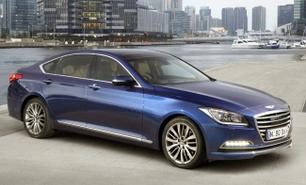
Anybody who doubts that Hyundai is gunning for the number one in the world has rocks in their head. Big heavy ones. Korean companies do not settle for anything less than number one. The second-generation Genesis (our first taste here in the Antipodes as the gen-one had its steering wheel on the wrong side) is proof.
What's different about Hyundai's unstoppable rise is the way they're going about it. They've always done their own thing in Korea, reinventing themselves time and again when they strayed off the beaten path.
The Genesis is a gamble for a Korean company in foreign markets whose default setting for luxury is marked, Britain or Germany. If Hyundai gets the Genesis wrong there will be howls of derision, or at best patronising pats on the back - "Nice try, you'll get there one day". But if they get it right...
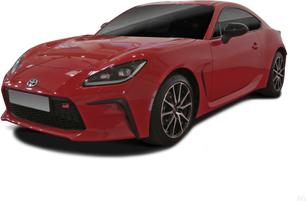
The new, second generation take on the hachi-roku formula adds a serious amount of 'GRRRR' to the mix. This is it - the new-look, more powerful and much angrier Toyota GR86.
It takes the familiar front-engine, rear-wheel-drive sports car formula and mixes in a bit of madness - there’s a more focused chassis setup, redone steering, a firmer ride and of course, a bigger capacity engine. Still no turbo, though.
The question is - does it improve on the original? And can it live up to its new jaw-dropping price?
The Genesis is not quite a match for cars twice its price but it makes you think what's possible. It doesn't have the dynamic brilliance of a BMW or the self-assured faultless execution of a Mercedes. Lexus ought to be worried, though - why would you have an LS when you could have this? The only answer is 'badge'.
The Genesis is an epoch-making car for the Korean manufacturer. As the company has got better, there are fewer excuses for overlooking it. While the Genesis is pitched into a shrinking market, it's not really meant for the average i30 buyer to buy, but to see.
It's bristling with tech and is not only a halo car but a shot across the bows of both Lexus and the Germans. Attached to that shot is a note: "We're coming for you." In other words, Hyundai got it right.
If you’re expecting a faster, angrier and more focused version of the original 86, you’re going to be happy with this car. If you’re expecting it to be as fun and chuckable as the first one, you might be upset.
It has a different character, this GR86 - certainly with more GRRRR than ever before - and it still represents a strong sports car option for buyers, even if it is a fair bit more expensive this time around. It'd be hard not to recommend the GTS version to anyone considering it.
Note: CarsGuide attended this event as a guest of the manufacturer, with travel and meals provided.
The Genesis is like no other Hyundai. For a start, it's gigantic - it looks easily as big as a BMW 7 Series (it isn't) with the road presence to match. There's a lot of BMW from most directions, but with a sharper approach to the creasing and character of the sheet metal.
Towards the rear it's more BMW 6 Series Gran Coupe and is all the better for it. The style is understated and technocratic.
Inside is also very Germanic, but with a bit more of a Lexus feel
The big wheels from the Ultimate pack help make it look lower and sleeker, too.
Inside is also very Germanic, but with a bit more of a Lexus feel. Our car had the lighter leather which meant that the wood and the metal materials didn't necessarily work well together.
The interior is expertly put together and feels like it will last forever.
The only jarring moment is the gear selector is shared with our long-term Hyundai i30 - it looked a bit cheap in what is otherwise a beautifully executed cabin - it needs more heft.
On Australian-delivered cars there is just one Hyundai badge, sitting proudly on the boot - you get the feeling this was debated long and hard and when the decision was made to go for it, a big one was chosen.
However, the winged Genesis branding takes pride of place everywhere else. When you approach the car at night and the puddle lamps come on, the Genesis logo is projected on to the ground, crisp and clear.
The GR badges mean a lot, here. Not just because they signify that this is a proper Gazoo Racing product for Series 2, but also because they help you pick it as the Toyota and not the Subaru BRZ.
They are even more closely aligned in terms of exterior design this time around, and while both are good looking sports coupes, I wish more had been done to differentiate the two.
Sure, if you’re paying attention you’ll see the shape of the intake / grille area is different, and it has a different bumper shape to the BRZ, too - and both of them are bloody good looking cars, if you ask me.
The rear is particularly smart, I reckon - a more sporty and sleek appearance than the last one, and even if the tail-lights are somehow familiar, I think it’s a neat rear end. Can’t wait to see who makes the best looking aftermarket rear spoiler for it.
If you’re curious about the size and dimensions of the new GR86 compared to the old one, Toyota says it measures 4265mm (up 25mm) on a 2575mm wheelbase (up 5mm), sits 1310mm tall (down 10mm), and has the same overall width of 1775mm excluding mirrors.
There have been some big design changes in the cabin, though the overall layout is tremendously similar to the last car. It has similar controls for the air-con, a new touchscreen above, and similar layout to the storage, too.
The interior design is a bit plain, though - the screen is big and colourful, and I’m thankful for that. Because unless you option the GTS with the red carpet, it’s a bit bland in there.
The only way to describe the Genesis' pricing is aggressive - kicking off at $60,000, it's the most expensive Hyundai money can buy, but with a spec list like this, you won't feel at all short-changed.
Your sixty large buys you a huge cabin with a seventeen speaker stereo, auto headlights and wipers, LED ambient lighting inside and out, dual-zone climate control, keyless entry and start, powered front seats which are heated and cooled, satnav, front and rear parking sensors, and plenty of other bits and pieces.
Our car had the $22,000 Ultimate package, adding 19-inch alloys, blind spot sensor, front and side cameras, around-view display, real leather, more adjustments for the driver's seat, ventilated seats in the front, heated rear seats, panoramic glass sunroof, acoustic glass, heads-up display, powered bootlid and LED foglamps.
The Genesis is like no other Hyundai
You can have a lot of the more useful features in the $11,000 Sensory Pack. It's a good middle ground that, for example, features the excellent heads-up display.
The 9.2-inch screen splits the asymmetric air-conditioning vents. The software is unique to the Genesis and a huge leap forward over the rest of the Hyundai range - classy, smooth graphics, a good responsive screen.
You control the seventeen speaker stereo from here, which kicks out a rich sound and an impressive Bluetooth performance - rear seat passengers can also run the stereo from their armrest. The satnav is detailed and chatty, while the excellent heads-up display shows a configurable information set in strong, clear graphics.
I was there, that fateful day in June 2012 when Toyota Australia announced that the base model 86 manual was going to come in at less than $30,000. My jaw dropped, as did almost everyone else’s in that shed near the track where the launch was being held.
Fair to say my jaw also dropped when the price of the new 2023 Toyota GR86 was announced in the shed near the track (this time it was Phillip Island, not the Sutton Road driver training centre outside Queanbeyan).
That’s because the new model is between 15 and 35 per cent more expensive than the original 86.
The GR86 GT six-speed manual is now $43,240 (MSRP - before on-road costs). The price for the six-speed auto is identical, meaning - depending how you look at it - the manual is a rip-off, or the auto is compellingly priced.
The GR86 GTS model also employs the manual-or-auto-for-the-same-price strategy, listing at $45,390 (MSRP).
You get a few worthwhile items to justify the extra $2150 over the GT, and you can read all about the standard equipment inclusions here.
But it’s fair to say the GR86 might well be angrier in a lot of ways, but customers might be angry about the increase, too. Toyota even admitted that if it had kept the original price in line with inflation, it would have only cost $38,000 for the base GT grade. But it argues there’s a lot more value for buyers in this new model, by way of the drive experience and upsized engine, primarily.
However, there are some startling safety equipment exclusions that you might want to consider. More detail below.
OK, so what about rivals and pricing? Well, you can get the mechanically-identical Subaru BRZ for less. It starts at $40,290 for the manual (and has additional standard safety kit), but you have to pay extra for the auto, which starts from $44,090.
Or you might wish to think about a Mazda MX-5, which has the added cool factor of being a convertible, and starts at $37,990 for the base manual soft-top, or $42,300 for the hard-top.
The Genesis is powered by Hyundai's own 3.8-litre V6 developing 232kW and 397Nm, mated to Hyundai's eight-speed automatic transmission.
Despite weighing just under two tonnes, the Genesis completes the dash to 100km/h in 6.5 seconds.
It has a claimed 11.2L/100km on the combined cycle. In what must be a first, we got below that, averaging 10.8L/100km over two weeks. And that's without stop-start fuel-saving to blunt the effect of lot of city driving.
The Genesis is not going to tempt you into a track day, even with rear wheel drive
We'd still like to try the V8 - only available in left-hand drive markets - though.
It’s a bigger engine - now a 2.4-litre horizontally-opposed ‘boxer’ four-cylinder petrol unit - and that increase of 20 per cent engine capacity has yielded some good horsepower increases, too. And it has a Subaru badge on the engine cover. Because it’s a Subaru engine.
The new model pushes out 174kW of power (at 7000rpm), which is up from a max output of 152kW on the old model.
It’s the torque figure that’s interesting, though. There’s 250Nm at 3700rpm, which isn’t huge. But Toyota claims there’s 240Nm available from 3500-6500rpm, meaning a long flat torque build-up. The old model had 212Nm for the manual.
Now, both the six-speed manual and six-speed automatic transmission have the same power and torque outputs - in the last gen, the auto was held back by 5kW and 7Nm compared with the max-power manual.
Of course, it’s rear-wheel drive, and has a Torsen limited slip differential in the mix.
Toyota says the 0-100km/h time for the manual is 6.3 seconds, which is 1.8sec faster than the last manual. The auto’s 0-100 is claimed at 6.8sec.
Wondering about weight? The new one has four different masses to consider: GT manual - 1287kg; GT automatic - 1308kg; GTS manual - 1291kg; GTS automatic - 1312kg. Toyota says the bulk of the additional circa-44kg increase across the board is down to the larger capacity engine.
At five metres long, with a ride firmly pitched in the luxury camp, the Genesis is not going to tempt you into a track day, even with rear wheel drive.
Blindfold your passengers and swap them between a Lexus, a BMW and a Genesis and the overwhelming impression they'll get is one of incredible smoothness.
If you're wanting sudden movements, this isn't the car for you
Sitting in the back of the Genesis, it's easily as good as the German and luxury Japanese competition. The seats are hugely comfortable, there's ample head, leg and shoulder room and it feels lot nicer than anything within a bull's roar of its price.
No matter where you sit, it's an incredibly quiet car. The engine is a distant whoosh, the tyre noise muted and there's almost no wind or ambient noise. It's supremely comfortable and the excellent stereo will wash away what little noise does invade.
It certainly feels its weight from the driver's seat, with a competent, soft turn-in, but if you're wanting sudden movements, this isn't the car for you.
The Genesis is an epoch-making car for the Korean manufacturer
On fast flowing roads you can have some fun, but things will get floaty and that will quickly kill that fun. The ride and isolation from the rest of the world is completely worth it.
Have you ever been cutting veggies for dinner and realised you need to sharpen your knife? And then, once you’ve done it, you realise what the knife is really capable of?
That’s kinda the feeling between the last generation of the Toyota 86 and this new Toyota GR86.
I loved the old 86. Still do. Would have one in a heartbeat. But this - as the analogy suggests - is a much sharper tool.
The engine is a big improvement on the old 2.0-litre - it feels considerably more urgent, and it gathers pace without fuss. You can really rely on the torque of the engine more in the new GR86 - that wasn’t so much the case in the last car, which you had to row through the gears more in. Now you can leave it in fourth and allow the engine to do the work, whereas in corners in the old car, you’d probably have elected to downshift to third, maybe second.
The manual transmission is good, for the most part. It’s easy enough to operate, though the shift action can still feel a little bit notchy (first to second, fifth to sixth in particular in the car I drove). The clutch feel was reasonable, but not stall-proof at low speeds.
The sound of the engine is a bit more pleasant now, too. It doesn’t have the nasal overtones of the last one - with a deeper, more enjoyable noise. It’s not the best sounding boxer engine, but it’s not the worst, either.
I only had a short amount of time in the GR86 automatic, and it was on the Phillip Island race track. It has paddles, which I appreciate - but the gearbox will overrule you if you try and downshift and haven’t managed to get the engine revs down. Self preservation at the expense of outright fun? Yeah. A bit. A dual-clutch auto would be an interesting development in this car - but it’s not going to happen.
Drivers who live in areas where there are lots of potholes and bumpy sections of road - so, most of Australia, then - might feel the now-stiffer chassis is a bit too rigid at times.
It feels much more like a sports car than a sporty car, with Gazoo Racing having honed the suspension to the tastes of Toyota president and master driver, Akio Toyoda. I’ve been to Japan. I know the roads there are a heck of a lot more agreeable than here.
Look, it mightn’t be a deal-breaker for the enthusiast, but the curious customer might find the ride a bit hard.
The trade-off, of course, is terrific handling. It tucks into corners nicely, and with the reworked suspension (Macpherson front, multi-link rear), there’s less of that playful “please keep pushing me so we can have some slidey oversteer” character to it. It will drift, no doubt. But in the last 86, it didn’t take much effort to make that happen.
The steering is excellent, with terrific accuracy and weight, and decent feel through the wheel, too. You don’t feel every single thing at the front axle, but you do have a better gauge of it than you might have in the last GT grade, which famously ran those Prius tyres that were part of the reason sliding it around was a lot easier, too. The rubber on the new GR86 is far better - the GT runs Michelin Primacy HP (215/45/17), and the GTS has Michelin Pilot Sport 4 (215/40/18).
Look, it's still a lot of fun. But it’s fun in a different way. I actually prefer the last one in terms of the drive experience - even though this one is technically more impressive in all the important ways.
Nine airbags, traction and stability control, lane departure warning, forward collision control, ABS, brake force assist and distribution and traction and stability control bring the ANCAP count to five stars.
The Sensory and Ultimate packs add blind spot sensors and around view cameras.
If you buy the manual version of the Toyota GR86, you’re getting a car that isn't as safe as the auto. It’s that simple.
That’s because the manual models miss out on now-expected (and, frankly, embarrassingly absent) potentially life-saving safety features like forward autonomous emergency braking (AEB) or lane keeping assistance.
You get AEB in the auto, as well as a form of rear AEB (parking support brake) with rear parking sensors, and adaptive cruise control, as well as lane departure warning.
Another kicker? You have to choose the GTS if you want blind-spot monitoring and rear cross-traffic alert, which is on both manual and automatic models.
The BRZ gets that rear-facing safety gear on all versions. Advantage Subaru, I guess.
There’s no ANCAP crash test safety rating for the new GR86.