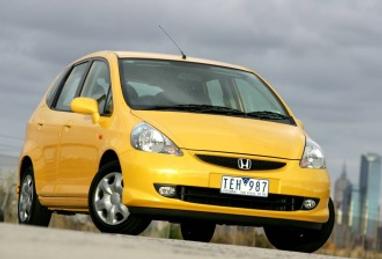
Honda Jazz 2005 Problems

Are you having problems with your 2005 Honda Jazz? Let our team of motoring experts keep you up to date with all of the latest 2005 Honda Jazz issues & faults. We have gathered all of the most frequently asked questions and problems relating to the 2005 Honda Jazz in one spot to help you decide if it's a smart buy.

Used Honda Jazz review: 2002-2009
By Ewan Kennedy · 24 Sep 2012
Honda Jazz is the smallest model from the at-times quirky Japanese car maker that’s sold in Australia. Since its launch in October 2002 the Jazz has gained an excellent reputation for build quality and trouble free running.Quality is of particular interest as the Jazz comes from Thailand, not Japan, to hold down manufacturing costs. We have visited Honda’s Thai plant and came away impressed, though hardly surprised, to note Honda's big emphasis on quality control.Honda Jazz has a high roofline to maximise interior space in what is a relatively small body. It can seat four adults with little compromising on legroom, but in Australia is more likely to carry either a couple or a family with young children. It fulfils both tasks with ease.There’s reasonably easy entry to the back seat, but some may find the rear door opening is a little tight in the original model. Those sold from the new model of 2008 this mild problem had been rectified. The Jazz has one of the best folding rear seat designs of them all. The rear seat slides backwards and forwards to let you choose your own compromise between people and/or luggage.And it can be folded in a few moments to create a huge luggage area. Even better, the front passenger seat backrest can be reclined all the way down to let you carry long loads extending from the dashboard to the rear window. In August 2008 Honda introduced a new Jazz that looked the same as the first generation, but was actually a major evolution of the old.The gen-two car is larger and sits on a longer wheelbase, so has significantly more space inside, particularly in the rear area of the cabin. Boot space increased and the 60/40 split rear seats could be folded flat without having to move the front seats a few notches forward as in the original model. At the same time the body was more rigid to improve NVH (Noise, Vibration and Harshness). The post-08 Honda Jazz has the sort of refinement that normally requires a car a size larger.Honda Jazz comes with a 1.3- or 1.5-litre four-cylinder engine. Though the engine sizes remained in the second-generation Jazz, they were actually all new. Power and torque were both increased, yet fuel consumption and emission decreased. Best of all, the torque graph has stretched to give you more grunt at the bottom end of the rev range.The gen-one Jazz has a continuously variable transmission (CVT). The 1.5 CVT comes with a sports mode offering seven preset gear ratios operated by steering wheel shifters. The 1.3-litre engine runs purely as an automatic. However, Honda decided to go back to a conventional torque-converter automatic transmission in the gen-two Jazz. Honda made this decision because potential buyers didn’t like some of the characteristics of the CVT, particularly the way it selected relatively high engine revs to gain maximum efficiency.Handling of the little Honda is good if roads are reasonably smooth, but it can be bounced about on bumps. On surfaces that suit it, the Jazz turns in easily, is happy to change direction in corners and is generally well set up for everyday driving. Enthusiastic drivers may find it a little lacking in steering precision. While the Jazz is reasonably easy for the amateur mechanic to work on, there is some underbonnet crowding that’s inevitable on a car of this size. Keep some band aids handy - and don’t forget the workshop manual.The Honda Australia dealer network is widespread in the heavily populated areas, but isn’t all that established in remote areas. We seldom hear of any real hassles with getting hold of spare parts, but if you are concerned about this it may be smart to make local enquiries before falling too deeply in love with one of these cute little models. Spare parts prices for Hondas are more reasonable now than they have been in the past.Insurance costs for Honda Jazz generally sit in the mid-range of the field. There doesn’t appear to be any real differentiation between companies on premium charges. It’s always wise to spend some time shopping around for the best deal, though.WHAT TO LOOK FORCheck that the engine starts easily and responds quickly and positively to the throttle, even when it’s completely cold. A continuously variable transmission should be crisp in its reactions to changes in throttle position and road conditions. Because a CVT transmission sounds and feels different to conventional automatics, have an expert drive it if you are not confident it’s working correctly.Make sure the brakes stop the car without any pulling to one side and that no one wheel locks while the others are still turning. Bodywork should be undamaged and free from rust. Corrosion is not common unless the car has been poorly repaired after a smash. Look over the interior to make sure it hasn’t suffered at the hands of uncaring owners, especially bored young kids. As always, it makes a lot of sense to get a professional inspection after carrying out initial checks to the best of your ability.CAR BUYING TIPCars that are always used in cities or close-in suburbs can suffer from a lot more parking scars than those that live in more spacious surroundings. Small cars are often city cars, so check them very carefully. 
Read the article
Used Honda Jazz review: 2002-2012
By Ewan Kennedy · 22 Mar 2013
Jazz is the smallest Honda sold in Australia and since its launch in October 2002 it has gained an excellent reputation for build quality and trouble free running. Style is also part of the equation and the Honda designers have come up with a tall machine that has plenty of character, yet doesn’t look like everything else in its class.Honda Jazz has a high roofline to maximise interior space in what is a relatively short body. It can seat four adults with little compromising on legroom so can be used as a family car even with kids in their teenage years. In Australia the Jazz is more likely to carry either a couple or a family with young children.There’s reasonably easy entry to the back seat, but some may find the rear door opening is a little tight in the original model. Jazzes sold from the new model of 2008 provide easier access.Honda Jazz has one of the best folding rear seat designs you will find anywhere. The rear seat slides backwards and forwards to let you choose your own compromise between people and/or luggage. The seat can be folded in a few moments to create a huge luggage area.Additionally, the front passenger seat backrest can be reclined all the way down to let you carry long loads extending from the dashboard to the rear window. Build quality is of particular interest as the Honda Jazz comes from Thailand, not Japan, to keep its price down.We have visited Honda’s Thai plant and came away impressed, though hardly surprised, to note Honda's big emphasis on quality control. In August 2008 Honda introduced a new Jazz that looked the same as the first generation, but was actually a major evolution of the old.The gen-two car is larger and sits on a longer wheelbase, so has significantly more space inside, particularly in the rear area of the cabin. Boot space increased and the 60/40 split rear seats could be folded flat without having to move the front seats a few notches forward as in the original model.At the same time the body was more rigid to improve NVH (Noise, Vibration and Harshness). The post-08 Honda Jazz has the sort of refinement that normally required a car a size larger.Handling of the little Honda is good if roads are reasonably smooth, but the older models can be bounced about on Aussie backroad bumps. On surfaces that suit it, the Jazz turns in easily, is happy to change direction in corners and is generally well set up for everyday driving. Keen drivers aren’t likely to be impressed, but it’s not that sort of car.Honda Jazz comes with a 1.3- or 1.5-litre four-cylinder engine. Though the engine sizes remained in the second-generation Jazz, they were actually all new designs. Power and torque were both increased, yet fuel consumption and exhaust emissions decreased.Best of all, the second generation engines, from 2008, have their torque spread over a wide range, with particular emphasis on the lower end of the tacho dial. The gen-one Jazz has a continuously variable transmission (CVT).The 1.5 CVT comes with a sports mode offering seven preset gear ratios operated by steering wheel shifters. The 1.3-litre engine runs purely as an automatic. Honda decided to go back to a conventional torque-converter automatic transmission in the gen-two Jazz as some potential buyers didn’t like the characteristics of the CVT, particularly the way it selected relatively high engine revs to gain maximum efficiency.An interesting new hybrid powertrain was added to the options list in early 2013. The extra charge for the clean, green petrol-electric drive system isn’t as high as it has been in the past, so buyers keen on minimising climate change are showing a lot of interest in the Jazz Hybrid.While the Jazz is reasonably easy for the amateur mechanic to work on, there is some underbonnet crowding that’s inevitable on a car of this size. Keep some band aids handy – and don’t forget the workshop manual.The Honda Australia dealer network is widespread in the heavily populated areas. Spare parts prices for Hondas are more reasonable now than they have been in the past thanks to a strong push on getting costs down over the last few years.Insurance charges for the Honda Jazz generally sit in the mid-range of the field. It’s always wise to spend some time shopping around for the best deal, though there isn’t a big spread on premiums.WHAT TO LOOK FORCheck that the engine starts easily and responds quickly and positively to the throttle, even when it’s completely cold.A continuously variable transmission should be crisp in its reactions to changes in throttle position and road conditions. Because a CVT transmission sounds and feels different to conventional automatics, have an expert drive it if you are not confident it’s working correctly.Make sure the brakes stop the car without any pulling to one side and that no one wheel locks while the others are still turning.Bodywork should be undamaged and free from rust. Corrosion is not common unless the car has been poorly repaired after a smash.Look over the interior to make sure it hasn’t suffered at the hands of uncaring owners, especially bored young kids.CAR BUYING TIPSpend just as much time shopping around for the best deals on finance and insurance as you do for the car itself.
Read the article
Used Honda Jazz review: 2002-2014
By Ewan Kennedy · 25 Feb 2015
Jazz is the smallest Honda model sold in Australia. Launched here in October 2002, the latest edition Jazz was introduced in 2014. It has caused quite a few of the older models to be traded in, so there may be some bargains as dealers work to shift the trade-ins from their yards.To keep the price down the Jazz is built in Thailand. We have visited Honda's Thai plant and can attest to Honda's emphasis on quality control.Honda Jazz has a high roofline to maximise interior space in what is a relatively small bodyHandling of the little Honda is good if roads are reasonably smooth, but it can be bounced about on bumps. On surfaces that suit it, the Jazz turns in easily, is happy to change direction in corners and is generally well set up for everyday driving. Enthusiastic drivers may find it a little lacking in steering precision.Honda Jazz has a high roofline to maximise interior space in what is a relatively small body. It can seat four adults without too much compromising on legroom. In Australia it's more likely to carry one or two people, but we've spoken to families with young children, who say their Jazz meets their needs and are more than impressed with the car.The Jazz has one of the best folding rear seat designs of them allThere's reasonably easy entry to the back seat, but some may find the rear door opening is a little tight in the original 2002 model. Those sold from the new model of August 2008 are much better.The Jazz, indeed many Hondas, has one of the best folding rear seat designs of them all. The seat slides backwards and forwards to let you juggle between people and/or luggage. Even better, it can be folded in a few seconds to create a very large luggage area. The front passenger seat backrest can be reclined all the way down to let you carry long loads extending from the dashboard to the rear window.August 2008 saw the introduction of the second generation Jazz. It kept the same general styling theme as the gen-one, but is larger overall and sits on a longer wheelbase. The result is significantly more room inside, particularly in the rear area of the cabin. Boot space increased and the 60/40 split rear seats can be folded flat without having to slide the front seats a few notches forward as in the original model.At the same time the body was more rigid to improve NVH (Noise, Vibration and Harshness) entry into the cabin.Honda Jazz comes with a 1.3- or 1.5-litre four-cylinder engine. Though the engine sizes remained in the second-generation Jazz, they were an all-new design. Power and torque were increased, yet fuel consumption and exhaust emissions came down. The torque graph was stretched to give more grunt at the bottom end of the rev range.The gen-one Jazz has a continuously variable transmission (CVT). The 1.5 CVT comes with a sports mode offering seven preset gear ratios, it's controlled though steering wheel paddles. The 1.3-litre engine runs purely as an automatic.Controversially, Honda decided to go back to a conventional torque-converter automatic transmission in the gen-two Jazz, saying some drivers didn't like the characteristics of the CVT.While the Jazz is reasonably easy for the amateur mechanic to work on, there is some under-bonnet crowding that's inevitable on a car of this size. Keep a workshop manual at your side and don't attempt any safety related work unless you're qualified to do so.If you want a Honda Jazz with a larger boot you can choose the Honda CityThe Honda Australia dealer network is widespread in the heavily populated areas, but isn't all that established in remote areas. We seldom hear of any real hassles with getting hold of spare parts, but if you are concerned about this it may be smart to make local enquiries before falling too deeply in love with one of these cute little models. Spare parts prices for Hondas are more reasonable now than they have been in the past.Insurance costs for Honda Jazz generally sit in the mid-range of the field. There doesn't appear to be any real differentiation between companies on premium charges. It's always wise to spend some time shopping around for the best deal, though.If you want a Honda Jazz with a larger boot you can choose the Honda City, a Jazz with a four-door sedan rear end.Check that the engine starts easily and responds quickly and positively to the throttle, even when it's completely cold.A continuously variable transmission should react quickly to changes in throttle position and road conditions. As a CVT sounds and feels different to conventional automatics, have an expert drive it if you are not confident it's working correctly.Make sure the brakes stop the car without any pulling to one side and that no one wheel locks while the others are still turning.It makes a lot of sense to get a professional inspection after carrying out initial checksLook over the interior to make sure it hasn't suffered at the hands of uncaring owners, especially bored young kids.Bodywork should be undamaged and free from rust. Corrosion is not common unless the car has been poorly repaired after a smash.As always, it makes a lot of sense to get a professional inspection after carrying out initial checks to the best of your ability.
Read the article
Deadly Takata airbag recall nears 1.2 million in Australia
By Joshua Dowling · 17 May 2016
Only a fraction of the 1.2 million cars on Australia roads with airbags that can spray shrapnel have been fixed, new figures show.
Read the article
Honda races to fix Takata airbag faults
By Laura Berry · 06 Dec 2016
Honda Australia is working around the clock to replace 600,000 potentially faulty airbags.
Read the article

The 2015 model Jazz was recalled for a CVT transmission problem which could see high internal hydraulic pressure cause an internal shaft to break, at which point the car would lose all drive. However, your 2005 model Jazz was not fitted with a gearbox with the same potential problem.

Even though there was no recall for the 2005 Jazz's transmission, those with the CVT transmission could suffer shuddering problems which were linked to depleted additives in the transmission fluid. The solution was an improved fluid which was added to the gearbox once the old fluid had been drained and the car's ECU reset. While Honda dealers were performing this change, the problem was not deemed to be a safety issue, so no recall was issued.

The Australian Federal Government operates a website that lists all recalls for all makes and models officially sold here. It makes for some interesting reading. You can find it here.

Honda Jazz shaking
Answered by Graham Smith · 03 May 2012

It's a problem with the CVT transmission and one that Honda is   aware of and has been rectifying. Take it back to your dealer and   have them assess it. They might be able to fix it by changing the oil   in the gearbox, but in some cases they have replaced gearboxes.

Honda Jazz pungy smell
Answered by Carsguide.com.au · 27 Oct 2011

Leaving it so long before reporting it was a mistake. Always report a problem to the dealer, so that it is on record should they take no action and the problem develops into something even worse. I don't really think you've got a strong claim in this case; I'd cop the whack and put it down to experience.

Another shuddering Honda Jazz
Answered by Carsguide.com.au · 23 Dec 2010

The first thing dealers usually do when they get a shuddering Jazz is to change the transmission fluid, which is a special fluid for the purpose, and that appears to fix most cars. In some cases it doesn't and in those cases it usually means the transmission needs replacing.  Trading the car is drastic, but if that eases your mind then so be it.

Toyota Yaris 2011 and Honda Jazz 2005: Engine longevity
Answered by David Morley · 15 Feb 2020

A few factors determine engine longevity, so let’s start with the first of those, the basic materials and design of the engine in question. Both the Toyota and Honda have advanced small-capacity engines that are made from quality materials. So that’s in their favour.

The second factor is servicing. A lack of regular maintenance including fresh oil and filters will kill engines fast, so that’s crucial. And finally, how they are driven will also play a part. An engine that only does long distances in the country will always last longer than one that is subjected to frequent cold starts and stop-start traffic. An engine that is regularly revved to redline between the gears will also potentially die younger than one that is driven sensibly and with a bit of mechanical sympathy.

The bottom line? There’s no short answer. But I have seen small-capacity Honda and Toyota engines clock up 250,000km and more with correct maintenance. Things have certainly changed from the 1950s when the average car engine needed a rebuilt every 100,000km and what was called a de-coke and valve-grind every 30,000km. Ask your grandfather about it.

Disclaimer: You acknowledge and agree that all answers are provided as a general guide only and should not be relied upon as bespoke advice. Carsguide is not liable for the accuracy of any information provided in the answers.
Have a new question for the CarsGuide team?
More than 9,000 questions asked and answered.
Complete guide to Honda Jazz 2005
Complete guide to Honda Jazz 2005 CarsGuide Logo
Reviews, price, specs and more