What's the difference?
Honda built its four-wheeled automotive empire on the back of small cars, flying in the face of 1970s convention that bigger was better. As the ubiquitous Civic grew larger and larger, a niche for a smaller car appeared, and that niche was subsequently filled by the City in sedan guise, and the Jazz hatch that sits alongside it.
The buying public, however, is simply not as interested as it once was in small hatches and sedans, and Honda, along with other importers, is feeling the pinch when it comes to slumping sales for its smaller models.
But are we all missing out on something here? After all, the Thai-built City is priced from a rock-bottom $15,990 in base manual form – which is not a lot of money for a Honda.
We’re trying the range-topping, $21,590 VTi-L to see what we may have been missing.
Don’t let people talk you into buying a tiny car just because you live in the city. That’s what I’ve learnt from being a car reviewer and living about eight kilometres from the CBD.
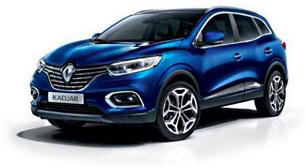
Yes, car spaces are small, or almost non existent, but the people that live there are as full-sized as people elsewhere and they often carry around just as much gear. What you need is a big, little car and the Renault Kadjar is that – a small SUV which is actually bigger than most.
The Kadjar is also French, and that’s appealing to us city folk because even though there are millions of us living in one square metre we like to think of ourselves as different, as individuals, cosmopolitan, metropolitan.
So the Kadjar looks perfect then, right?
Well, it’s good yes… in some ways, but after reading this you might prefer its Japanese cousin, the Nissan Qashqai. Let me explain...
Small sedan sales are on the wane, and as a result, the cars that remain in the market often aren’t the best in a brand’s lineup.
This is the case with the Honda City. While it’s got plenty of space for passengers and it’s economical, the performance of the drivetrain in terms of composure leaves a lot to be desired.
The underdone steering, too, makes the car uncomfortable for passengers more often than not, while the buggy, hard-to-use multimedia system is unforgivable in an almost-$22,000 car.
Put it this way… the larger, newer, more refined base model Honda Civic is tantalisingly close in price to the top-spec City, and we know which side of the dealership we’d be walking towards.
The Renault Kadjar Intens ticks a lot of the urban boxes. It’s small, which is good for navigating narrow city streets and parking in tight spaces, but it’s also spacious and practical. The Kadjar is fuel efficient for a four-cylinder petrol engine and it has that sophisticated French styling.
The Intens is expensive, though, and unless you absolutely have to have leather seats, a glass roof, and the Bose stereo I’d go for the mid-range Zen grade and save yourself $5K but still have all the same safety tech. That said the Intens has auto parking as standard which is a nice convenience for the city.
Safety could be better. The AEB system doesn’t have pedestrian and cyclist detection, rear cross traffic alert, or reverse emergency braking.
Finally, the dual-clutch automatic and 1.3-litre turbo-petrol engine while a fuel efficient combination, isn’t all that easy to live with and can make driving a less-than-smooth experience. The Nissan Qashqai’s combination of CVT auto and four-cylinder naturally aspirated engine is better suited to the urban jungle - something to think about there.
Now the scores, the Kadjar Intens gets the same mark for daily driving and its urban talents – it could be smoother to drive, but there’s still lots to like.
The City does a good job of disguising the fact that it’s a micro-sized sedan; at first glance, the revised front bar and grille that’s meant to mimic the one on the new Civic does such a good job that some people will need to look at the bootlid badge to find out it’s not a Civic.
A high waistline and a solid yet stylish sweep over the roof keep the City from looking overly twee, and even though the 16-inch wheels look a bit narrow, the overall impression is one of a larger car.
The interior, too, is spacious and airy, while the controls and steering wheel give the City an upmarket feel. There’s a little too much grey plastic inside, and hard plastics aren’t difficult to spot, but the City presents well, on the whole.
People talk about French design being good. Well if you want to see just how good take a look at the Nissan Qashqai, because the Kadjar is fundamentally the same SUV with Renault’s design spin applied.
Yep, as I mentioned about 15 seconds ago, Renault and Nissan are part of an alliance that allows them to share the same cars, but each brand has room to ‘make it their own’ with styling that delivers a very different look, inside and out.
Now, the Qashqai is not an ugly car, but I think the Kadjar is more stylish and premium looking in the same way the larger Renault Koleos SUV is gorgeous compared to the relatively straight-laced Nissan X-Trail it’s based on.
There’s no doubt the Kadjar is a Renault thanks to the giant diamond logo on the plunging grille. I like the way the front bumper rises up into the bonnet like it’s all one piece, but I’m not completely sold on the rear of the car which looks a bit like its shirt is tucked into the back of its pants, which makes no sense unless you look at the images.
Still, the tail-lights have a prestige feel and the Kadjar model name spelled out across the tailgate is a confident statement, also adopted recently by other brands such as Volkswagen (T-Cross) and Ford (Puma).
Telling the Intens apart from the other two grades is fairly easy, it has 19-inch wheels (the others have 17-inch rims), there’s the enormous glass roof, and it also has a chrome effect on the front and rear bumpers, side skirts, and around the fog lights. It’s a more premium look.
That higher-end feel goes into the cabin as well with the Intens’ black leather upholstery and colourful ambient lighting. The touchscreen is tiny, though, and there isn’t a great deal inside that you don’t get in the entry-grade Kadjar’s cabin, which is also almost as stylish.
The Kadjar is classified as a small SUV, which means nothing really when it comes to wondering if it’s going to fit in your garage or in the tiny parking spaces we’re faced with in the city.
So, I’ve mapped it out for you. The Kadjar’s dimensions are, 4449mm long, 2058 mm across (including the wing mirrors), and 1612mm tall.
Another interesting thing – each B-pillar is adorned with a little French flag. I’m not sure if they're a sign of Gallic national pride or to remind everybody that meets the Kadjar that Renaults are French.
Either way, you don’t see this type of thing on other cars and for many buyers the appeal of a Renault is having a car that’s not like everybody else’s.
Up front, the City is a great fit even for taller drivers, and its height-adjustable seat also means that the, err, less vertically inclined pilot can find a comfortable position behind the tilt-and-reach adjustable wheel.
A regular gear shifter and manual handbrake means the two cupholders are squashed under the centre console, but there are bottle holders in all four doors, as well as two more cupholders in the rear centre armrest in the VTi-L.
The VTi-L also gains two extra 12-volt accessory power points in the rear to complement the USB and a third 12V point up front, while the keyless entry system is not something you’d usually find on a car at this price point.
Sadly, the City’s multimedia system lets the side down - big time. Try as we might, we couldn’t connect a phone to our tester, no matter what we did, and it’s just utterly unintuitive to use in most situations.
It’s a bit of a rude shock, actually; most manufacturers have media systems sorted, but there’s simply not a even a half-decent one in any Honda that’s currently on sale. And there's no Apple CarPlay or Android Auto, though you can find those mirroring systems in the larger Civic.
Rear seating has adequate headroom – just – for taller teens, and there isn’t a lot of compromise required from front seaters to comfortably accommodate four people. Five? That’s getting crowded, but it can be done.
Two ISOFIX baby seat fixtures are present, along with three top-tether mounts. Boot space measures 536 litres - which is actually 12 litres bigger than that of the new Camry - while both rear seats fold flat(ish) to increase load capacity further.
A good point; the seats can be unlatched via boot-mounted buttons. A bad point; you still have to reach in and push the seats down by hand. A space saver spare nestles under the boot floor, as well.
The Kadjar is a big-small SUV, in that it’s longer than many in the same segment at 4.4m with a wheelbase of more than 2.6m, which means more space inside for people and their stuff.
That said, don’t expect limousine legroom, but at 191cm (6'3") tall, I can sit behind my driving position with my knees only just touching the front seat back, which is pretty darn good for a small SUV.
Making life a bit more comfortable back there, too, are directional air vents, two USB charging ports and a 12V power outlet. There are another two USB ports and a 12V up front, too.
Cabin storage is okay. The door pockets in the back are big enough for a 500ml bottle, while there are larger ones in the front, along with two cupholders and another circular hole, which looks like it’s for coins, if anybody still uses those?
The centre console bin is pretty decent in size and so too is the boot which has a cargo capacity of 408 litres with all seats up and 1478 litres with the second row folded flat.
The top shelf VTi-L is the best of a two-model lineup, and costs $21,590 plus on-road costs. It comes with an 88kW 1.5-litre four-cylinder petrol engine and a continuously variable transmission driving the front wheels, as well as LED daytime lamps, a part-leather interior, push-button start and smart key, climate control air conditioning, 16-inch alloys and a 7.0-inch touchscreen multimedia system with sat nav and Bluetooth phone and audio streaming.
It also has a leather-bound steering wheel and gear shifter, and map pockets on both seat backs.
It does miss out on a lot of other stuff, though, including Apple CarPlay and Android Auto capability, automatic lights (remember when a car last beeped at you to turn off the lights? Me neither...) and automatic wipers, and it also misses out on driver aids like auto emergency braking (AEB).
It starts to look a bit dear when you look at similarly priced cars - even from the next size sector up - that do offer inclusions like AEB and automatic headlights, though the small sedan is a bit of a rarity in the Aussie market now.
Its only like-for-like rivals in the space are the Mazda2 sedan and the Hyundai Accent sedan. Other potential competitors like the Ford Fiesta sedan and, more recently, the Toyota Yaris sedan have been deleted from local line-ups after years of declining sales, while the subsequent rise of the compact SUV will continue to have an impact on the so-called 'light car' market.
The Intens is the highest grade of Kadjar you can buy and has a list price of $37,990. As a point of reference, the entry-grade Kadjar with an automatic transmission is $29,990. So, what are you getting for an extra $8K?
Well, the entry-level Kadjar comes with a 7.0-inch touchscreen with Apple CarPlay and Android Auto, cloth seats, dual-zone climate control, privacy glass and 17-inch alloy wheels. The Intens gets 19-inch alloys, leather seats (heated up front), a seven-speaker Bose sound system, leather steering wheel, panoramic sunroof, as well as LED headlights and fog lights.
The Intens also comes standard with auto parking, and even the most determined DIY parkers will appreciate that in the city.
The Intens also has more advanced safety equipment than the entry-grade, although the same tech also comes on the mid-spec Zen for $32,990.
You may already know this, but the Kadjar and the Nissan Qashqai are essentially the same car. Renault and Nissan have an alliance which lets them share technology and as well as entire models.
So, you might want to compare the Kadjar Intens to a Qashqai Ti which lists for $38,790. Other models to check are the Mitsubishi ASX and Toyota C-HR.
The i-VTEC four-cylinder 1.5-litre single cam engine is naturally aspirated, and it makes its 88kW at a high 6600rpm, while its modest 145Nm of torque peaks at 4600rpm.
It means the CVT gearbox needs to work pretty hard to get the best from the engine, which has been superseded by a twin-cam version in other markets.
While the Renault Kadjar and Nissan Qashqai are essentially the same car, they don’t share the same powertrain. The Kadjar has a smaller but more powerful engine – a 1.3-litre turbo-petrol four-cylinder making 117kW/260Nm.
Shifting gears is a seven-speed dual-clutch auto. There’s no manual available, and all Kadjars are front-wheel drive.
Frankly, the Qashqai four cylinder with less grunt and CVT are a smoother combination. The dual-clutch auto and turbo lag means power delivery and acceleration are delayed, while low-speed gear shifts can be jerky.
The underdone performance does offer a benefit at the petrol pump, with the City returning a claimed 5.9 litres per 100km on the combined fuel economy cycle.
A 320km test loop netted us a dash-indicated figure of 6.3 litres per 100km, which is impressively close.
The 40-litre fuel tank is happy to accept standard unleaded petrol, too.
Renault says after a combination of open and urban roads the Kadjar will have used 6.3L/100km. In my own testing I measured 6.5L/100km at the fuel pump. That’s outstanding.
Weighing just 1100kg, you’d expect the 1.5-litre powered City to have a bit of get up and go… but unfortunately it’s already gotten up and left by the time you drive off.
The 1.5-litre naturally aspirated engine is a carryover unit from the previous generation, and it feels like it, too. It’s also teamed with a CVT gearbox that isn’t a patch on more up-to-date trannies from the likes of Subaru and Toyota.
On any sort of incline, the CVT ups the revs of the engine to a point between bloody annoying and mildly painful, too. The VTi can be ordered with a manual gearbox, which has to be better than the CVT in this example.
The underdamped suspension tune is adequate for light duties around town, but the electric steering feel very odd underhand, especially at the very beginning of a turn.
There’s a big initial motion at the front wheels when you start to turn which then quickly tapers off, meaning that you have to be ultra precise with your steering to prevent the City from lurching into the corner and falling over its soft suspension.
On light throttle, with no hills and few corners, though, the City is just fine…
Renault’s Kadjar may be a better-looking version of Nissan’s Qashqai, but it doesn’t drive as well. This comes down to the engine and transmission Renault has gone with.
There’s turbo lag with that small four-cylinder and this delay is made more pronounced by a dual-clutch transmission that causes the vehicle to lurch during shifts.
This type of shemozzle is not uncommon, the Ford Puma and Nissan Juke behave in the same way with their similar powertrains.
There’s nothing wrong with them, it’s just that for a car that’s probably going to spend its life mainly in the city, the Kadjar won’t provide the smoothest driving experience.
The Qashqai has a CVT automatic and while these transmission aren’t as sporty feeling as a dual-clutch, they’re smooth and good for easy city driving.
The Kadjar does have a comfortable ride and good handling, so if you’re able to get used to the antics of the engine and transmission there’s more to like than not about the way this Renault drives.
As mentioned, the City misses out on AEB and other driver aids, but does offer emergency brake assist and emergency flashing brake lights, as well as hill-start assist.
Full-length curtain airbags are offered along with dual front and front side 'bags, and there's a reversing camera. The City holds a maximum five-star ANCAP rating, which it has had since it was tested back in 2014.
The Kadjar hasn’t been given an ANCAP safety rating, but it did score the maximum five stars when tested by its European equivalent Euro NCAP in 2015.
But beware, the Kadjar isn’t equipped with much in the way of advanced safety equipment. Yes, there is AEB on all grades, while the mid-spec Zen and top-of-the-range Intens come with blind spot monitoring and lane departure warning. But that’s about it. No lane keeping assist, or rear cross traffic alert, or adaptive cruise.
There are front and rear parking sensors, which are almost vital in the city, and a reversing camera.
It’s for this reason the score here is so low – charging $38K and not having anywhere near the level of safety tech on a new car that costs much less is disappointing.
For child seats there are three top tether anchor points across the second row and two ISOFIX points.
Under the boot floor is a space saver spare wheel.
Honda sells the City with a five-year, unlimited kilometre warranty, while a no-catch seven-year, unlimited kilometre warranty is occasionally offered with its cars, along with premium roadside assistance for the life of the longer warranty.
Both warranties are also transferable to the next owner, should you sell your car before the warranty expires.
A fixed-price servicing regime is in place for the City, too, starting at $259 and peaking at $297. But Honda asks for the City to be serviced every six months or 10,000km, which does add to the cost of running the car.
The Kadjar is covered by Renault’s five-year/unlimited kilometre warranty.
Service intervals are every 12 months or 30,000km and capped at $399 for the first three services, followed by $789 for the fourth then back to $399.
There’s also up to five years roadside assistance, if you service your Kadjar with Renault.