What's the difference?
Don’t let people talk you into buying a tiny car just because you live in the city. That’s what I’ve learnt from being a car reviewer and living about eight kilometres from the CBD.
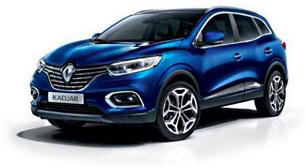
Yes, car spaces are small, or almost non existent, but the people that live there are as full-sized as people elsewhere and they often carry around just as much gear. What you need is a big, little car and the Renault Kadjar is that – a small SUV which is actually bigger than most.
The Kadjar is also French, and that’s appealing to us city folk because even though there are millions of us living in one square metre we like to think of ourselves as different, as individuals, cosmopolitan, metropolitan.
So the Kadjar looks perfect then, right?
Well, it’s good yes… in some ways, but after reading this you might prefer its Japanese cousin, the Nissan Qashqai. Let me explain...
Honda built its four-wheeled automotive empire on the back of small cars, flying in the face of 1970s convention that bigger was better. As the ubiquitous Civic grew larger and larger, a niche for a smaller car appeared, and that niche was subsequently filled by the City in sedan guise, and the Jazz hatch that sits alongside it.
The buying public, however, is simply not as interested as it once was in small hatches and sedans, and Honda, along with other importers, is feeling the pinch when it comes to slumping sales for its smaller models.
But are we all missing out on something here? After all, the Thai-built City is priced from a rock-bottom $15,990 in base manual form – which is not a lot of money for a Honda.
We’re trying the range-topping, $21,590 VTi-L to see what we may have been missing.
The Renault Kadjar Intens ticks a lot of the urban boxes. It’s small, which is good for navigating narrow city streets and parking in tight spaces, but it’s also spacious and practical. The Kadjar is fuel efficient for a four-cylinder petrol engine and it has that sophisticated French styling.
The Intens is expensive, though, and unless you absolutely have to have leather seats, a glass roof, and the Bose stereo I’d go for the mid-range Zen grade and save yourself $5K but still have all the same safety tech. That said the Intens has auto parking as standard which is a nice convenience for the city.
Safety could be better. The AEB system doesn’t have pedestrian and cyclist detection, rear cross traffic alert, or reverse emergency braking.
Finally, the dual-clutch automatic and 1.3-litre turbo-petrol engine while a fuel efficient combination, isn’t all that easy to live with and can make driving a less-than-smooth experience. The Nissan Qashqai’s combination of CVT auto and four-cylinder naturally aspirated engine is better suited to the urban jungle - something to think about there.Â
Now the scores, the Kadjar Intens gets the same mark for daily driving and its urban talents – it could be smoother to drive, but there’s still lots to like.Â
Small sedan sales are on the wane, and as a result, the cars that remain in the market often aren’t the best in a brand’s lineup.
This is the case with the Honda City. While it’s got plenty of space for passengers and it’s economical, the performance of the drivetrain in terms of composure leaves a lot to be desired.
The underdone steering, too, makes the car uncomfortable for passengers more often than not, while the buggy, hard-to-use multimedia system is unforgivable in an almost-$22,000 car.
Put it this way… the larger, newer, more refined base model Honda Civic is tantalisingly close in price to the top-spec City, and we know which side of the dealership we’d be walking towards.