What's the difference?
Honda built its four-wheeled automotive empire on the back of small cars, flying in the face of 1970s convention that bigger was better. As the ubiquitous Civic grew larger and larger, a niche for a smaller car appeared, and that niche was subsequently filled by the City in sedan guise, and the Jazz hatch that sits alongside it.
The buying public, however, is simply not as interested as it once was in small hatches and sedans, and Honda, along with other importers, is feeling the pinch when it comes to slumping sales for its smaller models.
But are we all missing out on something here? After all, the Thai-built City is priced from a rock-bottom $15,990 in base manual form – which is not a lot of money for a Honda.
We’re trying the range-topping, $21,590 VTi-L to see what we may have been missing.
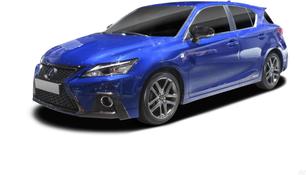
There are two ways to look at the Lexus CT200h; as either the cheapest model in the Japanese company’s range, or as a planet-saving hybrid.
Either way, the four-door, five-seat CT200h hatch – which has been updated for 2018 – differs from the rest of the Japanese luxury brand’s lineup for a number of different reasons.
Small sedan sales are on the wane, and as a result, the cars that remain in the market often aren’t the best in a brand’s lineup.
This is the case with the Honda City. While it’s got plenty of space for passengers and it’s economical, the performance of the drivetrain in terms of composure leaves a lot to be desired.
The underdone steering, too, makes the car uncomfortable for passengers more often than not, while the buggy, hard-to-use multimedia system is unforgivable in an almost-$22,000 car.
Put it this way… the larger, newer, more refined base model Honda Civic is tantalisingly close in price to the top-spec City, and we know which side of the dealership we’d be walking towards.
The cheapest Lexus of them all isn’t chasing badge snobs with the CT200h as blatantly as Mercedes-Benz, BMW and Audi do with their entry level cars… but it’s perhaps not quite the Lexus you’d expect it to be.
It has a lovely front-of-cabin, for example, but there’s a lot of last-gen Prius in plain sight in the rear of the cabin.
The hybrid powertrain, too, is noble in concept, but the day-to-day reality is that it’s not as nice to drive, especially town to town, as a regular petrol-powered car of similar size.
The foot brake, silly multimedia joystick and odd gearshifter also spoilt the party a bit.
Empty nesters who are looking for a nice city runaround with a tinge of greenwash about it will love it… and if the current Prius is anything to go by, the next CT will be a very good thing indeed.
The City does a good job of disguising the fact that it’s a micro-sized sedan; at first glance, the revised front bar and grille that’s meant to mimic the one on the new Civic does such a good job that some people will need to look at the bootlid badge to find out it’s not a Civic.
A high waistline and a solid yet stylish sweep over the roof keep the City from looking overly twee, and even though the 16-inch wheels look a bit narrow, the overall impression is one of a larger car.
The interior, too, is spacious and airy, while the controls and steering wheel give the City an upmarket feel. There’s a little too much grey plastic inside, and hard plastics aren’t difficult to spot, but the City presents well, on the whole.
There are some light external revisions for the latest update of the compact Lexus CT200h. New grey 17-inch alloys are unique to the Sport Luxury, along with a black roof treatment, new L-shaped LED driving lamps that match new-design LED tail-lamps, while Lexus designers have also added its new spindle grille to the brand’s smallest model.
It manages to be inoffensive, but it doesn't really reflect the brand's latest design language of 'real world concept cars' like the NX and the LC ranges.
Inside, a couple of new leather colour options are available for the CT200h, while the addition of the wide-format 10.3-inch screen to the top of the centre console is the single largest change. Interestingly, the steering wheel controls appear to have regressed a little from the previous model, no doubt brought about by the addition of the new driver aids.
Up front, the City is a great fit even for taller drivers, and its height-adjustable seat also means that the, err, less vertically inclined pilot can find a comfortable position behind the tilt-and-reach adjustable wheel.
A regular gear shifter and manual handbrake means the two cupholders are squashed under the centre console, but there are bottle holders in all four doors, as well as two more cupholders in the rear centre armrest in the VTi-L.
The VTi-L also gains two extra 12-volt accessory power points in the rear to complement the USB and a third 12V point up front, while the keyless entry system is not something you’d usually find on a car at this price point.
Sadly, the City’s multimedia system lets the side down - big time. Try as we might, we couldn’t connect a phone to our tester, no matter what we did, and it’s just utterly unintuitive to use in most situations.
It’s a bit of a rude shock, actually; most manufacturers have media systems sorted, but there’s simply not a even a half-decent one in any Honda that’s currently on sale. And there's no Apple CarPlay or Android Auto, though you can find those mirroring systems in the larger Civic.
Rear seating has adequate headroom – just – for taller teens, and there isn’t a lot of compromise required from front seaters to comfortably accommodate four people. Five? That’s getting crowded, but it can be done.
Two ISOFIX baby seat fixtures are present, along with three top-tether mounts. Boot space measures 536 litres - which is actually 12 litres bigger than that of the new Camry - while both rear seats fold flat(ish) to increase load capacity further.
A good point; the seats can be unlatched via boot-mounted buttons. A bad point; you still have to reach in and push the seats down by hand. A space saver spare nestles under the boot floor, as well.
The CT200h basically replicates a small hatchback in terms of interior size. It'll seat five, but if you try to put three adults across the back, they won't be particularly happy about it.
The roofline is quite low and the car’s waistline is high, which makes the glasshouse feel small. Room in the front is adequate, but only just for taller drivers; the sunroof, as fitted to our test example, takes away a good chunk of headroom, despite the CT200h standing just 5mm lower than a Corolla overall.
The seats themselves, too, are mounted just a touch high to be comfortable for taller drivers, while rear seaters will complain bitterly about being stuck behind my (184cm) driving position. However, my more diminutive wife pronounced herself very comfortable behind the wheel and in the passenger seat.
A nice, small steering wheel sits in front of a single-dial dash that sports two digital screens either side. The left-hand screen changes when you change the drive mode dial between Eco, Normal, and Sport. And there's also a full EV mode button in handy reach.
Two cupholders are line astern between driver and passenger, although storage is at a premium thanks to the size of the car. Climate and multimedia controls - and even an old-school CD player – flow right through underneath the centre console, which steals away valuable space. There are no extras like wireless charging bays, nor is there Apple CarPlay or Android Auto.
There are bottle holders in the door, but don't try and stash anything that's over one litre in size because it just won't fit.
It's quite an austere proposition for rear-seat passengers, with no bottle holders in the doors, no cup-holders and no charging points. There are fixed vents under the front seats and on the right side of the rear area, so it's not a complete desert, and there are ISOFIX mounts for two child seats in the rear.
Another practicality issue that's unique to the CT200h is the gear shifter. It operates as a spring-loaded joystick, and unless you're watching the dash indicator, it can be tricky to know which gear you're in. Other car makers have actually recalled cars with this style of transmission stick, and it's certainly something that you have to get used to.
Likewise, the old-school foot brake is certainly an anachronism in something like a Lexus.
Based on the previous generation Prius, the nickel-metal hydride battery for the CT is hidden underneath the rear seat, so it doesn't steal away too much boot room. However, the boot floor is still quite high, and the area is rather small at 375 litres with the seats up. There is 985 litres available when you drop the seats, but the aperture is short and narrow, so larger items will be a squeeze. There is a space-saver spare nestled away underneath the boot floor, too.
Another practicality note in the negative column is Lexus's insistence on the odd joystick control for its multimedia system. It's simply not very good. It’s imprecise when compared to a touchscreen, the action and feel of our test unit was very much less than premium, and it’s just awkward and clumsy to use. The CT is not the only Lexus to use it, but we wish the company would just see the light and ditch it all together.
The top shelf VTi-L is the best of a two-model lineup, and costs $21,590 plus on-road costs. It comes with an 88kW 1.5-litre four-cylinder petrol engine and a continuously variable transmission driving the front wheels, as well as LED daytime lamps, a part-leather interior, push-button start and smart key, climate control air conditioning, 16-inch alloys and a 7.0-inch touchscreen multimedia system with sat nav and Bluetooth phone and audio streaming.
It also has a leather-bound steering wheel and gear shifter, and map pockets on both seat backs.
It does miss out on a lot of other stuff, though, including Apple CarPlay and Android Auto capability, automatic lights (remember when a car last beeped at you to turn off the lights? Me neither...) and automatic wipers, and it also misses out on driver aids like auto emergency braking (AEB).
It starts to look a bit dear when you look at similarly priced cars - even from the next size sector up - that do offer inclusions like AEB and automatic headlights, though the small sedan is a bit of a rarity in the Aussie market now.
Its only like-for-like rivals in the space are the Mazda2 sedan and the Hyundai Accent sedan. Other potential competitors like the Ford Fiesta sedan and, more recently, the Toyota Yaris sedan have been deleted from local line-ups after years of declining sales, while the subsequent rise of the compact SUV will continue to have an impact on the so-called 'light car' market.
The 1.8-litre petrol-electric CT200h comes in three different flavours – the Luxury, the F-Sport as tested here, and the Sport Luxury. The range now kicks off at $40,900 (up $2150) and peaks at $56,900 with the Sport Luxury (up $810).
The F-Sport may be a little lacking in the actual ‘sport’ department, but it’s is pretty flush with flash kit, including not one but three motors (one petrol and two electric), auto lights and wipers, a wide 10.3-inch multimedia system, leather seats, dual-zone climate control and new 17-inch alloys.
At $50,400 plus on-roads, the F-Sport has jumped in price by $1960, but it’s gained a host of new gear, including a new driver aid system that adds auto emergency braking (AEB), pedestrian-detecting pre-collision warning system, lane departure warning with steering assistance and adaptive cruise control.
There are also LED headlights and taillights, as well as revised styling for the front and rear bumpers.
The CT will be cross-shopped against other premium tiddlers like the Mercedes-Benz A-Class, Audi’s A3 and the BMW 1 series. Comparing it like-for-like in the hybrid category, there’s the top spec Toyota Prius i-Tech, while Nissan’s Leaf could theoretically be lumped in both on price and on environmental grounds.
The i-VTEC four-cylinder 1.5-litre single cam engine is naturally aspirated, and it makes its 88kW at a high 6600rpm, while its modest 145Nm of torque peaks at 4600rpm.
It means the CVT gearbox needs to work pretty hard to get the best from the engine, which has been superseded by a twin-cam version in other markets.
The 1.8-litre twin-cam petrol engine makes a relatively low 73kW and 142Nm, while a 60kW, 207Nm electric motor that’s also connected to the front wheels chips in its share.
Combined, the system produces 100kW, while the torque figure translates to around the 150Nm mark. That juicy 207Nm doesn’t come into play, sadly, given that the petrol engine – which is built to run cooler than a traditional Otto cycle engine, and therefore more efficiently – does most of the work.
Throw in a transaxle for the electric motor and a power inverter, and things are getting complex. However, if the Prius is any indication, the CT200h’s drivetrain is durable and relatively serviceable, with batteries estimated to last ten years or longer.
The underdone performance does offer a benefit at the petrol pump, with the City returning a claimed 5.9 litres per 100km on the combined fuel economy cycle.
A 320km test loop netted us a dash-indicated figure of 6.3 litres per 100km, which is impressively close.
The 40-litre fuel tank is happy to accept standard unleaded petrol, too.
Here’s the odd thing – over 220km of largely highway driving, I couldn’t get the CT200h under a dash-indicated 10.4 litres/100km, against a claimed combined fuel economy figure of 4.4L/100km.
I topped the tank off with 18 litres of fuel, which works out at a closer 8.8L/100km… but it still ain’t anything like 4.4.
Another owner I spoke to, though, said he regularly records high fives with his CT200h in mixed conditions.
It runs a 45-litre tank that’ll happily take 95 RON fuel.
Weighing just 1100kg, you’d expect the 1.5-litre powered City to have a bit of get up and go… but unfortunately it’s already gotten up and left by the time you drive off.
The 1.5-litre naturally aspirated engine is a carryover unit from the previous generation, and it feels like it, too. It’s also teamed with a CVT gearbox that isn’t a patch on more up-to-date trannies from the likes of Subaru and Toyota.
On any sort of incline, the CVT ups the revs of the engine to a point between bloody annoying and mildly painful, too. The VTi can be ordered with a manual gearbox, which has to be better than the CVT in this example.
The underdamped suspension tune is adequate for light duties around town, but the electric steering feel very odd underhand, especially at the very beginning of a turn.
There’s a big initial motion at the front wheels when you start to turn which then quickly tapers off, meaning that you have to be ultra precise with your steering to prevent the City from lurching into the corner and falling over its soft suspension.
On light throttle, with no hills and few corners, though, the City is just fine…
If you've ever driven a Prius, then you'll be very familiar with the way that the CT drives. Based around a 73kW Atkinson cycle petrol engine which focuses on fuel efficiency rather than outright power, a 60kW electric motor (the pair combine to produce 100kW in total), a nickel-metal hydride battery array and a CVT gearbox, the CT200h – like the Prius – is a bit different to a regular hatch.
Under light throttle, the CT is quiet and moves along quite well, and you can even use full Electric Vehicle mode at speeds under 45km/h for a brief amount of time, (slightly less than two kilometres), and with a very gentle right foot.
The battery array is recharged via the petrol motor as well as regenerative braking (where heat energy is captured and directed back to the electric system) – but unlike a petrol-electric plug-in hybrid, there’s no way to stick a 240v cable into the CT to top up the battery.
It has the unusual whines and odd noises that you would associate with a partly electric car, but the petrol motor sounds just like a regular old four-pot petrol unit, and it’s running most of the time.
One issue with the drive of a hybrid is its ability, or the lack thereof, to get off the line in any sort of hurry. You really have to mash the throttle to get going, which takes some getting used to. There’s also some hesitation and un-Lexus like thumps from the drivetrain if you confuse it by almost stopping then taking off again.
The CT200h’s biggest bugbear is that the fourth generation Prius exists. Built on a more sophisticated newer-generation platform and with a more refined drivetrain, the new Prius is a great insight into how good the next CT will be – and what the shortcomings of the current one currently are.
The CT works well in high-traffic city environs, where a light throttle foot helps get the best out of the unusual drivetrain. Lots of lag from rest is an annoyance, as is an excess of CVT whine under hard efforts, but the CT200h pootles around town very well.
Its small size does play against it when it comes to keeping out road noise at freeway speeds, though the CT is superior to most other similarly sized cars in this regard. As an aside, its build quality is nothing short of amazing, with minimalist panel gaps, a tight interior and lashings of paint on every surface.
As mentioned, the City misses out on AEB and other driver aids, but does offer emergency brake assist and emergency flashing brake lights, as well as hill-start assist.
Full-length curtain airbags are offered along with dual front and front side 'bags, and there's a reversing camera. The City holds a maximum five-star ANCAP rating, which it has had since it was tested back in 2014.
Part of the update for 2018 is the addition of several driver aid systems, including AEB across the range, lane departure control with steering and adaptive cruise control.
The F-Sport also has reversing camera and eight airbags as standard, ensuring the maximum five-star ANCAP safety score it managed in 2017.
Honda sells the City with a five-year, unlimited kilometre warranty, while a no-catch seven-year, unlimited kilometre warranty is occasionally offered with its cars, along with premium roadside assistance for the life of the longer warranty.
Both warranties are also transferable to the next owner, should you sell your car before the warranty expires.
A fixed-price servicing regime is in place for the City, too, starting at $259 and peaking at $297. But Honda asks for the City to be serviced every six months or 10,000km, which does add to the cost of running the car.
Lexus sells the CT with an unusual four-year/100,000km warranty, which includes roadside service coverage. The battery pack has an eight-year/160,000km warranty, while Lexus would like to see you back for a service every 12,500km or 12 months.
It’s not just about a warranty or a service interval with Lexus, though. For decades now, its customer service record has topped all industry measures, and everyone we know who has bought a Lexus with their own money has raved about the quality of the service received.
As well, it’s a level of service that’s provided across the range. It’s a tangible benefit of buying a CT200h.