What's the difference?
Holden wasn't the first manufacturer to find itself bereft of a big SUV when the fuse was lit by BMW and Mercedes as the last millennium came to a close. Ford responded with the Territory while Holden jacked-up a V8 Commodore and slapped the Adventra badge on it. Sadly, it didn't work, and so the Captiva was the next best option, procured from what was then called Daewoo.
As a result of that that little blip on the economic radar, the GFC, and an on-going re-organisation of General Motors, the Korean-built Captiva has lasted rather longer than anyone expected.
It first launched with two bodystyles, but is now down to one, the bigger and more practical seven seat body shell.
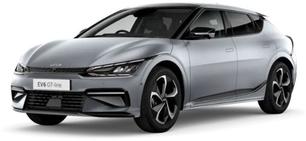
Kia’s EV6, launched in 2021, was an early signal from Kia that its talk of rearranging car-buyers’ perceptions was more than an idle boast.
Sure, the South Korean brand had gone from budget also-ran a couple of decades ago to a brand that represents reliability and quality in a very short space of time.
But a brand that was technically innovative and EV-savvy? Or capable of family cars with supercar performance? Let’s wait and see, we all said.
And now the latest member of the all-electric EV6 family has arrived, and with it Kia’s big chance to prove its point, as well as convince us that its flagship products are worthy of a six-figure price-tag.
With shattering straight-line performance and all the hallmarks of a thoroughly modern take on the electric vehicle concept (including all-wheel-drive and electronic control of everything from the suspension to the rear differential) the EV6 GT makes the technical statement it needs to.
But does it have the quality, the specification and the overall appeal to justify a price-tag that was unimaginable in a South Korean car until very, very recently?
The fact is that technical merit is not enough – never has been – when it comes to making a macro price-point shift in the minds of consumers.
Any model seeking to reset the value proposition of an entire brand needs to be more than the sum of its parts. But does the EV6 GT achieve that rare distinction? That’s what we’re here to find out.
The Captiva is very, very long in the tooth and is heading towards retirement some time in the next twelve months. Before then, it's a lot of car for the money, particularly the seven seat LS. It's not fast, flash or futuristic but it will do the job and with all of the early problems sorted, will probably do it for quite some time.
The Captiva's low scores are mostly to do with the car just being old and feeling it, with dodgier plastics, slightly undercooked ride and handling and a lack of engine and safety tech. It doesn't mean it's a terrible car, because it isn't and Holden papers up the cracks with a low starting price and good after-sales.
A hundred thousand dollars used to be big money. And for a family SUV, it still is. But don’t make the mistake of confusing the Kia badge with pedestrian motoring. The EV6 GT is proof that Kia can make high performance cars that work, and make the most of modern EV tech in the process.
We’re a bit disappointed in the real-world range of the car, and there’s no doubt the vast majority of drivers neither need nor want a car as focussed as this one. But as an example of how a modern, digital electric car can feel more like an old-school analogue performance car, the GT is Exhibit A. And for those of us for whom it’s about the journey, not the destination, this is indeed good news as EVs continue to take over the world.
Note: CarsGuide attended this event as a guest of the manufacturer, with meals provided.