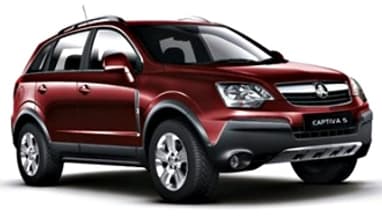
Are you having problems with your 2010 Holden Captiva? Let our team of motoring experts keep you up to date with all of the latest 2010 Holden Captiva issues & faults. We have gathered all of the most frequently asked questions and problems relating to the 2010 Holden Captiva in one spot to help you decide if it's a smart buy.
The Captiva doesn’t actually have a four-wheel drive mode in the conventional sense. It employs an all-wheel drive system with all the drive going through the front wheels in normal conditions, but when conditions dictate the drive is redirected to the rear axle as required for maximum traction. I’m not sure what difference having a light on the dash would make, the system would still be working out the best distribution of the drive for best traction, all you would have is a light flashing on the dash. I would find that distracting.
The diesel is a much better choice for fuel economy, we did have a lot of complaints about the consumption of the petrol version before the diesel was released, but owners appear happy with the economy of the diesels. We have also had a number of reports of issues with the Captiva, more than I would like to see. The most concerning is about uneven and premature tyre wear, with owners complaining about having to fit new tyres after 15,000 to 20,000 km. The RAV4 is a good car and the Toyota brand is generally a safe bet, although the recent troubles with recalls in the US tells you that even the great Toyota is not immune to problems.
The Captiva V6 doesn’t reach its peak torque until 3200 revs so it’s hard to know why you feel it dropping off after just 2000 revs. The exhaust system was primarily designed as a fuel economy improver; the engine also has constantly variable cam phasing and that’s the main system that allows good low down torque as well as good top end performance.
The LPG system manufacturers are working on kits for the Captiva and they should be available within weeks. From what I am told they are developing both vapour and liquid injection systems, and either would be fine. Of the two liquid injection would be the better, but I would expect it to be more expensive. Generally you would pay off the cost of a vapour-injection system in about 12 months, which makes it a good proposition given you plan to keep the car for five years.
No, there isn't once you've exhausted all other avenues as you appear to have done. It's now your word against theirs. The problem you have is to convince VCAT that the crack occurred in the normal course of events and not through any abuse on your part. What Holden has done in offering you part compensation is regular industry practice and I would be tempted to accept it.
You are not alone. Your experience is quite common, but one that Holden doesn't seem keen to own up to. Contact Holden directly and register your concerns. You could also consult a suspension specialist like Pedders who should be able to fix the problem for you.
You're not on your own, contact Holden and register your concerns. If enough people do it they might take action.
Show more
Disclaimer: You acknowledge and agree that all answers are provided as a general guide only and should not be
relied upon as bespoke advice. Carsguide is not liable for the accuracy of any information provided in the
answers.