What's the difference?
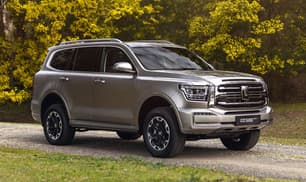
The arrival of the GWM Tank 500 Ultra PHEV is noteworthy because it’s the first plug-in hybrid Tank model in Australia.
It’s also a major event for the Aussie adventure-travel community because it’s a plug-in hybrid 4WD with five seats, high- and low-range gearing, and a front, centre and rear diff lock.
The Tank 500 PHEV gets more power and torque than its hybrid stablemate, offers about 120km electric-only driving range (listed), and it can be used as a 6kW mobile power station (V2L) at your campsite. Towing remains at 3000kg.
There’s a lot in this Tank’s favour: it’s a body-on-ladder-frame chassis large 4WD with a packed standard features list and real off-road adventure potential.
All of that – and more – for under $80 grand.
But does the plug-in set-up add anything substantial in terms of daily driveability or does it simply make this Tank an $80,000 camp-site generator?
Read on.
The Volvo XC60 has long been an understated achiever of the premium mid-size SUV crowd.
It doesn’t shout for attention like some of its rivals, but it’s built a reputation for quiet confidence and family-friendly practicality. For 2026, the XC60 Ultra B5 Dark keeps the same engine but has received a facelift in other areas. Is it enough to keep family buyers who want a mix of practicality and luxury happy?
The GWM Tank 500 Ultra PHEV is an impressive five-seat 4WD wagon. It’s reasonably nice to drive, it’s comfortable and it’s a capable 4WD. These vehicles keep improving and are increasingly stacked with characteristics to like.
There are still glaring range-specific issues with some of its driver-assist tech and its plug-in hybrid set-up doesn’t offer the fuel economy you’d hope for. At least not under real-world testing conditions. But the Tank 500 is packed with features and represents decent value-for-money when cross-shopped against the likes of its stablemate the regular hybrid, or the Prado and Everest.
The facelifted Volvo XC60 Ultra B5 Dark is the car at school pick-up that doesn’t need to brag. It just gets on with things and it looks good doing it. It offers a strong mix of family-focused features, comfortable and composed road manners and thoughtful practicality throughout the cabin.
The updated media system is crisp and responsive, though it could use a few tweaks to be truly intuitive. Overall, the XC60 mild-hybrid remains a solid choice for families who value understated luxury, comfort and safety over flash. It doesn’t reinvent the wheel, but it does what it does well.
In terms of dimensions, the Tank 500 Hi4-T PHEV is 5078mm long (with a 2850mm wheelbase), 1934mm wide and 1905mm high. It has a listed kerb weight of 2820kg, so it’s not an insubstantial vehicle.
There are plenty of old-school 4WD design cues in the Tank 500’s appearance. It’s mostly chunky and straight up and down, with some softer curves here and there as concessions to contemporary styling.
It's clear to see where the GWM Tank 500 takes its cues from – most of the current crop of popular 4WD wagons, such as the Toyota LandCruiser 300 Series.
The Tank 500 is a large vehicle straddling that line between large and extra-large 4WD wagons. It is longer than any 300 Series, but it’s narrower and shorter.
It has a sunroof, roof rails, electric side steps (that extend when doors are opened and retract when doors are shut) and 18-inch alloy wheels.
The interior is well laid-out and functional with some understated class to it. There are soft-touch surfaces and genuine Nappa leather seating throughout.
The XC60 has a graceful, poised curbside presence. Its wide stance and smooth body panels give it a confident silhouette, while the redesigned grille with dark accents, integrated intake vents (both faux and real), and those sharp 'Hammer of Thor' headlights tie it all together. It’s not trying to be sexy, but it is undeniably handsome. It's the kind of SUV that turns heads quietly rather than shouting for attention.
Inside, the vibe is pure Scandi chic. There’s a refreshing lack of plasticky surfaces, with everything feeling solid and premium to the touch. The supple Nappa leather seats and expansive panoramic sunroof instantly make the cabin feel airy and refined.
Taking centre stage on the dash is a new 11.2-inch portrait-style media display. The layout is a little too reminiscent of an oversized iPad for my taste, but the crisp graphics and quick touch response are big pluses. Adding a touch of craftsmanship, the crystal Orrefors gear shifter and genuine driftwood inlays across the dash and centre console bring warmth and texture you don’t find in most rivals.
Is this facelift breaking new ground? Not really. But then, it doesn’t need to. Volvo has long been firmly planted in the premium end of the field and this update simply shows it's still cultivating all the right qualities.
This Tank 500 has five seats because the two at the very rear have been removed to accommodate the hybrid battery.
The front seats are Nappa leather, power-adjustable (eight-way for the driver, six-way for the front passenger), as well as being ventilated with massage and memory functions.
The three-position second row – set up in a 60/40 split-folding configuration – breaks the usual 4WD wagon second-row seat tradition of being fine but not fantastic. The second-row set-up in this Tank is a first-class-cabin-style back seat with a flip-down control console (which includes air-con controls) instead of a basic centre armrest.
As mentioned there is no third row in this Tank 500 because of its underfloor battery.
Up front, the 14.6-inch multimedia screen (with wireless Apple CarPlay and Android Auto) dominates the dash. It's generally easy enough to use, although I had difficulty getting my iPhone hooked up to the system and the cabin set-up remains clunky and counter-intuitive in its operation.
The cabin has wireless charging, front and rear USB ports, as well as 12V and 220V power outlets.
The second row folds away to expand the rear storage capacity. Cargo volume is a listed 640 litres when all seats are in use and 1400 litres when the second row is stowed away.
The rear cargo area has tie-down points and a cargo slide cover.
The XC60 is spacious without being sprawling. The front row is the sweet spot for comfort, with generous leg and headroom plus ergonomic seats that offer excellent under-thigh and side-bolster support. They also bring the luxury of heating, ventilation and even massage functions.
The rear row uses firmer padding, and while the backrest looks fairly flat, it’s deceptively supportive. Adults should be comfortable back there on longer journeys. Access is only slightly compromised by the wheel arch eating into the rear aperture, but otherwise it’s an easy SUV to get in and out of. My eight-year old pointed out that the rear doors are on the heavy side, though, and often need a good slam to latch properly.
Storage is well thought out throughout the cabin. Up front you get a decent glove box, cupholders, drink bottle holders, door bins, a dedicated phone tray that doubles as the wireless charging pad and a shallow centre console with two USB-C ports. One niggle. The cupholders don’t grip cups as snugly as they should.
The rear row has a 60/40 split with a 'ski-port' door and a fold-down armrest. And in the back, there are door bins with bottle holders, a fold-down armrest with cupholders and net map pockets. Rear passengers are also spoiled with dual-zone climate control, four directional air vents and two more USB-C ports.
One of the XC60’s best family-friendly features is the integrated booster seats, which have two height settings and fold neatly back into the base when not in use. They’re a lifesaver if you have kids who feel like they've 'aged out' of car seats but aren’t quite tall enough to go without. Of course, there are also ISOFIX mounts and three top-tether points if you still need to install child seats.
Out back, the boot offers a flat loading space, a powered tailgate with kick function and a healthy 613L of storage with all seats up (up to 1543L when the rear row is folded). You also get a 12-volt socket, a proper temporary spare tyre, and if you’ve got the optional air suspension (as per our test model) you can raise or lower the boot height for easier loading.
Tech usability is a bit of a mixed bag. The new 11.2-inch media display is sharp and responsive, and it comes pre-loaded with Google apps like Maps, Spotify and Assistant. But the Apple CarPlay and Android Auto isn't wireless, which feels like a miss at this price point.
The Bluetooth is patchy, with calls and music sometimes not syncing properly. A wired connection works better, especially for my iPhone 15 Pro Max, but I'm not a fan of leaving my phone on charge all the time. If you’re already familiar with Volvo or Polestar’s system, you’ll feel at home, but first-timers may need a little time to adjust.
The GWM Tank 500 PHEV is only available in high-spec Ultra trim and has a listed drive-away price of $78,990.
Standard features in the Ultra include a 14.6-inch multimedia touchscreen (with wireless Apple CarPlay and Android Auto), three-zone climate control, 18-inch alloy wheels, electric side steps, a 360-degree view monitor plus 'clear chassis view', auto parking assist, auto reversing assistance, lane departure warning and lane keep assist, all-terrain driving modes and an electronic rear diff lock.
Worth noting the Tank 500’s 37.11kWh battery supports Vehicle-to-Load (V2L) functionality, which means you can power your camping gear (lights, fridge etc). It offers up to 6.0kW of off-grid power, according to GWM.
'Marble White' paint is standard. Metallic paint, including 'Crystal Black' ($495), 'Dune Gold' ($595), and 'Onyx Silver' ($595) costs extra.
There are two mild-hybrid variants in the XC60 line-up, and the one we’re driving here is the flagship Ultra B5 Dark. Priced at $81,990, before on-roads, it costs about $7000 more than the entry-level Plus B5 Bright, but that premium buys you a longer list of included features that makes the Ultra Dark feel like the sweet spot of the range. Especially considering Volvo also offers two plug-in hybrid XC60s, but those command up to $20K more!
In terms of market rivals, the XC60 sits right in the middle. The Audi Q5 TFSI starts at $81,000, while the Lexus NX 350h Sports Luxury AWD asks $87,900, both before on-road costs.
Standard equipment is generous. The Ultra Dark gets a panoramic sunroof and Nappa leather upholstery, with the electric front seats offering heating and ventilation functions plus a heated steering wheel for winter comfort. There's a 360-degree view camera system with surrounding parking sensors and a park-assist feature.
Tech upgrades include a new 11.2-inch media display with in-built navigation, Google apps, and wired Apple CarPlay/Android Auto, backed up by four USB-C ports, a 12-volt socket and a wireless charging pad. There's also a Volvo phone app, which allows users to pre-condition the climate prior to entry, have a digital key and program the spare key for any kids who might want to borrow the car!
Families will appreciate the thoughtful touches like a powered tailgate with kick function, built-in child booster seats in the rear row, a temporary spare tyre (a welcome feature), four-zone climate control and lots of storage throughout the cabin. Keyless entry sensors on every door add another layer of convenience.
Our test car was also fitted with just over $5000 worth of options, including the Bowers & Wilkins premium sound system, active air suspension, tinted rear windows, and even front seat massage functions. When you consider that many rivals charge extra for equipment that comes standard here, the XC60 Ultra B5 Dark makes a strong case for itself on value.
Every Tank 500 Hi4-T PHEV has a 2.0-litre turbo-petrol engine, a 37.11kWh lithium-ion battery and an electric motor. And that combination produces a total* of 300kW and 750Nm.
* Electric motor 120kW, petrol engine 180kW at 6000rpm. Motor 400Nm, engine 380Nm at 1700-4000rpm.
This system is mostly seamless in operation but as for GWM’s claims that it delivers “outstanding efficiency, performance, and refinement smooth, responsive take-offs, strong acceleration, and exceptional fuel savings - while ensuring minimal noise and maximum driving confidence”. Well, let’s just say this Tank 500 gets off the mark well for a large 4WD but the prompting requires a heavy right foot.
It is generally quiet and comfortable and yields a smooth driving experience. And as for fuel saving, flick your eyes down to ‘Efficiency’ to see how it did on this test.
This Tank 500 has a nine-speed automatic transmission, low- and high-range 4WD gearing, as well as a front, centre and rear diff lock.
The Ultra B5 Dark tested here is all-wheel drive and has a 2.0-litre, four-cylinder, turbo-petrol mild-hybrid engine. It produces up to 183kW of power and 350Nm of torque.
The 'mild hybrid' tag comes from a 48-volt system paired with an integrated starter-generator. It’s not a full hybrid, so you won’t be gliding around silently on electric power alone, but it helps smooth out stop-start driving, boost efficiency and add a little extra shove when you put your foot down.
The result is an engine that feels lively in the city and confident out on the open road, with enough in reserve to make overtaking stress-free.
Official fuel consumption is 2.1L/100km on a combined cycle on regular unleaded fuel (91) with low-charge consumption at 8.4L/100km. For reference, low-charge fuel consumption on this test was 10.2L/100km as recorded. Okay, but not a particularly compelling result.
The Tank 500 has a 70-litre fuel tank so, going by those fuel figures, you could reasonably expect a driving range of about 686km out of a full tank.
Volvo claims combined cycle (urban/extra-urban) fuel use of 7.6L/100km for the XC60 Ultra B5 Dark, which isn’t bad for a turbo-petrol but reminds you that this is only a mild hybrid. With a 71-litre fuel tank, you’re looking at a theoretical driving range of up to 934km which is great for a family SUV likely to see its fair share of school runs and road trips.
In my real-world testing, which included plenty of urban driving with one longer trip in the mix, I averaged 8.6L/100km. That’s a little higher than the claim, but still a respectable result overall.
The Tank 500 Hi4-T PHEV is decent on road – and that’s good news for anyone thinking about buying this large 4WD.
It has more power and torque than its hybrid stablemate (300kW/750Nm vs 255kW/648Nm) for general day-to-day drivability while it retains all of the regular hybrid’s positive driving characteristics and few of the negatives.
This Tank 500’s turbocharged petrol engine and the electric motor work seamlessly together, with no discernible clunking or shifting between systems in the powertrain.
This is a big, heavy four-wheel drive – even heavier in this plug-in hybrid form than the regular hybrid because of this vehicle’s battery. But it is nicely settled and composed because of that weight.
This flip side is the extra heft on-board means there is some body-roll to this vehicle. It’s noticeable, but not a deal-breaker.
On highways, sealed surfaces or well-maintained bush tracks the Tank 500 is quite impressive. It’s settled, controlled and quite nice to drive.
Overall, this Tank 500’s suspension – double wishbone independent with coil springs at the front, and multi-link live axle with coil springs at the rear – is firm. There has been talk of it having been retuned for Australian conditions, but it remains stiff and jittery at pace, especially through backcountry bitumen in poor condition and lightly corrugated dirt roads. However, GWM informs me that the suspension set-up will undergo more retuning for Australian conditions and those changes will be incorporated into 2026 production vehicles.
Besides that, the engine, electric motor and transmission work quite well together. It is a reasonably smooth 4WD wagon to drive.
There are, however, glaring issues with the driver-assist tech, which is quite annoying in its operation. It’s either very jarring or intrusive in its application (example: adaptive cruise control braking way too early), or bloody annoying/dangerous (example: road-sign recognition abruptly tried to cut my speed from 100km/h to 40km/h because it registered the school zone sign off to the side of the highway. At the time it was outside school drop-off and pick-up times anyway.).
You can switch off the driver-assist features every time you start up, but the system resets and defaults to being annoying again when you switch off.
When it comes to 4WDing though, the good news returns.
This hybrid retains all of the regular Tank 500’s 4WD mechanicals, including the (BorgWarner-sourced) transfer case with high- and low-range 4WD, and it offers up plenty of torque across a decent spread of revs.
The off-road traction control system is suitably dialled in, hill descent control is effective, keeping you to a nice controlled low speed and there’s low-speed cruise control or the equivalent that keeps the vehicle to a controlled pace across varying terrain.
Not forgetting, the Tank 500 is triple locked – front, centre and rear diff locks – so there are few excuses to not be able to crawl over most off-road obstacles.
However, the tyres on this vehicle (Giti Xross HT71 SUV - 265/60R18) aren't up to scratch when it comes to off-roading beyond anything other than well-maintained tracks in the dry. The Tank 500 as is well suited, straight out of the dealership, for light to moderate off-roading. But if you swap in a decent set of aggressive all-terrain tyres the Tank 500 will be able to more comfortably take on more challenging terrain.
But it's capable of climbing. I took on a 30-35 degree incline of rock steps and the Tank 500 did it easily and comfortably on its standard highway tyres.
Most of the plug-in hybrid Tank’s off-roading characteristics check out. Approach, ramp over and departure angles are as per the regular hybrid Tank 500 (30, 22.5 and 24 degrees) and wading depth is a listed 800mm although the country was so dry at our proving ground that I never had the chance to test that claim.
Ground clearance on the Tank 500 Hi4-T PHEV is listed as 213mm (it’s 224mm in the normal hybrid) but that doesn't negatively impact this vehicle's off-roading capability if you drive it with control and consideration.
It is big, so it can be a little bit tricky to steer around, especially when the track becomes tighter and the obstacles become a bit more cheeky, but generally this can be driven very safely and with the utmost control through a lot of tricky four-wheel driving challenges.
It's not as polished in its off-road performance as something like the Toyota Prado or Ford Everest, but it does the job and there's a bit of a gruff edge to it, which some people might consider part of its charm.
As mentioned, the Tank 500’s 37.11kWh battery supports Vehicle-to-Load (V2L) functionality, which in theory means you’ll be able to power your camp-site (lights, fridge etc), but I’ll reserve final judgement on this set-up until I have the opportunity to test it over a long weekend with several appliances drawing power at the same time.
If you’re thinking about using this Tank PHEV as an adventure touring vehicle then it’s handy to know its payload is listed as 610kg, while it’s noted as 790kg in the Tank 500 HEV. Throw two adults, two teenagers, a dog, and camping gear in and you’ll hit that 610kg mark in no time.
The Tank 500 is rated to tow a 750kg unbraked trailer and 3000kg braked. Gross vehicle mass is 3430kg and gross combined mass is 6430kg.
There’s plenty of power on tap, with enough left in reserve when you really need to push it. Around town, the XC60 keeps up with traffic effortlessly, and out on the highway it never feels strained. The transmission is fairly punctual with its shifts, though you do need to drive it a little more assertively to avoid any lag when accelerating from a stop.
Visibility is excellent thanks to the big, wide windows and higher driving position. It’s also refreshing to have a wide rear window behind the C-pillar as it's something not all rivals manage.
On the road, the XC60 feels composed and comfortable. The cabin stays quiet even at highway speeds and the suspension soaks up the worst bumps without ever feeling floaty or disconnected. Handling is equally predictable, with steering and dynamics that feel natural and reassuring. Take a sharp corner at speed and you will notice a slight loss of composure but it rights itself quickly.
Day to day it’s also very car park friendly. Parking sensors and the 360-degree camera view make manoeuvring simple, though the video feed looks a little blurry at the edges. A more seamless stitch between camera angles would improve the presentation, but functionally it gets the job done.
The Tank 500 has the maximum five-star ANCAP rating from testing in 2024. As standard, it has seven airbags and a comprehensive suite of driver-assist tech including AEB, lane departure warning, adaptive cruise control, tyre pressure monitoring, front and rear parking sensors and a 360-degree around-view camera.
While the 2026 Volvo XC60 hasn’t undergone ANCAP testing yet, it continues Volvo’s long-standing reputation for safety with a comprehensive suite of features. Standard equipment includes autonomous emergency braking, blind-spot monitoring, lane keeping aid, lane departure warning, rear cross-traffic alert, front and rear collision warning, traffic sign recognition, driver attention warning and seven airbags - basically covering all of the essentials.
For families, there are integrated booster seats in the rear row, ISOFIX child seat mounts, and three top-tether anchor points. A stand-out feature is the programmable spare key, which is colour-coded in bright orange and allows you to set speed and speaker-volume limits. Which is ideal for nervous parents who share the car with teens or other young drivers.
Other practical safety touches include a protective first-aid kit and warning triangle, adaptive cruise control with stop/go function, parking assist, surrounding parking sensors and a 360-degree camera system.
The Tank 500 is covered by a seven-year/unlimited km warranty, seven years' roadside assistance and seven years' capped price servicing.
The Tank 500’s 37.1kWh traction battery has an eight year/unlimited km warranty.
The first service is scheduled at 12 months/10,000km; the rest of the servicing appointments are set for every 12 months/15,000km. Lowest price per services is $335, highest is $975.
GWM has 122 dealerships nationwide at time of writing.
The XC60 is covered by a standard five-year/unlimited-km warranty, which is okay for its class, especially at the premium end. You can pre-purchase either a three- or five-year 'Volvo Genuine Service Plan'. The five-year plan will set you back $3870, which is steeper than many rivals, though Volvo sweetens the deal with five years' complimentary roadside assistance. Services are spaced at every 12 months or 15,000 km, whichever comes first.
One thing for regional owners to keep in mind, while Volvo has a decent retail footprint, there are only 34 Volvo service centres in Australia. Depending on where you live, that can mean a long drive. In my case, the nearest Volvo service centre is almost two hours away. That adds travel time and inconvenience for regular maintenance or unscheduled work.