What's the difference?
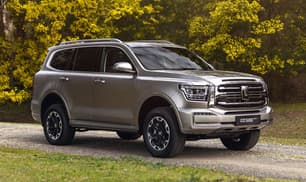
The arrival of the GWM Tank 500 Ultra PHEV is noteworthy because it’s the first plug-in hybrid Tank model in Australia.
It’s also a major event for the Aussie adventure-travel community because it’s a plug-in hybrid 4WD with five seats, high- and low-range gearing, and a front, centre and rear diff lock.
The Tank 500 PHEV gets more power and torque than its hybrid stablemate, offers about 120km electric-only driving range (listed), and it can be used as a 6kW mobile power station (V2L) at your campsite. Towing remains at 3000kg.
There’s a lot in this Tank’s favour: it’s a body-on-ladder-frame chassis large 4WD with a packed standard features list and real off-road adventure potential.
All of that – and more – for under $80 grand.
But does the plug-in set-up add anything substantial in terms of daily driveability or does it simply make this Tank an $80,000 camp-site generator?
Read on.
Toyota finds itself in a very unusual position - playing catch-up.
Usually the Japanese brand dominates any market segment it is in - or at least has one of the more popular offerings. But when it comes to mid-size electric SUVs, Toyota finds its bZ4X trailing well behind several rivals including the BYD Sealion 7, Geely EX5, Kia EV5, Tesla Model Y and Zeekr 7X.
There’s a very clear reason for this, too. Toyota was late to the party. The brand has taken a very slow approach to the electric vehicle (EV) market, launching its first battery-powered model, the bZ4X SUV, in early 2024.
Up until the start of 2026 and a price drop that coincided with surging petrol prices and a spike in EV demand, the bZ4X was something of a bit-player in the EV market. But with sales up more than 300 per cent in 2026 the time seems perfect to expand, with the bZ4X Touring reaching dealerships.
So is this the right SUV at the right time? Or is it too little too late?
The GWM Tank 500 Ultra PHEV is an impressive five-seat 4WD wagon. It’s reasonably nice to drive, it’s comfortable and it’s a capable 4WD. These vehicles keep improving and are increasingly stacked with characteristics to like.
There are still glaring range-specific issues with some of its driver-assist tech and its plug-in hybrid set-up doesn’t offer the fuel economy you’d hope for. At least not under real-world testing conditions. But the Tank 500 is packed with features and represents decent value-for-money when cross-shopped against the likes of its stablemate the regular hybrid, or the Prado and Everest.
Is the bZ4X Touring the right Toyota for this moment in time or too little too late for the brand to play catch-up to its EV rivals?
The good news for Toyota is that it isn’t too late, at all. The Touring expands the appeal of the bZ4X, metaphorically and literally, and certainly the sales trajectory in 2026 suggests buyers are warming to Toyota’s electric future.
However, it remains a more expensive proposition for its size and the Touring doesn’t really make it stand out amongst the crowd that includes the popular BYD Sealion 7 and Tesla Model Y. It’s unfamiliar territory for Toyota, but it didn’t become the automotive juggernaut it is by giving up, so there is every reason to think the bZ4X duo will chip away at the EV sales leaders.
Note: CarsGuide attended this event as a guest of the manufacturer, with travel, accommodation and meals provided.