What's the difference?
Ford has introduced what is being touted as an adventure-type van to its Transit Custom line-up and it’s called the Trail.
The Trail is based on the long-wheelbase Transit Custom Trend and it’s equipped with a suspension lift, on-demand all-wheel drive, 'Trail' drive mode, LED headlights and daytime running lights, a variant-specific grille, black wheel arch moulding and side strip, yellow exterior decals and 16-inch matt black twin-spoke alloy wheels.
With all that in mind, maybe a van is your next adventure vehicle?
Read on.
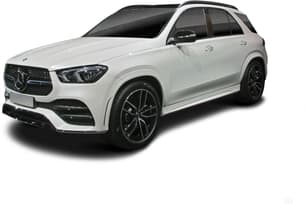
This is the first real Mercedes-Benz GLE. It's the second version of the SUV, but the last one was really just a big update of the old ML, and it never really soared to the heights it could have as a result of that.
But this new version - the 2020 GLE - is exactly that. It's new.
The exterior is new. The engines are new. The underpinnings are new. The interior - yep, you guessed it - new.
The big question is, though, is the GLE a competitor now? Can it stand up against the BMW X5, Maserati Levante, Porsche Cayenne, Range Rover Sport, Volvo XC90 and even the VW Touareg?
Let's find out.
The Ford Transit Custom Trail has plenty of appeal as a work van or a camper fit-out candidate. It’s a well-packaged, comfortable and contemporary van that’s nice to drive and as a bonus, with all-wheel drive it’s given the scope of capability to be able to tackle mild off-roading situations with confidence.
It’s built for work and play and though it’s limited to two-up for travels, the Trail offers so much potential as a camper conversion for adventure seekers its few niggles are easily forgotten when you’re busy making memories.
All told, the Mercedes-Benz GLE 2020 model is an improvement in many ways over its predecessor. It's safer, more high-tech, considerably more luxurious and practical inside, and offers better value, too.
But, in 300d guise at least, it's let down by a slightly underdone engine, and suspension that just doesn't do a good enough job on rougher roads. It's close, but not close enough to be best in class.
Maybe that'll be a different case for the higher-grade versions with the most high-tech engines and the tricky optional suspension... we'll have to wait and see.
It looks like a van but with some striking yet low-key flourishes that all kind of work as a whole. Those include a Trail grille and the matt black alloy wheels. The yellow sticker-pack is a neat touch.
The Trail has more presence than a regular Trend with its 30mm-taller raised suspension and overall adventure-ready look with strong front end and chunky wheel arches.
The striking but low-key theme continues inside with a neatly laid-out yet spartan cabin. The two synthetic leather seats are topped with Trail embossing and lined with yellow stitching.
The cabin is separated from the rear cargo area by a bulkhead, which incorporates a small wired window.
You can make your own mind up about the styling of the new GLE. It's certainly more aggressive than the model that came before it, and Benz claims that it's the most aerodynamic SUV in its class.
The models on test were all fitted with the AMG styling pack and the bigger 21-inch multi-spoke wheels, and from some angles it's a striking car. I particularly like the way the rear-end treatment has worked for the GLE: the triangulated tail-lights, the lower bumper and the rear glass all work together well.
In profile, the GLE is quite challenging to look at. The rounded window-line is a bit awkward, and somehow the wheels just don't fit with the bulky guards (though I do like the way the AMG 21s poke out a bit at the back).
The front sees the diamond-style treatment to the grille for the AMG Line versions, but there's a lot of black plastic on the bumper, and the headlight shape gives it a bit of a droopy-eyed look. Is it just me, or is it a bit of a Bassett Hound?
It is a bigger car than before - 111mm longer (now 4930mm - and on an 80mm longer wheelbase, now 2995mm), and it's 15mm wider but 31mm lower - and it looks more substantial as a result. I'm just not sure it's pulling off its bulk as well as it could.
So the outside is pretty, er, interesting. We had comments from passersby to that effect, too, and in our comparison test it was the consensus of our team of experienced testers that the GLE had some challenging exterior design elements.
But inside is where the best bits hide, with a lot of luxury finishes, materials and technology giving the GLE some wow factor that its exterior design arguably misses out on.
It’s a van so there are two distinct sections to the Trail, the cabin and the load space.
Firstly, the cabin. More a work-friendly than family-friendly interior, this Trail is a two-seater with plenty of durable plastic everywhere – ready for work and life – as well as charging (with USB-A and -C ports) and storage (including a van-favourite dash-top slot for logbooks etc, outboard moulded cupholders and a nifty pop-out cupholder), all amenities enough to cope with most daily van-related duties.
The seats are comfortable, supportive and have a fold-down lock-in-place armrest.
Now for the load space. There are no seats back there and as such it has plenty of potential as a work van or touring vehicle.
Access to the rear load space is via a barn door at the back and this Trail has a sliding door on both sides.
The cargo area is substantial – 3002mm long (to the bulkhead; 3450mm long if load-through hatch is used), 1392mm wide (between wheel arches) and 1425mm high (floor to roof). Easily big enough for work equipment or recreational gear. It can cope with four Euro pallets (each measuring 1200mm x 800mm) and it has a listed maximum load volume (with the bulkhead) of 6.8 cubic metres.
Load height through the rear barn doors is 531-585mm, depending on how much weight is already onboard.
The load space has the aforementioned metal bulkhead (with window and load-through hatch), load area protection kit (full height walls and moulded floor), LED lights and eight tie-down loops.
Otherwise, this is a load area ripe for customisation. Maybe a plethora of shelves for a tradie, or some bedding and extra storage for an adventurous person or couple.
The cabin presentation and pragmatism is excellent in the new-generation GLE. There was an existing version on site for us to compare, and to say it's like night-and-day would be generous to the old model.
A lot of that comes down to the MBUX twin 12.3-inch screens on top of the dash - one for all the driver instrumentation and controls, and the other for sat nav, media, car controls and other settings. They look great, and there are multiple ways to control them: the steering wheel controls, the touch pad between the front seats, the screen in the middle is touch-capacitive, and there's the much-bragged-about “Hey Mercedes” voice control system.
But it's more than just the screens: the finishes and materials used in the GLE are exceptional. The plastics are excellent, the brushed aluminium treatment that runs the width of the dash with ambient lighting, the surrounds on the vents (oh, so many vents!) - it all works so well together. But the open-pore wood finish is my favourite element, adding a touch of ruggedness that's also plush and luxurious.
The test cars all had the high-end leather treatment and optional bolster-heavy seats, and they're okay, but a little fiddly to adjust. I guess that's the beauty of driver profiles - the car will remember your favourite settings and make the adjustments as you get in or out by detecting the key.
There's also excellent storage throughout - the door pockets in all four doors are huge, there are cupholders front and rear, and loose item storage is decent, too. Plus there are heaps of USB-C (fast charging) ports up front and in the back.
Speaking of the back, the cars at launch all had the seven-seat package, which might appeal to you, or not. It's more than just a couple of seats in the back row, because it includes electric seat adjustment for the second row, with slide and recline functions allowing you to prioritise second- or third-row space.
The space in the second-row with the seats set as far back as they can go is excellent. There's heaps of room for someone my height (182cm) to sit behind a similar sized driver with ample knee room, headroom and shoulder room. You'll be able to fit three adults across the back, or if you have kids, there are three top-tether points and outboard ISOFIX child-seat anchors, too. No child seat restraints in the third row, though.
Whether you choose the five-seat or seven-seat option, the boot space remains the same at 825 litres with five seats in play. All models have an electric tailgate, too.
And if you're curious about the third row, it should be fine for anyone shorter than 175cm for shorter drives. It's not super spacious back there, and should be considered a 5+2 option. Really need a seven-seat Merc? You could get a GLS if you can afford it, or go for a V-Class luxury van. Go on. Do it!
The 2025.75Y Ford Transit Custom Trail has a MSRP of $61,990 (excluding on-road costs).
Standard features onboard include a 13-inch multimedia touchscreen (with wireless Apple CarPlay and Android Auto), a 12-inch digital instrument display and synthetic leather upholstery with Trail logos on the seats.
Other gear includes an eight-way manually adjustable driver’s seat, keyless entry and start, front and rear parking sensors, climate-control air and automatic LED headlights.
It also has all-wheel drive, LED headlights and daytime running lights, a variant-specific grille, black wheel arch moulding and side strip, yellow exterior decals and 16-inch matt black Trail twin-spoke alloy wheels.
The standard no-cost exterior paint is 'Frozen White'. Anything else – 'Agate Black Metallic', 'Grey Matter', 'Magnetic' or 'Moondust Silver' – will cost you $700.
One thing that's really neat about the new Mercedes GLE range is that the brand has decided to specify each of the models exactly the same - that makes it simple for consumers, because essentially you're just paying more for a better engine.
That means the extensive standard equipment list is the same whether you choose the 300d entry-level diesel model at $99,900 (plus on-road costs), the mid-range petrol 450 model at $111,341, or the current range-topping six-cylinder diesel 400d at $118,142.
That may seem like a pretty slim range, but you can expect Mercedes-AMG to offer two additional performance-oriented models - the GLE 53 and the GLE 63 S - in 2020. And, for context, the current BMW X5 ranges from $112,990 to $149,900, while the Porsche Cayenne lineup spans from $117,000 to $242,000.
Standard equipment includes the company's MBUX multimedia system with dual 12.3-inch screens, LED lighting with adaptive high beam headlights, 20-inch alloy wheels, a power tailgate, 360-degree parking camera, colour head-up display, the company's 'Artico' leatherette upholstery with heated front seats, DAB+ digital radio and Apple CarPlay and Android Auto.
There are multiple ways to personalise and customise your GLE, but one that's expected to attract a lot of custom is the “7 Seat Package” which adds third-row seats for people up to 180cm tall, and also incorporates electric second row seat adjustment (tilt and slide) and electric seat folding. The pack is $3900.
Other option boxes include the AMG Sport Package ($9900, comprising an AMG bodykit, panoramic roof, wireless phone charging and leather upholstery), the Night Package ($4800, adds black exterior accents), the Vision Package ($4200, including panoramic roof, wireless charging, 13-speaker Burmester sound system) and the Energising Package Plus ($6200, adding multi-contour front seats with massaging, heated armrests, air fragrances).
The Ford Transit Custom Trail has a 2.0-litre four-cylinder turbo-diesel engine producing 125kW at 3500rpm and 390Nm at 1750-2500rpm.
The Trail has a clever eight-speed automatic transmission and an on-demand all-wheel drive system.
It all works rather well, but it’s a van afterall and as such it is less dynamic and more dependably driveable than perhaps a cross-shopped SUV wagon. However, as an AWD van the Trail can be trusted to keep its grip on wet bitumen, soggy grass and loosely-gravelled tracks and that’s a strong part of its appeal over a 2WD van.
Powering the Mercedes-Benz GLE is a selection of engines, with petrol and diesel offered.
The entry-level power plant is the 300d, which uses a 2.0-litre four-cylinder turbo-diesel engine with 180kW of power (at 4200rpm) and 500Nm of torque (from 1600-2400rpm). It has a nine-speed automatic transmission and all-wheel drive as standard.
The range-topping diesel is a thumper. It's the 400d, which runs a 2.9-litre turbo-diesel six-cylinder with 243kW of power (at 4000rpm) and 700Nm of torque (from 1200-3000rpm). It also has a nine-speed auto and AWD standard.
The sole petrol model at launch is the 450, which employs a twin-turbocharged 3.0-litre in-line six-cylinder engine with 270kW of power (at 5500rpm) and 500Nm (at 1600-4500rpm). It uses a nine-speed automatic transmission with AWD, but this version is the only one with mild-hybrid tech, using 48-volt EQ Boost tech to help add 16kW and 250Nm for short stints of added performance (0-100km/h in just 5.7 seconds, apparently), and allowing the engine to shut off under light throttle or lift-off situations.
If you plan to tow, there's a factory-fit tow pack available that allows 750kg unbraked and 3500kg braked towing across all grades. This pack is the one from the factory - remember that - and it costs $1900. If you instead fit one as an aftermarket fit, the figures are 750kg/2700kg respectively.
The Ford Transit Custom Trail has an official combined cycle (urban/extra-urban) fuel consumption figure of 8.5L/100km. On this test I recorded 8.8L/100km.
The Trail has a 70-litre fuel tank so going by my on-test fuel figure you could reasonably expect a driving range of about 795km from a full tank of diesel. However, as with any vehicle, once you’ve loaded the Trail with real-world burdens (e.g kids, dogs, camping gear, etc) you’ll soon see that fuel consumption increase.
Fuel consumption varies between the models, as you'd expect.
The 300d is the most frugal of the mix, with an official combined cycle fuel use claim of 6.9 litres per 100 kilometres. The 400d, with its bigger six-cylinder diesel, is said to use 7.7L/100km. The 450 petrol model has the highest claimed fuel use, at 9.1L/100km, and that's despite the fact it's the only version of this trio to bring electrification into the mix with the EQ Boost 48-volt mild hybrid system.
On test at the launch of the GLE we saw a displayed return of 9.4L/100km for the 300d model, but there was a fair bit of country road and highway driving in the mix.
All versions of the GLE are fitted with an 85-litre fuel tank.
It’s easy to get in and out of the Trail’s driver seat with a wide-opening door and a big step to help you inside.
The seats are comfortable and it’s simple enough to dial-in your driving position via the tilt-and-reach adjustable steering wheel and manually-adjustable seat.
Word of warning: the auto transmission is operated via a stalk mounted on the right-hand side of the steering wheel column, which takes some getting used to.
Once underway, the Trail is punchy enough around town and in the suburbs with its 2.0L 'EcoBlue' turbo-diesel engine offering a more-than-adequate amount of power and torque (125kW and 390Nm) and its clever auto helping out with nifty moves through traffic (for a van, anyway).
Visibility is impressive from the cabin and you’re afforded a convenient vantage point with the Trail standing a bit taller than its regular Transit Custom stablemates as it’s on lifted suspension, but feeling composed on most surfaces.
The Trail has a listed kerb weight of 2046kg and a turning circle of 12.1m, pretty standard for a long wheelbase van, so this is not an insubstantial vehicle and it’s a bit tricky to 'flip a u-ee' if the situation demands it.
It has six drive modes – 'Normal', 'Eco', 'Slippery', 'Tow/Haul', 'Sport', 'Trail' – which each adjust engine torque, throttle response and traction control, among other things, to suit the road surface and conditions.
But we’re all here to see how it goes off-road, aren’t we?
Well, obviously this is no rock-crawling machine and it’s not intended to be. It’s best thought of as having an all-wheel drive system that gives this van mild off-road capabilities, as in it can tackle wet bitumen, soggy grass, lightly corrugated bush tracks and very shallow mud puddles with more confidence than the Transit Custom Trend it's based on.
In a nutshell, the AWD Trail will be able to handle most low-level traction-compromised scenarios. But it does not have enough ground clearance, wheel articulation, grip or underbody protection to tackle any terrain beyond modest off-roading.
Speaking of grip, the Trail as standard rides on Bridgestone Duravis R660 (215/65 R16) rubber, a van/light truck commercial tyre and they are not so well suited to dirt tracks and the like. Grippier all-terrain tyres would help this van perform slightly better off-road than on its showroom rubber.
In its favour, the Trail has a front skid plate and underbody protection in case it cops some knock from the ground during its adventures.
Not in its favour, however, especially as a potential touring vehicle, is the fact it has a space-saver spare wheel and tyre.
If you’re thinking of using your Trail as a tourer, it’s worth knowing payload is listed as 1179kg, maximum braked trailer towing capacity is 2500kg, Gross Vehicle Mass (GVM) is 3225kg and GCM is 5725kg.
The launch drive was limited to the 300d variant, though I did get a chance to sample the version with air suspension, as well as the model with the standard steel suspension.
Now, before we get too nerdy, this is an important element for a luxury SUV. Ride comfort is arguably as vital as effortless power. And, sadly for the GLE, neither model sets any benchmarks for suspension control and comfort.
The steel-sprung model doesn't have adaptive suspension at all, meaning that it can be bouncy, wobbly, unsettled and stiff all at the same time. The country road I sampled it on showed that the standard suspension offered up a quite nervous experience, never feeling as settled as a luxury SUV really ought to.
The air suspension version is definitely better, but still not as good as a BMW X5, Audi Q7 or VW Touareg. It lacks the body control and comfort that a true luxury SUV ought to offer.
Now, that might matter to you, or it might not. You might think the look of the car - with 20s, 21s or 22s filling the guards - is more important than how it deals with lumps and bumps. But it's our job to tell you how the land lies, and the GLE simply can't match the better SUVs in this segment as a driver's tool.
There is another level of suspension which the CarsGuide team (myself included) hasn't yet had the chance to sample - the E-Active Body Control system, which includes curve-tilting so it can make the car feel level through corners, and a system that'll scan the road ahead to predict bumps and lumps and prime the suspension to deal with it. That system is $13,000... and, while I haven't sampled it yet, it's my hope that it makes all the difference to the GLE.
So, what about the other driving elements? Well the steering is light and accurate, and decently responsive at low speeds or highway pace, and you're never left guessing as to what'll happen.
The engine, too, is decent - a 2.0-litre with 180kW and 500Nm is nothing to be sneezed at - but in a vehicle this large, with a kerb weight of 2165kg, and with a nine-speed automatic taking care of forward progress, it can be a busy engine.
That's because the transmission will shuffle between ratios when you encounter a hill as it doesn't quite have the grunt to simply stick in a gear and tug you along. It's not that big of a deal, and the transmission is smooth enough and pretty hard to catch out, but it is a little less effortless than a six-cylinder would no doubt be.
All in all, I was left wanting more from the drive experience. Maybe the higher-grade models with the highest-grade suspension will prove a better flag waver for the new-generation GLE.
The Ford Transit Custom was tested as part of ANCAP’s Commercial Van Safety Comparison in 2024 and received a Platinum score “achieving a near-perfect score in safety assessments”, according to ANCAP.
The Trail has all of the Custom’s driver-assist tech and safety features, including six airbags (driver, front passenger, front side curtain and front side seat), as well as AEB, adaptive cruise control (with stop and go), traffic sign recognition and lane centering, blind-spot monitoring and assist, rear cross-traffic alert, forward collision warning, hill launch assist, side wind stabilisation, front and rear parking sensors, a rear view camera (with 180-degree split view) and on-board tyre pressure monitoring.
As you'd expect, the Mercedes-Benz GLE has achieved the highest possible five-star ANCAP safety rating under the stricter 2019 criteria. Indeed, the GLE was given the best ever score for child occupant safety.
The GLE is loaded with the safety technology and equipment you would expect. There's auto emergency braking, lane departure warning, lane keeping assist (with active lane assist - it will merge into the next lane when you indicate), blind-spot monitoring, rear cross-traffic alert, front cross-traffic alert, adaptive cruise control, a 360-degree camera with reversing camera, front and rear parking sensors, semi-autonomous parking, and driver fatigue detection.
The GLE has nine airbags (dual front, front side, driver's knee, rear side, full-length curtain).
All GLE models have three top-tether restraints for child seats, and dual ISOFIX anchors in the second row. The seven-seat model has no third-row child restraints.
Ford’s five-year/unlimited kilometre warranty applies to the Trail.
Servicing is set down for every 12 months or 30,000km and capped-price servicing is offered. Four scheduled services will set you back $2000 (including a brake fluid change at year three) which isn't over the top for a vehicle of this type.
Ford Australia has about 195 independent Ford dealers in Australia, with many located in metropolitan or suburban areas.
Mercedes-Benz stands by its three-year/unlimited kilometre warranty plan, stating at the launch it has no plans to extend it to match what most of the mainstream brands now offer (five years). But it's not alone in the luxury segment in that regard.
The big point the company's local reps made was that they're trying to lower the cost of ownership for customers through servicing packages. You can pre-pay them, or you can pay as you go (PAYG).
The GLE requires maintenance every 12 months or 25,000km. The pre-pay option is $2700 for the first three years/75,000km of maintenance or, if you decide to PAYG, the costs are $850, $1200 and $1250 (totalling $3300 over the same period). It makes sense to pre-pay then, and you can bundle the cost into your finance, too, so you'll notice it less.
There is three years roadside assist included at no cost if you buy the car brand new, as it coincides with the warranty period.