What's the difference?
Have you seen that new Ford television commercial filled with its three most adventurous vehicles - the Ranger, Everest and Bronco - driving across a variety of Australian landscapes as people old and young alike have fun in a trio of the Blue Oval’s finest?
No? That’s probably because it doesn’t exist, because Ford Australia doesn’t sell the Bronco SUV here despite the fact it’s the third member of ‘T6’ family alongside the Ranger and Everest.
No vehicle sums up the state of Ford Australia better than the Bronco. It’s a rugged, capable SUV that would seemingly appeal to the Australian market and it’s built on the same underpinnings as the Ranger/Everest (the so-called ‘T6’ platform) that was developed here, in Australia by Ford’s engineering and design teams based in Melbourne.
And yet, despite that, and the fact it obviously has the capability to be made in right-hand drive, Australians are denied access to this reborn icon (Ford’s words).
The problem, it seems, is the Bronco’s popularity in the US market, with orders stretching well beyond a year the company, understandably, wants to make sure it has that resolved before it expands.
At least, that’s what Ford’s global CEO, Jim Farley told CarsGuide in September 2022, leaving the door wide open for the Bronco to eventually make its way down under.
“We can do Bronco and Bronco Sport for the globe for sure,” Farley said. “But we have, like, a year or two order bank so we have a lot of work to do on our capacity before we can even consider something like that.”
He added: “Of course it can be engineered, just like Mustang, but you have to invest in the capacity and it’s like the first or second inning of building up the Bronco line-up.
"It’s a whole family, we’ve just come out with the Heritage, we’ve got Everglades, there’s going to be a lot of iterations so just give us some time.”
And it’s the Bronco Heritage that Mr Farley referenced that this reviewer just spent several days behind the wheel of in the USA, taking it on a cross-country road trip through the country’s south-east and up into Washington.
It was the ideal drive to find out, once and for all, if the Bronco has real potential for the Australian market or if we’re daydreaming on something unworthy of our attention.
Freedom of choice has been the focus for the luxury car industry for more than a decade. Buyers were free to choose from a seemingly endless amount of variations and bodystyles to suit their taste and lifestyle.
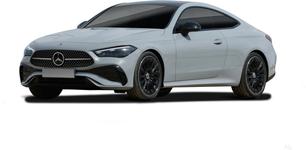
It gave birth to the ‘four-door coupe’ then the ‘SUV coupe’ and so many more. But now it seems car makers have reached their limit, as evidenced by Mercedes-Benz’s newest offering - the CLE Coupe and Cabriolet.
While technically a new addition to the range, the CLE actually replaces not one existing model, but two. The CLE will fill the gap left by both the C-Class Coupe and E-Class Coupe, allowing the German brand to simplify its line-up (ever so slightly).
So, what is the CLE Coupe and how will it live up to expectations of two different car buyers? Read on to find out…
In many respects the reasons the Bronco is not available to Australian buyers are clear and understandable - demand remains high in the US market and it’s unclear just how many Ford Australia could sell. A pessimist would point to the modest sales of the Jeep Wrangler but an optimist would point out the sales gap between the Ford Ranger and the Jeep Gladiator and ask why Ford doesn’t think it could out-sell its competition.
Having spent so much quality time with the Bronco it’s clear it would have some major appeal to Australian buyers. The strong sales of the Ranger and Everest, as well as the entire off-road SUV market - the likes of the Isuzu MU-X, Mitsubishi Pajero Sport, etc - it’s obvious we love a rugged, adventurous vehicle.
Ford’s strength in that area, with the Ranger/Everest combination, would seemingly strengthen the case for the Bronco to join its ‘T6’ siblings, but only time will tell.
Having spent an extended period behind the wheel I’m more convinced that the Bronco would find a strong market in Australia. Both with the off-road set and those who like a Land Rover Defender to take the kids to school.
This is an SUV with capability and personality and that should be enough to make it a success in Australia. But for now, we need to play the waiting game…
Note: CarsGuide attended this event as a guest of the manufacturer, with travel, accommodation and meals provided.
The CLE Coupe really feels like a car of the times. As the electric vehicle market continues to suck in resources, the days of endless variants and body styles is going to wane. But the truth is the CLE does a nice job of filling the demands that both previous C-Class Coupe and E-Class Coupe buyers are looking for.
It’s a stylish model with plenty of technology on the inside, so it should appeal to those who want something refined and elegant for their lifestyle. It has a hint of sportiness on road, without being overtly dynamic or uncomfortable; although Mercedes-AMG will cater to those buyers soon enough. And it offers the kind of space inside that buyers of both models will find acceptable (as long as they don’t have to climb into the back regularly).
The biggest challenge will be convincing C-Class customers to take the big jump up in price over the model it replaces, while at the same time convincing E-Class buyers that this is still something special and different given its similarities to the old model.
Note: CarsGuide attended this event as a guest of the manufacturer, with travel, accommodation and meals provided.
While we don’t have a history with the Bronco in Australia, it’s an iconic model in the US that was introduced in the 1960s to compete with the likes of the Jeep CJ-5 and Toyota LandCruiser.
It evolved throughout the 1970s, ‘80s and into the ‘90s eventually becoming an F-150-based SUV before being discontinued in ‘96.
For this revived Bronco Ford has gone back to its roots, taking inspiration from the ‘60s and ‘70s but also creating a car that is also very much contemporary.
It’s a great example of using retro design elements without getting lost in nostalgia.
It’s also hugely functional, with a removable roof and doors, which is a popular feature in the US where it’s legal to drive without the doors in place, and has deliberately short front and rear overhangs for improved approach and departure angles.
The Heritage edition takes this a step further with its pumped out Sasquatch flared guards, which are both functional and add to the chunky look of the Bronco.
Notably, the Bronco does not feature a Ford ‘blue oval’ badge, instead it only uses the ‘F-O-R-D’ on the grille and the rest of the badges are the ‘bucking Bronco’ - an alternative take on the ‘striding Mustang’ logo used for the iconic pony car.
The interior of the Bronco is interesting, showing very little commonality with the Ranger and instead embracing its unique history and design language.
The Heritage version also pops with its Oxford White dashboard inset, complete with bright red ‘Bronco’ lettering in front of the passenger.
Thankfully for the German brand its family look across its range means the CLE seamlessly integrates into both the C-Class and E-Class line-ups.
Mercedes does use some colourful language to describe the looks, with terms like 'sharknose' for the front end, and these ‘powerdomes’ on the bonnet, and there’s a swooping design that wraps around the tail to create a dynamic-looking vehicle.
The biggest question about design, though, is the size of the CLE, specifically how it compares to the two coupes it replaces. While based on the same basic underpinnings as the C-Class sedan, Mercedes has stretched and pulled the body to try and fill the space between it and the old E-Class Coupe.
The result is a car that is 164mm longer than the C-Class Coupe and +15mm longer than the E-Class overall, with the wheelbase stretched 25mm over the C-Class but actually 8mm shorter than the old E-Class two-door. It’s also 50mm wider than the previous C-Class but exactly the same width as the E-Class. So it’s definitely on the bigger size without actually matching up with either model it supersedes.
The Bronco is a big vehicle so you do need to climb up into it, but Ford has considered that and integrated handles into the side of the dashboard to help you in.
That’s just one of several small but thoughtful touches around the cabin that show the company has been very considered in designing the Bronco.
The option to have either removable soft- or hard-top is another one of those design touches that show Ford was determined to ensure the Bronco appealed to a broad market of buyers.
It does mean some peculiarities, though, such as the window and mirror controls being on the centre console, instead of the doors.
It also cuts down on small item storage space, as the doors only have small netted areas rather than any meaningful space.
In fact, small item storage is limited to just two cupholders and two small areas up front and in the car there are no cupholders at all in the rear.
Instead, rear passengers are left with the small nets in the doors and nothing else. However, rear passengers do get a USB and power outlet which will no doubt come in handy for owners.
Back in the front the instrument display combines an analogue speedo with a small digital screen that displays the rest of the information.
It’s not a particularly clear layout, with a vertical rev counter next to several other readouts making it tricky to glance at on the move, and unfortunately it cannot be changed like some other digital displays.
The 8.0-inch media screen is a good size and offers Ford’s intuitive SYNC 4 operating system, which is a plus.
In terms of space the Bronco offers reasonable interior room, albeit less than you might expect when you look at how big it is outside.
The front seats are comfortable and offer good visibility of the road ahead, while the rear offers adequate legroom and generous headroom thanks to the tall and squared-off roofline.
The boot measures a very healthy 1008 litres according to Ford, which seems generous based on our real world experience.
It certainly coped well, accommodating several large suitcases and smaller bags, though, so it doesn’t lack for luggage capacity even if its on-paper claim may be grandiose.
Obviously there’s the full-size spare mounted on the rear tailgate in case you need it. The tailgate itself opens in two parts, with the lower half coming out to the side while the glass lifts up, which is necessary because of the removable roof (with the glass section coming off with the top).
Not surprisingly given the exterior growth over the old C-Class Coupe, Mercedes is talking up the increased interior room and practicality. Which is crucial to the success of the CLE because in replacing both the smaller C-Class and larger E-Class coupes, it now needs to appeal to both audiences.
Front seat room is generous, with plenty of shoulder room and the seats offer good comfort and support. In the back Mercedes’ designers have managed to create 95mm more legroom than the old C-Class Coupe, but fractionally less than the E-Class Coupe (just 1mm less). The rear seats are wider than both outgoing models, both across the shoulders and the mid-section. Headroom has been increased by 10mm over the C-Class but decreased by the same amount compared to the E-Class.
Putting the measuring tape aside, while the rear seats are fine for short trips, the back of the CLE is clearly not the place to be and if you plan on using the rear seats regularly then you should be looking at one of the brand’s sedans.
As for the boot, at 420 litres it’s 60 litres bigger than the old C-Class but five litres smaller when compared to the E-Class Coupe; so once again there’s a trade-off between the two.
Ford offers an extensive range of Broncos in the US market, with two-door and four-door variants, as well as the choice of removable hard or soft-tops before you get to the trim lines.
The range actually begins with a model variant simply known as ‘Base’ which has only the basic features, even simple steel wheels, so it can be used as a blank canvas for owners to customise with their own aftermarket additions for the ultimate off-roader.
But the Bronco isn’t a cheap vehicle, with even the Base starting at US$39,890 (approx. $52,000) and running all the way up to US$86,580 (approx. $132,000) for the high-performance Raptor.
In between there are seven other variants with some memorable names - Big Bend, Black Diamond, Outer Banks, Badlands, Heritage, Wildtrak and Heritage Limited.
The Heritage we tested starts at US$47,105 - roughly $70,000 in Australian money - which isn’t cheap but you do get plenty of car for the money.
In terms of standard Bronco equipment there’s a 4x4 system with Ford’s ‘HOSS 1.0’ off-road suspension system, terrain management system and 'EcoBoost' engine, plus keyless entry and ignition, dual-zone climate control and Ford’s 'SYNC 4' multimedia system on an 8.0-inch touchscreen.
Unique touches for the Heritage edition include a two-tone paint job with 'Oxford White' accents on the removable hard-top, front grille and 17-inch alloy wheels.
It also gets the huge squared-off fender flares from the 'Sasquatch' package that Ford offers for the Bronco, which also increase the track by approximately 50mm.
The Heritage treatment also includes a unique ‘plaid’ cloth trim for the seats, an Oxford White inlay in the dashboard and front and rear rubber floor mats.
The initial range consists of just two models - the CLE200 and CLE300 4Matic, but an AMG variant, the CLE53 is due to follow soon (as is the expected-but-not-confirmed V8-powered CLE63), but not before the Cabriolet arrives. While the CLE300 Cabriolet was on hand for us to look at, we weren’t allowed to drive, so we’ll focus this review on the hard-top models.
The CLE200 is priced from $103,900 and the CLE300 is $124,900 (neither price includes on-road costs). While it’s hard to do a like-for-like comparison between the old models and this new one, the CLE is more than $20k more expensive than the old C-Class but around $9-12k cheaper than the equivalent E-Class Coupe.
For future reference, the CLE300 4Matic Cabriolet will be priced from $135,900.
Standard features on both models includes 19-inch alloy wheels, AMG Line exterior and interior packages, a panoramic sunroof, 64-colour ambient cabin lighting, heated front seats with memory function, a head-up display, a 12.3-inch digital instrument display, plus the latest MBUX infotainment system which runs through an 11.9-inch touchscreen as well as Burmester surround sound system. One of the key specification differences between the CLE200 and CLE300, aside from the powertrain, is the interior trim, with the cheaper model using synthetic leather while the more expensive one gets the genuine article.
The Heritage edition is powered by Ford’s EcoBoost 2.3-litre four-cylinder turbocharged petrol engine and can be paired with a 10-speed automatic.
However, our test car was equipped with a seven-speed manual gearbox, but not in the way you might think. Instead of seventh gear being an overdrive for highway cruising, the extra ratio is actually for extremely low-speed off-road use.
Known as the ‘Crawler’ gear Ford says it makes the Bronco ‘almost unstallable’ when you find yourself in a tricky spot.
Specifications for the engine aren’t quite as straightforward as you’d like, with Ford offering power and torque figures for US standard and premium grade fuels.
With the former the 2.3-litre makes 205kW/427Nm, while if you put better petrol in you’ll get 223kW/440Nm - so it will pay to spend a bit more at the pump.
The CLE200 and CLE300 are both powered by four-cylinder turbocharged petrol engines, albeit in different states of tune, and each assisted by a mild-hybrid integrated starter generator.
The CLE200 Coupé makes 150kW and 320Nm and sends it to the rear wheels via a nine-speed auto transmission. While the CLE300 4Matic Coupé gets 190kW and 400Nm but also gets (as the name gives away) Mercedes’ 4Matic all-wheel-drive system.
While not really a hybrid in the conventional sense, the integrated starter generator adds an extra 17kW/205Nm boost when required while also helping to save fuel.
Not surprisingly a large SUV powered by a relatively small, turbocharged petrol engine is not particularly fuel efficient.
The USA’s Environmental Protection Agency estimates the EcoBoost four-cylinder will use 11.7 litres per 100km on the combined urban/highway cycle.
That didn’t ring true in our real-world test, which did include long highway stretches as well as a lot of urban running around, with the car’s trip computer saying we’d used 13.6L/100km.
While that’s not particularly miserly, at least there’s a 64-litre fuel tank to provide a driving range of nearly 550km, so you can cover some distance.
Make no mistake, the integrated starter generator is a mild-hybrid system, so don’t expect to see miserly returns from the CLE. Instead, the official figures for the pair are quite close, despite the different drivetrains.
The CLE200 has a claimed fuel rating of 7.2L/100km, while the CLE300 uses 7.4L/100km.
The Bronco is designed for off-road use, it isn’t a ‘soft-roader’ and has been created specifically for those who enjoy getting off the beaten path.
Ford claims an approach angle of 43.2 degrees, a breakover angle of 29.0 degrees and a departure angle of 37.2 degrees, plus 294mm of ground clearance and up to 850mm of water fording capability.
We, unfortunately, didn’t get a chance to drive the Bronco that way, instead spending three days behind the wheel driving it through US cities, along highways and winding our way through some picturesque mountain roads.
But despite being out of its element, the Bronco felt perfectly at home.
The fundamental qualities of the ‘T6’ platform, that makes the Ranger such a capable and popular offering with Australian buyers, shines through with the Bronco, too.
It steers with accuracy and has nicely weighted steering, rather than feeling too heavy and slow as some off-roaders can.
The ride is comfortable, too, which isn’t too surprising as it rides on 17-inch alloy wheels with huge 35-inch tyre, with bumps soaked up with ease.
Ford’s drive select system has modes for on-road - 'Normal', 'Sport' and 'Eco' - as well as off-road - 'Mud/Ruts', 'Sand' and 'Rocky' - so you’re covered whatever you want to do.
As for the powertrain, the EcoBoost engine does an admirable job most of the time, feeling powerful enough around town to move this sizable SUV.
However, there are times it will struggle and labour, most obviously when needing to overtake or climb a hill. There were several instances when we found ourselves shifting down from sixth to fourth gear to keep momentum up.
To judge the CLE on its driving merits you first need to understand where it fits within the broader Mercedes-Benz line-up. Put simply, while coupes are seen as sporty cars, the German brand has other models that are designed to appeal to driving enthusiasts; such as the upcoming AMG versions of this car and the AMG GT Coupe.
So within that context, the CLE200 and CLE300 do an admirable job of being stylish cruisers that feel at home in the city but not out of place on a winding country road.
Sports suspension is standard on Australian delivered models, making it 15mm lower than overseas versions and fitted with firmer passive damping too. But still, it doesn’t translate to a dynamically agile and engaging sports coupe suddenly, instead it just gives the CLE a bit more sharpness when turning, at the expense of some comfort on pockmarked roads.
The engines perform nicely, the CLE200 feels adequately endowed with its 150kW/320Nm, so naturally the 190kW/400Nm CLE300 just feels like it has a bit more pep in its step. But I’d question the value of the all-wheel-drive system in a car like this, especially in Australia where the roads are rarely very slippery.
In the US market the Bronco gets front, side and curtain airbags, with rollover sensors, as well as a reversing camera as standard equipment across the range.
But if you want more active safety features you need to add some optional safety packages, including on this high-grade Heritage edition.
That means items like pre-collision warning with autonomous emergency braking, blind spot monitoring and lane keeping assist are all additional extras.
For the Bronco to work in Australia, the company would need to offer a higher level of standard safety equipment in line with market expectations.
Both CLE models come with all the usual passive and active safety features you’d expect on a modern luxury car, including autonomous emergency braking, ‘Active Lane Keeping Assist’, ‘Active Brake Assist’, blind spot monitoring, traffic sign assist, active cruise control and Mercedes’ ‘Pre-Safe’ accident anticipation system. There’s also a ‘Parking Package’ with 360-degree camera view to keep you and those around you safe at low speeds.
There’s no ANCAP rating for this new model announced yet, but previously both the C-Class Coupe and E-Class Coupe were tested.
These are questions for another time unfortunately, with Ford Australia still unlikely to add the Bronco to the range in the near future.
The CLE is covered by Mercedes Australia’s usual five-year/unlimited kilometre warranty.
The brand offers pre-purchased service plans for maintenance covering three, four or five years, starting at $3325 then $4535 and then $6800.