What's the difference?
The Ducato originated in 1981 through a joint venture between Fiat and PSA Peugeot-Citroen, which are both now part of the recently formed Stellantis conglomerate. The Ducato has evolved through four decades and several generations, with more than 2.6 million sold in a variety of body styles (including popular motorhomes) and wheelbases.
The current generation van, which competes in the 3501-8000kg GVM commercial class, is also marketed as the Peugeot Boxer, which was tested at maximum GVM by CarsGuide in 2020. Despite many similarities between them, the latest iteration of the Ducato is more than just a badge-engineered version of its French sibling.
The MY21 Fiat Professional Ducato Series 7 is equipped with an all-new drivetrain, updated safety and convenience features and a class-leading two-tonne-plus payload capacity, which we recently put to the test.
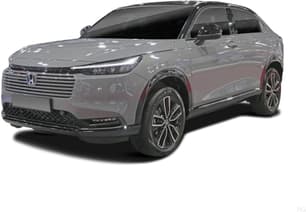
Like many car brands, Honda is storming the hybrid field. The new HR-V brings with it a hybrid powertrain and external facelift but is it enough to keep it competitive in the small SUV segment?
As with any cosmetic surgery you may wonder whether the facelift has been successful.
No tricks – I’ll tell you straight up the new external design might be what you’re looking for if you’re on the hunt for a small SUV that doesn’t look like it moonlights as an Uber for Mr Big Ears (a Noddy reference for any youngsters out there).
We're testing out the top hybrid model, the L, to see what else this urban dweller gets right and what it sometimes gets wrong.
The latest Fiat Ducato, in MWB MR configuration with optional nine-speed auto, is a competent competitor in the 3501-8000kg GVM segment. Its class-leading two-tonne-plus payload rating would have considerable appeal for those who need to carry exceptionally heavy loads and we couldn’t find any major flaws in its design and performance. However, the warranty is short and there are niggling issues in terms of driver comfort, which if addressed would increase the Ducato’s appeal.
The Honda HR-V e:HEV L offers a respectable driving experience in the city but compared to its rivals, it’s features list and safety don’t always stack up. It sort of straddles the fence between basic and lux at times, which is an odd place for a top-model to be but its sharper styling will win hearts and the cabin is still practical.
The MWB MR's front-wheel drive chassis rides on a 3450mm wheelbase with 12.5-metre turning circle. It’s 5413mm long, 2050mm wide and 2539mm tall, so like numerous van rivals in this GVM class it can’t access shopping centre and underground carparks which typically have a 2.2-metre height limit.
Underpinnings are simple and rugged, combining coil-spring strut front suspension with a leaf-spring rigid-tube rear axle that’s well designed for heavy load-carrying, with compressible rubber cones between body and axle that provide a second stage of support. There’s also four-wheel disc brakes, power-assisted rack and pinion steering and ample hard-wearing black plastic protecting the most vulnerable areas of the bodywork from scrapes and dents.
A sealed steel bulkhead separates the cabin from the cargo bay, insulating driver and passengers from load area noise and doubling as a robust cargo barrier. Its sliding window is ideally positioned to allow the driver or passenger to make a quick over-shoulder glance to check that their load is secure. Leg room for the centre passenger is unusually generous, even for tall adults, which would be appreciated by a crew of three.
Interestingly, the rear barn-door windows are heated but there are no wiper/washers fitted. At first this appeared to be an oversight, but having driven the Ducato in heavy rain we were surprised at how spray-free the rear screens remained and how clean they were afterwards.
Our only gripes are that the driver’s left footrest is so short you can only rest your toes on it. It’s a shame the excellent full-length one that resides in the passenger footwell (which of course is the driver’s footwell in LHD models) can’t migrate across the cabin for RHD versions. Driver comfort would be further improved with more rake adjustment in the base cushion.
The small 5.0-inch infotainment screen also makes it difficult to see much detail in the vision provided by the reversing camera. The optional 7.0-inch screen would be an improvement here, but is only available as part of the Comfort and Tech Pack.
The small SUV segment can often be littered with odd-looking cars that highlight pillowy or severely angular body-shapes (lookin' at you C-HR) but the HR-V offers something stylish and modern instead.
The 2025 HR-V has a sharper design that accentuates the coupe styling, slim LED headlights and crisp-looking grille. A feature highlight is the eye-catching full-length tail-light treatment which makes the design pop at the back.
The interior is gorgeous with a streamlined dashboard that features just the right number of buttons and dials for those who want more tactility in a world where screens rule.
While the technology screens are on the smaller end, they look great against the synthetic leather trims and soft touchpoints that are liberally splashed throughout the cabin.
The cockpit is driver-orientated with everything within reach and easy to use while on the go. The steering wheel looks sporty and feels wonderful.
Everything looks well-built and feels solid; it's a cabin you’ll be pleased to spend time in.
The Ducato’s 2060kg kerb weight and 4250kg GVM results in a huge 2190kg payload rating which dwarfs rivals we've tested including the Mercedes-Benz Sprinter, Ford Transit and its Peugeot Boxer sibling. It's also rated to tow up to 2250kg of braked trailer but given that Fiat does not publish a GCM (Gross Combination Mass) number, we can’t confirm if it can tow that weight while carrying a full payload.
The cargo bay, with a competitive 11.5 cubic metres of load volume, has an unprotected load floor that’s 3120mm long and 1870mm wide with 1422mm between the wheel housings. Therefore, it can easily carry two 1165mm-square standard Aussie pallets or three 1200 x 800mm Euro pallets, held in place by eight sturdy load-anchorage points.
There’s also ample forklift access through either the rear barn-doors, which can swing open to 270 degrees with a combined 1562mm-wide opening, or the sliding side doors with their 1250mm-wide openings.
All doors and walls are lined to mid-height and the raised roof cavity allows even tall adults to stand inside without stooping. It also provides a large and very useful storage area over the driver’s cabin, which is ideal for stowing ropes, straps, load-padding etc.
There’s plenty of cabin storage too, with large-bottle holders and two levels of storage bins in each front door. The dashboard offers numerous open storage bins plus small-bottle/cup holders, a glovebox, large overhead map shelf and storage tray under the driver’s seat. The centre seat’s backrest also folds forward to reveal a handy work desk on the back of it, complete with a spring-loaded clip to hold documents in place, a pen holder and two more small-bottle/cup holders.
For a small SUV, the cabin is large. Both seating rows feature excellent access with the 195mm ground clearance not eliciting one grunt from my occupants (even the oldies).
Head- and legroom is decent in both rows but taller passengers might brush the ceiling on bumps when seated in the back.
The only area that lacks this feeling of space is the boot, as it only has 304L of capacity available when all seats are in use and that's on the tiny side compared to its rivals. The Kia Niro has 425L which rivals some sedans!
Seat comfort is best in the front where thick padding and a longer cushion offer more comfort on a longer journey, despite lacking lumbar support.
The rear seats are harder and shorter and you should expect some big stretches from adults after a road trip. However, the directional air vents and other amenities keep it from feeling too basic on comfort.
There are lots of storage options with a glove box that's large enough to fit a manual with room to spare, a small middle console, two large 'stacked' shelves in front of the gearshift, four cupholders, four drink-bottle holders and two map pockets that also feature a device holder large enough to fit my iPhone 15 Pro Max.
The HR-V has 'Magic' seats in the rear which means the base can fold up or the backs can be folded flat. It’s a cool feature that opens up extra storage options.
The technology is simple to use and responsive. The touchscreen multimedia system has built-in satellite navigation, the Honda Connect app, wireless Apple CarPlay and wired Android Auto. The CarPlay is easy to set up and maintains a steady connection.
Charging options are good with a single USB-A and three USB-C ports, as well as, a 12-volt socket but you miss out on a wireless charging pad despite the L being the top grade.
Our white test vehicle is the MWB MR, which translates to Medium Wheel Base Mid-Roof. It’s one of four Ducato van configurations featuring medium, long and extra-long wheelbases and two roof heights.
They’re all powered by a new 2.3 litre turbo-diesel engine, with a list price of $48,300 for the MWB MR with standard six-speed manual or $51,190 with the optional new nine-speed torque converter automatic like our test vehicle. It also has an extra side-sliding door that adds another $1190.
A few of the standard features include 16-inch steel wheels with heavy-duty 215/75 R16C tyres and a full-size spare (16-inch alloys optional), infotainment system with 5.0-inch touchscreen, USB/AUX connectivity and steering wheel controls, power-adjustable and heated exterior mirror, dual passenger seat with three-point central seatbelt, single cargo bay side-sliding door, twin rear barn-doors with 270-degree opening, reversing camera/rear parking sensors plus an upgraded safety suite headlined by AEB.
There’s also a wide choice of colours and other options including the Comfort and Tech Pack which for an additional $2190 brings a larger 7.0-inch infotainment touchscreen with DAB digital radio, Apple CarPlay/Android Auto, plus sat-nav, LED daytime running lights, automatic climate control and tyre pressure monitoring.
For the same price you can also get a Safety Plus Pack comprising rain/dusk sensor, auto high beam, traffic sign recognition, blind-spot monitoring and rear cross-traffic alert, fog lights, traction control and all-season tyres.
There are three HR-V variants available, starting with the petrol base-model Vi X, moving to the mid-spec e:HEV X and on to the top-grade e:HEV L; which is the model on test here.
The L is priced from $42,900, drive-away (2000, NSW postcode), which positions it as the most affordable compared to its similarly graded rivals. The Kia Niro HEV GT-Line is $55,487, drive-away, and the Toyota C-HR Koba is $55,180, drive-away.
Despite having a much higher price tag, the rivals sport a few extra features including electric front seats, ventilated front seats, larger media screens, wireless Android Auto, a wireless charging pad and upgraded sound systems... just to name a few.
Oh, and the HR-V is only a four-seater, so the rivals also boast a fifth seating position.
That being said, the L isn't a total lump in the features department and the standard equipment is still pretty good (just not full-bodied like it's rivals).
The L comes with synthetic leather and cloth mixed upholstery and trims, heated front seats, a heated steering wheel and 18-inch alloy wheels.
Technology includes a 9.0-inch touchscreen multimedia system with satellite navigation, wireless Apple CarPlay, wired Android Auto, six-speaker sound, the 'Honda Connect' app, a 7.0-inch digital instrument cluster, one USB-A port, three USB-C ports, a 12-volt socket and Bluetooth connectivity as well as AM/FM and digital radio.
Practicality feels well-rounded with keyless entry and start, rain-sensing windscreen wipers, dusk-sensing headlights, dual-zone climate control and a powered tailgate.
The all-new drivetrain features Fiat’s latest 2.3 litre four-cylinder turbo-diesel with Multi-Jet 2 electronically-controlled common rail direct injection, variable-vane turbocharging, intercooler and Euro 6-emissions compliance using AdBlue. It produces 130kW at 3500rpm and (in automatic models) 450Nm of torque which peaks at 1500rpm. In case you’re wondering, the red ‘180’ body badges denote European metric horsepower.
The new ZF nine-speed torque converter automatic is a sweet-shifting transmission which Fiat claims is designed to optimise the engine’s torque delivery and fuel economy. It has a sequential manual-shift function if required, which could be useful if hauling big payloads in hilly terrain, but works most efficiently when left alone.
The L is a hybrid which combines a 1.5L four-cylinder petrol engine with an electric motor and together they produce up to 96kW of power and 253Nm of torque.
Which is plenty to make the L feel like a zippy city car but on the open road, the engine has a tendency to over-rev and can get whiny going up a hill, which may be a by-product of the continuously variable auto transmission.
Fiat does not publish a combined average consumption figure for the Ducato, but the dash display was claiming 10.2L/100km at the end of our test, which covered almost 300km of which more than a third was with a heavy payload. We also had the auto stop-start function switched off. That consumption figure was very close to our own, calculated from fuel bowser and tripmeter readings, of 10.6L. So, based on our numbers you could expect a real-world driving range of around 850km from its 90-litre tank.
The HR-V L has a low combined (urban/extra-urban) fuel cycle figure of just 4.3L/100km which is not far off the 4.0L/100km claims of its rivals. Combined with the 40L fuel tank, you have a theoretical driving range of up to 930km, which is pretty darn good!
After doing a lot of urban driving, with a couple of longer trips thrown in, my real-world usage came out at 5.1L, which is isn't too far off the claimed figure, is still a good result overall and computes to a range in excess of 780km.
There’s a commanding view for the driver thanks to a panoramic windscreen and clear eye-lines to the truck-sized door mirrors. There’s also reasonable but cluttered vision through the central rear-view mirror, which is partly obscured by the centre seat’s headrest.
The cabin bulkhead is effective in all but eliminating cargo bay noise and engine/wind noise volume is commendably low even on the highway. The highest audible intrusion at those speeds comes from the front tyres, which is acceptable on smooth bitumen surfaces but increases on coarser grades.
Its leather-rimmed steering wheel is nice to use and thanks to the driver’s door moulding and fold-down in-board armrest, there’s evenly balanced elbow support to relieve strain on the neck and shoulders.
The engine and nine-speed auto transmission are well matched, providing energetic performance when prodded and crisp, decisive shifting. Long-legged highway gearing allows 100km/h at 1500rpm (which is also bang on maximum torque) and less than 1700rpm at 110km/h. Ride quality when empty or lightly loaded can get bouncy on bumpy roads, which is not unexpected from suspension with a two-tonne-plus payload capacity.
Our main criticism is insufficient rake adjustment in the driver’s seat base cushion. There’s not enough angle available to stop the driver sliding forwards, requiring constant repositioning that becomes tiring after a while. More rake in the base cushion, combined with a decent-sized left footrest, would solve this issue.
Also annoying is the audible lane-departure warning, which is too loud and sounds like you’re being zapped by a ray-gun in an old sci-fi movie if you step out of line. A less confronting warning would be welcome.
The HR-V L is an SUV perfectly suited to city life. Its power delivery is responsive around town, allowing for quick bursts when needed and the well of power feels deep until you get onto the open road. And as mentioned, that’s when it’s let down a bit.
The HR-V has a tendency towards mild understeer in quicker sweeping bends but is otherwise surefooted on the road. The suspension is firm, and you’ll notice the bumps here and there, but ride comfort still manages to be okay most of the time. Also road noise isn’t too high around town.
The visibility is great until you’re trying to look out of the back window and have a passenger to your left or a car seat installed. A digital rearview mirror would have been quite welcome in these scenarios.
Like most small SUVs the HR-V is easy to park and it’s small enough to be your best friend in a tiny car park. However, the reversing camera doesn’t reflect the grade level as the quality of the feed isn’t the best.
There’s no ANCAP ratings for this GVM division and above, but the latest Ducato is equipped with AEB, forward collision alert, lane departure warning, rear parking sensors, reversing camera plus driver and dual-passenger airbags as standard. Buyers can also option the Safety Plus Pack mentioned earlier.
The HR-V has a four- out of a possible five-star ANCAP safety rating from testing done in 2022. It only features six airbags and its individual assessment scores aren’t as high as its rivals.
In fact, both the rivals I’ve mentioned performed much better and have additional safety features to boot, including safe exit assist, 360-degree view camera systems and rear occupant alert. Which the HR-V misses out on.
The top model HR-V benefits the most in safety compared to the lower grades and includes blind-spot monitoring, front fog lights, forward collision warning, rear cross-traffic alert, lane keeping aid and departure warning, traffic sign recognition, intelligent seatbelt warning, adaptive cruise control and a reversing camera as well as front and rear parking sensors.
Some notes, though. The lane departure and keeping aids seem to 'activate' whenever they feel like it. I had them come on more on unmarked roads than marked.
The adaptive cruise control can be too sensitive at times and having the car slam on brakes when you're passing a parked car on the highway going 100km/h is a scary experience to say the least.
The HR-V has AEB with car, pedestrian, and cyclist detection which is operational from 5.0 to 100km/h (170km/h for car).
Being a four-seater, you only get two ISOFIX child seat mounts and two top-tether anchor points and while it is easy to fit a child seat in, the top of it wipes out your rearview vision.
The safety is pretty disappointing as it lets down an otherwise solid SUV.
Three years/200,000km warranty looks undercooked compared to the five years/unlimited km offered by some rivals. Scheduled servicing, though, is excellent for hard-working vans at 48,000km/12 months whichever occurs first. Five years of Fiat Professional servicing, based on a total distance of 240,000km, equals $6756.99 or an average of $1351.40 per year.
Honda offers the HR-V with a five-year/unlimited km warranty and an eight-year battery warranty which is on the lower end considering it's rivals can get up to seven-years unlimited km warranty now.
The five years capped-priced servicing program offers excellent value, however, as services are a flat $199, which is great for the class.
Servicing intervals are at every 12 months or 10,000km, whichever occurs first and that should be fine for the average city dweller. But it could get annoying if you put higher than average kays on your car every year.