What's the difference?
I know, picture Ferrari and you'll likely be conjuring images of potent V12 or V8 engines, a scenery-shaking exhaust bark on start-up and a fuel bill that would make a Sheikh wince.
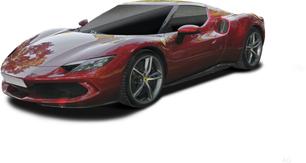
But this one, the 296 GTS, doesn't have, or do, any of those things. In fact, it doesn’t so much explode into life as it does kind of whirr gently, as though you’ve just switched on a photocopier.
And yet, people I trust on these matters reckon this just might be the best Ferrari to have ever worn the badge. So, I guess we better get to figuring out what the hell is going on with this plug-in Prancing Horse.
There are really only four things you need to know about the all-new Hyundai Inster. It's small outside, yet surprisingly big inside. It's all electric. It's cute as a button. And it's as practical as a Swiss army knife.
Actually, there's one more thing. It's cheap for an EV. But it's still not that cheap, given the wave of cut-price Chinese product now on our shores.
So, can the Hyundai Inster carve itself a slice of the entry-level EV market?
Anyone who says electrification somehow muddies the Ferrari formula is wrong. This plug-in Prancing Horse is among the most potent and direct vehicles I’ve ever driven, and the electric motor only adds to the experience.
The target market for the Inster isn't huge, and Hyundai knows it won't be a runaway best-seller for the brand. But those in the market for a bite-sized EV will find the Inster feels bigger, and drives better, than they might expect.
It is hard not to swoon when you gaze upon the 296 GTS, and I say that with no bias - I don’t think all Ferraris have looked this good.
But this is Ferrari at its dreamy, sweeping best, from the tarmac-kissing front — which generates so much downforce and cooling it negates the need for active aero — to its swollen haunches and the glass-topped engine window.
So what’s the difference between this and the GTB? Largely it is the ability to drop the folding roof, meaning you can feel the wind in your hair and that exhaust in your soul. To be honest, though, I reckon it looks better top up...
It’s a cockpit-style driver’s set-up inside, and there’s lots I love and some things I don’t. But let’s start with the steering wheel, which might be one of the best in existence.
It feels magic under the touch, as do the giant flappy paddles which remain fixed in place as you turn the wheel.
It’s also surprisingly comfortable in the figure-hugging sports seats, though climbing in and out of them is not necessarily something you want to do in front of a crowd.
Downsides? There is plenty of tech in the 296 cabin, but it’s all controlled from the steering wheel, making it fiddly and annoying to use.
Also, there are F1-levels of complexity on the control-everything steering wheel, and if I’m being honest, there are some buttons or switches, the function of which I still don’t fully understand.
The words small but perfectly formed appear here, with Hyundai’s insistence on not having a traditional range-wide design identity allowing them the freedom to create something unique and pretty funky here — though I do see some shades of Suzuki Ignis in the side profile.
It does look fun though, right? With the selfie ring-light-style headlights, Tetris-style rear lights, those swollen guards and the funky alloys.
And you can dial up further with the Cross variant, which gets a tougher, more squared-off look front and back - even if you’re more chance of meeting a bunyip than an Inster on your favourite off-road track.
Inside, the cuteness continues, though some of the scratchy cabin materials definitely point to the entry-level nature of the Inster.
Still, the seat materials, both the cloth and the leather, are lovely and thoughtfully coloured, and the twin screen setup is nice, too. I love the inclusion of a host of physical buttons that control the climate, stereo and the nav.
What do you want to know around practicality? We’re talking two seats, about 200 litres of cargo space total and a couple of smallish storage spaces in the cabin. And… that’s about it.
Next question, please.
The Inster stretches 3825mm long, 1610mm wide and 1575mm tall, but it rides on a 2580mm wheelbase – the later being bigger than the Hyundai Venue, and almost as big as the Kona.
It has allowed Hyundai to stretch the legroom options in the backseat, which actually gives you more space than the two bigger SUVs mentioned above, helped massively by the fact the Inster's rear pew is on rails, allowing you to slide it right back, and that it reclines a fair way, too.
I'm 175cm and I found I had more than enough leg and headroom, and with the backseat in full La-Z-Boy mode, I could sit back and relax, even on a longer journey.
It's a good thing it's four seats only, though. While the Inster feels longer than it is, it doesn't feel any wider, and even in the front seat you can feel like you're in economy class when you have a passenger on board, with both of you rubbing elbows on the central armrest.
Clever storage abounds though, with hidey-holes, handbag hooks and more dotted throughout the cabin. Opt for the roof box – and wear the efficiency penalty – and you can pop another 75kg worth of gear on the roof.
Also cool is the fact the backseats fold completely flat in the entry-level Inster, upping the storage possibilities. And in the top-spec Cross, the front seats fold down, too, allowing for fairly long items to be stowed. Though why you would need the driver's seat to fold flat is a bit of a mystery, unless you're looking to turn your Inster into an immovable storage container.
Apparently in Korea you can option a mattress that slides over all four seats, but I can't see that taking off here.
The official storage numbers are 280L and 1059L, and the small boot is helped along a little by underfloor storage where you can pop your charging stuff.
Okay, hold your breath for a moment. The 296 GTS lists at $668,146, which is a sizeable jump over the hard-top GTB, which is more like $551,800. But what price a little open-air freedom?
What you get for that investment is a two-part (solid) folding roof, of course, but also what might be Ferrari’s most high-tech offering to date, with a plug-in hybrid system delivering potent performance rather than a usable EV driving range, a mega-clever braking system and an almost telepathic six-way 'Chassis Dynamic Sensor' designed to link the car’s key functions to make the experience, and the driver, somehow better.
Elsewhere, there are sports seats, Matrix LED headlights, 20-inch alloys, keyless entry and a very cool engine start touch-button on the even cooler steering wheel.
Oh, and there's wireless charging and Apple CarPlay, both thankfully standard in Australia, the latter controlled through the steering wheel and digital driver display.
It's all beautifully finished and a joy to behold and sit in.
The Inster is available as an entry-level model, which comes as a Standard Range for $39,000 before on-road costs, or an Extended Range for $42,500. It then steps up to the Inster Cross, which is $45,000.
For perspective, the Geely EX5 is considerably bigger, and will travel further on a charge, for $40,990 before on-road costs. Then there's the Chery E5, which is now $39,990 plus on-road costs.
Anyway, the Inster nabs 15-inch wheels, dual 10.25-inch screens (one for the multimedia, another for driving info), a six-speaker stereo, Apple CarPlay and Android Auto, cloth seats, two V2L connectors, a wireless charging pad and rain-sensing wipers. The equipment list for the Extended Range is the same, but it rides on 17-inch alloys.
Stepping up to the Inster Cross scores you a unique and off-road-inspired look, but also leather trim inside, a unique design for its 17-inch alloys, heating and ventilation for the front seats and heating for the steering wheel, some extra safety kit and practicality perks, and the option of a sunroof or an exterior roof storage box, the latter of which seriously eats into the driving range.
Now we're talking. The powertrain here is both tremendous and terrifying, pairing a 3.0-litre twin-turbo-petrol V6 with a rear mounted electric motor, and a 7.5kWh battery, to deliver a total 610kW and 740Nm. That power is fed through an eight-speed dual-clutch auto transmission.
Those are, frankly, scary numbers, and enough, Ferrari says, to dispatch 100km/h in just 2.9 seconds, and to push on to a top speed of 330km/h.
The Hyundai Inster Standard Range kicks off power proceedings, with a single front-mounted electric motor producing 71kW and 147Nm.
Next is the Extended Range, which shares its outputs with the Inster Cross. Here, the front-mounted motor’s outputs have been ticked up slightly, now producing 84kW and 147Nm.
Those aren’t big numbers, but then neither does either Inster feel particularly slow or underpowered.
As well as the ability to start up and slink away silently, the Ferrari 296 GTS’s little battery will deliver a 25km EV-only driving range, and contribute to the overall claimed fuel use of just 6.5L/100km.
Charging is AC only, and the the brand reckons it takes around 90mins to top up using an 11kW charger. The self-charging is on-point, though, with the Ferrari able to quickly recoup energy from braking and the like to top up the battery without needing to plug in.
Standard Range cars get a 42kWh lithium-ion battery, producing a driving range of 327km. The Extended Range and the Cross get a bigger 49kWh battery, increasing the range to 360kms. Now, that roof box. It does look cool, but you’re going to really need to carry stuff to choose that option, given it increases energy consumption by 25 per cent, reducing the Cross’s range to just 293km.
When it comes to charging, the Inster is set up for 120kW DC fast charging, or 10.5kW AC charging - provided you have that much power available at home, as most wall boxes are more like 7.1kW.
The engine is undoubtedly a highlight, and we’ll get to that in a moment, but I first want to talk about the steering in this car.
It might sound like a weird point to get hung up on, but it is sensational, and maybe the best I’ve ever experienced. Generally speaking, super-responsive steering can risk feeling overly sharp and uncomfortable when cruising, but somehow the 296 manages to feel super natural, super responsive, and super engaging, without every feeling sharp or darty. It’s just predictable, responsive, and spectacular.
Honestly, it is a highlight of a drive experience filled with highlights, with another being the dual-nature of this drop-top supercar. Long before I got anywhere near a twisting road I needed to navigate the usual nightmare that is Sydney, tackling traffic, suburbia, freeways, tunnels and expansion joints galore, and the 296 never felt uncomfortable.
Instead, the 296 slipped into a comfortable kind of lope, never jarring or rough, and eminently easy to get along with. And yet, when you arrive on the right road that veil of sensibility drops, and the Ferrari quickly reminds you of its potential.
For a start, the acceleration is properly, startlingly aggressive. Engage the 'Qualification' drive mode (which unlocks the full might of the Ferrari's electrified powertrain) and flatten your right foot, and you'll find the world suddenly hurtling past your windows, and your knuckles will no doubt whiten as you feel the rear tyres fighting for traction against the onslaught should you try it on anything but the straightest of roads.
It's addictive, but it's just one element of a near-perfect combination on offer here, with the 296 GTS the stiffest Ferrari drop-top to date, which becomes immediately clear as you start to attack corners with ever-growing confidence.
Grip, stability and stiffness in spades, the GTS delivers. And all accompanied by an exhaust howl so angry and evil it’s hard to believe it’s being generated by a V6.
It’s a thing of very near perfection.
Honestly, the impact electrification has had on vehicles in this class is staggering.
It wasn't so long ago that these micro cars were fitted with underwhelming petrol engines, four- or five-speed gearboxes and all the noise-deadening technology of a tin of beans.
As a result, they were cute, but painful. It always felt like you had to wring their neck to get the most out of them, and when you did, they were loud, buzzy and annoying.
But the Inster is none of those things. While not ludicrously powerful, the electric propulsion offered, and the nature of the way it's produced, feels ample in the little Hyundai, with the acceleration smooth, silent and easy,
It's also just generally quiet. Hyundai says it has double-sealed the doors, used thicker glass and fitted full underbody coverings to reduce the NVH - or noise, vibration, harshness - levels, and all of that, combined with the peace and quiet of an electric motor, have created a mostly blissful cabin experience.
The ride and handling hasn't been through the full Hyundai Australia ride and handling calibration of old. Instead, it's undergone the brand's more modern approach, which is to take the best componentry from what's available overseas and then build the Aussie-spec cars from there.
Either way, it all works pretty well here. Only really big bumps clang into the cabin, with the Inster otherwise riding well over all of the road surfaces we encountered.
The point, I guess, is that it's a drive experience stuffed full of happy surprises. The ride, the acceleration and the refinement are all well up on what you might expect from a city car.
Not much chance of the 296 GTS being crash-tested in Australia — you’d be able to hear the Italians weeping across the ocean.
You do get front and side airbags parking sensors, a reversing camera, auto high beam and tyre pressure monitoring.
The Hyundai Inster is yet to be crash tested, but does arrive with a solid safety offering including seven airbags, as well as active equipment like a auto emergency braking (AEB), rear cross-traffic avoidance, lane keep assist, and active cruise control.
The Cross ups the equipment a little more, including a surround-view monitor, blind-spot monitoring and front parking sensors.
Standard is a three year warranty, but you can extend that for up to five years. Then, if your car has less than 90,000km on the clock, you can opt into the 'New Power15', which gives you up to 15 years total warranty coverage and is fully transferable.
The first seven years scheduled maintenance is free-of-charge.
The Inster delivers super long service intervals, requiring a trip to the service centre every two years or 30,000kms, but each service is priced at $655. A Toyota Yaris Cross, for perspective, will see you visit the service centre twice as often, but each visit will only cost you $255, or $510 every two years.
The Hyundai warranty is five years/unlimited kilometres, while the high-voltage battery is covered for eight years.