What's the difference?
I know, picture Ferrari and you'll likely be conjuring images of potent V12 or V8 engines, a scenery-shaking exhaust bark on start-up and a fuel bill that would make a Sheikh wince.
But this one, the 296 GTS, doesn't have, or do, any of those things. In fact, it doesn’t so much explode into life as it does kind of whirr gently, as though you’ve just switched on a photocopier.
And yet, people I trust on these matters reckon this just might be the best Ferrari to have ever worn the badge. So, I guess we better get to figuring out what the hell is going on with this plug-in Prancing Horse.
What’s a point of difference you look for in the oversaturated SUV market? Is it price? Warranty? Features? How about comfort?
There are a lot of mid-size SUVs in Australia. Most of them like to trade on their features or value or, more than ever, sportiness.
You can see it in the huge wheels, aggressive body kits, stiff suspension. The list goes on. But not for the Citroen C5 Aircross.
The most recent offering from the storied French automaker is all about one thing. Comfort.
My question is why is comfort in SUV-land such a niche concept? And how does this quirky orange Citroen get it so right? Read on to find out.
Anyone who says electrification somehow muddies the Ferrari formula is wrong. This plug-in Prancing Horse is among the most potent and direct vehicles I’ve ever driven, and the electric motor only adds to the experience.
The C5 Aircross might seem like a niche European 'alternative' SUV, but I wish it wasn’t. The more mainstream players could learn a lot from how brilliantly this Citroen is packaged.
It is truly class leading in terms of passenger comfort and even luggage space, even shipping with great multimedia and safety in this base Feel grade.
Unless you really need to be towing, performance (or in this case, lack thereof) should be low on your SUV priority list anyway.
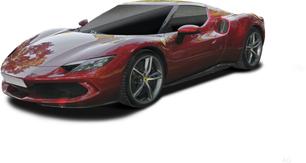
It is hard not to swoon when you gaze upon the 296 GTS, and I say that with no bias - I don’t think all Ferraris have looked this good.
But this is Ferrari at its dreamy, sweeping best, from the tarmac-kissing front — which generates so much downforce and cooling it negates the need for active aero — to its swollen haunches and the glass-topped engine window.
So what’s the difference between this and the GTB? Largely it is the ability to drop the folding roof, meaning you can feel the wind in your hair and that exhaust in your soul. To be honest, though, I reckon it looks better top up...
It’s a cockpit-style driver’s set-up inside, and there’s lots I love and some things I don’t. But let’s start with the steering wheel, which might be one of the best in existence.
It feels magic under the touch, as do the giant flappy paddles which remain fixed in place as you turn the wheel.
It’s also surprisingly comfortable in the figure-hugging sports seats, though climbing in and out of them is not necessarily something you want to do in front of a crowd.
Downsides? There is plenty of tech in the 296 cabin, but it’s all controlled from the steering wheel, making it fiddly and annoying to use.
Also, there are F1-levels of complexity on the control-everything steering wheel, and if I’m being honest, there are some buttons or switches, the function of which I still don’t fully understand.
It wouldn’t be a French car without a solid dollop of style, and the Aircross has heaps of it.
From the orange paint, to its floating rear light fittings and chevron emblazoned grille, the Citroen is nothing if not unique.
Just like the C4 range before it, the C5 Aircross inherits the plastic 'airbump' fittings under the doors, with the plastic-clad soft-roader look continuing over the wheelarches and across the C5’s front and rear.
There’s a lot going on, on both the front and rear of this SUV, but somehow it’s not really over-complicated, all the flourishes and highlights manage to flow into each other to maintain some semblance of consistency.
The C5’s rear is a little more tame, with body coloured panels contrasted with the plastic strip, gloss black highlights, and dual-square exhaust facades. The floating gloss-clad roof rails are a flashy if silly touch.
I’d personally argue it’s a better-looking car than its Peugeot 3008 sibling, although it looks built entirely for city-slickers rather than the adventurous type.
Inside it’s normal. For a Citroen. Gone are the days of floating steering wheels or overtly wacky instrument clusters, it’s all quite tame and that’s for the betterment of the brand.
That’s not to say it’s not a cool place to be, and I was surprised to find myself surrounded by classy fittings, quality soft-touch materials and an understated blocky design theme. The C5 gets a small, oval steering wheel which feels great in the hands.
Those awesome memory foam seats are finished in a slightly odd grey synthetic denim kind of material. Some hated it, but I thought it contrasted the car’s exterior and interior schemes well. The raised centre console gives front passengers an extra secure premium sort of feel.
The grey materials will be slightly divisive, but the number one annoyance for me was the complete lack of tactile buttons for adjusting the climate control or media functions. Is a volume knob too much to ask?
Other than that, the C5 has one of the most tame, practical interior treatments on any Citroen… possibly ever… without managing to be boring.
What do you want to know around practicality? We’re talking two seats, about 200 litres of cargo space total and a couple of smallish storage spaces in the cabin. And… that’s about it.
Next question, please.
The C5 Aircross is one of the most practical SUVs you can buy in this segment in terms of interior space. There’s just loads of it, and plenty of smart features to back it up.
In the front you get some small trenches in the doors, lovely big cupholders in the centre console, along with a top-box which was a little shallow, but still handy, as well as a small cavity (seemingly designed to hold the key) and a big bin for stowing your wallet or phone.
Back seat occupants get decent leg and headroom, but what’s really special here is each passenger gets their own memory foam seat with enough width to travel in decent comfort. The centre passenger’s legroom isn’t even impeded by a big transmission tunnel.
Rear passengers also get pockets on the back of the front seats, dual air vents, small cupholders in the doors, and a 12-volt power outlet. With no drop-down armrest, it would be nice to see more practical cupholders in the door cards.
The boot is truly gigantic. Like, biggest in the segment gigantic. At a minimum it weighs in at 580L (VDA), but as an added boost, the rear passenger seats can be slid forward on a rail to grant a whopping 140 extra litres of space to 720L. With the rear seats down you’ll be able to make use of 1630L.
A power tailgate, able to be operated by waving a foot under the car is also standard, revealing a totally unimpeded aperture. So, not only does it have a class leading luggage area, but it’s also easy to use.
Okay, hold your breath for a moment. The 296 GTS lists at $668,146, which is a sizeable jump over the hard-top GTB, which is more like $551,800. But what price a little open-air freedom?
What you get for that investment is a two-part (solid) folding roof, of course, but also what might be Ferrari’s most high-tech offering to date, with a plug-in hybrid system delivering potent performance rather than a usable EV driving range, a mega-clever braking system and an almost telepathic six-way 'Chassis Dynamic Sensor' designed to link the car’s key functions to make the experience, and the driver, somehow better.
Elsewhere, there are sports seats, Matrix LED headlights, 20-inch alloys, keyless entry and a very cool engine start touch-button on the even cooler steering wheel.
Oh, and there's wireless charging and Apple CarPlay, both thankfully standard in Australia, the latter controlled through the steering wheel and digital driver display.
It's all beautifully finished and a joy to behold and sit in.
The C5 Aircross enters Australia in just two spec levels, and the one reviewed here is the base Feel. Priced at $39,990, before on-road costs, it’s not exactly cheap, but is thankfully well specified.
And at the time of publication a Citroen drive-away pricing campaign pitched the Feel at $44,175 with all registration, dealer and other pre-delivery charges included.
In the box is a 7.0-inch multimedia touchscreen with Apple CarPlay, Android Auto, DAB+ digital radio and built-in sat nav, a 12.3-inch digital dash display, auto-dimming rear-vision mirror, auto headlights and windscreen wipers, keyless entry and push-start ignition, dual-zone climate control, LED DRLs, and an electric tailgate.
That’s the good. Not-so-good are the halogen headlights (kind of detracting from the slick front styling) and the lack of radar cruise control.
The Aircross does get a decent set of active safety features explored in the safety section of this review.
Competitors? Well there’s a good chance you’ll be cross-shopping the C5 Aircross against other alternate options in the mid-size space, including the Peugeot 3008 Allure (with which the Aircross shares an engine and chassis - $40,990), the Renault Koleos Intens FWD ($43,990), and perhaps the Skoda Karoq (just one spec-level in Australia - $35,290).
The Aircross’ secret weapon, which you can’t get on any other mid-size SUV, is its seats. Citroen calls them 'Advanced Comfort' seats, and they’re stuffed with memory foam “inspired by mattress technology.”
And it sounds like pamphlet hype, but it’s not. Once you’re seated, it’s like you're floating on air. A little bit of genius!
Citroen pairs this with reasonably-sized 18-inch alloy wheels and a unique suspension system which uses “progressive hydraulic cushions” (a nod to Citroens past) to soften the ride.
It’s a double down of comfort features, and really adds up to a lovely place to be behind the wheel. All for a similar price to its Peugeot sibling. Worth considering.
Now we're talking. The powertrain here is both tremendous and terrifying, pairing a 3.0-litre twin-turbo-petrol V6 with a rear mounted electric motor, and a 7.5kWh battery, to deliver a total 610kW and 740Nm. That power is fed through an eight-speed dual-clutch auto transmission.
Those are, frankly, scary numbers, and enough, Ferrari says, to dispatch 100km/h in just 2.9 seconds, and to push on to a top speed of 330km/h.
The C5 Aircross is powered by just one powerplant no matter which grade you pick. It’s a 1.6-litre turbocharged four-cylinder petrol engine, producing 121kW/240Nm.
It shares this engine with the Peugeot 3008 and the outputs compare well with the Renault Koleos’ Nissan-sourced 2.4-litre four-cylinder engine (126kW/226Nm) considering it’s much smaller and (theoretically) less thirsty.
The ever-smart Skoda Karoq is tough to beat in this segment with its 1.5-litre engine (110kW/250Nm) putting strong torque figures on the board.
The C5 Aircross sends power to the front wheels only via a six-speed automatic transmission, for a comparison the Koleos has a lackluster CVT auto, while the Karoq benefits from a seven-speed dual-clutch automatic.
As well as the ability to start up and slink away silently, the Ferrari 296 GTS’s little battery will deliver a 25km EV-only driving range, and contribute to the overall claimed fuel use of just 6.5L/100km.
Charging is AC only, and the the brand reckons it takes around 90mins to top up using an 11kW charger. The self-charging is on-point, though, with the Ferrari able to quickly recoup energy from braking and the like to top up the battery without needing to plug in.
The 1430kg C5 is rated to consume 7.9 litres of mid-grade 95RON unleaded per 100km.
That’s about on-par for the segment, and in practice I managed a figure of 8.6L/100km. A litre over isn’t too bad for truly mixed driving.
The mid-grade fuel requirement is a bit of an annoyance, but it’s also to be expected from a small capacity turbocharged European engine. It’s primary competitors (with the exception of the Koleos) drink the same.
The engine is undoubtedly a highlight, and we’ll get to that in a moment, but I first want to talk about the steering in this car.
It might sound like a weird point to get hung up on, but it is sensational, and maybe the best I’ve ever experienced. Generally speaking, super-responsive steering can risk feeling overly sharp and uncomfortable when cruising, but somehow the 296 manages to feel super natural, super responsive, and super engaging, without every feeling sharp or darty. It’s just predictable, responsive, and spectacular.
Honestly, it is a highlight of a drive experience filled with highlights, with another being the dual-nature of this drop-top supercar. Long before I got anywhere near a twisting road I needed to navigate the usual nightmare that is Sydney, tackling traffic, suburbia, freeways, tunnels and expansion joints galore, and the 296 never felt uncomfortable.
Instead, the 296 slipped into a comfortable kind of lope, never jarring or rough, and eminently easy to get along with. And yet, when you arrive on the right road that veil of sensibility drops, and the Ferrari quickly reminds you of its potential.
For a start, the acceleration is properly, startlingly aggressive. Engage the 'Qualification' drive mode (which unlocks the full might of the Ferrari's electrified powertrain) and flatten your right foot, and you'll find the world suddenly hurtling past your windows, and your knuckles will no doubt whiten as you feel the rear tyres fighting for traction against the onslaught should you try it on anything but the straightest of roads.
It's addictive, but it's just one element of a near-perfect combination on offer here, with the 296 GTS the stiffest Ferrari drop-top to date, which becomes immediately clear as you start to attack corners with ever-growing confidence.
Grip, stability and stiffness in spades, the GTS delivers. And all accompanied by an exhaust howl so angry and evil it’s hard to believe it’s being generated by a V6.
It’s a thing of very near perfection.
Straight up, the C5 Aircross is not the most exciting car you can drive. It’s not even exciting for the segment, with the focus being refreshingly distant from sporty.
You’ll be getting sluggish acceleration comprised of an occasionally lazy six-speed auto transmission and a dollop of turbo lag every time you depress the accelerator pedal.
But the C5 Aircross is, refreshingly, not about being sporty at all. I’d argue Citroen is one of the few carmakers that really ‘gets’ what driving an SUV should be about. Comfort.
See, this SUV more than makes up for its lackluster performance by being possibly the nicest place to be behind the wheel in the segment.
We’ve covered how unreal the seats are in terms of their quality memory foam padding, but it doesn’t end there. The C5 has the same excellent well balanced steering from the rest of the Citroen and Peugeot passenger car ranges, as well as sensibly-sized tyres on small alloy wheels and the hydraulic cushion suspension.
It all adds up to a ride that’s quiet and makes most road corrugations, imperfections and potholes a complete non-issue.
The suspension does have its limits, hitting a particularly sharp bump or pothole will have the car bouncing off its shocks, but it’s simply awesome on 90 per cent of Australian urban roads. I wish more SUV mid-sizers rode like it.
It’s also super quiet thanks to “extra insulation” in the engine bay and the small alloy wheels.
Not much chance of the 296 GTS being crash-tested in Australia — you’d be able to hear the Italians weeping across the ocean.
You do get front and side airbags parking sensors, a reversing camera, auto high beam and tyre pressure monitoring.
The Aircross has the same set of active safety features no matter which grade you pick. This means auto emergency braking (AEB – works up to 85km/h) with forward collision warning (FCW), lane departure warning (LDW) with lane keep assist (LKAS), blind spot monitoring (BSM), driver attention alert (DAA), and traffic sign recognition (TSR) are all standard.
You’ll get the added benefit of front and rear parking sensors and a 360-degree parking view, which is excellent in its functionality.
Expected refinements include six airbags and the regular suite of electronic stability and brake controls.
It’s an impressive suite and has everything you’d expect in a new car – apart from the strange omission of active cruise control.
The C5 Aircross has not yet been rated by ANCAP (although its European full-safety spec equivalents have a maximum five-star EuroNCAP score).
Standard is a three year warranty, but you can extend that for up to five years. Then, if your car has less than 90,000km on the clock, you can opt into the 'New Power15', which gives you up to 15 years total warranty coverage and is fully transferable.
The first seven years scheduled maintenance is free-of-charge.
All current Citroens are covered by a five-year/unlimited kilometer warranty, matching the widely accepted industry standard.
That’s all well and good, but it’s the very erm… European service pricing which is the killer here.
The C5 Aircross is covered by a capped price servicing program which costs between $458 and $812 per yearly visit, for an average of $602 per year for the life of the five year warranty.
It’s a bit of a let down given the Citroen’s cheapest fixed-price service is the equivalent to an expensive service at more mainstream brands.