What's the difference?
The Ferrari 12Cilindri should not exist. Everything about it shouts of excess to the point of illegality. Surely, one would assume, emissions regulations have made a vehicle with a naturally aspirated V12 engine as socially, and indeed legally acceptable as asbestos sandwich wrapping.
The work it must have taken to somehow squeeze this thing through the regulatory net is clearly more than any other company could be bothered with - the 12Cilindri is the only new atmo V12 a lot of money can buy.
Ferrari made the effort because this car, with this layout, is an integral part of the brand’s heritage, dating back to 1947, the rock on which it is built. Old Enzo Ferrari himself said the V12 is the Ferrari engine “everything else is a derivation of the original”.
And, of course, they made it because there are plenty of purists out there who will pay big, big dollars to have one. We flew to an unfortunately soggy launch for the car in Luxembourg to see what a V12 that can now rev to 9500rpm would feel, and sound like.
The Honda Accord is now in its 11th generation and there was a time when the Accord, and rivals like the Skoda Superb and Toyota Camry were the perfect family cars.
But if you head to a car park, it's obvious they're no longer the choice when it comes to family hauling.
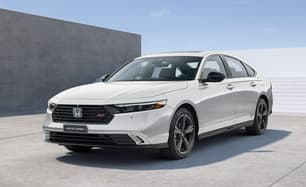
We’re family testing the new Accord, now offered in one highly-specified variant, to see if its new hybrid powertrain and design are worth a look in a world where the SUV is king.
In the near future we’ll look back at the 12Cilindri and say it’s a shame Ferrari doesn’t make cars like that any more. But if this is the last proper, naturally aspirated V12 Ferrari ever, it’s definitely a worthy one. One day you’ll enjoy seeing this in a car museum.
Note: CarsGuide attended this event as a guest of the manufacturer, with travel, accommodation and meals provided.
Will the new Honda Accord e:HEV RS topple the SUV throne? Unlikely, but it proves sedans can still haul the family around in relative comfort and style.
The new Accord drives stupidly well and offers great ongoing ownership costs, even if it's price tag is a little steep. It's hybrid powertrain also offers fantastic efficiency and that's a big win.
So, while I’ll admit a vehicle with such a massive, phallic bonnet and a cabin that seems to sit over the rear wheels is never going to be my favourite Ferrari, personally, it’s impossible to see how you could make a giant-bonneted V12-powered, heritage-hugging grand tourer look better than this.
Yes, it does look striking in pictures but in the flesh it is absolutely gob smacking, a thing of real beauty from some angles, and outrageous showiness from others.
Following one from behind, its massive, hunkered rear end actually brings to mind a Lamborghini Diablo, although I wouldn’t tell the many passionate Ferrari designers I met that.
They have a lot to say about why the 12Cilindri (and can we just discuss that name - yes, it is silly, in English, but when an Italian says it - Dodici Cilindri - with the properly poetical pronunciation, it really does make sense) looks as outrageously lovable as it does.
They reckon they were inspired by the exciting era of car design in the 1970s, but also by science fiction movies, and the desire to build something modern that also feels classic.
Take the black banded front end where the headlights live. “Our intent was to lose the human expression that cars have, to not have an actual human gaze, so it doesn’t have eyes.”
Of course, no car has actual eyes, but you get the idea, they didn’t want it to look like it has them, the way most vehicles do.
There’s also a lot of talk about dihedrals and monoliths. The 12Cilindri also has an incredible clam shell bonnet, which not only creates a sense of theatre when you open it but means there’s no cut line through the bonnet, adding to that sense of the whole front end being monolithic.
Then there are the many aero features, including two Batmobile-like flaps on the rear wing that activate to provide downforce when required - some 50kg of it at 250km/h.
I could go on and on, surely they did, but let’s just say this is one hugely impressive piece of car design. I know some people find it a little weird looking in photos, but they are simply wrong. It's beautiful in the flesh.
The design for the new Accord is powerful with a sexy silhouette that features a rear spoiler, black accents and sporty 18-inch alloy wheels.
The old chunky grille is long gone and at certain angles you almost get a Nissan 200 SX vibe, which is gorgeously retro and a refreshing take for Honda - which has been playing it safe for the last few years.
The interior is simply styled but looks timeless. The dashboard has clean lines and a featured honeycomb mesh that hides the air-vents. It's a feature which might not land with everyone but it adds personality.
The black upholstery looks plush and there are enough soft-touchpoints to make the cabin feel like it deserves a premium tag.
For what it is, a two-seat grand tourer/rocket ship, the space inside is perfectly functional, and there’s a large kind of overgrown parcel shelf where you can throw a back pack or your jackets if you need to.
You also get a 270-litre boot, which is, you guessed it, just big enough for a set of golf bags.
Keep in mind that there is literally no one on Earth who will buy this as their only car.
Access to the cabin is great thanks to wide door apertures but the Accord is a low car to get in and out of with its 134mm ground clearance. Expect a couple of grunts when parked on a hill!
Both rows offer ample legroom but the front enjoys the best of the headroom. A 183cm (6.0ft) friend was lumped with the middle seat and spent the trip dreadfully hunched over and uncomfortable. Save the middle seat for kidlets.
The electric front seats offer decent comfort for a longer trip but it's disappointing that only the driver’s side gets lumbar support.
The rear row enjoys well-padded seats and amenities, like retractable sunblinds, reading lights, two USB-C ports and directional air vents but it took a while for the back to cool down on hot days which my kid made known. Loudly.
Storage consists of a large glove box and middle console (which can accommodate a small handbag), a sunglasses holder, four cupholders, four drink bottle holders and two map pockets. There is also a dedicated phone tray but a few extra cubbies up front would be welcomed.
The boot offers plenty of space with its 570-litre capacity, which is great for the class, and you can also open up storage options with the ski-port door, if need be. The powered boot release is a handy feature.
The touchscreen multimedia system looks nice but is a pain in the butt to use until you set some time aside to get to know it. It’s just not intuitive but the screen is responsive and it's a bonus that you get the built-in sat nav and Google apps.
The new Accord gets wired and wireless Apple CarPlay and Android Auto but it took a few beats to get the wireless CarPlay to work.
The charging options are good throughout the car with four USB-C ports, two 12-volt sockets and a wireless charging pad to choose from.
So just how big are these big dollars we’re talking about, for a Ferrari 12Cilindri. Well take a big deep breath, because the Coupe we drove starts at $803,500 while the convertible Spider, which is also available for order is $886,800.
Yes, that does seem like a lot to just take the roof off, but we’re talking about customers who will likely pay over $1M for one of these cars by the time they’ve finished personalising and adding expensive options, so they won’t mind.
And, to be fair, aside from the Purosangue SUV, this is about as many square metres of Ferrari as your money can buy you - not to mention the most cubic centimetres of engine, at 6.5 litres.
There’s a fair slab of luxury inside with a new 10.2-inch central touchscreen that makes it easier to ignore just how poorly designed and difficult to use the haptic buttons on the steering wheel are.
This is where you can run your Apple CarPlay or Android Auto without the kind of frustrated screams you’ll hear in some Ferraris.
The driver also looks at his own lush 15.6-inch display while the passenger now gets an 8.8-inch screen of their own, which can tell them how fast the person next to them is driving, or allow them to choose music to distract them from the blurred scenery outside.
The 12Cilindri is also available with luxurious ventilated seats featuring massage functions, as well as heating and cooling. But if you don’t want that kind of frippery you can opt for the far sportier carbon-fibre bucket seats instead.
Similarly, you can choose to have a very snazzy looking tinted glass roof or a carbon-fibre one, if you're very serious about lowering your centre of gravity.
Those kind of choices actually speak to the fact that the 12Cilindri is very much trying to be two cars at once; a luxurious and powerful Grand Tourer in the tradition of gentlemen drivers exploring Europe by road and, effectively, a supremely fast supercar, although Ferrari admits it is no longer the ultimate vehicle in its range, because more modern hybrid heroes like the 296 GTB and SF90 are, today, much more impressive when it comes to pure pace.
The model line-up has been streamlined for the new Accord and there’s only one variant available, the e:HEV RS model.
The new Accord is well-specified but misses out on some luxurious extras most of its rivals sport, like heated and cooled front seats, a heated steering wheel and heated rear outboard seats.
Which might all seem superfluous at first but maybe not when you consider the new Accord's $64,900, before on-road costs, price tag sits just shy of the more expensive Skoda Superb top model, which is $65,590, before on-roads.
The next two rivals are more affordable with the Mazda 6 Atenza priced at $52,590 MSRP and the new Toyota Camry SL at $53,990 MSRP.
The standard equipment list for the new Accord includes leather-appointed upholstery, electric front seats, lumbar support for the driver's side and a panoramic sunroof.
There's also keyless entry and start, adaptive LED headlights, a powered tailgate and a host of high-end technology throughout.
That includes a new 12.3-inch touchscreen multimedia system with satellite navigation and built-in Google apps, wired/wireless Apple CarPlay and Android Auto, the Honda app (with over-the-air updates), a 10.2-inch digital instrument cluster, dual-zone climate control, a wireless charging pad and a 12-speaker Bose sound system.
This stupendous, trumpeting, mid-mounted 6.5-litre V12 (it’s mounted just beneath the windscreen, effectively, which actually looks a bit weird when you lift up that big clamshell bonnet, but makes sense in terms of mid-engine balance for handling) is a further development of what was already a fearsome powerplant in the vehicle that precedes this, the Ferrari 812 Superfast.
This new version also gets an eight-speed dual-clutch transmission, instead of the old seven-speed one, which theoretically provides better economy, as if the owners will care, but also provides “more driving enjoyment” as its shift times are now 30 per cent faster.
The V12 itself, naturally aspirated remember, now revs even higher, with maximum power of 610kW arriving at a very, very loud 9250rpm, just short of the 9500rpm redline.
What is incredible about that rev number is just how effortlessly and easily the engine will climb to those heights, repeatedly and addictively.
Ferrari says it’s also developed something called 'Aspirated Torque Shaping', which allows it to “sculpt” the torque curve in relation to engine speed and the gear selected, with 80 per cent of its 678Nm kicking in from 2500rpm.
The goal of this, on which it delivers, is to provide a sense of “seemingly endless acceleration”, particularly in third and fourth gear, where the car’s happy place exists.
All that grunt will hurl you to 100km/h in 2.9 seconds or from a standing start to 200km/h in 7.8. No, it's not the fastest power plant Ferrari now makes, but in terms of its intended goal of being the greatest naturally aspirated V12 ever, it's a 10 out of 10 effort.
There is no way that Ferrari will get away with making another engine like this, so it’s fitting that it’s going out on an operatic high note.
Our test vehicle has an electric continuously variable transmission and features a new self-charging hybrid powertrain that couples two electric motors with a 2.0L, four-cylinder petrol engine that combine to produce 135kW of power and 335Nm of torque.
Only being available in one powertrain may limit its audience but the combo delivers decent performance for a sedan of this size.
Move along, nothing to see here. Well, nothing you wouldn’t expect, except for the fact the Ferrari 12Cilindri is fully emissions compliant with the 2026 Euro-6-E standard. Incredibly. A ceramic catalytic converter is part of the magic, apparently, but a lot of effort has clearly gone into all areas of emissions.
Its CO2 emissions are claimed to be 353g/km, but then its fuel efficiency is a claimed 15.5 litres per 100km, and that’s just having a laugh.
Despite having a 92-litre tank, I was shown a predicted range of just over 415km when full, and was down to a predicted 300km to go after draining a quarter of a tank. Even EVs can do better than that.
The new hybrid powertrain means lower outputs and the official combined fuel cycle figure is just 4.3L/100km! Which is only beaten by the Toyota Camry's 4.0L/100km.
The on-test figure pops out at 5.1L/100km after doing a some urban stuff but mostly open-road driving. Which is where hybrids tend to be the least efficient, so the fuel usage is excellent.
Based on the official combined (urban/extra-urban) fuel cycle and 48L fuel tank, you should see a theoretical driving range of up to 1116km, which is a little less than the Toyota Camry but still an amazing range for a family car.
That range figure drops to around 940km using our real-world average consumption number.
To say that our first drive of the Ferrari 12Cilindri was impacted by nasty wet weather and standing water on slick and narrow European roads would be like saying that going outside naked when it’s snowing impacted your level of goose flesh.
For the first 30 minutes I was breathing like someone who’d just been pushed out of a plane with no parachute. When trucks came towards me, and when the rear wheels scrabbled madly to find grip - bringing to mind the whirling legs of the cartoon Road Runner - I breathed in so severely that I think I now have a pair of boxer shorts stuck in my chest cavity.
Fortunately, Ferraris have a 'Wet' setting, which is a work of genius, sensing the amount of grip you might not have and adjusting the power delivery to keep you safe. Remarkably, even in this mode, you don’t feel short changed on power in this wild V12-powered machine.
Unfortunately, the combination of my work ethic, professional pride and male ego meant that I could not allow myself to stay in Wet mode and would occasionally switch to 'Sport', when the rain eased up and the road almost dried out.
It was during these times that, after about an hour, I really started to gel with the Dodici Cilindri and found opportunities to enjoy its stupendously operatic soundtrack.
Much as the emissions laws have squeezed the engine, new sound regulations mean this V12 Ferrari must be quieter, in theory, than ever before, at least from outside.
But the sound designers have gone to a lot of trouble to make sure the sensational noise of this engine spinning its way to 9000rpm-plus finds its way into the cabin, and into your ears, and your very soul.
The temptation to give it plenty in the lower gears was thus overpowering and unending, but this grand tourer is so powerful that exploring the upper ranges in any gear means warping straight past speed limits, and sane behaviour.
Fortunately, the 12Cilindri has stupendous brakes, and while its extreme length - almost 5.0m - causes some nose lifting under acceleration and diving under hard stopping, the car’s mid-engined balance means you always feel planted and in control.
The steering is also super sharp and, while it takes some getting used to, the accuracy of its turn-in encourages you to push harder and harder. I had a fantastic time driving it through long sweeping bends, and a slightly more stressful time in sharp hairpins.
This Grand Tourer really is two cars in one, however, because if you leave the gearbox in Automatic it really does take all the effort away, riding its wall of torque and seemingly capable of driving at any speed from 40km/h to 240km/h in seventh or eighth gear.
It is far more fun, and frightening of course, to change the gears yourself, and explore those higher, scintillating rev ranges.
So, it’s a great car, a collector’s piece, because they’ll never make another one like it, and a moving piece of visual drama. The only problem I have with the 12Cilindri is it’s just not the best Ferrari a huge whack of cash can buy.
Indeed, the Ferrari 296 GTB is not only the best Ferrari I’ve ever driven, it’s the best car I’ve ever been lucky enough to sit in, and it’s more than $100K cheaper.
Apparently the thing to do, if you’re a Ferraristi, is to have one of each. Sounds good.
Power delivery for the new Accord is pretty punchy and, in most scenarios it’s responsiveness is great. But occasionally, when you’re getting up to speed, there can be a small lag before things kick in.
The Accord handles like a dream and feels firmly planted on the road in corners. Even in high winds, the car feels stable and sure of itself. Delightful.
The cabin is quiet and engine noise is at a minimum most of the time. Around town, the Accord sounds and behaves like an EV. Only once you hit the open road do you get some road noise but it never intrudes on chatting.
It might also be one of the easiest sedans to park and it's got a lot to do with the top-notch 360-degree view camera system and direct steering.
The Ferrari 12Cilindri has not been ANCAP tested, nor is that ever likely to happen.
As well as a new brake-by-wire system and improved brakes that promise shorter stopping distances, this Ferrari is packed with software designed to keep you on the road, including 'Side Slip Control' and too many levels of traction control to count.
It also features, as standard, adaptive cruise control, 'Surround View', 'Assisted Emergency Braking', lane keeping assist, 'Traffic Sign Assistance' and 'DDAW' or Driver Drowsiness and Attention Warning.
The new Honda Accord hasn’t been assessed by ANCAP yet, but it has eight airbags, which includes a knee airbag for the front passenger, but you miss out on a front centre airbag.
Standard active (crash avoidance) safety tech includes blind-spot monitoring, driver attention alert, rear occupant alert, forward collision warning, tyre pressure monitoring, rear cross-traffic alert, lane departure alert, lane keeping aid, traffic sign recognition, intelligent seatbelt warning, a head-up display, adaptive cruise control and a 360-degree camera system as well as front and rear parking sensors.
There are two ISOFIX child seat mounts and three top tethers. The rear seat is wide enough to easily accommodate two big booster seats but you might get lucky with three smaller seats.
Like all Ferrari’s, the 12Cilindri comes with a seven-year, unlimited km warranty and a free-of-charge seven-year maintenance program covering all regular maintenance for the first seven years of the car’s life.
Service intervals are once a year, or every 20,000km.
The Accord comes with a five-year/unlimited km warranty, and an eight-year battery warranty, which are now normal terms for the class.
You get a five-year capped priced servicing program and it costs just $199 per service, which is very competitive.
Servicing intervals could get annoying if you put a lot of kays on your car as they're set at every 12-months or 10,000km, whichever occurs first.