What's the difference?
You’re getting flooded with new electric mid-size SUVs from China, I know. But if you’re struggling to recall them all, just remember – this is the good-looking one.
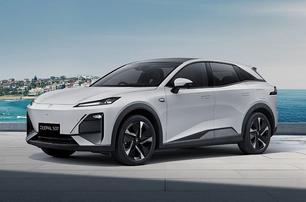
It’s the Deepal S07, the spearhead for the Deepal brand's new presence in Australia, and I reckon it looks damn sharp.
But is there substance to match the style? And can it take on the likes of the Kia EV5, Tesla Model Y and XPeng G6?
Let's find out, shall we?
There are good surprises and bad surprises. Like the time I was driving my ute and the steering wheel came off. Bad surprise. Or the time the chicken shop accidentally gave me a large chips when I paid for a medium. Good surprise. The Haval H6 also surprised me. And it was up there with a large chips type of surprise.
See, my expectations of Haval have been of a brand which is really big in China where its owned by Great Wall Motors, but can’t keep up with the likes of Toyota and Mazda when it comes to driving and styling. Instead, their strength seemed to be just value-for-money.
Surprise! The new generation H6 isn’t just good value-for-money any more. It’s still really well priced but it has stunning looks, too. But that wasn’t the biggest surprise.
If you are considering a mid-sized SUV such as a Toyota RAV4 or Mazda CX-5, I strongly suggest you widen the net and consider the H6, too. Let me explain.
The Deepal S07 has the makings of a great family friendly EV, but with some quirks that really need to be ironed out.
The H6 could be the turning point for Haval in Australia. The brand’s first big success that changes the way Aussies view this Chinese carmaker. The H6’s great value and stunning looks will win over many but add an excellent warranty, advanced safety tech, plus the surprisingly good, and you have a package that appears right up there with the likes of the Toyota RAV4 and Mazda CX-5.
The sweet spot of the range would have to be the Lux - the car I tested with its leatherette seats, privacy glass and dual-zone climate control.
If you’re left a little underwhelmed from the bland same-sameness of so many new SUVs, I reckon you’d like the Deepal S07 in the metal. Because boring it ain’t.
It’s sharp and purposeful and full of lovely creases and angles, and it stands out on the road — especially in this 'Sunset Orange' colour.
Deepal says it was designed in Turin, Italy, but I'm not sure that matters much. I mean, being in Italy doesn’t guarantee design success – just look to the modern Lancia range for proof – but I guess it’s something for a newish Chinese brand to hang its hat on.
Inside, the design is lovely, too. I like the materials used, the extended dash and the size of the central screen (though it tilting towards you or the passenger is probably overkill). And the flat-bottom wheel is a nice touch.
I'd like to know where the air con was designed, though. It feels massively underwhelming on a piping hot Sydney day. The main outlet is at the bottom of the dash, which is perfectly positioned to chill absolutely nothing, and you can’t really change the direction of the vents, either. Or, at least, I couldn't figure out how to.
This new generation H6 is ridiculously good looking. So much so that my Dad thought it was a Porsche when I arrived to pick him up. But in saying that Dad also has a glass coffee table supported by a golden naked lady and thinks I work in a car dealership, despite me explaining that motoring journalism is an actual job.
He’s not wrong, for once. Well, it doesn’t look like a Porsche, but I can see what he means given the way the LED strip across the tailgate lights up and connects with the tail-lights either side.
I don’t know what kind of deal with the devil the H6’s designer made but there isn’t an angle from which this SUV looks nothing short of beautiful. There’s the flashy but not over-the-top grille, the sleek headlights, and the smooth lines in profile which wrap around to the curvaceous back end.
Havals in the past have seemed low quality and unfinished, but this new H6 seems the opposite.
The same goes for the minimalist cabin. Those screens house almost every function except for the climate control and that clears the dashboard of buttons.
This cabin is a premium design with a floating centre console and metallic trim. Stepping up to the Lux from the Premium adds 'leatherette' upholstery, a leather steering wheel and then the Ultra takes the high-end feeling further with a 12.3-inch media display and a panoramic sunroof.
As for the dimensions, the H6 is larger than most mid-sized SUVs but smaller than a large SUV at 4653mm end to end, 1886mm wide and 1724 mm tall.
The six exterior colours are, 'Hamilton White', 'Ayres Grey', 'Burgundy Red', 'Energy Green', 'Sapphire Blue' and 'Golden Black.'
At just over 4.7m long and 1.9m wide, with a 2.9m wheelbase, the Deepal is a sizeable proposition, which means good passenger room and decent luggage space.
Starting at the boot, you’ll find 445 litres with the rear seats in place, but with the seats folded flat that number grows to 1385 litres. There’s a frunk up front, too, that holds another 125 litres.
In the back, the room is ample for full-size adults. When sitting behind my own 175cm driving position, I had more than enough knee and headroom to sit comfortably.
There’s also a heavy pulldown divider that’s home to twin cupholders, and there are two more up front, and USB connection points galore. Bonus points for the back seat riders being able to adjust their own air temps, too.
The H6 is cavernous for a mid-sized SUV with large and wide seats up front and excellent leg and headroom in the second row. The H6 doesn’t come with a third row which is shame because there’s room for one.
A 600-litre cargo capacity is big for the class and cabin storage is good with two cupholders in the second row, another two up front, a large space under the floating centre console, although the door pockets could be better.
Second rowers will be pleased with directional air vents back there, plus two USB ports. There are another two USB ports either side of the floating centre console, too.
The leatherette upholstery in the Lux I tested was easy to keep clean and would suit families better than the cloth material used in the Premium.
You’re going to notice the high load lip on the boot and for people as tall as me (191cm/6'3") the opened tailgate and your head may meet occasionally. Still the H6 is super practical.
It’s easy picking in the Deepal range, given there’s one model with just the one trim level, simply called the S07.
It’s currently $58,521 drive-away in NSW, or $53,900 before on-road costs. And that’s probably about right. You can get an entry-level Kia EV5 for $56,770, though with less range and kit, or the XPeng G6 Standard Range for $54,800, though that’s before on-road costs. The new Model Y is a bit of a jump, at $63,400 on the road.
For that you get 19-inch alloys, a fixed sunroof with a sun shade, LED lighting all around and a powered boot.
Inside, there’s a giant 15.6-inch touchscreen that can swivel towards the driver or the passenger, wireless Apple CarPlay and Android Auto, a 14-speaker Sony stereo and wireless device charging.
There’s dual-zone air con, the seats (heated and ventilated up front) are trimmed in synthetic leather and there’s an interior camera with gesture control, so you can use a kind of sign language to take a photo, control the stereo or answer or hang up the phone. It's weird and makes you look like a turkey, which is why I used it once and once only, but you might like it.
You’re saving a decent amount of moolah choosing a Haval H6 over, say, a Toyota RAV4, Mazda CX-5 or Nissan X-Trail. The H6 entry-grade is called the Premium and lists for $30,990 drive-away, while the mid-range Lux is $33,990 driveaway.
Both come in front wheel drive only. If you’re after all-wheel drive you’ll need to step up to the top-of-the-range Ultra for $36,990 drive-away, or pay $2,000 less and have it in front-wheel drive.
In comparison the RAV4 and CX-5 ranges start more than $3K higher than the entry-grade H6 and don’t get the same level of features. Let me show you what you get for your money.
Coming standard on the Premium are two 10.25-inch displays with Apple CarPlay, six-speaker audio, digital radio, air-conditioning, proximity key with push-button start, a reversing camera, paddle shifters, LED headlights and 18-inch alloy wheels.
Stepping up to the Lux adds dual-zone climate control, privacy glass, power adjustable driver’s seat, the front seats are also heated, leather steering wheel, 360-degree camera and roof rails.
The Ultra brings in a 12.3-inch media screen, power adjustable front passenger seat and both front seats are now heated and ventilated. There's also wireless charging, a head-up display, a heated steering wheel, panoramic sunroof, an electric tailgate, and auto parking.
That’s incredibly good value. Normally things that are cheap (like a Jetstar flight) offer nothing in return (like a Jetstar flight). Yep, nobody is going to accuse you of being ripped off here.
The S07 is powered by a single 160kW/320Nm rear-mounted electric motor and it's rear-wheel drive. That’s enough output, says Deepal, to push the S07 to 100km/h in 7.9 seconds — not bad for a two-tonne-plus SUV.
The same four-cylinder turbo-petrol engine is in all three grades. It’s a 2.0-litre and makes 150kW/320Nm.
This engine had no problems pulling the H6 around when I tested it with my little family onboard with good acceleration and smooth shifts from the seven-speed dual-clutch automatic transmission.
When pushed hard the four-cylinder responds well, but it’s on the noisy side.
As mentioned at the start of this review only the top-of-the-range Ultra grade gives you choice of all-wheel drive or front-wheel drive. The Premium and Lux are front-wheel drives only.
The car we tested was the front-wheel drive Lux, but we’ll be able to review the all-wheel drive version when it arrives in our garage soon.
On paper the all-wheel drive Haldex system in the H6 looks promising and in this generation the SUV has a rear differential lock for better off-road capability. That said, the H6 is not an off-roader in the Toyota LandCruiser sense, and you should keep your adventures in it mild rather than wild.
There’s no diesel in the H6 line-up, nor will you find a hybrid variant or and electric version of this SUV at this stage.
Braked towing capacity is 2000kg for all-wheel drive and front-wheel drive H6s.
The 79.97kWh ternary lithium battery delivers a claimed driving range of 475km. It is, however, set up for just 92kW DC fast charging, which means going from 30 to 80 per cent will take just over half an hour. That’s at an appropriate DC fast charger, of course. Your 7.0kW AC home wallbox will take 11 hours, or eight hours if you can draw 11kW.
Haval says that after a combination of open and urban roads the 2.0-litre turbo-petrol four-cylinder should use 7.4L/100km in the front-wheel drive cars and 8.3L/100km in the all-wheel drives.
In my testing of the front-wheel drive I measured 9.1L/100km at the fuel pump. That was after an even split of motorway and urban running.
Thirsty work considering most of the time it was just me and an unloaded car. Add a family of four plus holiday gear and you can expect that mileage to be worse.
It’s here that the H6 is showing a weakness in its offering by not having a hybrid powertrain in its Australian range.
Binging, bonging safety systems aside, the Deepal S07's drive experience is relatively peaceful.
It can feel heavy, and isn't dynamically perfect through tighter bends, and even in the city the suspension - which does a good job ironing out most road imperfections - can clang over sharper, bigger stuff, especially if you're too enthusiastic with a speed bump.
But provided you're not asking too much of it on some twisting pass, and you're gentle enough over really big bumps, the S07 behaves much as you'd expect a big, wafty electric SUV might.
That is, with a smooth flow of power, steering that isn't overly direct, but not overly sharp either and with comfort the order of the day.
There are some annoying quirks, though, that would seem easy enough to iron out. The safety systems are often intrusive – and other Chinese brands can get them to be far less annoying – but I also found the tech and user interface annoying and fiddly, which again would be easy enough to fix.
I’m still in shock. This is the biggest surprise. The H6 I tested was effortless to drive, with a comfortable and composed ride. I was not expecting it, not when most Havals I’ve piloted in the past have disappointed when it comes to the driving bit.
Sure, the engine isn't overly powerful, but it's responsive, and the dual-clutch transmission shifts smoothly whether driving in slow traffic or at 110km/h on the motorway
Sharp speed bumps taken a bit too fast in the front-wheel drive Lux I tested reveal only modest suspension travel, causing a reverberating ‘bang’ as the shocks and springs react. I’ve experienced the same thing in many cars I’ve tested – even properly prestige ones.
This though is one of very few complaints I have about the way the H6 drives, for the most part this SUV performs remarkably well with a (high) level of refinement I seriously wasn’t expecting.
I can’t tell you what the all-wheel drive version of the H6 is like to drive having only tested the front-wheel drive version, but we’ll no doubt have one in the CarsGuide garage soon.
Handing out a low score for a five-star ANCAP car seems harsh, but bear with me.
All the major bases are covered, the standard spec including auto emergency braking (AEB) with car-to-car and 'vulnerable road user' (pedestrian, backover, cyclist, motorcycle) detection, blind-spot monitoring, lane-departure warning, lane keeping assist and more. And there are front, front side (chest), side curtain and front centre airbags.
But the single biggest drawback of the Deepal experience has to be the most annoying, infuriating active (crash-avoidance) safety systems I’ve ever come across. Honestly, it has to be experienced to be believed.
For one, whenever I wear sunglasses it gives me an “occlusion” warning, which I genuinely had to Google, but that’s nothing compared to the driver attention monitor, which seems rigged to go off if you so much as blink, sending chimes binging and bonging throughout the cabin, increasing in number like a bomb about to go off.
And if you have to turn them off every time you get in, you have to wonder if they have any business being there at all.
So yes, it wears a maximum five-star ANCAP rating from assessment in January this year, but it’s a tree falling in the forest, kind of vibe, like if a car has every active safety system known to man, and you want to switch them off every time you get in, is it any safer than a car that doesn’t have any systems at all?
Is the Haval H6 safe? Well the H6 hasn’t been given an ANCAP rating yet, but this new generation car looks to be equipped well with advanced safety tech across all three grades.
All H6s come with AEB which can detect pedestrians and cyclists, blind spot warning and lane change assistance, traffic sign recognition, lane departure warning, lane keeping assistance, and rear collision warning.
The Lux adds adaptive cruise control, while the Ultra brings rear cross-traffic alert with braking, and an 'Intelligent Dodge' overtaking system.
Along with all that tech there are seven airbags on board, too. And for child seats you’ll find two ISOFIX points and three top tether anchor mounts.
The S07 is covered for seven years or 160,000km, while the battery is covered for eight years or 240,000km.
Servicing is required every 12 months or 10,000km, and the brand’s capped-price servicing program covers the first seven services (or eight, if you include the initial 5000km check-in, which is free), for a total $2981.43 (or an average of $426 per paid workshop visit).
The H6 is covered by Haval’s seven-year/unlimited kilometre warranty. Servicing is recommended every 12 months or 15,000km, although the first service is required at the 10,000km point, then 25,000km and so on. Servicing is capped at $210 for the first service, $280 for the second, $380 for third, $480 for the fourth and $210 for the fifth.