What's the difference?
Hybrid campers tread the line between caravan comfort and camper trailer-manoeuvrability and are touted as somewhat of a new thing; almost an evolution of comfort as more people look for a perfect camping experience.
But camper-trailers like the Cub Longreach LE prove that the concept has been around for decades.
It hasn't always been called the Longreach, but this high-walled, super-sized, off-road camper-trailer was one of the first to offer caravan-like comfort and space in a product that'll go anywhere off-road*. (* In terms of reasonable use and having obviously scrutinised your camper's warranty conditions before setting off to make sure you're covered for that sort of usage.)
The 2019 LE takes the comfort levels even further, so we grabbed one for a night to check it out.
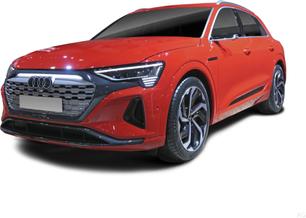
Late last year, Audi gave its large SUV range a freshen up by stocking its showrooms with the Q8 55 e-tron model; a rebadged, facelifted full-sized electric SUV designed to go head-to-head with things like the Mercedes-Benz EQE.
As it turned out, the Q8 55 was destined to become the mid-spec model and now Audi has book-ended the Q8 range with the entry-level Q8 e-tron 50 and the flagship SQ8 e-tron.
And while the previous 55 model was available in Sportback and SUV (station-wagon) forms, the latter has now been dropped.
That leaves the 50 model as an SUV only, while the headline act – and the vehicle we’re testing here – the SQ8 can be had in either body style.
The reason we’re concentrating on the biggest, baddest, most expensive variant, is that’s precisely what Audi is tipping the Australian market will gravitate towards.
In fact, as many as 70 per cent of Q8-platform sales could be the SQ8. That’s in line with the Australian market’s fondness for spending up big on the sportiest version of many makes and models, but it remains a bit of an anomaly in the rest of the car-buying world. Nevertheless, it remains the reason we’re focussing on that variant here.
Of course, electrification has never been more important for a carmaker operating here since the New Vehicle Efficiency Standard was announced recently, and even though the Q8 range will be a small percentage of Audi’s sales here, any EV represent progress towards meeting corporate targets.
This isn’t the camper for everyone – my guess is that plenty of people look at this and find it too sparse, too basic. I kinda get it.
But there are very few campers which offer the same amount of open, internal space, or that are as easy to set up.
That the Longreach, albeit with a few different names, has lasted so long on the Cub Campers' product roster is a testament to its versatility and ability to accommodate a small family on off-road camper trips.
It's arguably one of the forerunners of the hybrid camper scene, and it's now starting to evolve with campers' desires for more comfort.
There’s not doubt large, luxury SUVs like the SQ8 have a lot to gain from electrification in terms of refinement, performance and running costs. The flip-side is the extra mass of the batteries and other electrical gear but, in this case at least, there might be a silver lining there in the way the hulking SUV manages to force the air suspension into agreeable submission.
For our money, the station-wagon variant is the one to buy. It’s cheaper to begin with and with its greater luggage capacity, it simply makes more sense. Which is not to say the Sportback version is compromised in luxury, safety or performance terms, but if practicality doesn’t figure highly in any purchasing decision involving an SUV, then we sense a great disturbance in the force.
Regardless of what’s powering the SQ8, the driving experience is vintage Audi and that’s a good thing, and even that massive kerb mass can’t blunt the sort of chassis dynamics and feedback we’ve come to expect from the brand.
Some buyers will possibly baulk at the projected range and the Audi’s appetite for electrons, but when lined up side-by-side with its major competition, the SQ8 is every chance to emerge as the one to buy. We’ll need a proper comparison for that, of course, but the Audi should be on any short-list of big, deluxe, electric SUVs.
Note: CarsGuide attended this event as a guest of the manufacturer, with accommodation and meals provided.
For a rear-fold camper-trailer, the space inside couldn't be more practical. The long body and high sides mean that when the camper is open and set up, it has a lot more space than most. Behind the bed, for instance, there is enough space for Cub to have fit a small dinette.
The dinette has cushioned benches for two and a swivel table that can also become a counter over the rear floor area.
The camper's length also means that the rear floor area is massive. It is easily big enough to lie a couple of kids on, or if your nest is empty, to set up some camp chairs and a table to enjoy a covered living area.
It is still a rear-fold camper-trailer, though so, despite the fact it has nearly twice the space of other hybrid-style campers, it's very sparsely furnished. There's no internal kitchenette or anything like that.
There’s absolutely no question Audi knows a thing or two about cabin layouts and ergonomics. Like other contemporary Audis, this one features the fully customisable Virtual Cockpit with a huge range of possible displays and layouts. And again, as usual, it all works seamlessly and efficiently.
The head-up display is amazingly clear and the twin touchscreens divide the car’s tasks logically. Yes, there’s a lot going on, but compare the way the Audi applies logic to the menu strategy to the scatter-gun approach of many others, and you can see that plenty of thought has gone into this stuff.
Also, it goes without saying, of course, that there are multiple charging points as well as plenty of connectivity with good wireless connections available. That includes wireless phone changing.
The front seats are sporty but not too firm, even if they do give you a bit of a squeeze thanks to high bolsters and lots of contouring. The rear seat is likewise firm initially and is really best for two backsides thanks to the sculpting of the rear bench.
That said, it will accept a centre passenger, but that seat will be the last one occupied. Rear legroom – important in a car like this - is good, there’s enough room for your feet under the front seats and headroom, even in the allegedly racier looking Sportback, is ample if not huge.
The panoramic sunroof means there’s plenty of light to counter the dark interior colours, and the only real surprise is the amount of hard plastic on the upper part of the door trims, just below the glass. Given the acres of much plusher trim farther down the door, this seems a bit odd.
The other comment we’d make is that the SUV body simply makes more sense in terms of load carrying (569 litres plays 528) and makes more of the SUV’s claim to practicality.
The Sportback is also a bit of an acquired taste and while it’s not the first SUV-coupe mash-up we’ve seen, to many eyes, the combination never looks right. Coupe on stilts? Surely, not for everyone.
On that subject of practicality, the SQ8 bucks the trend in EVs by being able to tow up to 1800kg with a braked trailer. The factory towing pack is a $2180 option.
Cub Campers are famously good to tow, and even the largest of them lives up to the reputation.
As big as it is, the Longreach LE is quite light thanks to the effort Cub puts into engineering. As a result, it's not a strain, even for older dual-cabs like the D22 Navara.
And because it isn't any higher or wider than a modern SUV, there was very little wind-drag or buffeting as we cruised along the highway.
Cub developed the camper's Australian-made and -designed independent, coil-spring suspension and the set-up yields excellent ride in any conditions.
For the LE, Cub has added an extra shock-absorber each side to improve its performance even on the most corrugated roads.
An AL-KO off-road ball hitch is standard but can be upgraded to the Click-Lock version if you'd prefer that or need a more low-profile hitch.
In reverse, the long drawbar makes it an easy camper to manoeuvre around a campsite, plus it has enough size that the tow-vehicle driver never really loses sight of it while positioning it.
Almost a thousand Newton-metres (not to mention 370kW) infers some pretty serious performance and so it is.
When you press down on the throttle pedal, there’s an instant and somewhat furious response from the driveline. And just as the Audi’s touchscreens have been calibrated to respond on a human scale, so too have the major driving controls.
That said, while there’s more acceleration on tap than most drivers will ever have experienced, the SQ8 doesn’t move forward with quite the irresistible force the bald numbers might suggest.
And that’s purely down to the thing weighing the wrong side of 2.6 tonnes. Sure, Audi claims 4.5 seconds and that seems fairly believable, but it’s not quite as ballistic as some other current EVs.
Still, that’s hardly its mission in life, anyway. Top speed, in the interests of thermal management, has been limited to an entirely understandable – not to mention adequate - 210km/h.
But one thing all that kerb mass has (arguably) done is make the suspension work properly. Speaking purely personally, until I’d sampled the SQ8 over a variety of bitumen joins, potholes of all sizes and even clattering level-crossings, I was yet to drive a passenger car on air suspension that worked as well as the brochure claimed.
Historically, air suspension has been okay on smooth roads and even sometimes bigger lumps and bumps. But it usually fell short of expectations on small amplitude, high frequency stuff that made the suspension judder and stutter. Not this Audi.
Even on the 'Dynamic' setting, the ride never falls beyond plush although you will notice a little more stiffness being dialled into it by the computer.
The best advice is to leave it in the 'Comfort' setting where there’s still lots of roll and pitch control, yet an even higher degree of suppleness that fundamentally refuses to be beaten by a lack of post-Covid road maintenance. And this from a car that rides on 22-inch wheels and tyres.
Perhaps compressed air doesn’t scale in a linear manner, making the addition of a couple of tonnes of sprung mass a positive, rather than a negative.
The other thing Audi has done well to maintain is that almost indefinable corporate steering response.
It’s kind of muted this time around in terms of its ability to talk to you, but there’s still an over-arching Audi-ness to it with an instant pointiness without the frenetic feel often associated with a quick ratio and sticky tyres.