What's the difference?
Cub Campers is Australia’s oldest camper-trailer manufacturer and one of the oldest businesses in the caravan and camping industry, having just celebrated 50 years of operation in 2018.
The company can lay claim to inventing the soft-floor camper trailer, pioneering the rear-fold and championing off-road campers when everyone else was concerned with the on-road market. Amongst all that, though, it was late to the game when it comes to forward-fold campers, not releasing the Frontier until early in 2016, well after the flood of Chinese manufactured versions became immensely popular. So why did Cub wait so long and was it worth it?
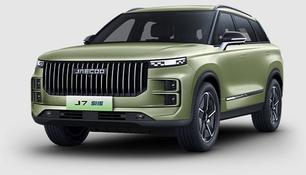
Jaecoo has entered the medium SUV space with the J7, pairing a plug-in hybrid powertrain with a sharply positioned price tag. On paper, it’s a compelling formula; electrified efficiency without the 'premium'.
But the J7 doesn’t arrive in a vacuum. It sits above its smaller sibling, the J5, and goes head-to-head with some increasingly polished rivals - the mechanically related Chery Tiggo 7 Super Hybrid, GWM Haval H6 GT PHEV, MG HS Super Hybrid and now the BYD Sealion 5. And all of them are chasing the same buyer.
So the question isn’t just whether the J7 is good value. It’s whether it carves out a clear identity of its own in a segment that’s quickly filling up.
All in all, the Frontier is the best forward-fold camper on the market, although it is also the most expensive. If you were making a buying decision purely based on features, you’d probably look elsewhere, but if you are prepared to pay a little more because this camper-trailer is Australian made, you get a very functional camper that’s easy to set up, reliable, strong and light.
The Jaecoo J7 SHS Track enters the medium SUV segment with a sharp drive-away price and generous equipment list. The ongoing ownership benefits add strong value but the on-road driving experience needs some finessing and the cabin doesn't quite hit every mark for practicality. Although it's ‘on track’ to make waves in this corner of the market, it hasn't yet carved out an iron-clad niche for itself. It's worth a look but it's not class-leading.
The real appeal of a forward-fold camper-trailer is the internal configuration. Because the bed folds out over the front of the camper, the trailer body is configured with a wrap-around lounge and dinette area, that also converts into a bed. It brings a certain level of caravan comfort to a camper-trailer-sized package. Cub’s execution is quite good. The lounge is comfortable and the dinette table is highly adjustable up and down or around and around. It converts into a bed more simply than any other on the market I’ve seen.
The downside of the forward-fold concept is the quantity and access of storage. Very little of the internal storage is easy to get to, and in truth there’s very little of it. That’s what happens when you put a couch in a trailer, sorry. There are hatches under the seats, but even they are limited by the slide-out kitchen and battery box across the back, plus, they’re not as easy to get to as a drawer. It’s the same in every manufacturers version, though. However, the Frontier has one unique features that makes it stand out – a series of pigeon holes under the foot of the bed which provide the only easy-to-access internal storage in any forward-fold I’ve come across so far.
Up front, the J7 Track delivers where it matters. The electric front seats offer heating and ventilation functions and feel supportive over longer drives. There’s enough width and shoulder room to avoid feeling hemmed in.
Access is good with wide door apertures and an easy step-in, step-out height from both rows. In the rear, the available space is generous, and the thick seat padding and supportive backrests will make longer journeys quite comfortable. The flat floor also means the middle seat isn’t automatically the punishment position for an adult.
Storage has been thoughtfully considered. Up front, the large centre console shelves make it easy to keep clutter contained, while the dual-opening middle console is deep enough to swallow a small handbag. There’s also a small side pocket beside the driver that’s ideal for keys or a garage remote.
Rear passengers will enjoy four device pockets, as well as a couple of map pockets. There are two cupholders and drink bottle holders in each row, as well as good-sized bins in each door.
With all rows in use, the boot has up to 500L of capacity, and the flat loading floor makes it easy to slide larger items in and out. Overall, it’s a usable and practical space for gear storage but you'll notice the lack of a powered tailgate as there isn't a dedicated handhold on the outside of the lid to easily open the boot.
There's also no charging ports or power outlets in the boot, which feels unusual for a plug-in hybrid. You have to make do with a tyre repair kit rather than a spare wheel but that's not unusual in this corner of the market.
The individual charging options are functional with a single USB-A and C port offered in each row and a 12-volt socket up front but you miss out on a wireless charging pad in this grade. The multimedia touchscreen is responsive and the layout is fairly intuitive to use. However, the lack of physical controls for simple adjustments like side mirror positioning or climate control can become frustrating. Some functions are just better served by buttons.
The wireless Apple CarPlay and Android Auto operate smoothly and the CarPlay has maintained a steady connection this week. The built-in sat nav is also easy enough to use.
The Frontier is quite good under tow. Cub designed and manufactures its own coil-spring independent suspension and has paid quite close attention to the balance and dynamics of the trailer.
As it’s not overly heavy, it’s not a handful, even on the beach, and behind the Mitsubishi Triton I tested it with, it was barely a struggle. On the road, the camper is well behaved, easy to see over and around and because it’s not very long, it’s not very daunting.
This is where the J7 Track feels less resolved. It's not fundamentally flawed by any means but it's not as polished as it could be.
With a charged battery, acceleration is strong and immediate, and there’s enough punch for hills and confident overtaking. Even when the battery is running low, the drop in output doesn’t feel as dramatic in real-world conditions as the standalone engine figures might suggest. You won't win any drag races but it remains competent. It just loses some of the initial punch when accelerating.
Steering is light, which makes urban manoeuvring easy, and the suspension leans toward the softer side. Around town, that translates to a comfortable and compliant ride. Push it harder through bends, though, and the body control starts to feel a little loose.
Highway refinement is another area where there’s room for improvement. Road noise becomes noticeably more present at open-road speeds, although it remains quiet around town.
Visibility out the front and sides is good, and the driving position gives you a fairly commanding view of the road. I don’t feel like there are any large blind spots from my driving position.
There are three levels of regenerative braking, and running it in the strongest setting does a good job of harvesting energy. However, even on the lowest setting, the braking response feels abrupt. At low speeds when the system tends to remain in EV mode, the transition can feel lurchy.
The 360-degree camera system is clear and outside of the heavy-handed regen braking, the J7 is straightforward to park. Just be prepared for passengers, especially opinionated children, to comment on the body movement.