What's the difference?
Citroen, the famous French manufacturer founded in 1919, has achieved global acclaim for daringly bold and brilliant design and engineering that was often ahead of its time.
Despite this, the double chevron badge has suffered a tumultuous ride since the 1970s, including a lifesaving merger with Peugeot in 1976, followed by another near-death experience for Peugeot-Citroen (PSA Group) in 2012.
Since then, though, major restructuring has seen a remarkable turnaround. Under Inchcape Australasia, which took over PSA’s local distribution in 2017, Peugeot Citroen Australia has a fresh focus on light commercial vehicles, with the venerable Citroen Berlingo holding centre stage with its class-leading payload capacity.
Even so, with less than seven per cent of the local small van segment (under 2.5 tonne GVM), the Berlingo’s market share is dwarfed by French rival Renault’s Kangoo, with 25 per cent, and VW’s kick-butt Caddy, which now commands more than 65 per cent.
However, with an all-new Berlingo range just around the corner and super deals being done with the current model in run-out mode, we put one to work for a week to see if it would be worth a trip to your local Citroen dealer to bag a bargain.
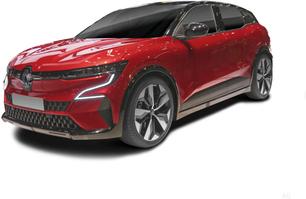
The hotly anticipated Renault Megane E-Tech has arrived on our shores but we're only getting the mid-spec variant for now.
Renault's newest EV is related to the well-known Megane in name only because it has been built from the ground up as an EV. It’s not a hatchback, like its namesake, either, rather a crossover, which means it’s a bit lower than some of its small SUV rivals.
It faces firm competition in the likes of the Hyundai Kona Electric, Volvo C40 and newcomer bZ4X from Toyota. In this review we'll see how Renault's cutest EV handles life with my family of three.
Given Citroen’s proud heritage of innovation, the Berlingo has a few unique and quirky features, but is overall quite conventional in its design and performance (though in a well thought-out and practical package).
With sub-$20K run-out pricing, it should have plenty of appeal for commercial customers, as it costs much less than its major rivals yet offers a superior payload.
The design for the Renault Megane E-Tech is top-notch and the eco-conscious footprint is even better. It’s an easy and comfortable car to be in but the price is a smidge too high in my opinion when you consider there’s currently only one choice for us Aussies and it’s a mid-spec variant at that. It also misses out on some items its rivals have but is a solid EV to consider for urban dwellers.
The smallest Berlingo rides on a front-wheel-drive, 2728mm wheelbase with an overall length of 4380mm and width of 1810mm. Compared to the Caddy, the Berlingo is 46mm longer in wheelbase, 28mm shorter and 37mm wider.
Suspension features MacPherson struts up front and a tidy trailing arm arrangement at the rear, which is well designed for carrying heavy loads. Steering is via power-assisted rack and pinion and four-wheel disc brakes provide reassuringly strong braking. The turning circle is a compact 11.0 metres.
The cabin and cargo bay are separated by a removable grey vinyl screen, with a large clear section in the upper half to allow rear vision for the driver. Citroen says this screen is primarily to reduce air-conditioning requirements, which in turn reduces the A/C load on the engine to optimise performance and fuel economy.
It’s also claimed to (slightly) reduce noise intrusion from the cargo bay, which is mostly caused by tyre roar through the rear wheel arches. However, Citroen has taken a commendable step in trying to muffle these noise paths by surrounding each wheel arch with large plastic mouldings which are claimed to contain sound-absorbing material.
Glazed rear barn doors with wiper/washer and 180-degree opening, plus solid sliding side doors, are standard issue. The barn doors also feature an asymmetrical design (one wide, one narrow) to off-set the centre pillars and reduce the large blind spot they create in the rear-view mirror.
The cabin layout is simple and functional with decent-sized door mirrors, although the kerb side would benefit from a wide-angle lens due to a big blind spot for the driver created by the solid side door. The fold-down inboard arm-rest is a nice touch and the cabin is quite spacious, although tall drivers will find the left footrest too high for a comfortable leg position.
The E-Tech’s plump body panelling gives me some cute marshmallow vibes from certain angles but there are enough features to keep it looking slick, like the fun LED headlights, massive 20-inch alloys and optional two-tone paintwork.
I’m also a fan of the door handles on the E-Tech as they add some nice focal points, because the front has auto-flush handles that pop out on approach and the back door handles are positioned on the C-pillar.
If you're eco-conscious the E-Tech ticks the box because Renault has designed it to be 90 per cent recyclable.
The body is made of aluminium and can be reformed and shaped into new products at the end of its life. The interior materials are made from recycled fabrics and trims; even the lithium-ion battery is free from any rare earth minerals.
Head inside the cabin and the grey knit trims and upholstery on the seats, doors and dashboard creates a cabin space that feels warm and inviting. It's a similar feel to the Polestar 2 - simple but refined.
Although, with my kid around I have higher anxiety about dirtying them!
The Berlingo’s 1433kg kerb weight and 2150kg GVM would normally result in a 717kg payload. However, Citroen’s official payload figure is 133kg higher, at a class-leading 850kg, because PSA calculates kerb weights differently to the norm (typically French). So, 75kg of that can be carried on the roof when shared across three racks with the mounting points provided.
Its robust 3250kg GCM allows up to 1100kg of braked trailer to be towed without any reduction in payload. Citroen states that this GCM applies up to a maximum altitude of 1000 metres above sea level, with a 10 per cent reduction for each additional 1000 metres. So keep those stats in mind if you’re heading for Mount Kosciuszko.
The cargo bay, which offers 3.3 cubic metres of load volume (or 3.7 with passenger sear folded), has a floor length of 1800mm and a roomy 1229mm between the wheel arches. This means it can carry one 1160mm-square standard Aussie pallet, easily loaded with a forklift through the rear barn doors and held in place by six tie-down points. There’s also internal lighting, a 12-volt outlet and sturdy ladder-frame cargo barrier behind the driver. Nothing for the passenger, though.
Cabin storage options include two pockets and a combined cup/bottle holder in each door. There’s also a large lidded compartment and two open bins set into the dash-top, two circular storage slots in the centre display plus two smaller pockets below and beside the gearstick; the latter a slim-line 'holster' complete with USB port.
The single glovebox has two-tier storage, and there’s a full-width cabin shelf overhead. The centre console, which is a module that can be unlocked and removed if you want floor space between the seats, has a cup holder at the front, a big internal storage area with sliding lid in the centre and two cup/small bottle holders at the rear. There’s also lots of vacant space for additional storage under both seats.
The E-Tech’s cabin is fairly roomy up front with plenty of head- and legroom. The front seats are super comfortable with powered lumbar support and I wouldn’t mind them not being powered if the price point was a bit lower.
The rear seat is comfortable enough once you get seated but the top of the door apertures are low, and I have to duck my head to get in and out.
Your head also brushes against the roof lining in the back which isn't terribly comfortable, especially considering there is no fold-down armrest to lean on.
The front row benefits the most with individual storage and you get a lot of options to choose from but the centre console is one of the most practical I’ve seen for the class. Lots of pockets and nooks that feature adjustable 'walls'.
You get a single permanent cupholder but with the removable walls, accommodation for a second cup or bottle, can be catered for.
Underneath the multimedia screen you get a dedicated phone shelf, which I love using.
In the rear, you get two map pockets and shallow bin storage in each door.
The charging options are good with two USB-C ports in each row as well as a 12-volt outlet and a wireless charging pad up front but you miss out on V2L (Vehicle to Load) functionality in this model.
The 9.0-inch touchscreen multimedia system looks great headlining the dash and is easy to access and use. The system rebooted once on me while driving but other than that everything is responsive.
You get wireless Apple CarPlay and Android Auto and the CarPlay is easy to get started.
The steering wheel has numerous stalks, controls, regen paddle shifters and even the gearshifter on the column, too. It takes a beat to get used to it but I like how driver orientated it is.
The boot offers great storage at 440L but it’s a deep well, which might be annoying if you’re unloading heavier gear. There is underfloor storage for the cables, too, and like I said, you miss out on a powered tailgate.
The Citroen Berlingo range comprises three models; the L1 Short Body Manual, L2 Long Body Manual and L2 Long Body Semi-Automatic.
Our test vehicle was the L1 Short Body Manual (aka M Confort VTi), which, with a 1.6-litre petrol engine and five-speed manual gearbox, is normally $22,990. This compares favourably with the Kangoo L1 SWB (1.2-litre petrol/six-speed manual) at $23,990, and is a huge 24 per cent saving over the Caddy TSI220 SWB (1.4-litre petrol/seven-speed dual-clutch auto) at $30,390.
However, the Berlingo’s run-out price is now a bargain basement $19,990 drive-away, so you’ll save even more up front, plus be eligible for an immediate tax deduction if you're a business owner.
Given it’s a commercial van, our Berlingo came with all the usual visual cues of a hard worker, like the solid white body colour with contrasting black bumpers, door mirrors, handles and side rubbing strips, plus black hub caps inside 15-inch steel wheels with 195/65 R15 Michelin tyres and a matching spare. However, the cabin does at least get floor carpet.
Its standard equipment list includes useful stuff like a rear-view camera and rear parking sensors (essential in any van with solid side doors), guide-me-home headlights, height/reach adjustable steering wheel, RDS stereo sound system with a 7.0-inch touchscreen and multiple connectivity options (including Apple CarPlay, Android Auto and Bluetooth), cruise control with adjustable speed limiter, one-touch electric front windows and more.
For the moment, the Megane E-Tech is being offered in only one grade for the Australian market and that’s the Techno EV60, which is the mid-level version of Renault’s brand new EV.
The EV60 is priced from $64,990, before on-road costs, and that positions it right in the middle of its rivals. The nearest competitor is the Hyundai Kona Extended Range at $60,500 MSRP, newcomer Toyota bZ4X 2WD slides in at $66,000 MSRP and the Volvo C40 Plus sits at $78,990 MSRP.
The E-Tech comes with a decent array of features for a mid-spec variant and premium items include heated front seats, a heated steering wheel, a digital rear view mirror and wireless functionality for Apple CarPlay and Android Auto but you do miss out on items like a powered tailgate and electric front seats which most of its rivals sport.
Technology looks good with a 9.0-inch touchscreen multimedia system, 12.3-inch digital instrument cluster, dual-zone climate control, faster USB-C ports (four total) and a wireless charging pad.
Sound is covered by the Arkamys Auditorium sound system with six speakers and the mood can be set with the 48-way configurable ambient lighting system.
Despite missing out on a powered tailgate, the EV60 has some features that still offer convenience like keyless entry, heated and auto-folding side mirrors and auto-folding flush door handles that pop out on approach (front only).
The Euro 6-compliant 1.6-litre multi-point fuel-injected four-cylinder petrol engine is conspicuously rev-happy for a commercial vehicle, as evidenced by its tachometer which displays rpm increments all the way up to 7000rpm - with no redline.
The needle has to reach 6000rpm to access the engine’s relatively modest maximum power of 72kW (less than Kangoo/Caddy, which are both turbos), with peak torque of 152Nm (also less) at a relatively high 3500rpm. It also requires 95-octane fuel.
The five-speed manual gearbox has useful spread of ratios for both city/suburban delivery work and load hauling on the highway.
The Techno EV60 has a single electric motor. It produces a power output of 160kW and 300Nm of torque, and Renault says it will sprint from 0-100km/h in 7.4-seconds.
That's perfectly adequate for keeping up with traffic or getting around town. You only notice a sluggishness with power when you have a full load of gear. Flipping it to 'Sport' mode make it feel peppier, if you ever need it.
Our Berlingo achieved a combined figure of 7.2L/100km over a distance of 422km on a variety of roads and with different loads, including near-maximum GVM. Impressively, that was line-ball with the official combined figure of 7.1. With its 60-litre tank, you could expect a realistic driving range of 580-600km.
The official energy consumption figure is 15.6kWh/100km and I averaged 13.9kWh after a fair mix between urban and open-road driving.
That’s outstanding consumption but the official driving range for this E-Tech’s 60kWh lithium-ion battery is up to 454km, which is similar to the Hyundai Kona Electric but I still had an eye on the range during longer trips.
The E-Tech has a Type 2 CCS charging port which means you can benefit from faster DC charging speeds, however, it can only accept a top speed of 7.4kW on AC power.
On a 7.4kW AC charger, you can go from 0-100 per cent in a little over nine hours but on a standard 2.3kW house plug, that jumps up to over 30-hours.
On a 130kW DC charger expect to go from 15-80 per cent in as little as 30 minutes, which is pretty convenient if you have access to one.
Sadly, the E-Tech doesn’t have vehicle-to-load capability, so you can’t power or charge bigger items.
The first thing we noticed was the relatively low cargo-bay noise, combined with low wind and engine noise. The ride quality was firm but acceptable without a load, and the steering responsive and linear in weight, with a strong self-centering effect ensuring good directional stability.
The slick-shifting manual gearshift was nice to use, with well-defined gates and a light clutch action. Braking response was strong, but four discs designed to cope with a 3250kg GCM could bite hard if you pressed too firmly without a load.
With maximum torque at 3500rpm and peak power at 6000rpm, the 1.6-litre non-turbo engine responded best around town when kept revving freely between those two numbers. Although torque started to fall away sharply below 1800rpm, a useful amount remained between 1800-3500rpm, as evidenced by 2750rpm at 100km/h and 3000rpm at 110km/h in top gear on the highway.
With 600kg in the cargo bay plus a 100kg driver, our 700kg payload was 150kg below GVM. Handling and ride quality with this load was excellent, particularly over large bumps and on heavily patched bitumen roads. Braking was also reassuringly strong and it continued to track straight in cross-winds at highway speeds.
The engine’s rev-happy nature was noticeable on our 2.0km, 13 per cent gradient set climb with this load, finding its sweet spot in second gear at 3750rpm - which it happily pulled all the way to the top. Engine braking on the way down was non-existent, but the powerful brakes easily covered this shortfall.
I have mostly loved driving the E-Tech. It's easy to cruise around in and the power is adequate for open-road driving but it prefers an urban environment.
The power can feel a bit lacklustre when you are carrying lots of people or gear but you mostly feel that when you're on a steep incline and trying to keep up your speed.
The steering is crisp and that makes the E-Tech very responsive to drive. The power is delivered smoothly and it feels well-balanced when you put your foot down.
There is more roll in corners than I was expecting but the car still feels firmly planted.
The ride comfort is great. The suspension is more firm than soft which means you feel the road but it's not a major bother. There is a bit of wind noise at higher speeds, as if the door isn’t properly sealed by a millimetre but it doesn't annoy me.
The regenerative braking is controlled by paddles on the steering wheel and you have three levels plus a one-pedal function to choose from.
The single pedal set-up is pretty smooth, even in stop/start traffic, but it’s great to be able to quickly change modes on the go.
The smaller size of the E-Tech makes it an easy car to manoeuvre in a small car park. You get front, rear and side parking sensors which is great because the reversing camera isn’t as clear as it should be for this price level.
No ANCAP rating here, but a LHD diesel version with dual airbags achieved four stars when tested by Euro NCAP in 2009. Evidence that our local model is aimed at cost-cutting fleet buyers is a front airbag and cargo barrier for driver only, with passenger front airbag and side airbags for both sides only available as optional extras. There’s no AEB either, but you do get an electronic stability control program with traction control and hill start assist, plus a rear-view camera and rear parking sensors.
The E-Tech has a maximum five-star ANCAP safety rating from testing in 2022 and has seven airbags, including a front centre airbag.
The EV60 comes with lots of passive safety features including dusk sensing auto LED headlights, LED DRLs, a rear fog light, child safety locks, tyre pressure monitoring, traffic sign recognition tech, an intelligent seatbelt warning, a reversing camera plus front, rear and side parking sensors.
Active safety equipment includes items like blind-spot monitoring, driver attention alert, rear collision warning, forward collision warning, rear cross-traffic alert, lane departure alert, lane keeping aid, and adaptive cruise control (with stop and go).
You also get a digital rear view mirror which is essential as the back window is narrow and the camera feed provides a clearer view than you’d have without it.
The rear row also features ISOFIX child seat mounts on the outboard seats and three top tethers but two seats will fit best. The front passenger seat also has ISOFIX child seat mounts and a top tether.
AEB with car, pedestrian, cyclist and junction turning assist function is operational from 8.0-80km/h (160km/h for cars) but it is common to see that starting figure sit closer to 5.0km/h.
A three-year/100,000km warranty includes roadside assistance, plus there’s a five-year anti-corrosion warranty. Scheduled servicing is 12 months/20,000km, whichever occurs first. There is also fixed pricing for the first three scheduled services of $416 (12 months/20,000km), $777 (24 months/40,000km) and $416 (36 months/60,000km).
The E-Tech comes with a five-year/100,000km warranty, but it’s usual to see an unlimited km term for the class. The battery is covered by an eight-year or up to 160,000km warranty term.
Service intervals are reasonable at every 12 months or 30,000km and you also get five-years roadside assistance included.
Pricing over the first five years ranges from a low of $230.04 to a high of $519.62, averaging out at pretty competitive $317.72 per service. No capped-price deal is available.